
Hoping for the Best
Middle East Socioeconomic Overview
Report: May 2025
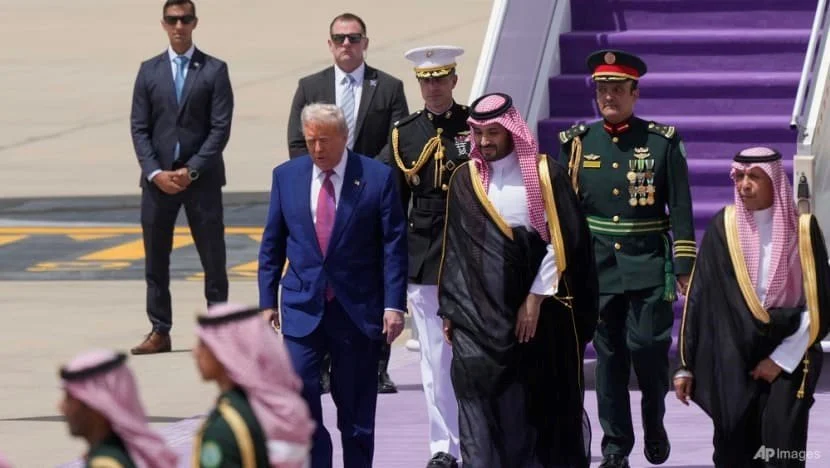
President Donald Trump walks with Saudi Crown Prince Mohammed bin Salman during an arrival ceremony at the Royal Terminal of King Khalid International Airport in Riyadh, Saudi Arabia, May 13, 2025. Photo credit: channelnewsasia.com
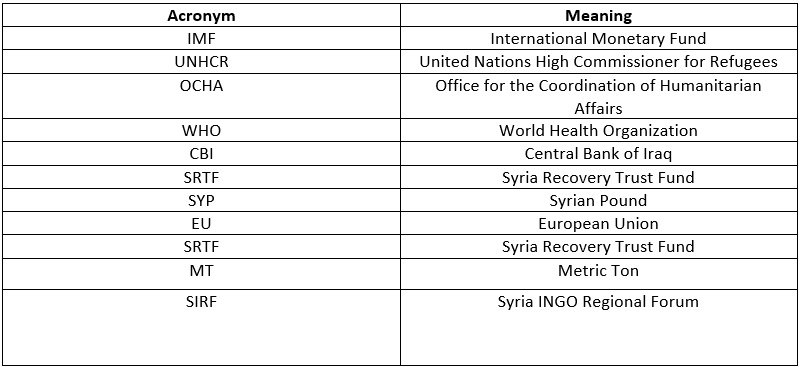
1. Table of Acronyms
2. Introduction
Trump’s visit to the Middle East marked a historic shift in the Middle East as the President spoke of new horizons for the region. The US President declared that there will be more cooperation in existing dimensions, especially when it comes to Saudi Arabia and the Gulf. Moreover, certain measures will be taken to ascertain regional leaders that economic relief will happen for countries like Syria and Lebanon. In short, he declared that it is time for a new shift and most observers and commentators are hoping for the best. The region really needs a new beginning.
3. The Socio-Economic Situation
Egypt

Al-Mashat details Egypt’s economic reform progress at IDSC conference. Photo credit: Daily News Egypt.
The European Bank for Reconstruction and Development lowered its forecast for Egyptian economic growth in the next fiscal year to 4.4%, down from 4.6% in February. However, it expects faster growth in the current fiscal year 2024/25, at 3.8%, down from 3.6%. It claimed bilateral loans represent a significant portion of Egypt's total external debt, representing 28%. These include bilateral loans from the Gulf Cooperation Council countries, as well as China, Germany, Japan, France, and Russia. While refering to its data, it pointed out that the industrial sector has begun to recover after a sharp contraction during the period of foreign exchange shortages that preceded March 2024. In contrast, production in the oil and gas sector continued to decline, and this decline is a major issue for government policy during fiscal years 2025 and 2026, including efforts to settle arrears owed to international energy companies. Inflation is expected to continue declining, supported by the Central Bank's tight monetary policy and pressure from rising fuel prices to cost levels. The European bank said that foreign exchange reserves, which had recently increased, would remain stable. Future prospects depend on the government's commitment to implementing structural reforms, particularly those related to the state's role in the economy, along with the continuation of the reduction of debt levels and debt servicing costs. It stated that the risks that may alter these forecasts are relatively high, given the ongoing uncertainty surrounding international trade policies and Egypt's continued reliance on foreign investments in debt instruments as a primary source of external financing.
To bolster this narrative to intertational donors and partners, Egypt’s Minister of Planning, Economic Development, and International Cooperation, Rania Al-Mashat, at the annual scientific conference of the Information and Decision Support Center (IDSC), detailed the nation’s efforts to implement its National Programme for Structural Reforms and enhance macroeconomic stability. The minister explained that this ongoing process is increasingly being recognied as being legitimate by the international community and global economic institutions. She noted that major institutions like the International Monetary Fund and the World Bank recently revised their growth forecasts upwards for the Egyptian economy in 2025 and 2026, even as they downgraded forecasts for many other countries due to growing complexities in the global economic landscape. Most importantly and as a validation for European Bank’s statements, Al-Mashat emphasized that Egypt successfully implemented over 86 structural measures last year. These included enacting amendments to the Public Finance Law to set an annual ceiling on government debt, preparing a draft procedural guide for programme and performance budgeting, and taking measures to cancel exemptions granted to state-owned enterprises, alongside offering investment incentives and facilitating tax policies. The minister highlighted that her ministry is working to enhance coordination with partners, primarily the European Union and the World Bank, to mobilise funds supporting the state’s general budget for the implementation of the national structural reforms programme.
Jordan
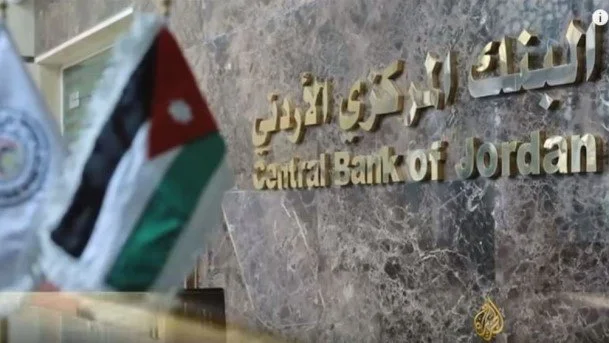
The Central Bank of Jordan, Photo credit. Al Jazeera.
The Jordanian economy faces accumulated challenges that make it difficult to achieve financial stability and sustainable growth. Despite a slight improvement in the annual GDP growth rate to 2.7%, this growth remains insufficient to accommodate population growth or create sufficient job opportunities. The high unemployment rate of 21.4% is among the highest in the region, reflecting the deep gap between educational outcomes and the labor market. In addition, weak growth in productive sectors is also exacerbated by the concentration of investment in non-job-generating sectors such as real estate and services. On the public finance front, the government deficit is clearly evident in the public debt-to-GDP ratio, which reached 89.2%, and a budget deficit of 5.3%. These figures indicate that reliance on borrowing has become a chronic strategy, rather than a temporary tool to support growth. In contrast, the relative stability of the inflation rate (1.83%) indicates the effectiveness of monetary policies in curbing price rises, a positive development for the Central Bank. However, raising the interest rate to 6.5% as a policy to combat global inflation is simultaneously putting pressure on domestic investment and productive borrowing. As for the trade deficit, which exceeded 920 million dinars, reflects a structural problem in the trade balance, requiring a review of production and export policies and the stimulation of the industrial and agricultural sectors. One industry, however, which is keeping Jordan on its feet is the Tourism sector. In its latest Regional Economic Prospects report, the European Bank for Reconstruction and Development noted that a rebound in tourism during the second half of the year played a key role in supporting economic activity. The EBRD also adimited that the government's commitment to fiscal discipline and continued progress on structural reforms also helped sustain resilience and maintain market confidence. Also, it projects that Jordan’s economy will benefit in 2025 from continued recovery in the tourism sector and the reopening of the Syrian market to Jordanian businesses.
Iraq
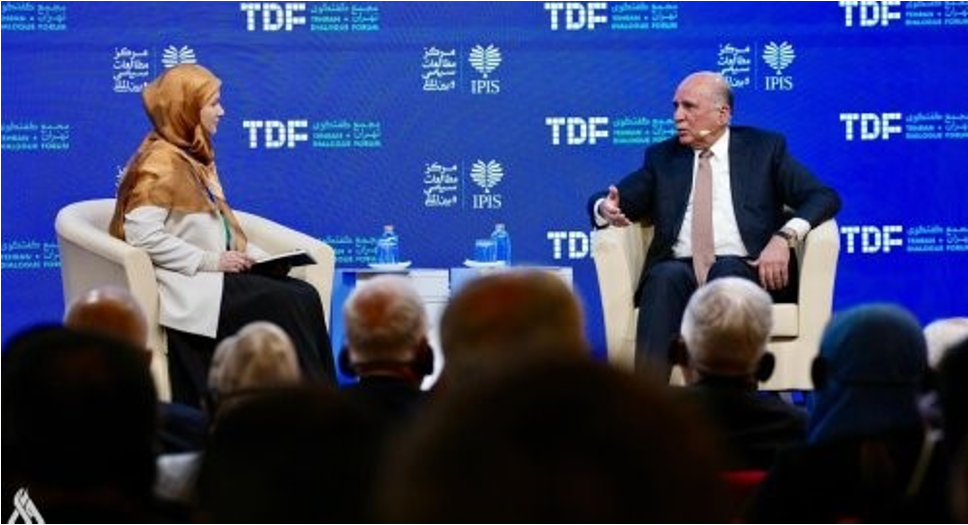
Foreign Minister Fuad Hussein confirmed that Iraq is currently seeing an influx of domestic foreign investment estimated at $87 billion, lauding all previous initiatives. Photo credit: https://ina.iq/
During May, the International Monetary Fund warned that Iraq faces a challenging year for its economy, when spending on salaries and energy continuing to rise, and 55% of its electricity is being wasted. According to a report published by the IMF, Iraq's fiscal deficit in 2023 reached 1.1% of GDP, and this percentage rose to 4.2% of GDP in 2024. The report attributed this to the fact that salaries and energy purchases in Iraq are constantly increasing, coupled with declining oil prices and rising government spending, which will have a significant impact on current expenditures this year due to the decline in oil export revenues. It also added that Iraq's non-oil economic growth in 2025 will be very low, with GDP growth falling to 1%. It stressed that the Iraqi economy's vulnerabilities have increased in recent years due to increased spending on public sector employment and salaries, as well as increased reliance on oil revenues. Although Iraq has been dealing with the same criticisms over the years, the country has been attempting to improve the economy, through means other than that of the oil export sector. For instance, the Iraqi government has recently decided to contract with two international companies to help raise Iraq's credit rating as part of the country's economic reform plan. Iraqi Prime Minister Mohammed Shia al-Sudani has ordered the contracting of a firm specializing in international law and global economics to serve as an advisor to the Trade Bank of Iraq, and another specializing in public relations, to contribute to raising Iraq's credit rating. The Iraqi Prime Minister held a special meeting to discuss financing private sector projects under the Sovereign Guarantees Initiative, according to the Iraqi News Agency. The meeting discussed mechanisms to facilitate procedures for achieving industrial development, the work of the Sovereignty Guarantees Committee, and its support for the private sector, as part of the government's vision for economic reform. The Iraqi Prime Minister directed the development of rapid solutions to simplify legal and administrative procedures to facilitate the implementation and success of small business lending and sovereign guarantee initiatives.
Lebanon
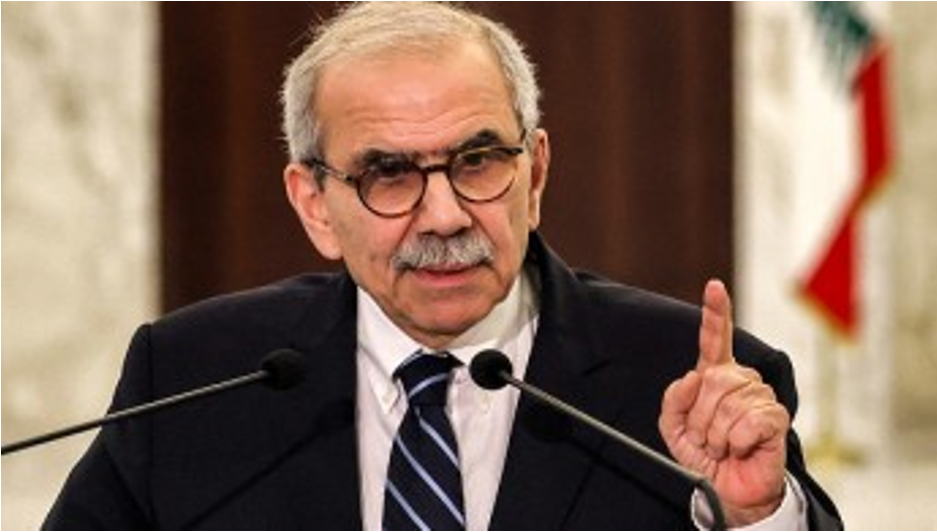
IMF welcomed Prime Minister Nawaf Salam's request to support the country's economic crisis [Getty]
Lebanese Minister of Economy and Trade Amer Bisat stressed in an interview with CNBC Arabia that the Lebanese industry cannot truly improve without revitalizing the banking sector, which has been virtually paralyzed since the outbreak of the country's financial crisis. The minister emphasized that the Lebanese economy will not recover unless fundamental issues are addressed, most notably restoring normal banking operations, noting that the industrial sector is in dire need of funding and financial stability to enable it to develop and compete. In his remarks, the minister noted that Lebanon plans to rebuild strong economic relations with Arab countries, believing that this would open new horizons for Lebanese exports and strengthen their position in foreign markets. Another positive development that will benefit Lebanon is the IMF welcoming the new government’s request for support to tackle the severe economic problems. This is important news especially after 2022, when Lebanon and the IMF reached conditional agreement on a $3-billion-dollar loan package but reforms that the 46-month financing program had required were not undertaken by the government back then. With a new government adopting a different kind of thinking, there will be a better conformity or willingness to heed to the requirements of the IMF. After all, the economy is still not in a good condition since the banking crisis in 2019 and there is a substantial infrastructure and housing needs resulting from the conflict. Another positive indicator that things might finally shift for Lebanon is the recent declaration of American President to lift sanctions off Syria. With the two countries having linked economies, this will directly impact Lebanon increasing its GDP growth by 1%. In the end, economic activity cannot emerge suddenly by itself. Rather, it requires certain conditions that can allow it to exist. This includes legal, financial, and investment facilitation, as well as securing all elements of production to ensure sustainable and real growth. Otherwise, growth will be eaten away by inflation.
Palestine
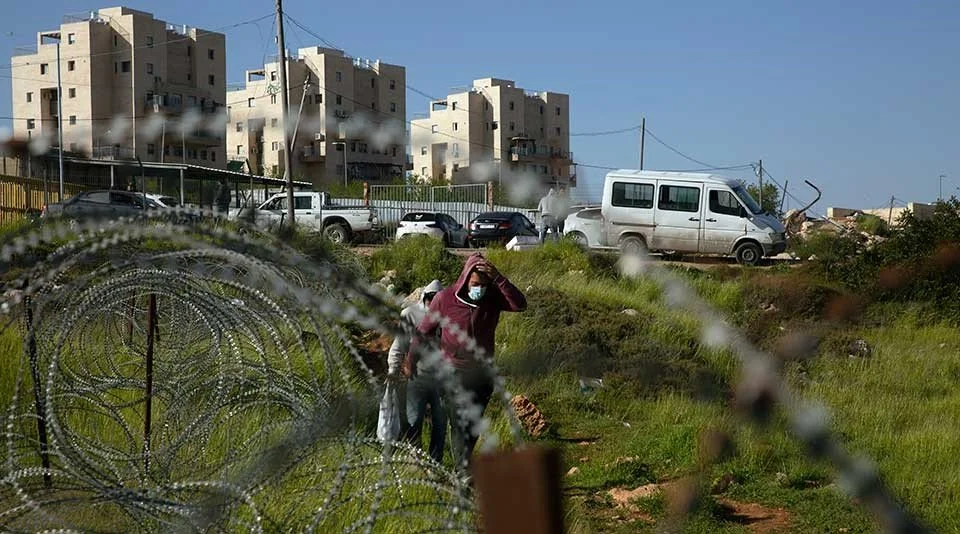
Even when there was no war or military operations, Palestinian labors had a hard time going to their jobs, as seen in this picture. Photo credit: peoplesworld.org
The Palestinian Ministry of Labor, in cooperation with the Palestinian Employment Fund, launched a national campaign titled "Emergency Employment for Early Recovery," in an effort to address the sharp rise in unemployment rates in the West Bank and Gaza Strip following the ongoing war on Gaza and ongoing [Israeli] military operations in West Bank refugee camps. The World Bank recently warned that the Palestinian economy is facing the risk of "financial collapse," amid a sharp decline in revenues and an unprecedented slowdown in economic activity since the outbreak of the war in October 2023. The West Bank is suffering from its most severe economic crisis in years, due to the occupier’s continued closure of crossings, its withholding of clearance revenues, and the prevention of Palestinian workers with work permits from entering [Israel] and working within the Green Line. The war has led to the destruction of a significant portion of the camps' infrastructure, which is expected to negatively impact public budgets, particularly those allocated to vital sectors such as education and health, after a portion of these funds had been diverted to cover the costs of sheltering and providing relief to displaced persons in the West Bank. According to Ministry of Labor data, the occupier has prevented the entry of more than 225,000 Palestinian workers since the beginning of the war, exacerbating the living crisis and causing widespread social and economic repercussions. The ministry explained that the Palestinian labor market has lost approximately 500,000 job opportunities in recent months, equivalent to a third of the country's workforce. To make matters even worse, the occupier has recently begun importing foreign labor from abroad as a replacement for Palestinian workers. In an attempt to alleviate the situation, a ministry official explained that the government is seeking to mitigate the crisis by creating an online platform that connects job seekers with opportunities available in the local market. According to the official, more than 288,000 Palestinians have registered on the platform within days, while the number of jobs currently available stands at approximately 6,500, including temporary employment and paid training opportunities in both the public and private sectors.
Syria
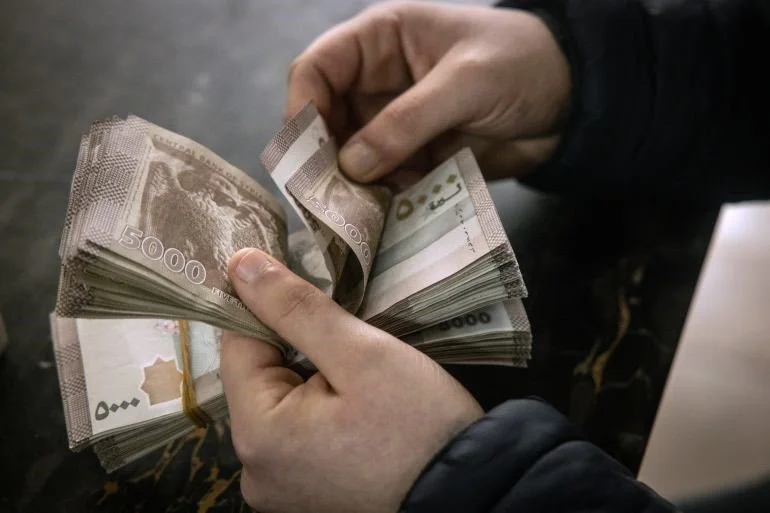
Experts expect the Syrian pound to improve in the medium term after the lifting of sanctions on the country's economy (Getty Images)
This month marked a significant milestone in Syria's history. During his visit to the Saudi capital, Riyadh, on the 13th of that month, US President Donald Trump announced his decision to lift US sanctions on Syria. The European Union then lifted all sanctions imposed on Damascus on the 20th of the same month. On May 23, 2025, the US Treasury issued General License 25 (GL 25), which allows financial transactions with the new Syrian government headed by Ahmad al-Shara, as well as the Central Bank of Syria and state institutions. Lifting US and European sanctions represents a real opportunity to revive the Syrian economy and reintegrate it into the global economic system. However, experts believe that the impact of this decision will not be immediate, and that the road to economic recovery will be long and challenging. Nevertheless, this decision is expected to open the door to the flow of investments and financial transactions, and pave the way for economic restructuring under the leadership of the current government. The energy and oil sectors are among the most prominent sectors expected to directly benefit from the decision to lift sanctions, having been severely impacted by previous measures. Easing restrictions would revitalize energy infrastructure and stimulate investment in oil extraction and refining, contributing to increased state revenues. Ports, shipping, and aviation companies are also expected to benefit from the return of commercial and logistics activity, which will revitalize the transportation sector and related services. These developments may contribute to strengthening the Central Bank of Syria's foreign exchange reserves, giving monetary policymakers broader tools to regulate the market and achieve financial stability. It also enables the government, led by Prime Minister Ahmed al-Sharaa, to move forward with a plan to restructure the economy and achieve more sustainable growth in the coming years.
Another great indicator that Syria is moving forward, is the fact an IMF mission was dispatched to Syria, in an important step aimed at closely assessing the financial and economic situation. This visit comes as part of growing international efforts to support the rehabilitation of the Syrian economy after years of conflict and isolation, and follows the US Treasury Department's official announcement that it was lifting sanctions on Syria. The mission will review the situation of Syrian institutions, including the Central Bank, the Ministry of Finance, and statistical agencies. As such the IMF team identified institutional needs and required technical support, with the aim of establishing a comprehensive cooperation framework with Syria that sets priorities for providing advice, technical support, and training key personnel. The IMF's move comes after the appointment of economist Ron van Ruden as its mission chief to Syria in April 2025, the first time such a decision has been made since the outbreak of war in the country. Julie Kozack, Director of the Fund's Communications Department, had announced that she had held fruitful discussions with the Syrian economic team, in preparation for supporting efforts to rehabilitate the Syrian economy. As such, it seems there is a global initiative, given the go-ahead by the American administration, to restart things in Syria and give the new government a chance to prove itself.
Cyprus
Cyprus continues to impress economic observers. Photo credit: https://www.ekathimerini.com/
According to the European Commission’s Spring 2025 Economic Forecast, Cyprus’ economy is expected to continue growing at a robust pace in 2025 and 2026. Fueled by Cyprus’ resilient domestic demand, a steady services export sector, and a healthy labor market, growth is expected to reach 3 per cent in 2025 and moderate slightly to 2.5 per cent in 2026. With private consumption being projected to remain the key growth driver, supported by an increase in wages and a reduction of inflation, which are restoring household purchasing power, these numbers can be surely achieved. According to the Commission, investment is expected to gain momentum as major construction projects continue and Cyprus benefits from funding through the EU’s Recovery and Resilience Facility. Moreover, there is the fact that structural transformation of the Cypriot economy is expected to attract more investment especially the companies that are searching for certain bureaucratic flexibilities. Moreover, the country’s labor market also showed strength, with the unemployment rate falling to a 15-year low of 4.7 per cent by the fourth quarter of 2024. Eventually, all this will lead to the contraction of account deficit to 5.9%. Fitch Ratings also made similar announcements as the agency affirmed Cyprus’s credit rating at A- with a stable outlook citing stable fiscal performance, strong growth and financial sector stability. Although positive, it took a different approach when compared to the Commission. For instance, declining public debt which had existed during 2022-2024, is expected to continue through 2025-2026, with debt falling below 60% of GDP in 2025. Also fiscal surpluses are projected to continue for 2025-2027 while economic growth above 3% expected to remain near that level through 2025-2026. Moreover, there is the prevalence of strong labor market conditions, positive medium-term economic prospects, and banking sector stability characterized by high capitalization and ample liquidity. According to Fitch, all this gave the island the ability to withstand geopolitical shifts in the region, regional conflicts, or disruption in trade.
4. The Humanitarian Situation
Egypt
The Minister of Parliamentary and Legal Affairs received the representative of the United Nations High Commissioner for Refugees in Cairo. He indicated that Egypt hosts more than nine million guests, including refugees, migrants, and asylum seekers, whose conditions are similar to those of refugees, which requires concerted regional and international efforts.
Jordan
The UNHCR states that there are currently 546,298 registered refugees in Jordan up until the beginning of May.
The proportion of Syrian displaced people registered within the UNHCR for May, are distributed as follows:
-163,385 in Amman Governorate (29.9%)
-140,600 in Mafraq Governorate (25.7%)
-104,172 in Irbid Governorate (19.1%)
-82,648 in Zarqa Governorate (15.1%)
-14,119 in Balqa Governorate (2.6%)
-10,715 in Madaba Governorate (2%)
-7,015 in Jarash Governorate (1.3%)
-6,856 in Karak Governorate (1.3%)
-7,451 in Maan Governorate (1.4%)
-4,500 in Ajlun Governorate (0.8%)
-3,583 in Aqaba Governorate (0.7%)
-1,134 in Tafilah Governorate (0.2%)
-317 in other (0.1%)
The Syrian American Medical Society (SAMS) has concluded its medical missions in Jordan close to the Syrian border, where hundreds of volunteers delivered specialized healthcare and medical education to communities facing severe crises and acute shortages in medical services.[1]
Iraq
The UNHCR states that there are currently 336,487 registered refugees in Iraq. Of those, 90,851 live in camps.
The proportion of refugee people (non-camp 245,636) registered within the UNHCR up until the beginning of May, are distributed as follows:
-118,100 in Erbil (48.1%)
-39,861 in Dahuk (16.2%)
-31,361 in Sulaymaniyah (12.8%)
-2,479 in Ninewa (1%)
-36,077 in Baghdad (14.4%)
-4,138 in Kerbala (1.7%)
-3,870 in Najaf (1.6%)
-2,626 in Kirkuk (1.1%)
-1,999 in Anbar (0.9%)
-5,125 in other areas (2.08%)[2]
As part of broader efforts to promote a just transition to a green economy and expand decent work opportunities in Iraq, the International Labour Organization (ILO), with funding from Italy and in collaboration with the Central Bank of Iraq (CBI), conducted a five-day training workshop under the title “Making Green Microfinance Work: Managing Product Diversification,” the training aimed to equip financial institutions with the skills and tools needed to design green financial products that serve sustainable small and medium-sized enterprises (SMEs) across the country.[3]
Lebanon
{UNHCR Lebanon did not update its data for May}
Since the beginning of April the number of registered Syrian refugees in Lebanon is 722,173.
Refugees in Lebanon are distributed as follows:
-268,559 in Bekaa (37.2%)
-214,655 in North Lebanon (29.7%)
-163,208 in Beirut (22.6%)
-75,751 in South Lebanon (10.5%)[4]
The Lebanese and Palestinian presidents agreed to establish a joint committee to follow up on the situation in the Palestinian refugee camps in Lebanon. The two sides agreed to form a joint Lebanese-Palestinian committee to monitor the situation of Palestinian refugee camps in Lebanon and work to improve the living conditions of refugees.[5]
With funding from Qatar Fund for Development, Qatar Red Crescent Society and Lebanon’s Ministry of Social Affairs have launched phase 2 of the “Road to Stability”, an initiative aimed at supporting the poorest Lebanese families affected by the recent war on Lebanon.[6]
As part of its steadfast commitment to supporting the sisterly Republic of Lebanon, the State of Qatar, through the Qatar Fund for Development (QFFD), has delivered the third, and final, gasoline shipment of 2025. The shipment, totaling 6,200 tons of fuel, arrived at the Port of Tripoli and is intended to enhance the operational capabilities of the Lebanese Army.[7]
Syria
Refugees International and Action for Humanity are among the organizations that welcomed President Trump’s decision to lift sanctions of Syria. The decision could jumpstart Syria’s recovery and offer millions of Syrians a chance to rebuild their country and their lives.[8]
The SRTF approved Phase IV of the health project “Primary and Secondary Health Care for Conflict-Affected Populations through Piloting Sustainable Health Solutions in Deir-ez-Zor”.[9]
As part of its ongoing humanitarian interventions to support the Syrian health care sector, Qatar Red Crescent Society (QRCS) has launched a project to provide sustainable and lifesaving medical services for the most vulnerable patients with kidney failure, chronic diseases, and disabilities in Aleppo and Idlib governorates.[10]
Cyprus
March registered 258 refugees entering Cyprus compared to 1208 in March 2024. Total number of boats was 1 compared with 13 boats in March 2024. [11]
[1] OCHA, May 15, 2025, https://reliefweb.int/report/jordan/sams-concludes-medical-missions-jordan-syria
[2] https://data2.unhcr.org/en/situations/syria/location/5
[3] OCHA, May 15, 2025, https://reliefweb.int/report/iraq/strengthening-financial-sectors-capacity-support-green-growth-and-decent-jobs-iraq-enar
[4] UNHCR, Oct 28, 2024, https://data2.unhcr.org/en/situations/syria/location/71
[5] Anadol Agency, May 21, 2025, https://www.aa.com.tr/en/middle-east/lebanon-palestine-agree-to-establish-joint-committee-to-monitor-refugee-camps/3575139
[6] OCHA, May 15, 2025, https://reliefweb.int/report/lebanon/qrcs-lebanons-ministry-social-affairs-launch-road-stability-initiative-enar
[7] OCHA, May 11, 2025, https://reliefweb.int/report/lebanon/state-qatar-delivers-third-and-final-batch-amounting-6200-tonnes-fuel-lebanese-army-enar
[8] OCHA, May 16, 2025, https://reliefweb.int/report/syrian-arab-republic/refugees-international-welcomes-president-trumps-decision-lift-us-sanctions-syria
[9]OCHA, May 15, 2025, https://reliefweb.int/report/syrian-arab-republic/srtf-approves-fourth-phase-health-project-northeast-syria-enar
[10] OCHA, May 11, 2025, https://reliefweb.int/report/syrian-arab-republic/qrcs-supports-syrian-patients-kidney-failure-chronic-diseases-disabilities-enar
[11] OCHA, April 11, 2025, https://reliefweb.int/report/cyprus/cyprus-monthly-arrivals-snapshot-march-2025