

MECC
Ecumenism Brings Arabs Together in Cairo to Confront Hate Speech
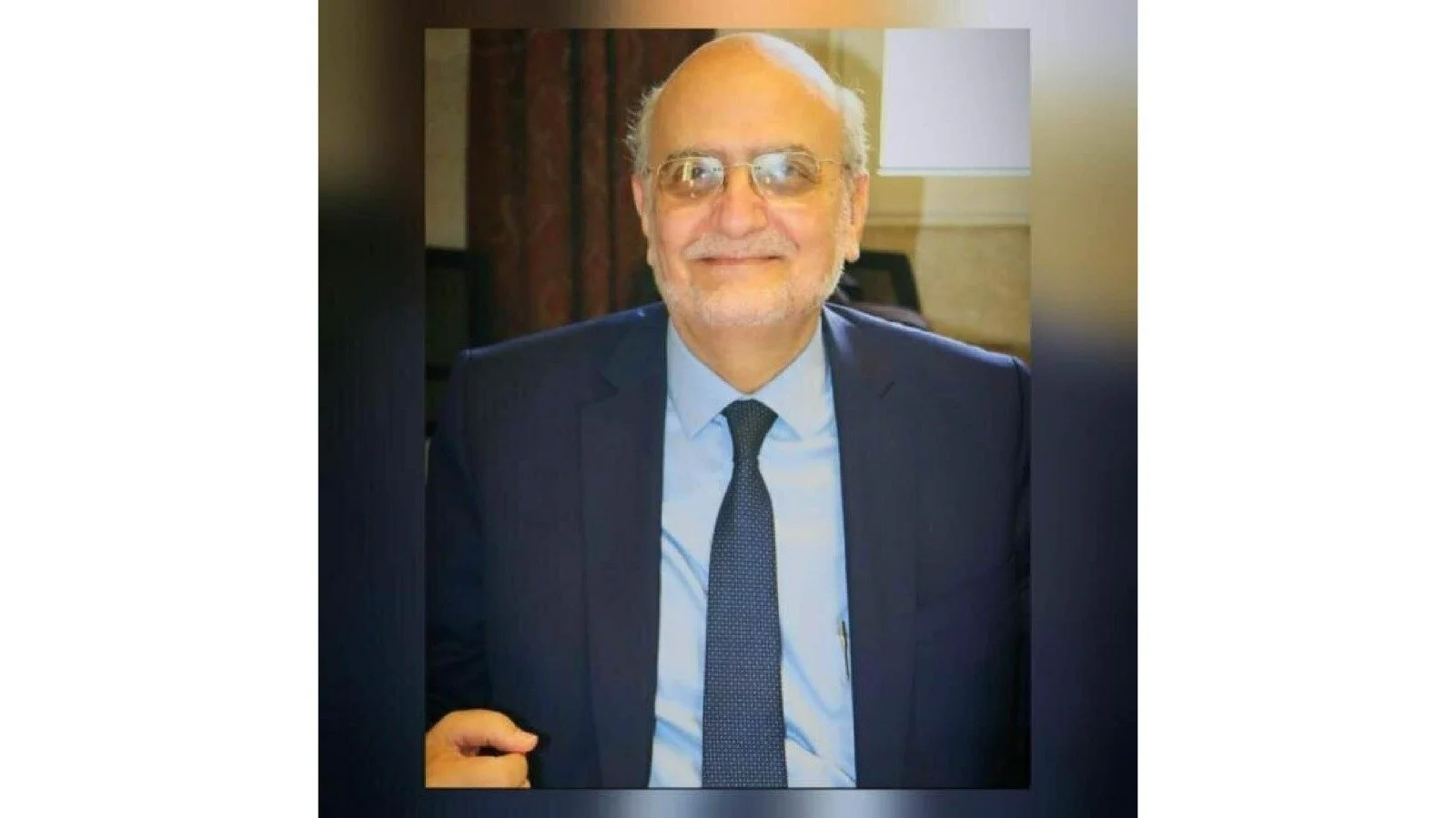
Professor Michel Abs
The Secretary General of the Middle East Council of Churches (MECC)
The regional conference “Countering Hate Speech to Promote Human Dignity and Living Together,” held in Cairo on October 4 and 5, was not merely a passing academic gathering. Rather, it was a distinctly Arab moment centered on a pressing question: How can we protect people from words that begin with exclusion and end by tearing society apart and igniting violence? The conference brought together researchers, religious leaders, and experts from several Arab countries in a gathering that reflected the breadth of shared concerns and a common aspiration for a safer and more cohesive future.
The conference was the outcome of the pioneering role played by the Middle East Council of Churches in transforming dialogue from a slogan into an institutional practice and an ongoing program. The Council did not limit itself to diagnosing hate speech; it created an Arab space for examining its religious, social, legal, educational, and media roots, as well as the role of digital platforms and artificial intelligence in spreading or limiting it. From Cairo, it became clear that confronting hatred does not mean eliminating differences, but rather managing them through dialogue, respecting human dignity, embracing diversity, and safeguarding the right to live together.
The Coptic Evangelical Organization for Social Services (CEOSS) also played a central role in the conference’s success. It hosted the opening in its offices, in the presence of its president, Rev. Dr. Andrea Zaki, and provided institutional and financial support that made the gathering possible and effective. This hosting reflects the organization’s long experience in community dialogue, strengthening citizenship, and building bridges of communication among the various components of society. The cooperation between the organization and the Council demonstrated that major challenges cannot be addressed from a single perspective, but require partnerships bringing together churches, researchers, civil society, media, and educational institutions…
A Prayer to Saint Teresa of Ávila on Her Feast Day
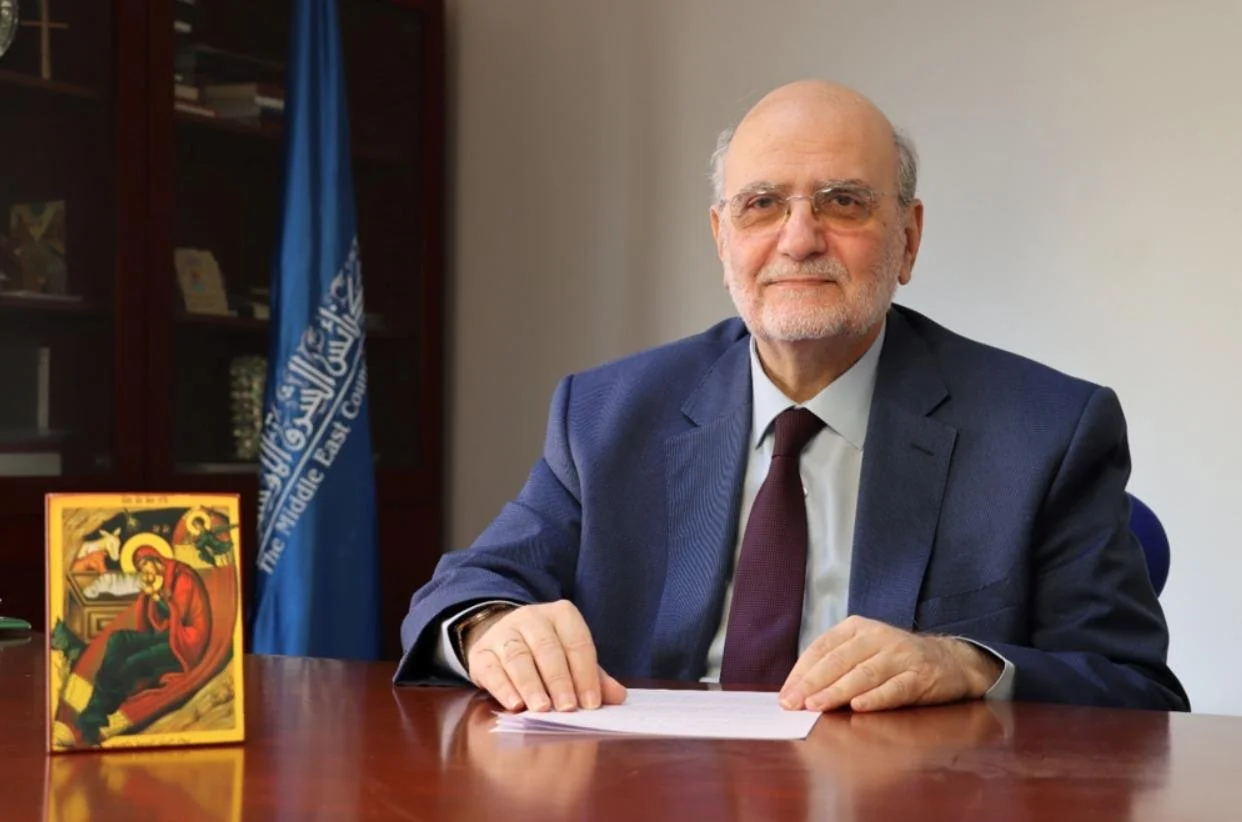
Written By the MECC Secretary General Professor Michel Abs
In these difficult times through which humanity is passing, when human beings so often become a calamity to one another rather than a source of support; in this harsh age, when creatures tear at one another’s flesh, I felt the need, on her feast day, to address this great saint in prayer.
O Teresa of Ávila, daughter of a fortress-city that became in your hands a fortress of the spirit, today on your feast we lift to you a prayer of love—not to confine you to an old image in the books of the saints, but to see you alive within the Church, bearing witness that God still awakens hearts, brings strength out of weakness, peace out of anxiety, and transforms ordinary human beings into apostles of light.
You who were born in Ávila in 1515 and raised in a home filled with a love of books and the lives of the saints, the grace of God taught you from childhood that life reaches its true meaning only when it is wholly directed toward eternity.
O Teresa, you entered the Carmelite Order as a young woman. You carried severe suffering in your body and long struggles within your soul, yet you did not hide from God your spiritual dryness, your fears, or your inability to pray…
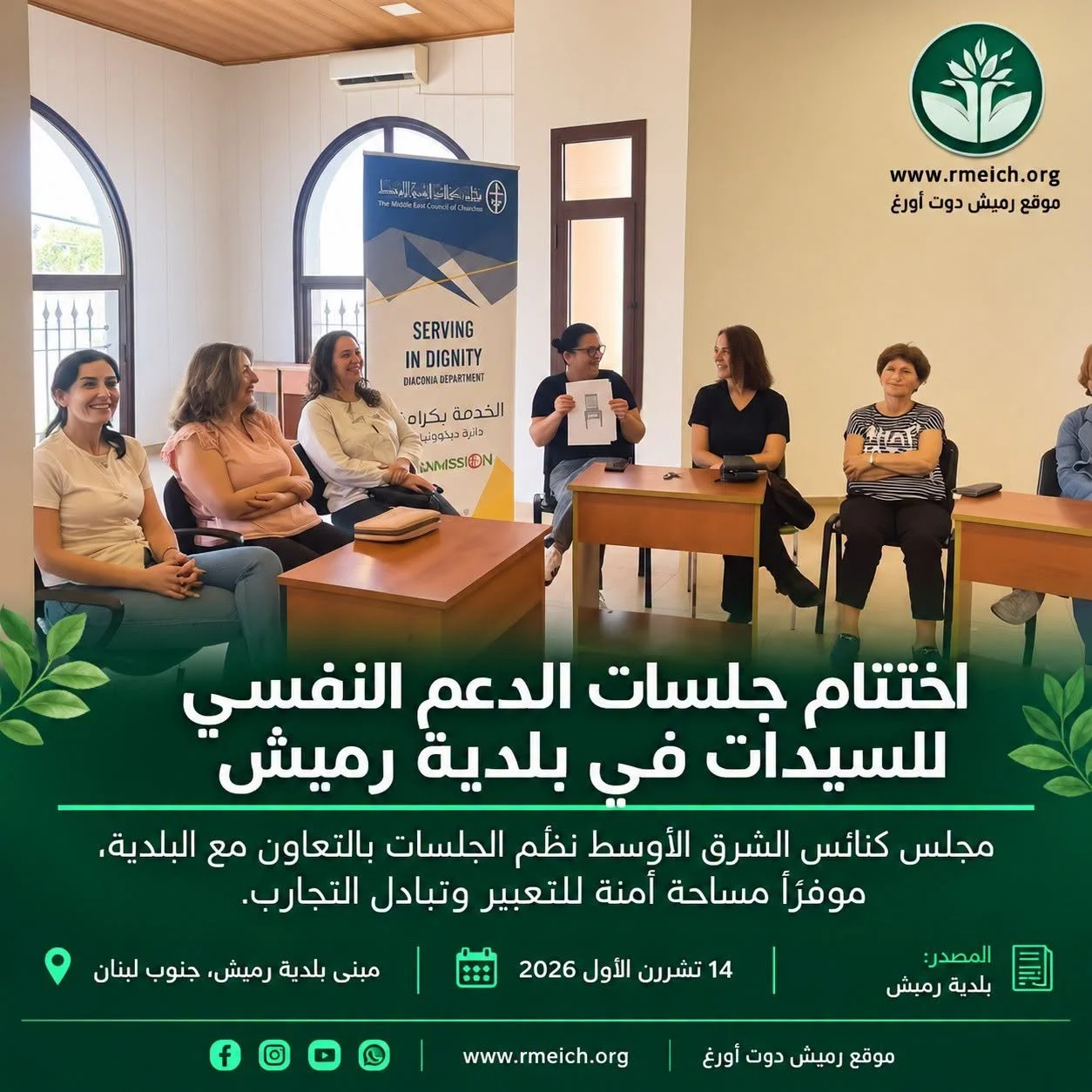
Conclusion of the Psychological Support Sessions for Women Organized by MECC in Cooperation with the Municipality of Rmeich - Lebanon, at the Municipal Building
The psychological support sessions for women, organized by the Middle East Council of Churches (MECC) in cooperation with the Municipality of Rmeich - Lebanon, concluded at the Municipal building.
The sessions provided a safe space for expressing emotions and sharing experiences, helping to strengthen resilience and hope amid difficult circumstances.
The Municipality of Rmeich expressed its gratitude and appreciation to the Middle East Council of Churches for its initiative and commitment to supporting women psychologically and emotionally, recognizing the positive impact this support has on families and the wider community.
Highlights from the Word of His Holiness Pope Tawadros II
During His Meeting with the Secretary General of the Middle East Council of Churches (MECC) Professor Michel Abs, and a Delegation of Researchers Participating in the Conference “Countering Hate Speech to Promote Human Dignity and Coexistence” - Cairo
Media of the Middle East Council of Churches (MECC)
His Holiness Pope Tawadros II, Pope of Alexandria and Patriarch of the See of St. Mark, emphasized during his meeting with the Secretary General of the Middle East Council of Churches (MECC) Professor Michel Abs, and a delegation of researchers participating in the conference “Countering Hate Speech to Promote Human Dignity and Coexistence” - Cairo:
“Love is the very foundation of human existence, and a person does not truly feel their humanity unless they practice love.”
His Holiness noted that sowing love is a fundamental building block, for Heaven is love, God is love, and life cannot endure without love.
He explained that there are five dimensions to sowing love:
1. Sowing Love for God
Sow love for God, the Almighty. Whoever looks to God will sow successfully.
2. Sowing Love for Creation and the Environment
Sow love for creation, the environment, and animals. The Nile is suffering, and everything around us needs our love and care.
When a child learns to pick up litter from the ground and protect the environment, that child will also learn to remove sin from their heart.
God created the village, while human beings created the city. Therefore, we must love the earth and preserve it…
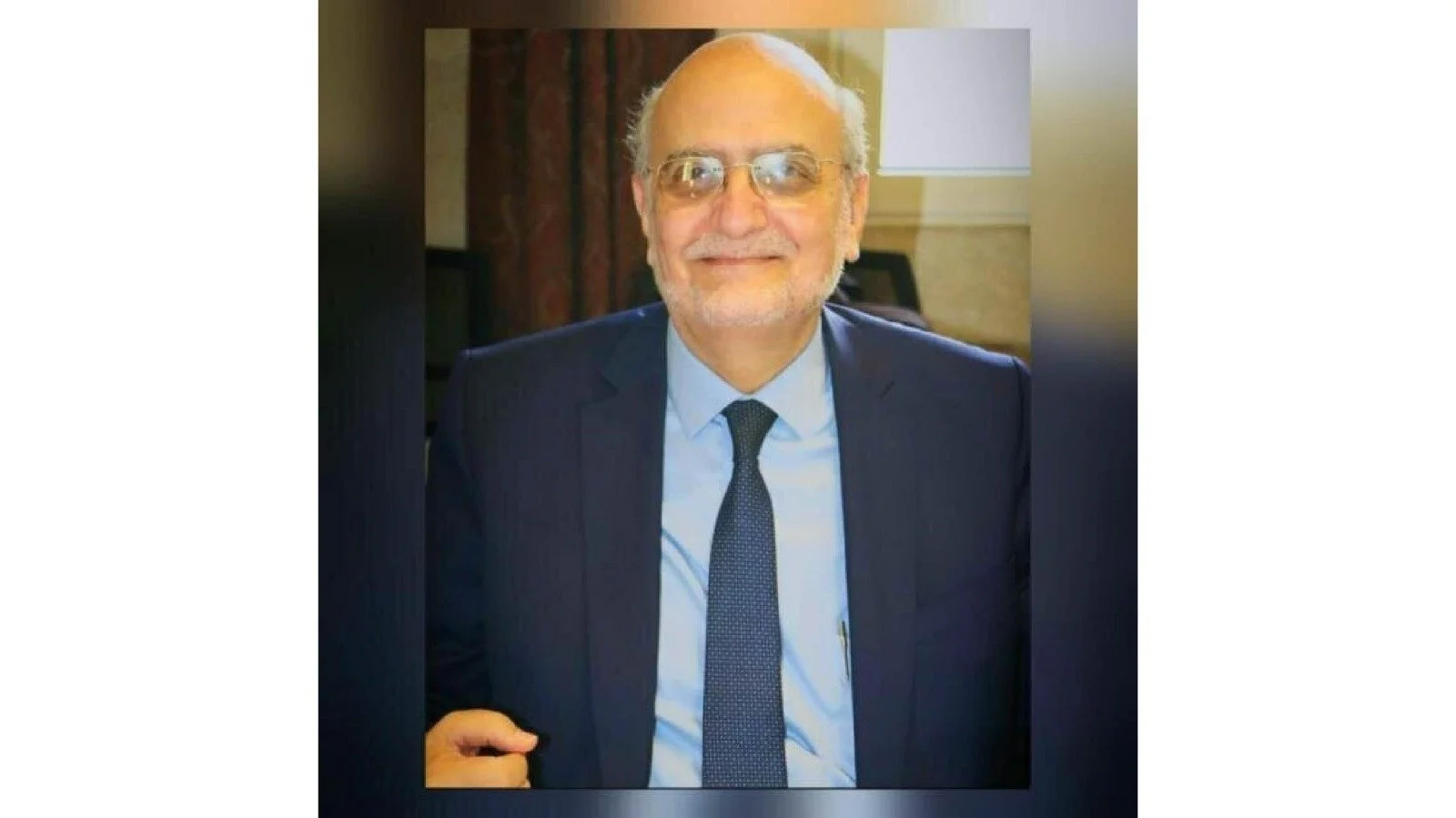
Address of the MECC Secretary General Professor Michel Abs
At the Opening of the Regional Conference: "Countering Hate Speech and Protecting Human Dignity"
Held in the Arab Republic of Egypt
In the name of the Creator of all that is, the source of light and of the elements of life,
In the name of those who suffer in every corner of the earth from discrimination and persecution,
In the name of all who endure stigma, marginalization, and bullying in their daily lives,
In the name of human dignity, which is equal to life itself and which nothing but social cohesion can secure,
We come to you with this conference — challenge.
We come to challenge a fate that no caution can avert.
We come to sound a warning together, and to say: cursed is the one who awakens strife in my wounded country, and blessed is the one who lays it to rest.
It was a blessed hour when we visited the Reverend Dr. Andrea Zaki, President of the Protestant Churches of Egypt and President of the Coptic Evangelical Organization for Social Services (CEOSS), and put to him the idea of this conference. With his characteristic spontaneity, he responded at once that CEOSS could host it.
And so it was. The idea took shape in our gathering here today around the theme of demonization and hate speech. It was made possible through the collaborative efforts of Ms. Samira Louka, Ms. Iman Mamdouh, Dr. Laure Abi Khalil, and the Journalist Lea Adel Maamary.
From the land of Egypt, the land of encounter — the country to which the Holy Family fled to escape the demonization of children more than two thousand years ago, and the nation that taught the world the meaning of unity in life through the “House of the Family” as well as through social unity — we open our conference today on a subject that touches the very core of our existence as citizens of this East: confronting demonization and hate speech….
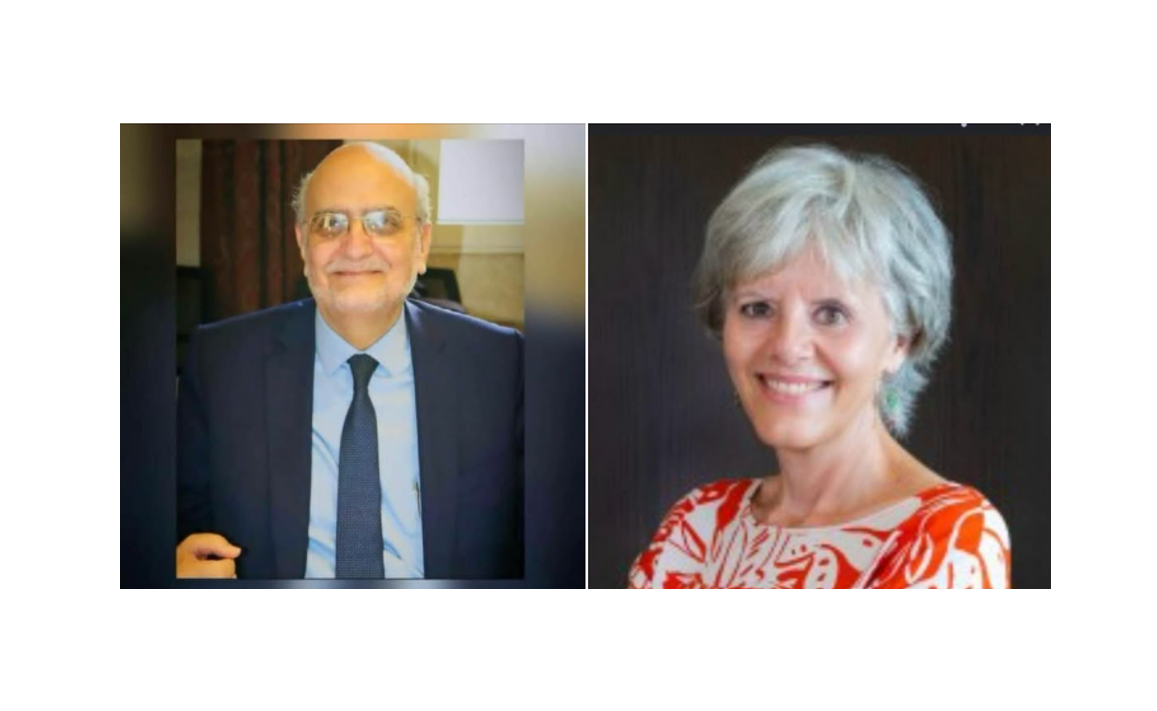
Middle East Council of Churches and Danmission Discuss Cooperation and Future Projects in Cairo
Cairo, October 7, 2026
As part of the ongoing cooperation and partnership between the Middle East Council of Churches (MECC) and Danmission, the MECC Secretary General Professor Michel Abs met with Mrs. Kristen Auken, Danmission’s Regional Advisor for the Middle East and North Africa, in Cairo. The meeting provided an opportunity to exchange views on the course of cooperation between both sides and to explore prospects and future projects that could be jointly undertaken.
The meeting addressed many issues related to the work of the Middle East Council of Churches and its role in the region. Discussions highlighted its key programs, projects, and activities, as well as its efforts to serve Churches and communities, promote dialogue, cooperation, and partnership, and respond to the challenges that the region is facing, its churches, and people.
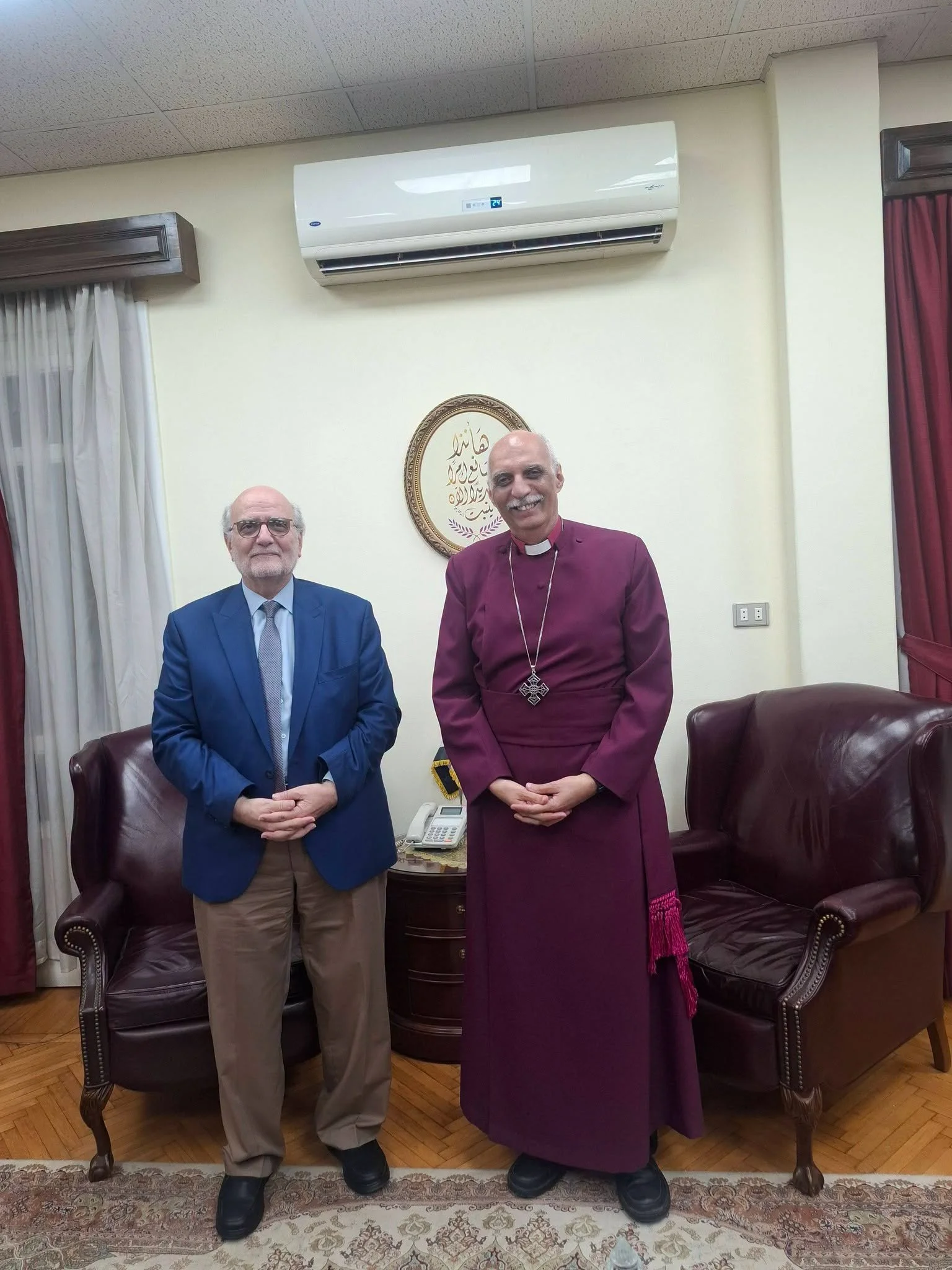
The MECC Secretary General Professor Michel Abs Visits His Eminence Archbishop Samy Fawzy Shehata, Archbishop of the Episcopal Church in Egypt, North Africa, and the Horn of Africa
Cairo, October 7, 2026
As part of efforts to strengthen Christian joint work, the Secretary General of the Middle East Council of Churches (MECC) Professor Michel Abs, visited His Eminence Archbishop Samy Fawzy Shehata, Archbishop of the Episcopal Church in Egypt, North Africa, and the Horn of Africa, at All Saints' Episcopal Cathedral in Zamalek.
The visit included discussions on ways to strengthen cooperation and coordination among the Churches.
The discussions addressed ways for developing spiritual programs and joint activities, contributing to deepening the spirit of unity and fellowship among the Churches and reinforcing the values of love and encounter among the various Christian denominations.
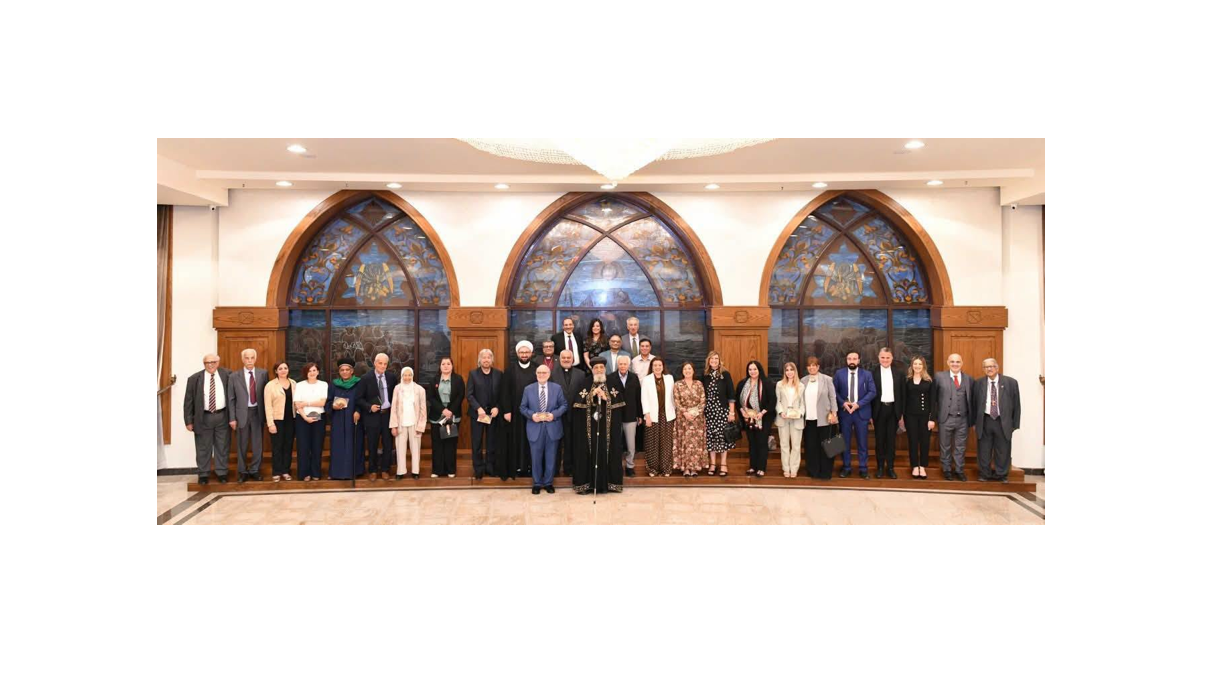
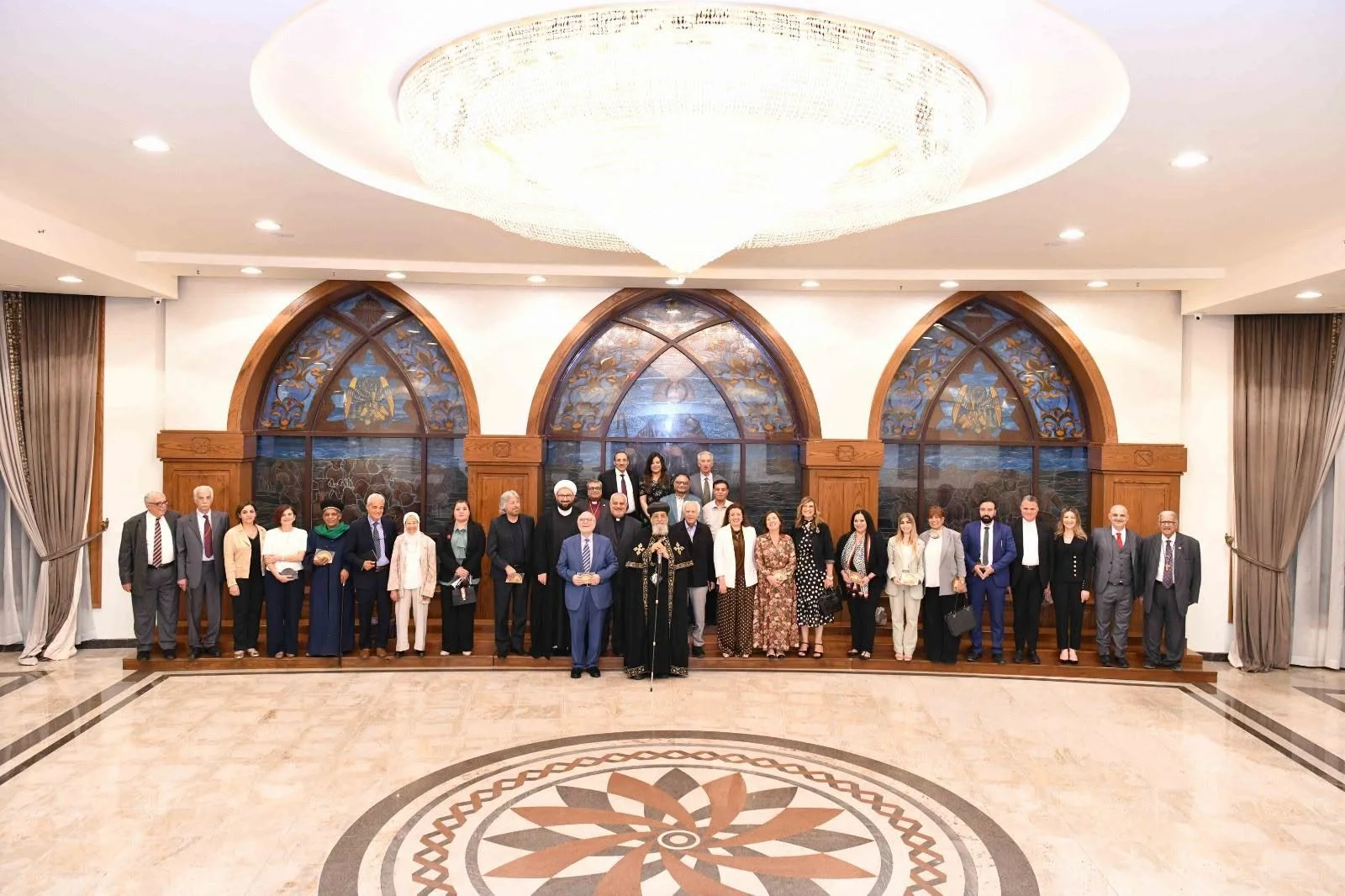
His Holiness Pope Tawadros II Receives the MECC Secretary General Professor Michel Abs, and the Delegation of Researchers
At the End of the Conference on Countering Hate Speech to Promote Human Dignity and Coexistence
At the end of the conference dedicated to explore the phenomenon of hate speech and ways to address it, His Holiness Pope Tawadros II, Pope of Alexandria and Patriarch of the See of St. Mark, received the Secretary General of the Middle East Council of Churches (MECC) Professor Michel Abs, accompanied by Associate Secretary General Reverend Dr. Rifaat Fikry, Honorary Secretary General Dr. Gerges Saleh, Coordinator of the Dialogue, Social Cohesion and Human Dignity Preservation Program at MECC Professor Laure Abi Khalil, Coordinator of Media and Church Relations at MECC Lea Adel Maamary, as well as a delegation of researchers from several Arab countries who participated in the conference.
The meeting, taking place in Cairo, marked the culmination of a process of dialogue and research that brought together researchers and specialists to address an issue directly connected to human dignity and the future of societies, as well as their ability to build relationships based on respect, understanding, and living together.
During the meeting, Professor Michel Abs spoke about the conference, highlighting its main objectives and themes, as well as the discussions that took place on hate speech, its various forms and effects, and the need to confront it by promoting a culture of dialogue and strengthening the values of peace and mutual respect.
For his part, His Holiness Pope Tawadros II focused on love as a fundamental principle in confronting hatred and building a society in which people can live together despite their differences.
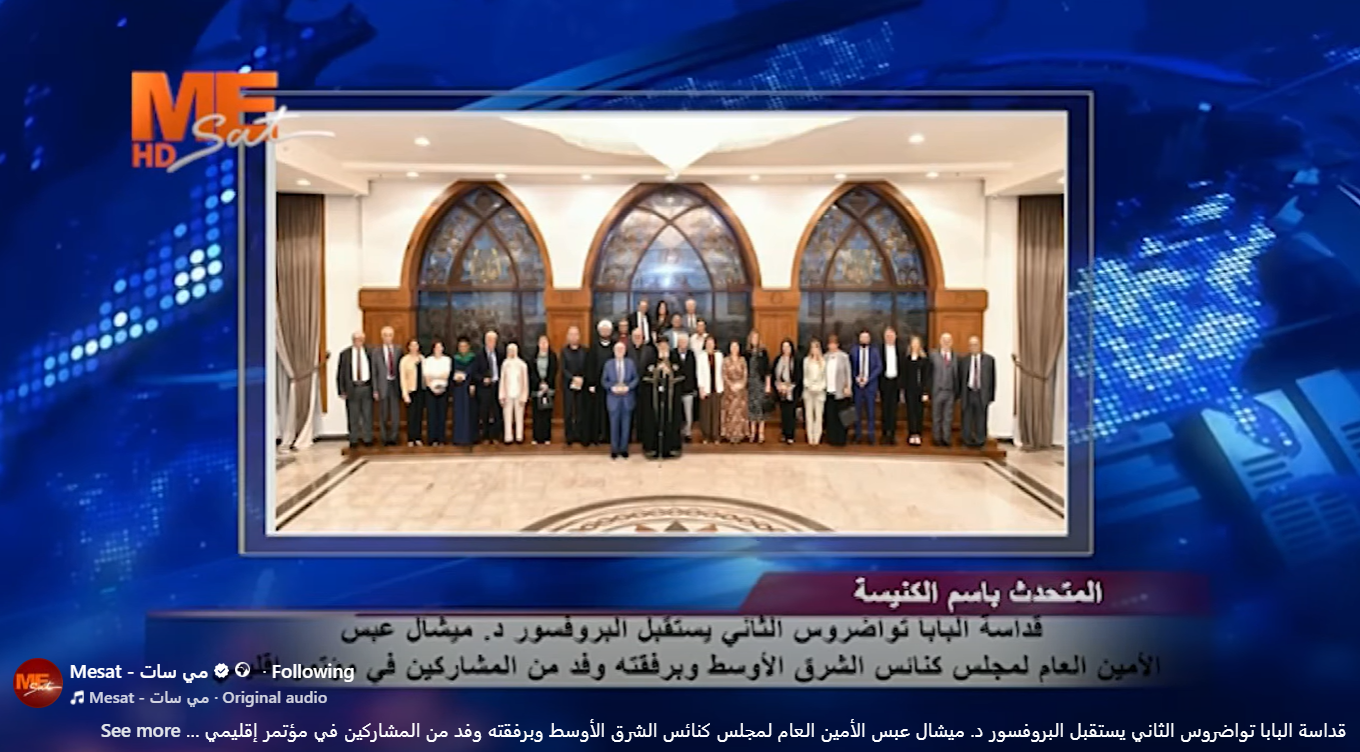
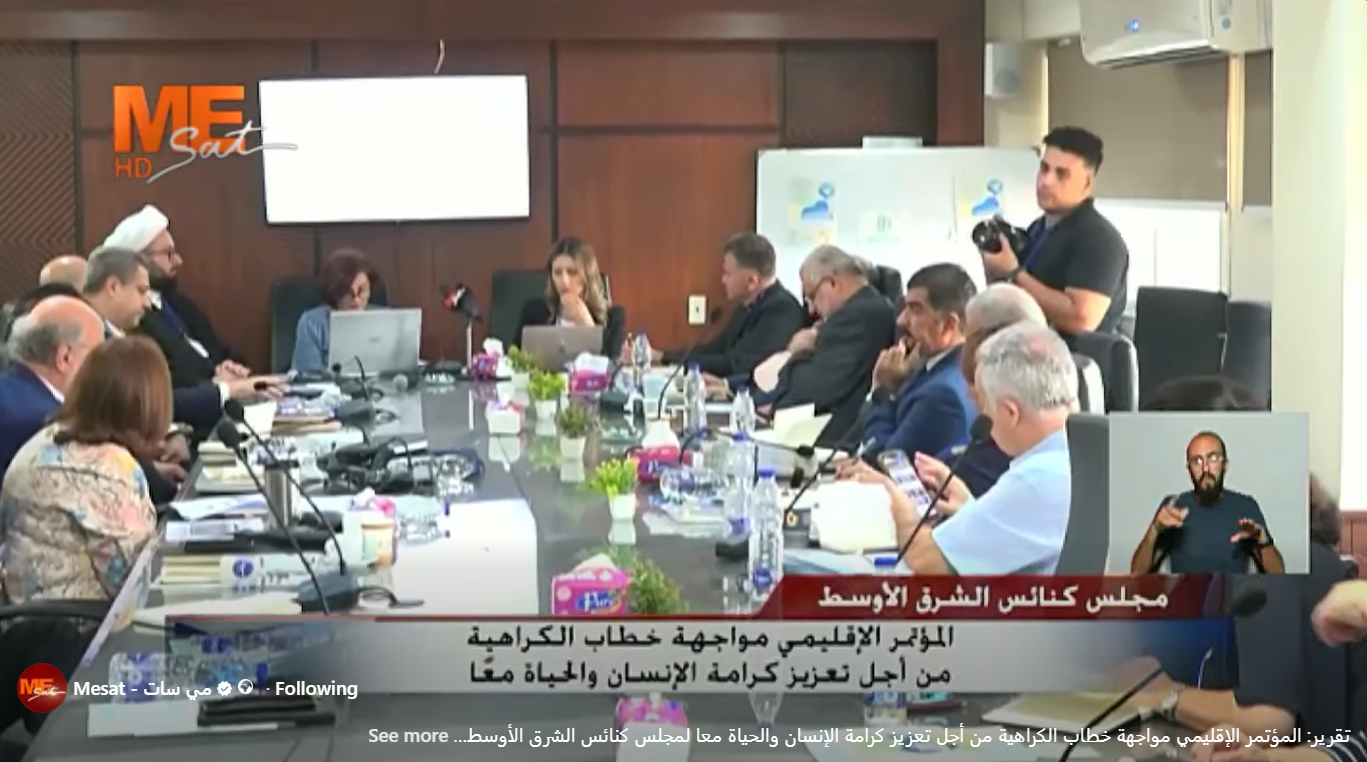
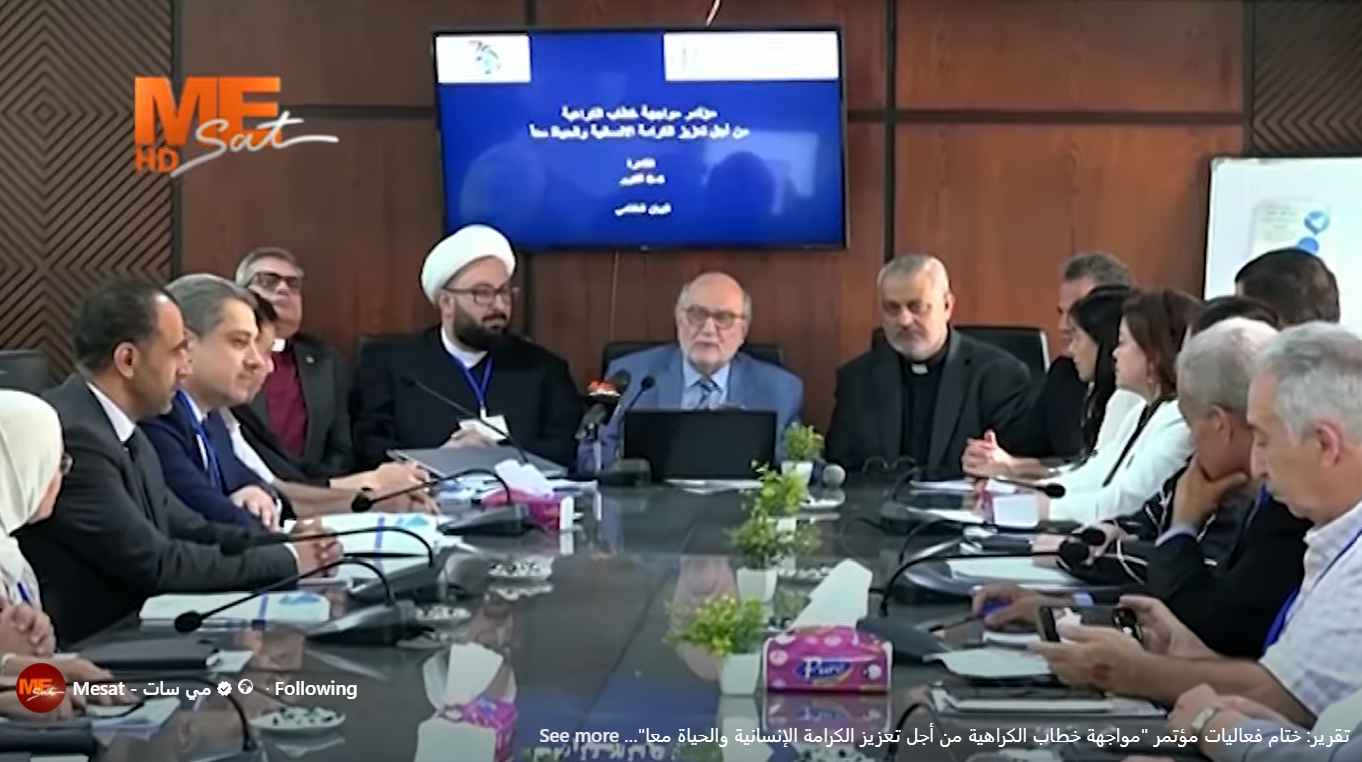
Video – Highlight on the Regional Conference: Countering Hate Speech to Promote Human Dignity and Coexistence
A Report Via “ME Sat” Channel
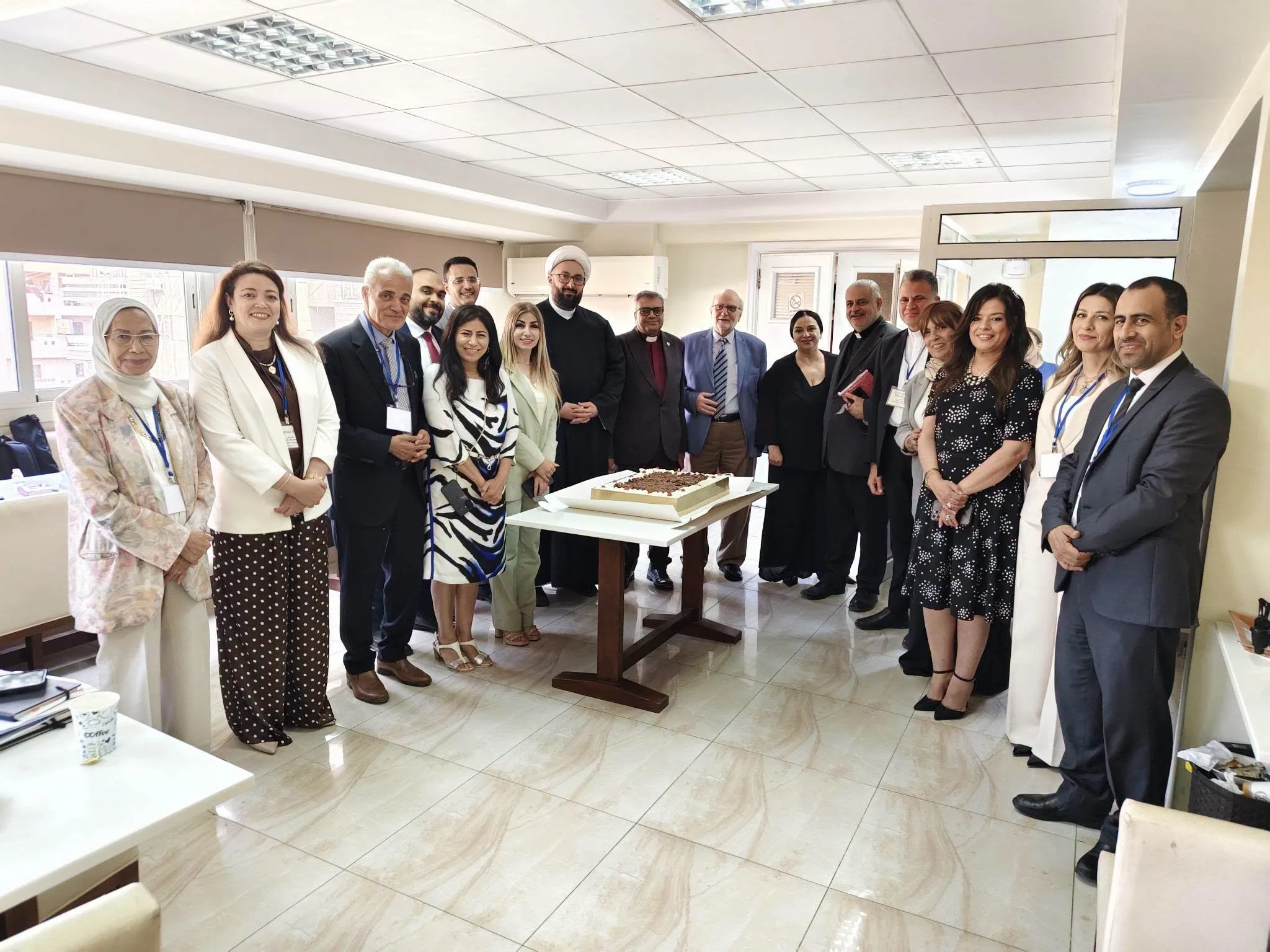
MECC Honors Media Partners in Egypt in Recognition of Their Role in Building Bridges of Love and Cooperation
As part of its efforts to strengthen joint cooperation and promote the values of love and communication, the Middle East Council of Churches (MECC) honored representatives of its media partners in Egypt, in recognition of their role in supporting its mission, highlighting its activities and initiatives, and contributing to the promotion of a culture of dialogue and rapprochement among members of the society.
This recognition reflects the Middle East Council of Churches’ belief in the importance of the media as a key partner in conveying messages of love and peace, highlighting initiatives that foster a spirit of cooperation and respect for diversity.
The Secretary General of the Middle East Council of Churches (MECC) Professor Michel Abs, expressed his appreciation for the efforts made by the partner media outlets in following the Council’s activities and covering its events. He emphasized that the relationship between Church institutions and the media is based on partnership, cooperation, and service to people and society.
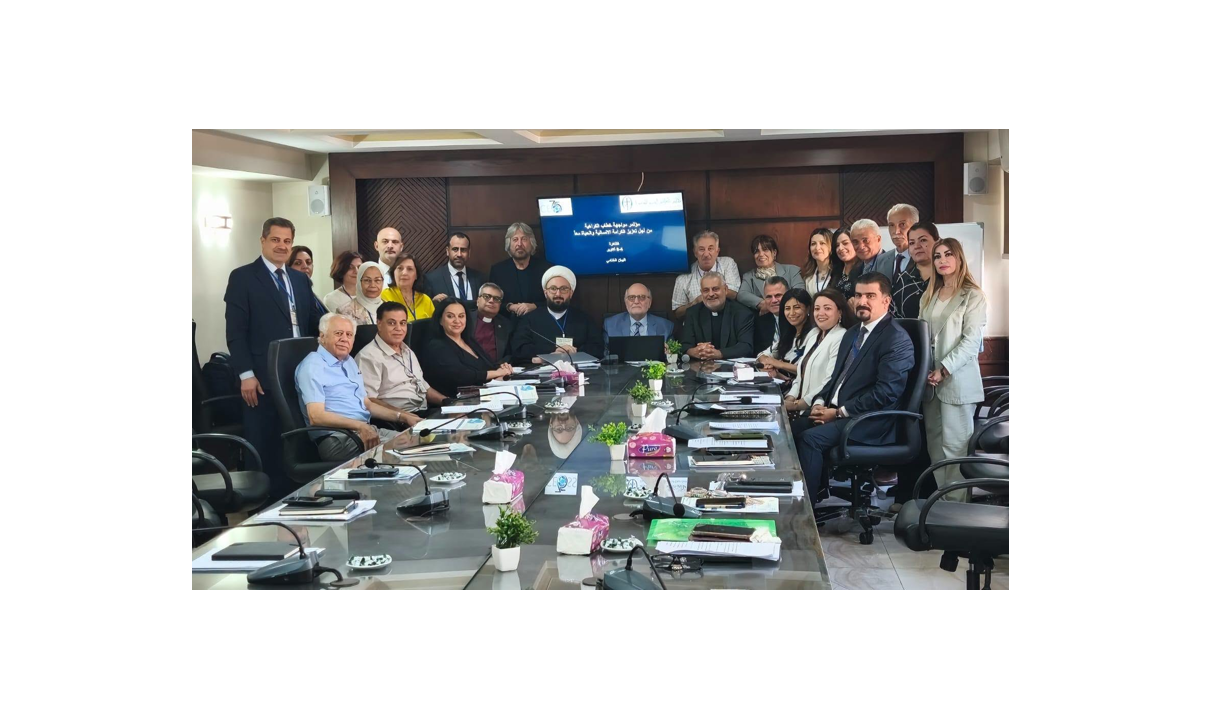
For Human Dignity and Living Together
Final Statement of the Cairo Charter for Countering Hate Speech and Protecting Human Dignity
The Middle East Council of Churches (MECC), in partnership with the Coptic Evangelical Organization for Social Services (CEOSS), held a regional conference in Cairo from 4 to 6 October 2026, under the title: “Countering Hate Speech to Promote Human Dignity and Coexistence.”
The conference brought together researchers, Religious Leaders, experts, and specialists from various fields to discuss the causes, forms, and consequences of hate speech, and to explore practical approaches and mechanisms that contribute to promoting human dignity, social cohesion, and peaceful coexistence.
Over three consecutive days, speakers and specialized researchers examined the phenomenon of hate speech from Religious, social, legal, educational, and media perspectives. Dedicated sessions also addressed the role of digital platforms and artificial intelligence in countering and reducing hate speech.
The conference further explored public policies and regional initiatives through a series of presentations and discussions on social cohesion…
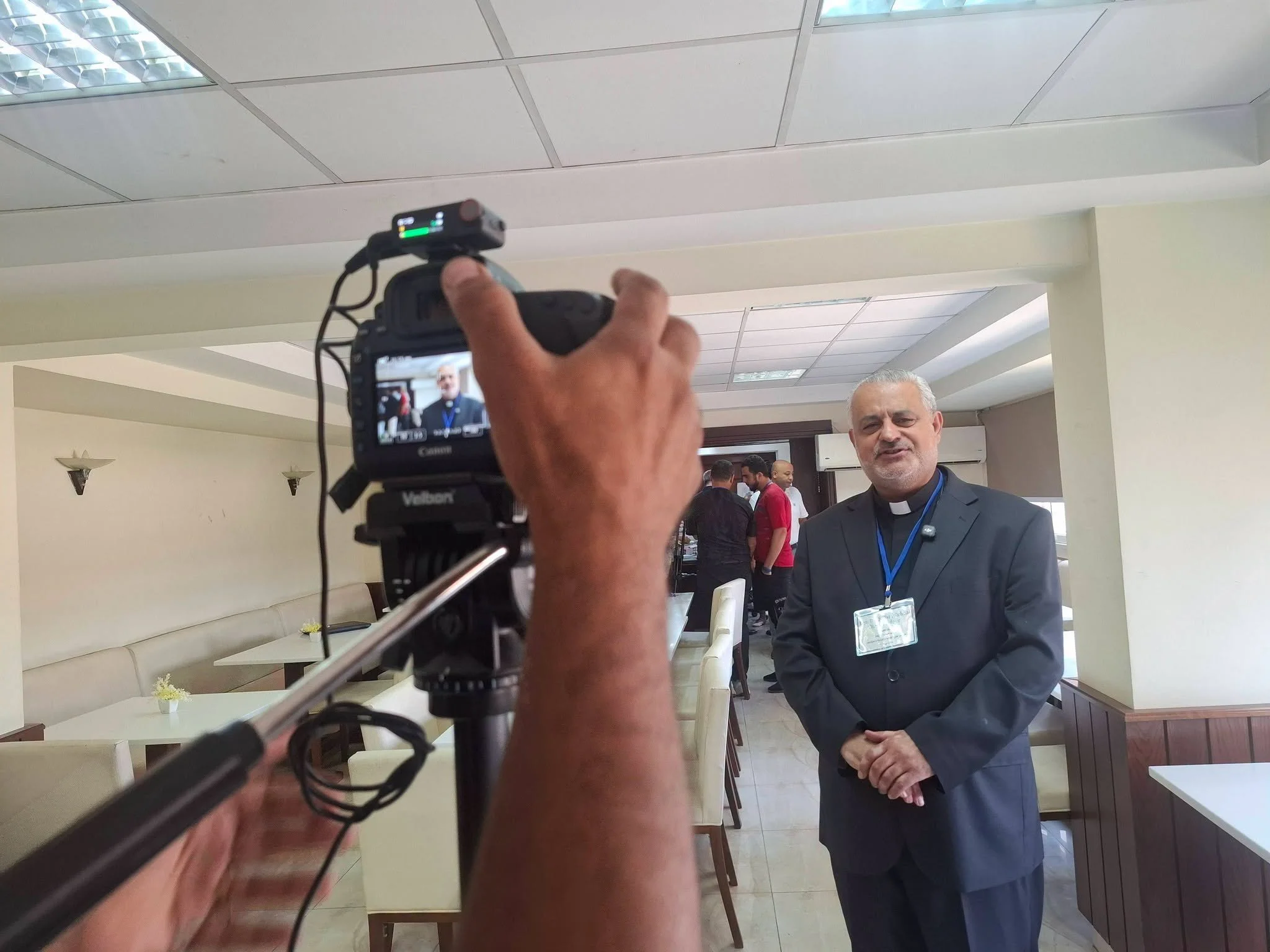
Father Dr. Rifat Bader: Let Us Disarm Words, Platforms, and Modern Technologies
Father Dr. Rifat Bader, Director of the Catholic Center for Studies and Media and Member of the Executive Committee of the Middle East Council of Churches (MECC), spoke during the conference “Countering Hate Speech to Promote Human Dignity and Coexistence” about the need to disarm discourse in today’s world. He stressed that weapons are no longer confined to wars and conventional arms. Words and digital platforms themselves can become tools of harm, exclusion, and hatred.
Father Bader said:
“Disarmament in today’s world is not limited to battlefields and conventional weapons. Words and digital platforms can also become weaponized. A word can kill, a gesture can hurt, and even digital blocking and exclusion can become tools of rejection rather than dialogue. Therefore, as Pope Leo XIV calls for, we need disarmed media, as well as disarmed modern technologies and artificial intelligence, that is, gentle tools that serve affection, dialogue, human connection, and mutual understanding among people.”
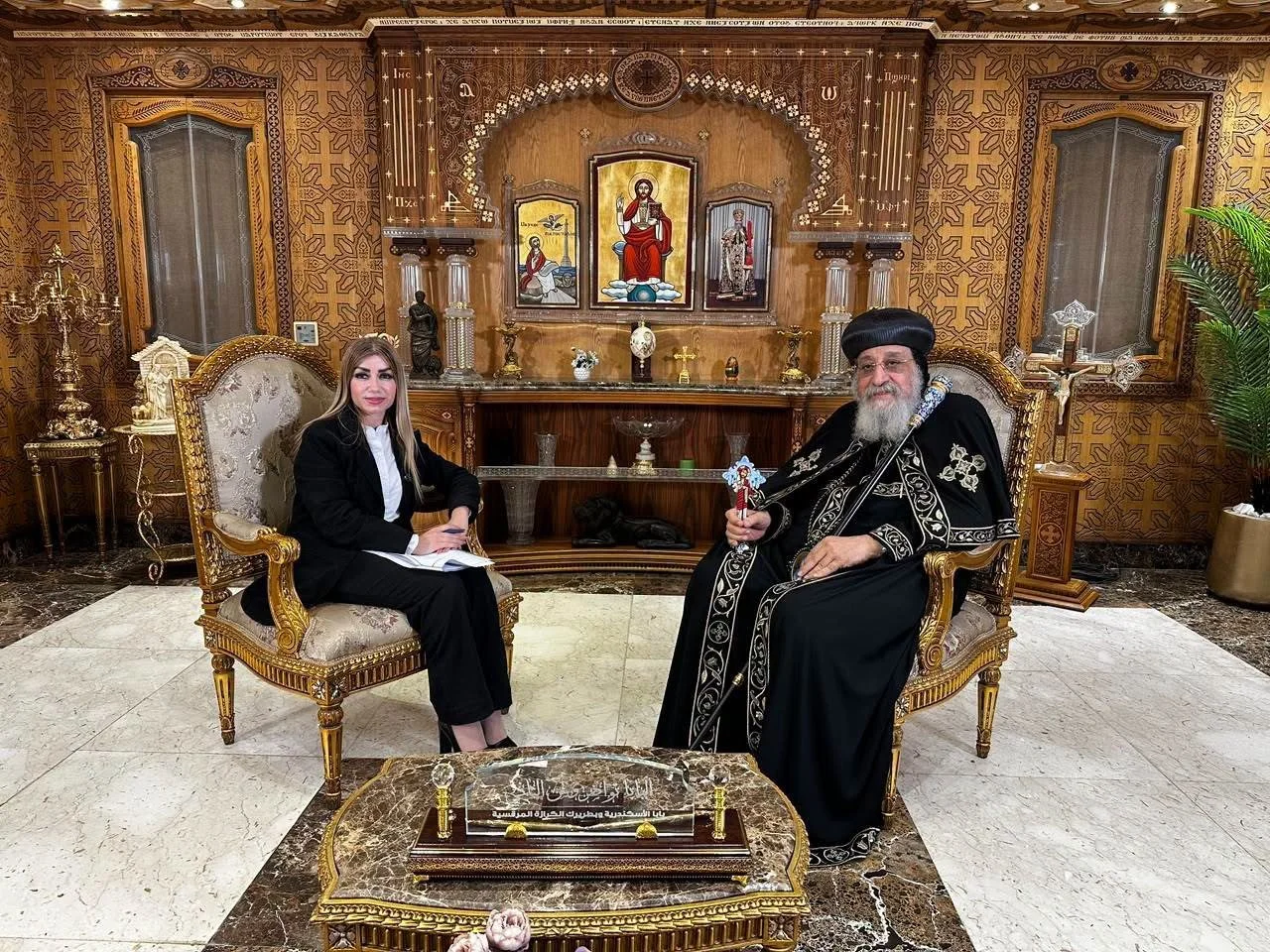
A Media Interview with His Holiness Pope Tawadros II at St. Mark’s Cathedral in Abbassia - Cairo
And a Commemorative Shield Presented by MECC to His Holiness’ Media Office
From the heart of St. Mark’s Cathedral in Abbassia - Cairo, and within the Coptic Orthodox Church, the Coordinator of Media and Church Relations at the Middle East Council of Churches (MECC) Journalist Lea Adel Maamary, conducted a media interview with His Holiness Pope Tawadros II, Pope of Alexandria and Patriarch of the See of St. Mark, as part of the “Leaders and Positions” program.
At St. Mark’s Cathedral, which is closely connected to the history of the Coptic Church and the collective memory of the Egyptian people, Journalist Maamary raised with His Holiness a many issues of concern to citizens, families, youth, and the Church. She also explored his vision for the future of the Church, its mission in Egypt and the diaspora, and its role in promoting love, peace, and national unity.
She also listened to His Holiness’ views on various issues brought by the new era, foremost among them the impact of social media and digital media on individuals, ways of protecting younger generations from rumors and polarization, and how the Church can preserve its identity and faith while remaining open to the wider world.
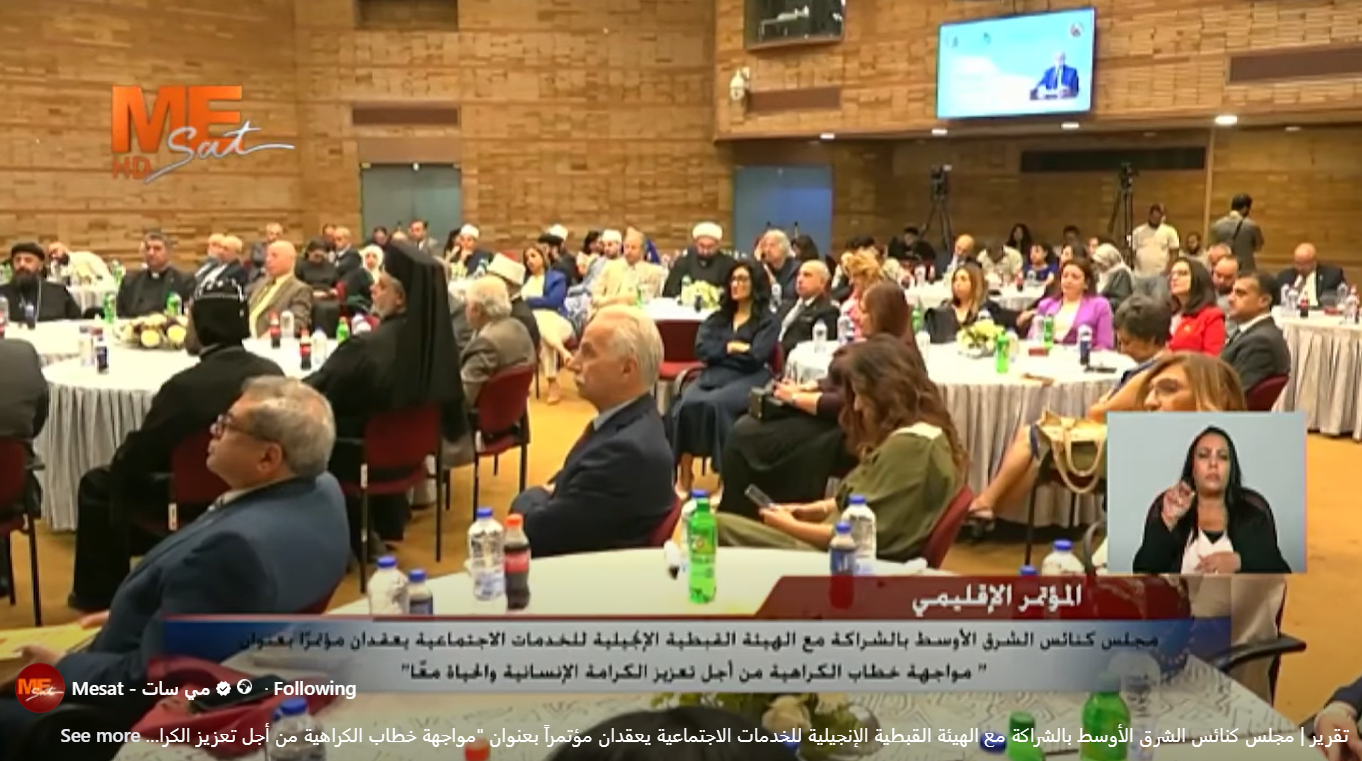
Video – The Middle East Council of Churches, in partnership with the Coptic Evangelical Organization for Social Services, holds a conference
“Countering Hate Speech to Promote Human Dignity and Coexistence”
A Report Via “ME Sat” Channel
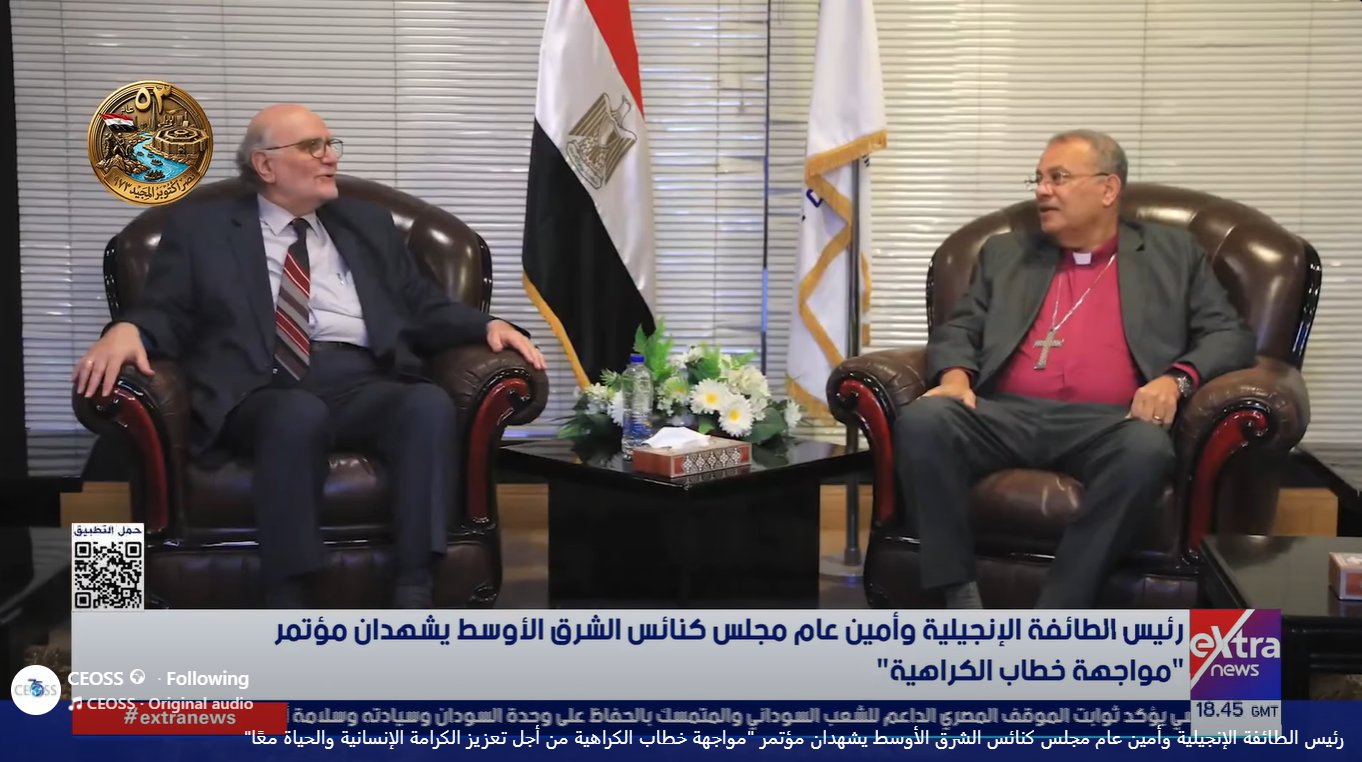
Video - Head of the Evangelical Community and Secretary General of the Middle East Council of Churches Attend
Conference on “Countering Hate Speech to Promote Human Dignity and Coexistence”
A Report Via "Extra News" Channel
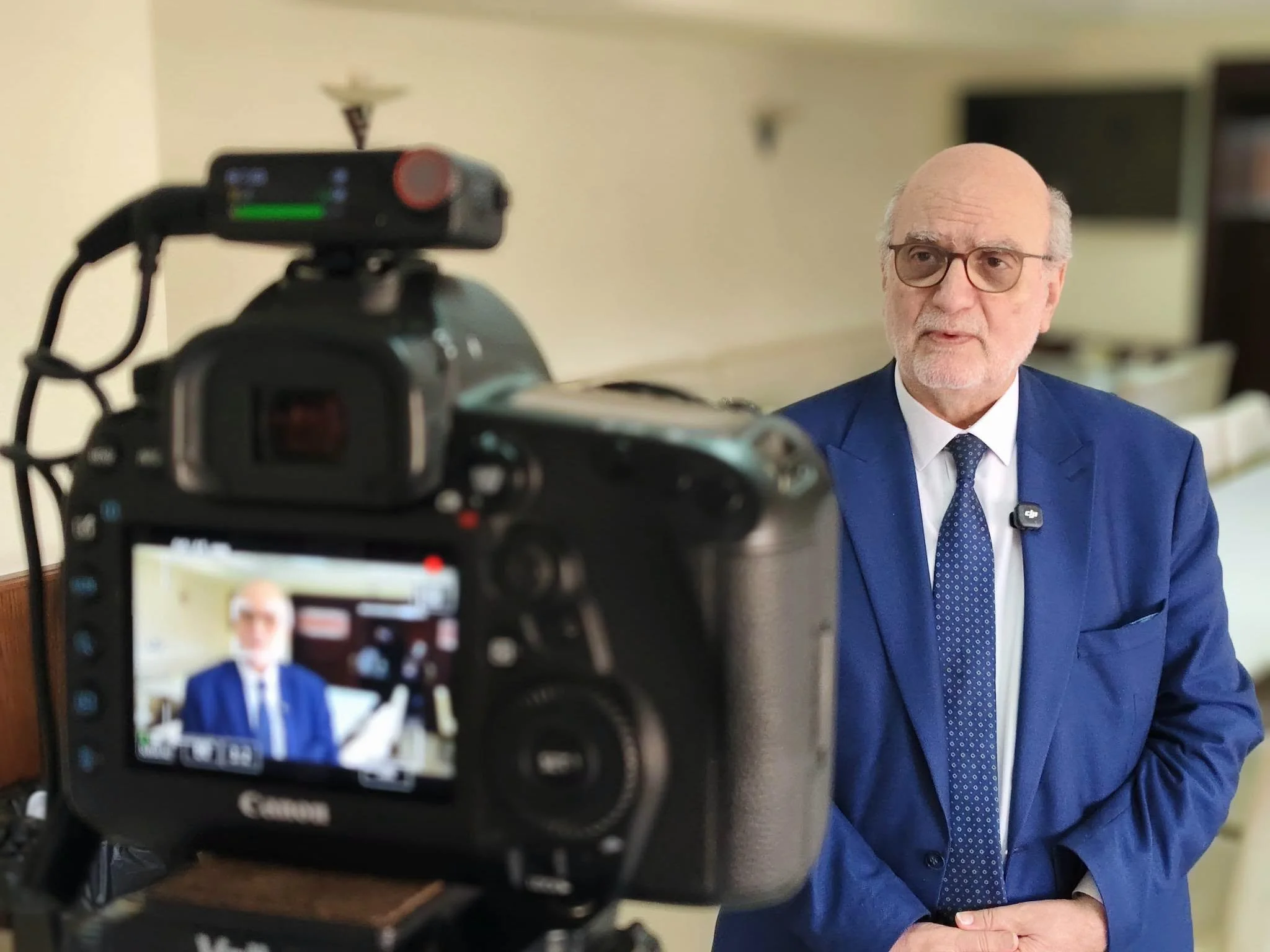
Effective Media Partnership in Covering the Conference on Countering Hate Speech to Promote Human Dignity and Coexistence, in Cairo
Within the framework of constructive media cooperation and the strong partnership between the media department of the Middle East Council of Churches (MECC) and its various media partners, joint media efforts play an important role in following and covering the Conference on Hate Speech. This collaboration reflects a shared commitment to highlighting issues of concern to our societies while promoting a culture of dialogue, respect, and acceptance of others.
This partnership has been demonstrated through close cooperation and coordination among media teams across all aspects of the coverage. It includes preparing news stories and press reports, covering the conference’s key sessions and discussions, providing photo and video coverage and documenting its activities, as well as conducting interviews with participants and speakers to highlight their views and perspectives on hate speech and ways to counter it.
This cooperation underscores the fact that the media, through its various institutions and platforms, is an essential partner in disseminating positive messages and strengthening communication among the different components of society, particularly on issues that require collective efforts and the creation of spaces for dialogue and mutual understanding.
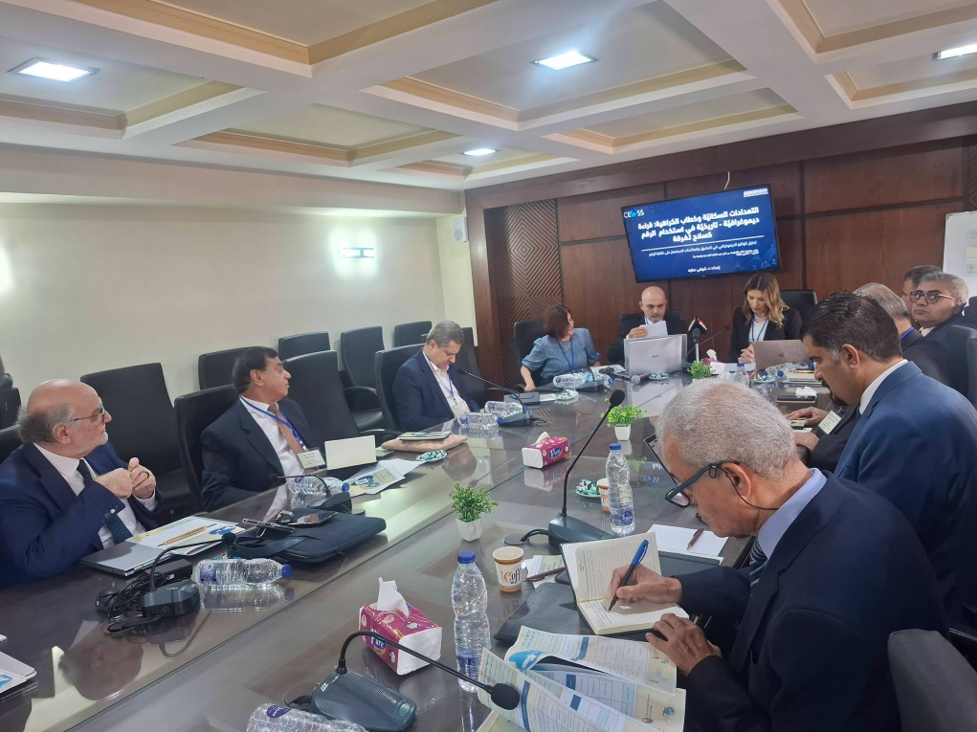
Regional Conference Opens in Cairo: Countering Hate Speech to Promote Human Dignity and Coexistence
The sessions of the regional conference organized by the Middle East Council of Churches (MECC), in partnership with the Coptic Evangelical Organization for Social Services (CEOSS), begun in Cairo.
The conference’s opening session started with a welcoming word delivered by the Secretary General of the Middle East Council of Churches (MECC) Professor Michel Abs.
Then, two presentations were delivered: the first one by Dr. Abdul-Hussain Shaban, was entitled “Hate Speech: A Vision of Its Essence,” while the second, one by Dr. Samir Morcos, was entitled “Hate Speech: A Coercive Act and a Hateful Society.”
Afterwards, Dr. Lubna Bayouk presided over the first session, which was held under the main theme “The Value-Based and Religious Framework for Countering Hate Speech.”
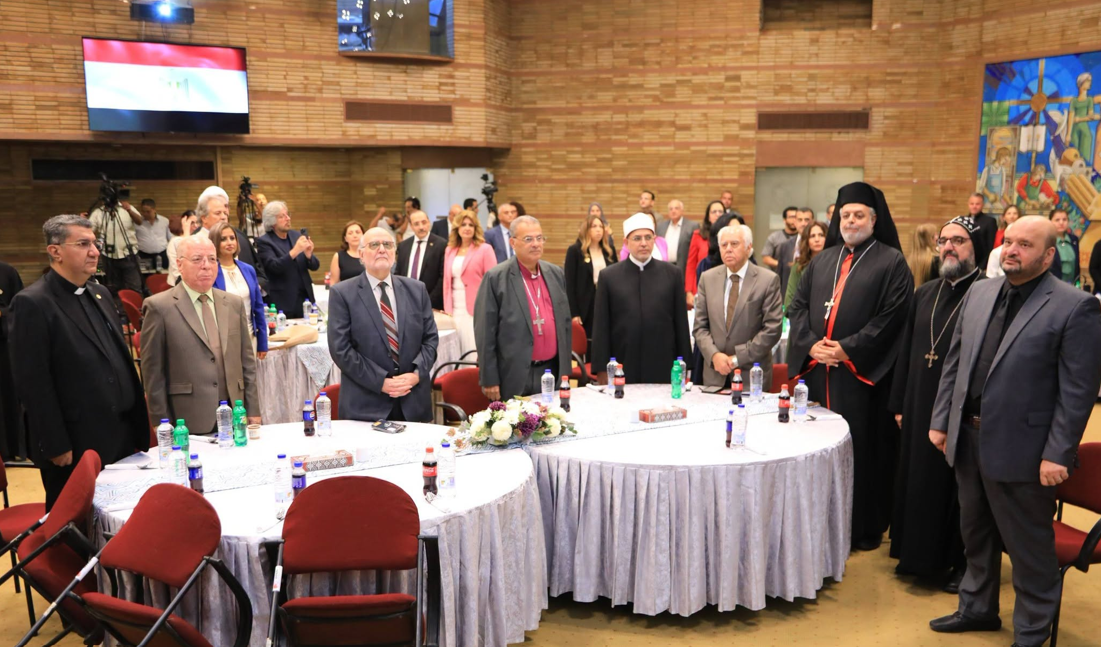
Head of the Evangelical Community and Secretary General of the Middle East Council of Churches Attend
Reverend Dr. Andrea Zaki: Confronting hate speech begins with rebuilding awareness and strengthening the value of the human being
We need an alternative discourse based on dialogue, respect, compassion, and acceptance of diversity
Professor Michel Abs: Egypt was chosen to host the conference because of its status as a land of encounter and unity
The region is suffering not only from wars and armies, but also from a war of narratives and a war of words
Cairo, October 4, 2026
Reverend Dr. Andrea Zaki, President of the Evangelical Community in Egypt and President of the Coptic Evangelical Organization for Social Services (CEOSS), participated, on Sunday, in the regional conference “Countering Hate Speech to Promote Human Dignity and Coexistence.” The conference was organized by CEOSS in cooperation with the Middle East Council of Churches (MECC) at the CEOSS’ headquarters in Cairo, with the participation of a distinguished group of Religious and intellectual leaders, researchers, and thinkers from Egypt and several Arab countries.