
MECC
Churches And Preparedness
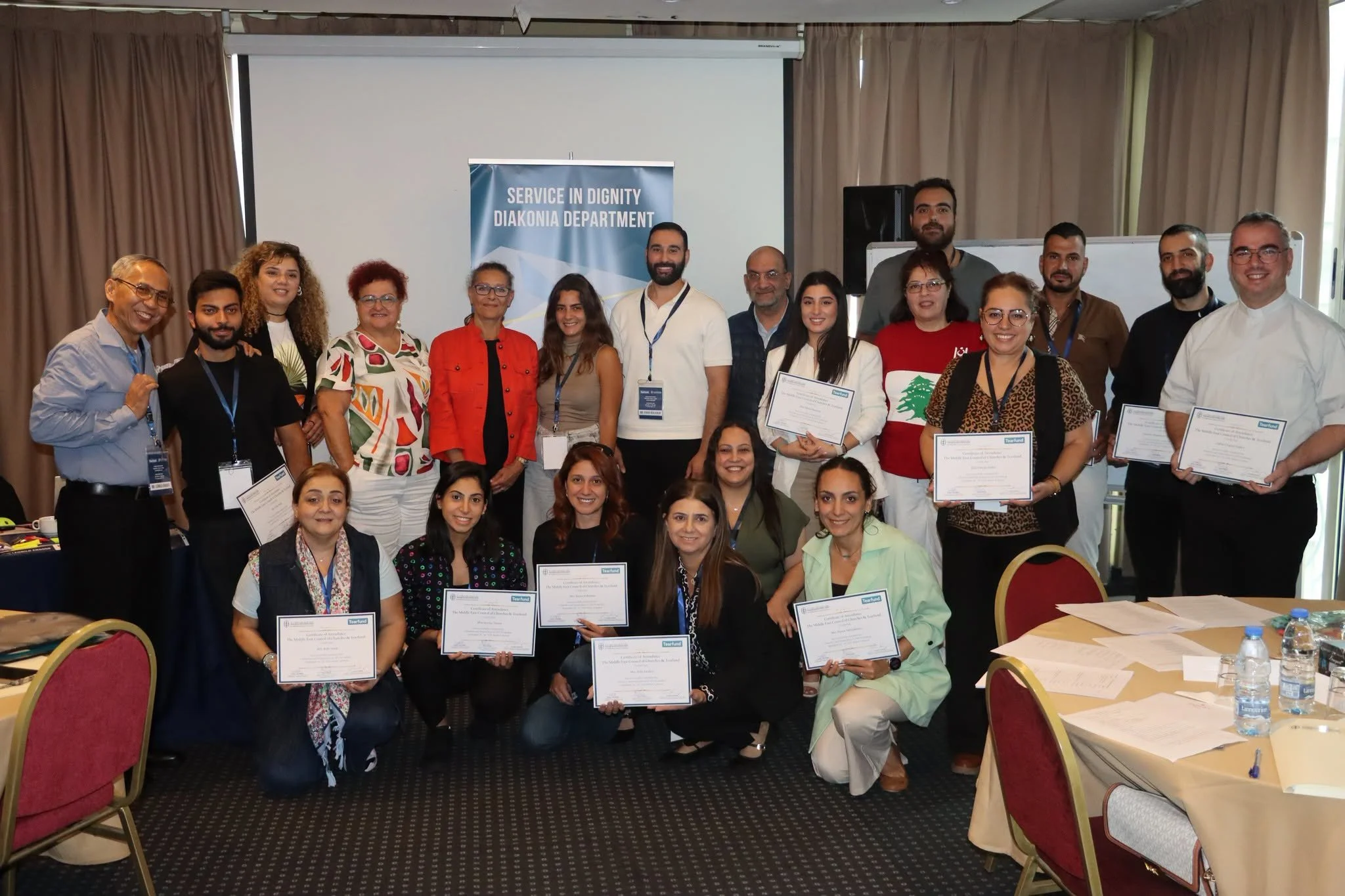
An Ecumenical Workshop Organized by the Middle East Council of Churches and Tearfund in Beirut
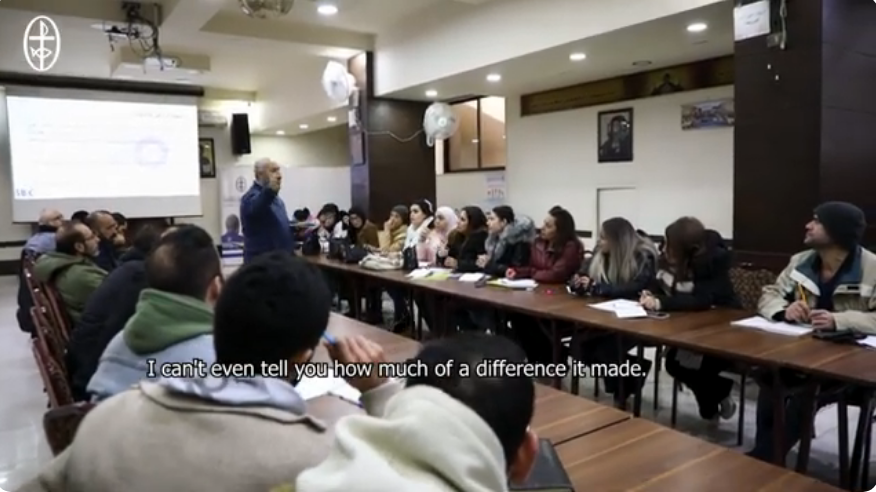
As part of efforts aimed at strengthening the preparedness and capacity of Churches to anticipate and respond to crises amidst the challenges that Lebanon is facing, the Diakonia and Social Service Department, Lebanon’s Office, at the Middle East Council of Churches (MECC), in partnership with Tearfund, held a training workshop on “Churches And Preparedness” from 28 to 30 September 2026 in Beirut. The workshop brought together an Ecumenical group of clergy and laypeople representing various Church Families.
The workshop was facilitated by a specialized trainer from Tearfund, and focused on the role of the Church in responding to crises and challenges affecting communities, as well as ways to strengthen the skills of Church workers. It addressed the various stages of disaster risk management, from prevention, risk reduction, and preparedness to response and recovery.
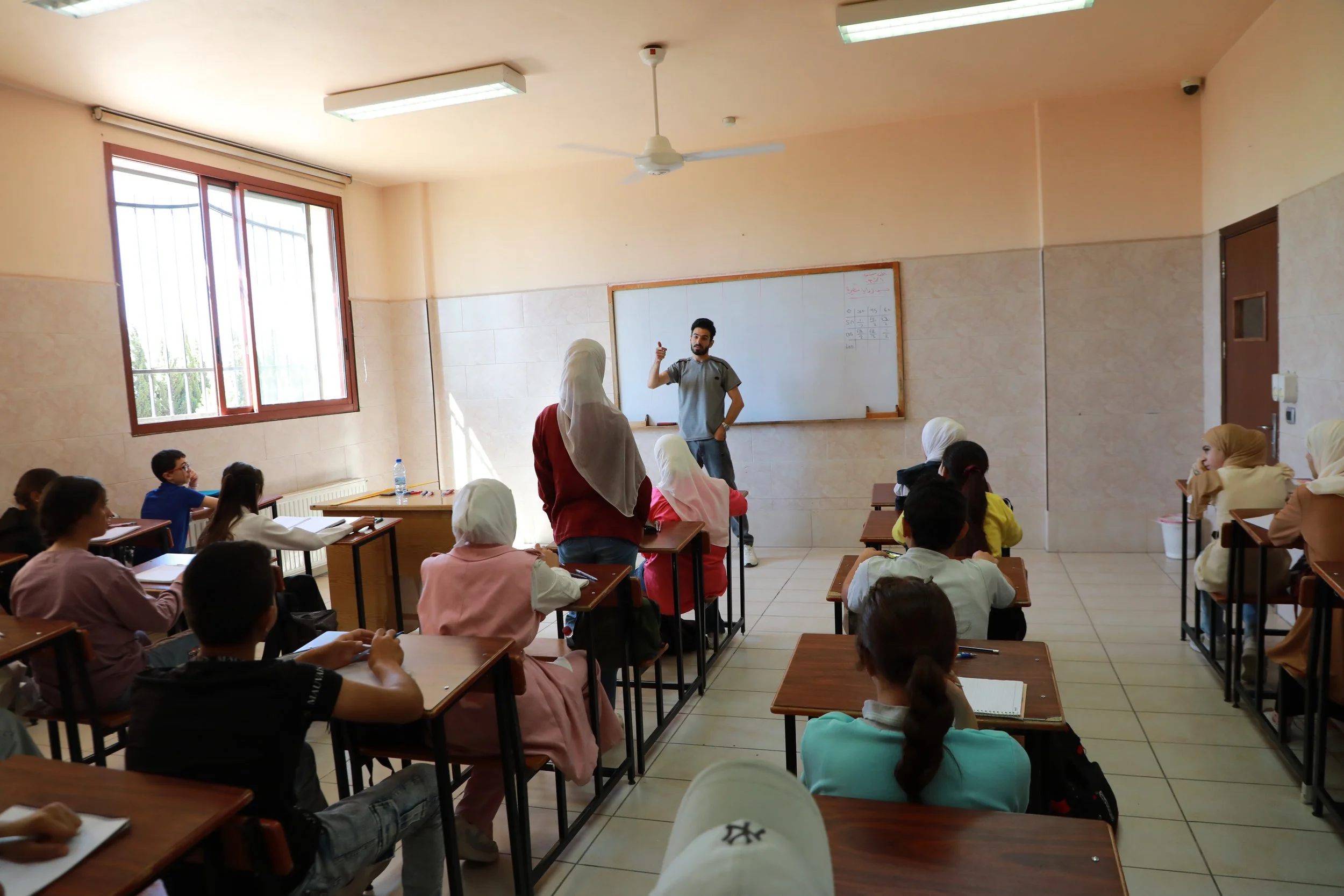
MECC Implements Remedial Classes to Support 9th Grade Students in Saidnaya
The Middle East Council of Churches (MECC), through its Diakonia and Social Service Department – Syria’s Office, implemented remedial classes for 9th grade students at “Our Lady of Saidnaya Monastery Orphanage School”.
200 male and female students from Saidnaya and the surrounding towns, benefited from the remedial classes, which aimed to support students and help them prepare for the upcoming academic year, as well as equip them to take the 9th grade certificate examination with confidence.
The remedial classes provided students with the essential curriculum knowledge needed. Students also received school kits, including a school bag and stationery.
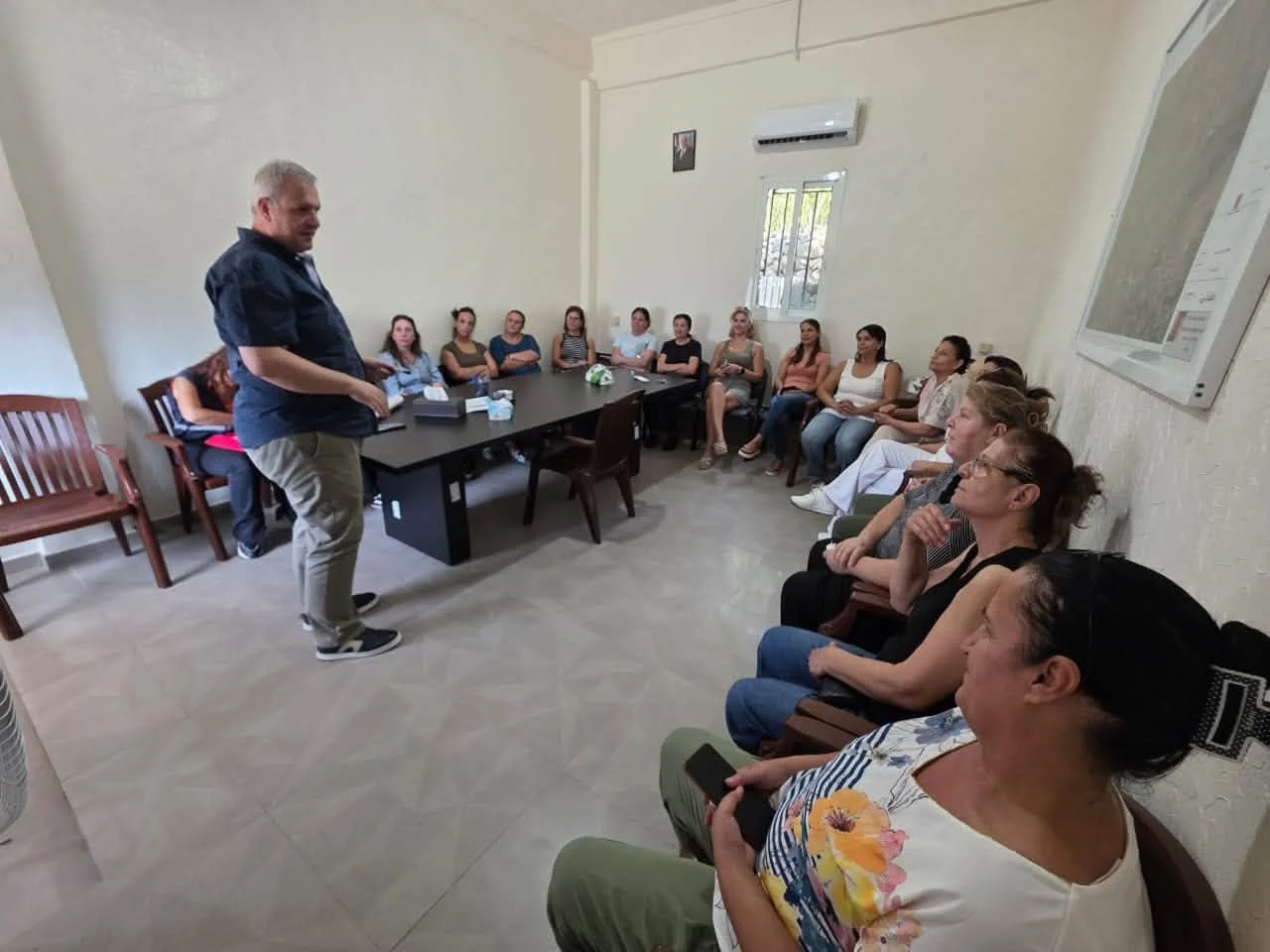
A Meeting on Communication with Others, Held by the Middle East Council of Churches and the Municipality of Kfarhara - Lebanon
As part of the partnership and cooperation program between the Municipality of Kfarhara and the Middle East Council of Churches (MECC), a meeting entitled “How to Communicate with Others” was held at the municipal building, under the supervision of Mr. George Rizk.
The meeting included discussions and interactive activities with women from the town, focusing on the importance of positive communication, understanding others, and promoting dialogue and cooperation among members of the community.
The meeting was distinguished by the women’s active participation and engagement, creating an atmosphere of dialogue and exchange of ideas that contributes to strengthening women’s role and developing their social and personal skills.
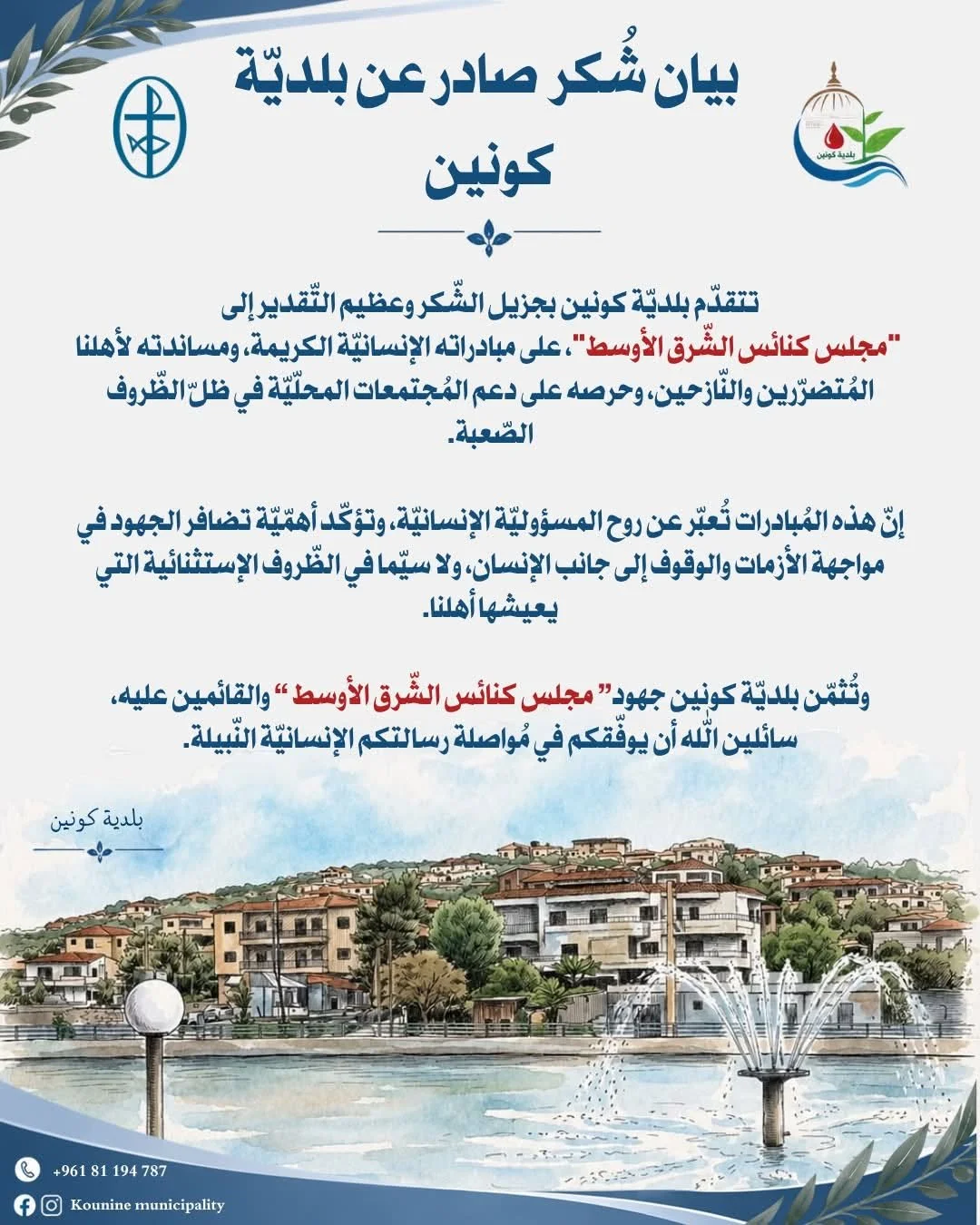
A Thank You Statement to MECC Issued by the Municipality of Kounin - Lebanon
The Municipality of Kounin extends its sincere thanks and deepest appreciation to the Middle East Council of Churches (MECC) for its generous humanitarian initiatives, its support for our affected and displaced residents, and its commitment to supporting local communities amidst these difficult circumstances.
These initiatives reflect a spirit of humanitarian responsibility and underscore the importance of collective efforts in confronting crises and standing by people, particularly during the exceptional circumstances our community is experiencing.
The Municipality of Kounin highly appreciates the efforts of the Middle East Council of Churches and its leadership, and we pray that God may grant you success as you continue your noble humanitarian mission.
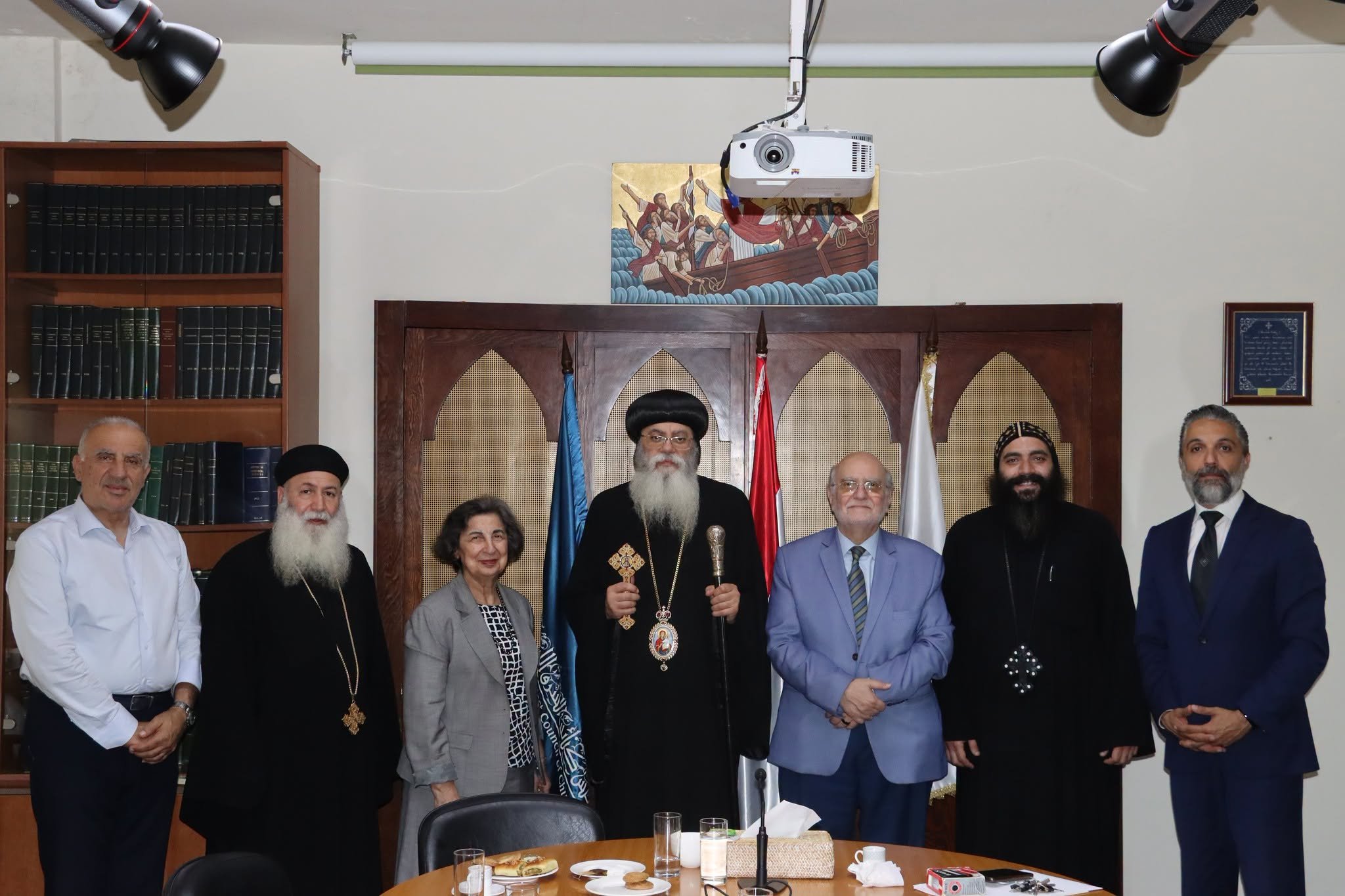
The Middle East Council of Churches and Anba Abraam Charity in Jerusalem Sign Cooperation Agreement in Beirut
Beirut – September 18, 2026
The Middle East Council of Churches (MECC) and Anba Abraam Charity in Jerusalem signed a cooperation agreement aimed at strengthening coordination and joint efforts in the humanitarian and Ecclesiastical fields, supporting initiatives and programs that serve local communities, and enhancing Christian communication, presence, and role in the Middle East.
The agreement was signed by His Grace Anba Antonios, Metropolitan of Jerusalem and the Near East for the Coptic Orthodox Church, and President of the Middle East Council of Churches (MECC) for the Eastern Orthodox Family, and President of Anba Abraam Charity in Jerusalem, together with the MECC Secretary General Anba Abraam Charity. The signing took place on September 18, 2026, at the MECC headquarters in Hamra, Beirut.
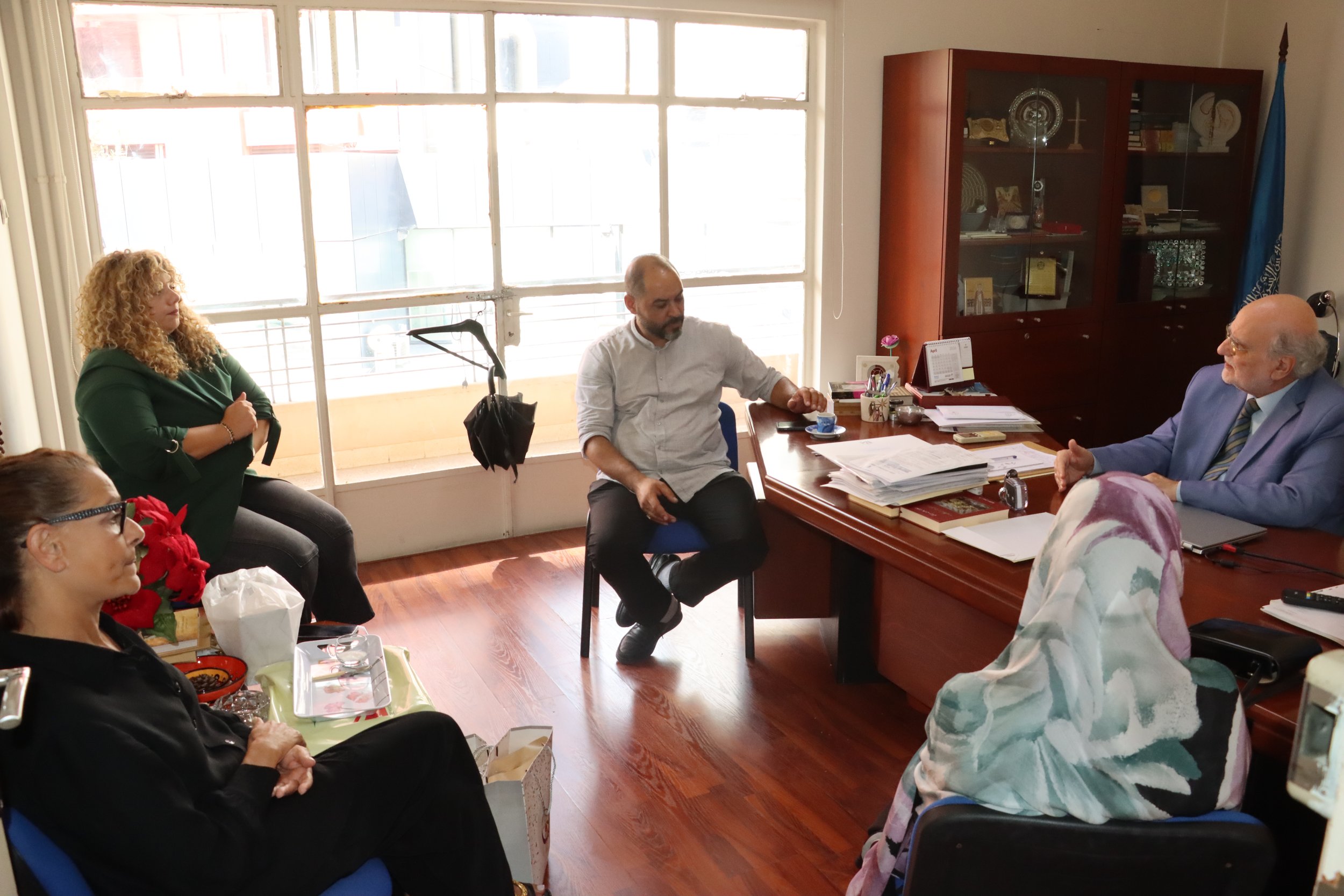
The Mayor of Kounin in the South of Lebanon Mr. Khalil Al-Dabak Visits the MECC Secretary General Professor Michel Abs
The Secretary General of the Middle East Council of Churches (MECC) Professor Michel Abs, received the Mayor of Kounin in the South of Lebanon Mr. Khalil Al-Dabak, accompanied by a delegation from the Municipality, on Friday, September 18, 2026, at the MECC headquarters in Beirut.
Attendees were the Director of the Lebanon’s Office at the MECC Diakonia and Social Service Department Ms. Nina Hallak, and the Coordinator of the Diakonia Department in the South of Lebanon Ms. Sara Hasrouni.
During the visit, Mr. Al-Dabak expressed his thanks and appreciation to the Council, particularly to its Diakonia and Social Service Department – Lebanon’s Office, for the assistance it has provided to residents of the town of Kounin, as well as to families and individuals who were forced to flee the town, and to displaced people who sought refuge there amidst the current circumstances.
A Delegation from Kerk in Actie (KIA) Visits MECC in Beirut
Discussions Focus on Strengthening Future Partnership
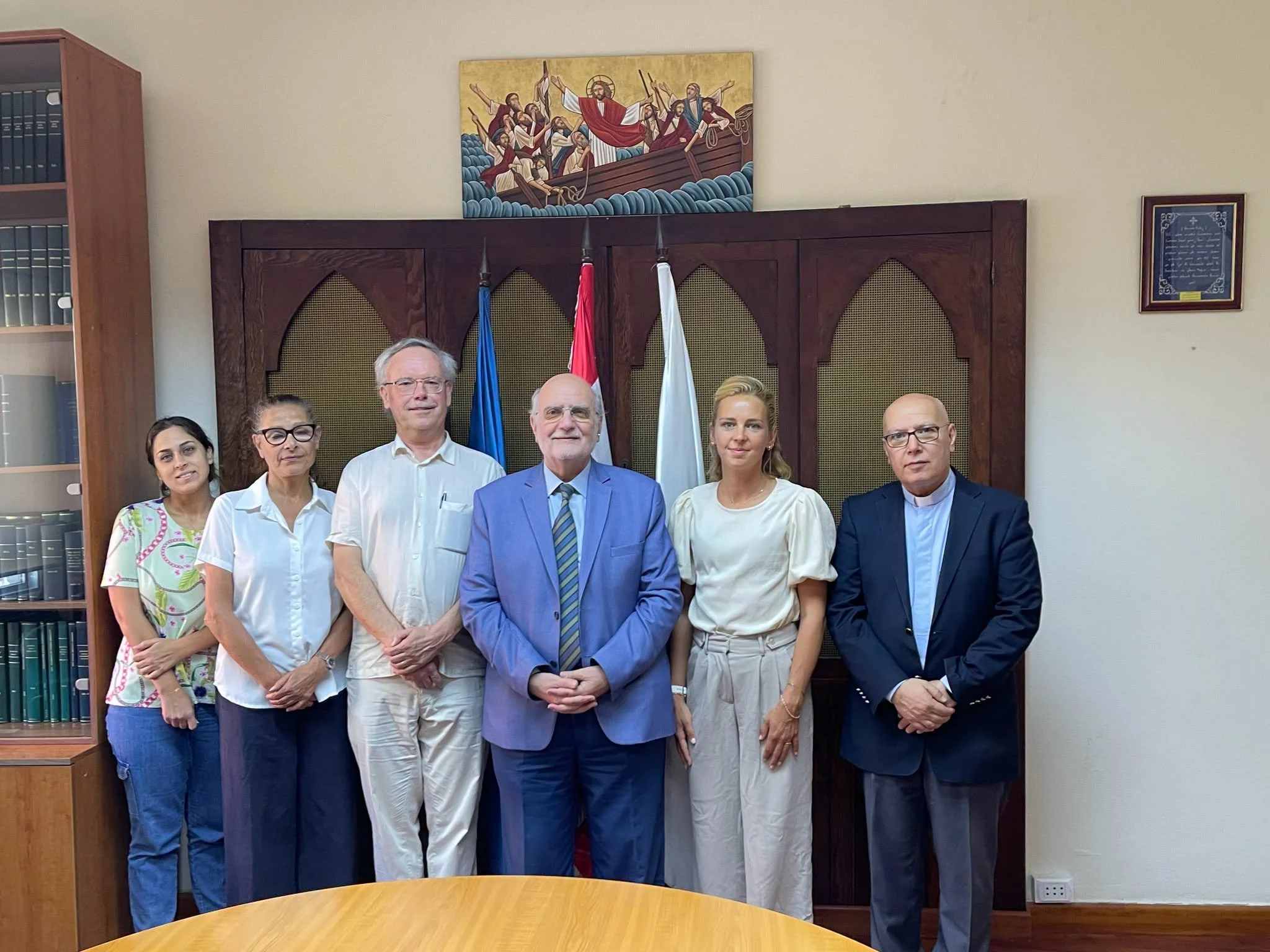
The Secretary General of the Middle East Council of Churches (MECC) Professor Michel Abs, welcomed, on Wednesday 9 September 2026, a delegation from Kerk in Actie (KIA), including Mr. Dick Loendersloot, the new KiA's Humanitarian Representative for the Africa Region, and Mrs. Kirsten Kok, the new KiA's Humanitarian Representative for the MENA Region. They also visited the Council on Friday, September 11, 2026, at the MECC General Secretariat offices in Beirut.
The visit aimed to strengthen the existing partnership between KIA and the MECC. The delegation met with the Secretary General Professor Michel Abs, in addition to holding meetings with many colleagues from the MECC various departments. The visit also provided an opportunity to meet Mrs. Kirsten Kok, who has recently assumed her new responsibility, succeeding Mr. Dick Loendersloot.
100 Fodder Kits to Support Cattle Breeders in Rural Dara’a
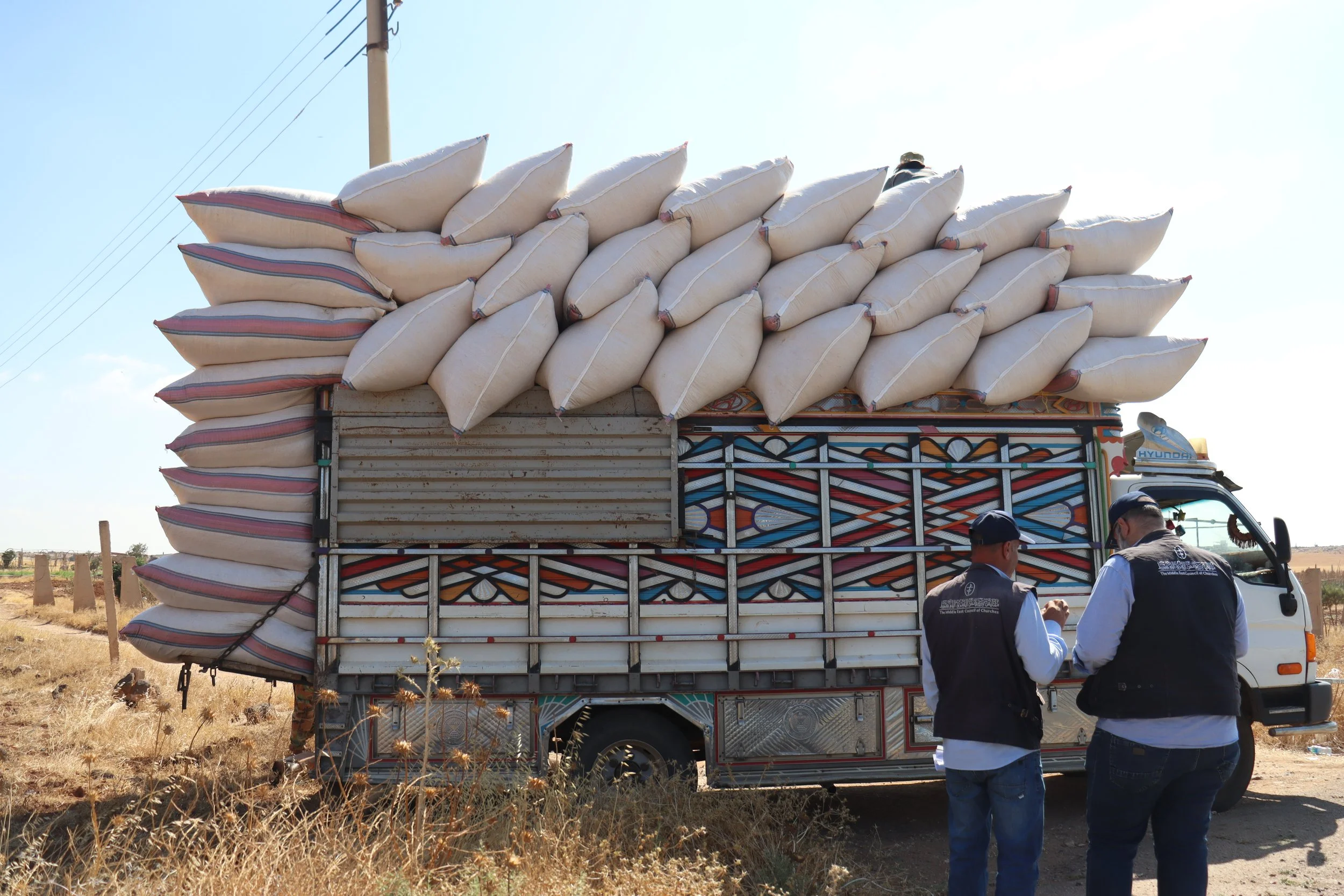
As part of its efforts to strengthen the livestock sector and enhance livelihoods and food security in rural areas, the Middle East Council of Churches (MECC), through its Diakonia and Social Service Department – Syria’s Office, continues to support cattle breeders.
In this context, 76 cattle breeders in Taybeh village, in rural Dara’a, were supported through the distribution of 100 fodder kits sufficient to 111 cows. Each kit consists of 900 kilograms of pelleted fodder fortified with mineral salts and 720 kilograms of hay, in addition to providing veterinary services, as well as medicines and vaccines for the livestock.
The beneficiaries also attended training sessions on proper cattle care, ways to manage common livestock diseases, and optimal nutrition practices to improve the quality and quantity of milk production.
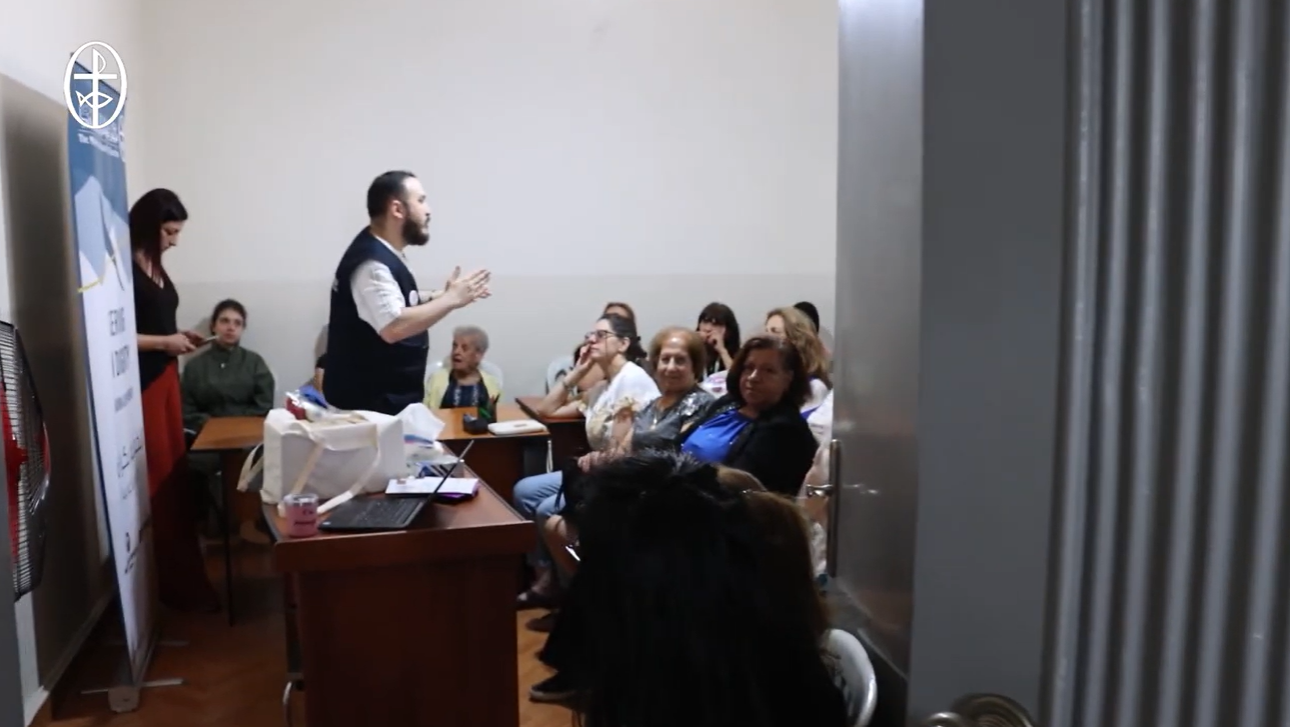
Video – MECC Organizes, Through Its Diakonia and Social Service Department, Lebanon’s Office
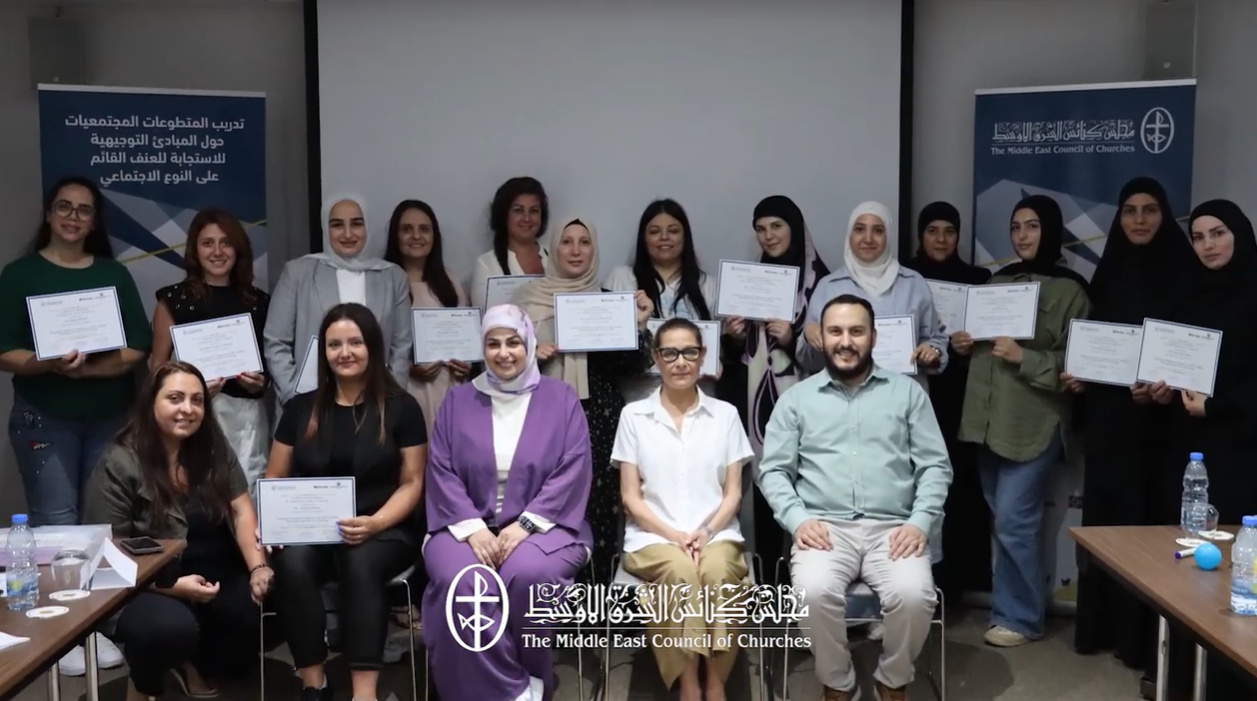
Awareness Sessions for Displaced People and Women from Host Communities
Brave Hearts
A Safe Space for Children to Develop their Skills and Make Positive Use of their Time
A Summer Club Organized by MECC in Syria
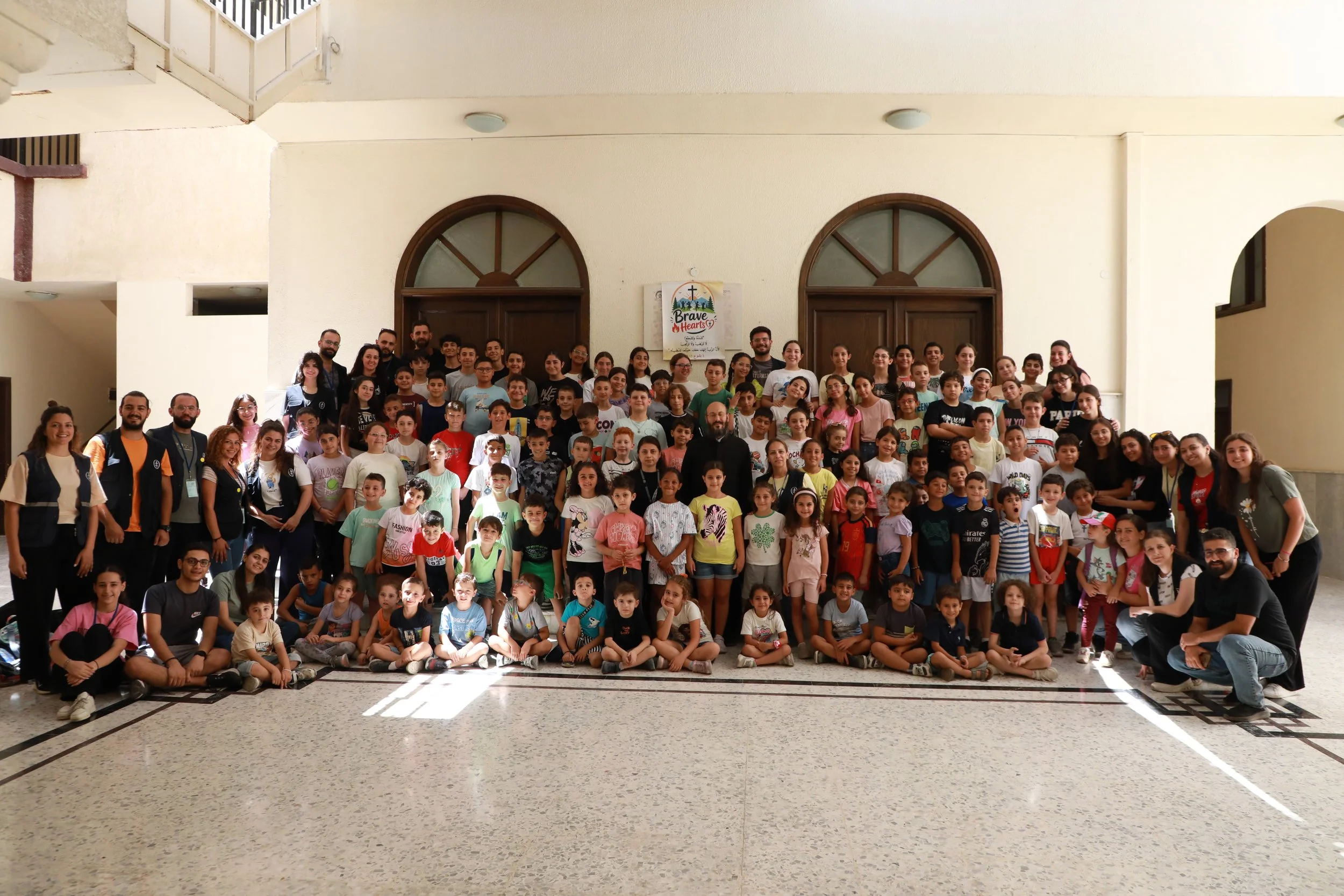
The Middle East Council of Churches (MECC), through its Diakonia and Social Service Department – Syria’s Office, organized a summer club for 102 children, aged between 5 and 14, in the city of Erbin in Rural Damascus Governorate.
The summer club, titled “Brave Hearts” included a wide range of interactive activities, including football, basketball, other physical exercises, theatre, choir, drawing, and handicrafts.
It also featured cognitive activities such as Rubik’s Cube and science experiments, as well as household skills, basic first aid principles, and purposeful recreational trips.
The club also offered computer skills courses for children aged 13 to 14 years old, in addition to life skills sessions for children of different age groups, with the aim of strengthening their resilience in dealing with themselves and their surroundings.
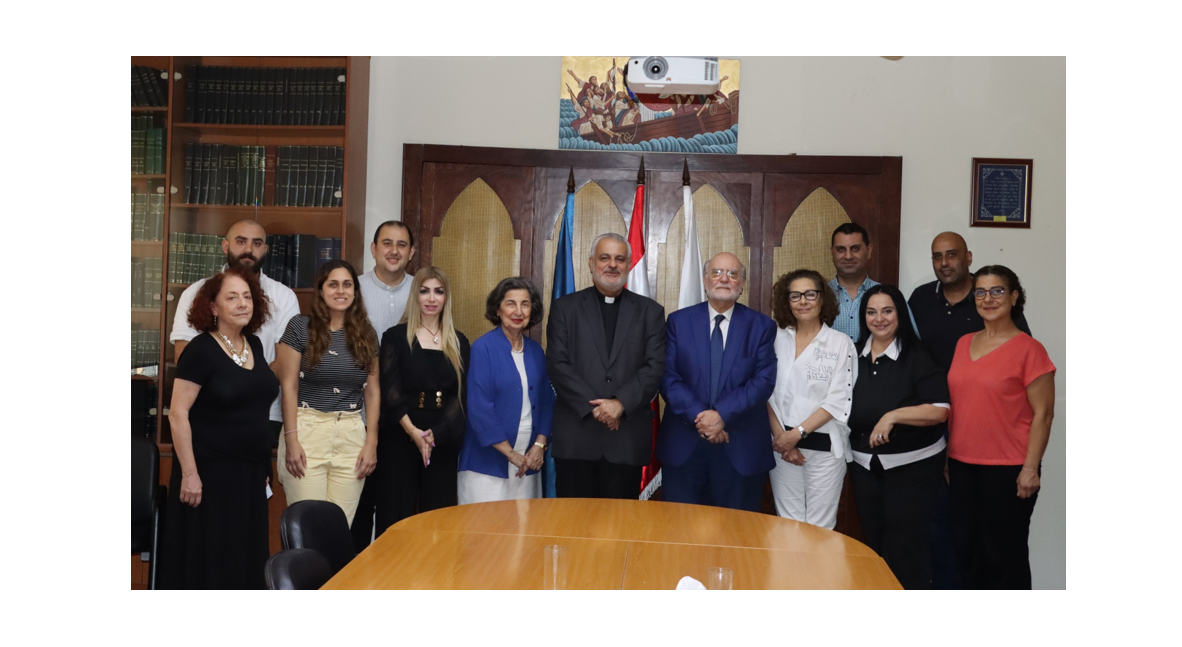
Father Dr. Rifat Bader Visits the Middle East Council of Churches in Beirut
Emphasis on the Need to Strengthen Media Cooperation
Father Dr. Rifat Bader, General Director of the Catholic Center for Studies and Media in Jordan, Publisher of “Abouna” Website, and Representative of the Executive Committee of the Middle East Council of Churches (MECC) for Media Affairs, visited the Council’s headquarters in Beirut on Wednesday, August 19, 2026. He was received by the MECC Secretary General Professor Michel Abs, and the General Secretariat team, in the presence of the Journalist Rafi Sayegh, from “Abouna” Website.
The visit took place as part of Father Bader’s participation in a seminar organized by MECC entitled “Ecumenical Media: Mission and Ethics,” where he delivered a lecture addressing the subject of Ecumenical media and the importance of its role today in serving the Church and society.
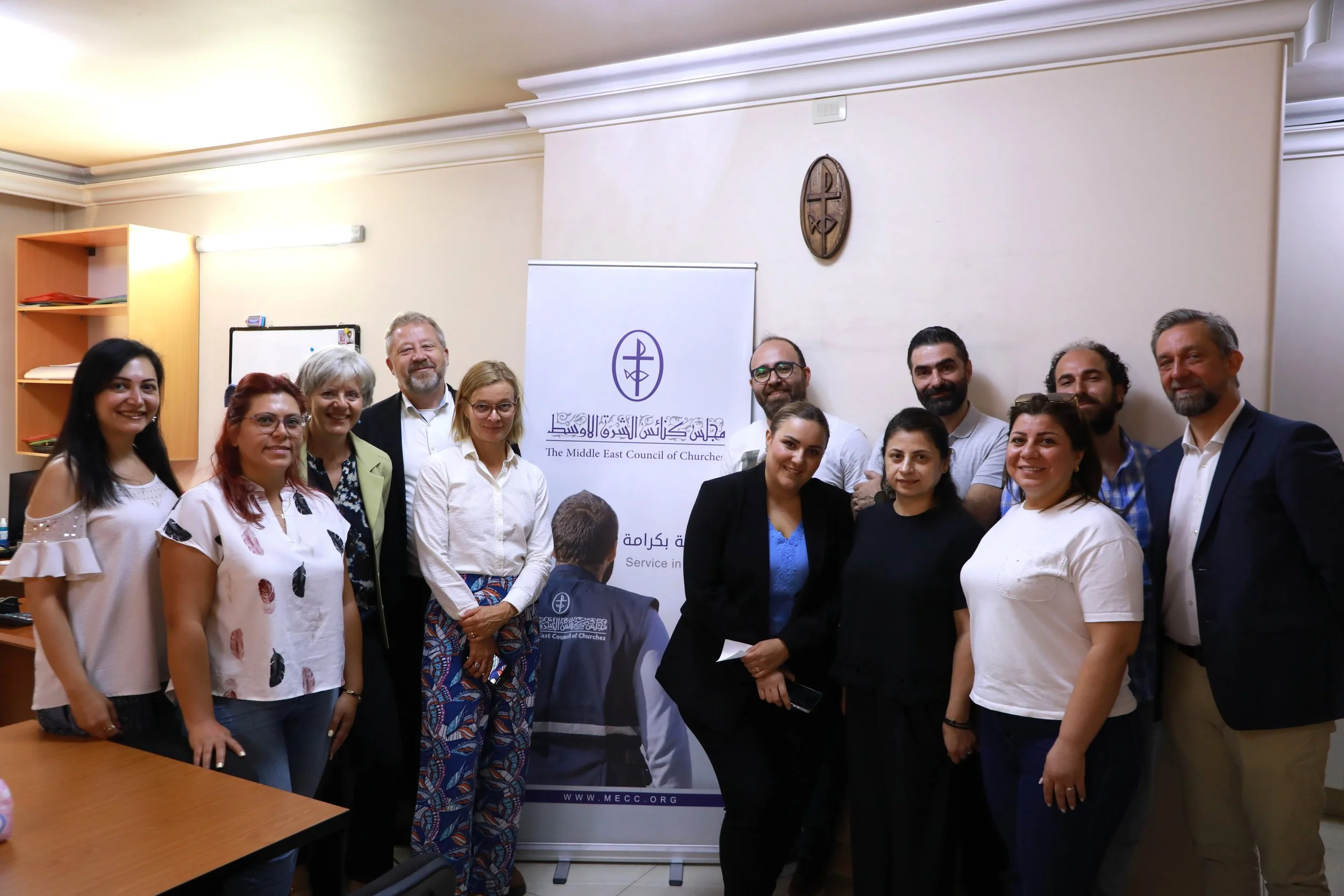
Danmission Delegation Visits MECC in Damascus to Strengthen Cooperation
A team from Danmission visited Diakonia and Social Service Department office of the Middle East Council of Churches (MECC), in Damascus, on the 10th of August. The visit included an introductory session during which MECC team presented an overview of the projects they implemented in Damascus, Rural Damascus, as well as in Dara’a Governorate, in addition to programs and projects carried out in cooperation between the two organizations.
The MECC team also provided an overview of the mechanisms and channels used to communicate transparently with beneficiaries, including the work of the Complaints and Response Mechanism (CARM), as well as Monitoring and Evaluation (M&E) mechanisms that accompany all stages of program implementation.
MECC and Danmission team also discussed the importance of the partnership between them in supporting the most vulnerable groups and contributing to meeting their basic needs.
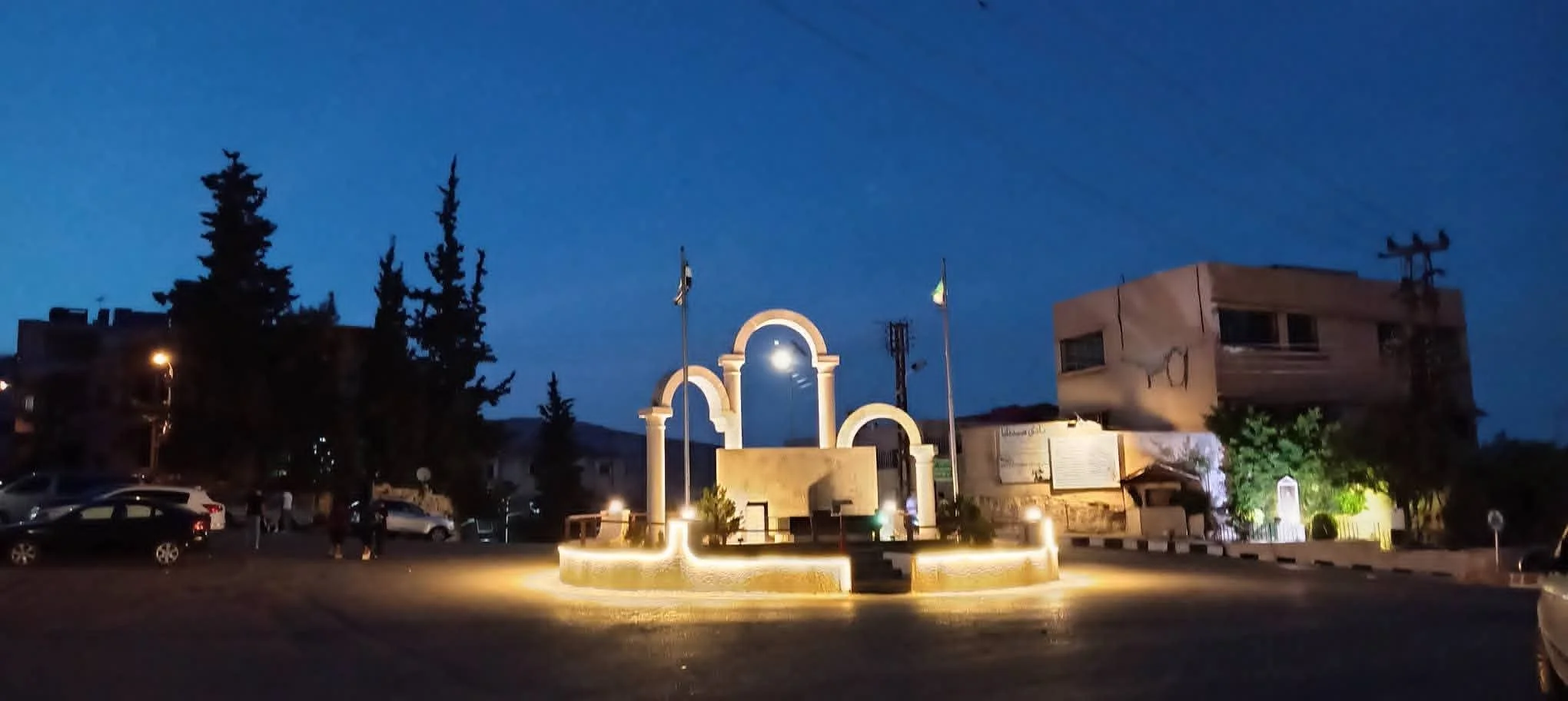
MECC Supports Seven Community Initiatives in Saidnaya
Seven community initiatives implemented service-oriented projects addressing the basic needs of the community, in the city of Saidnaya in Rural Damascus.
These initiatives were supported by the Middle East Council of Churches (MECC), through its Diakonia and Social Service Department – Syria’s Office, within its efforts to strengthen community engagement and improve essential services.
The initiatives included street lighting, along with the renovation and improvement of Ras Al-Amoud Square; the installation of solar panel system in a public clinic, two public schools, to hall for education and social activities, and a library; sport equipment for the sport club, and medical equipment for a local charitable dispensary.
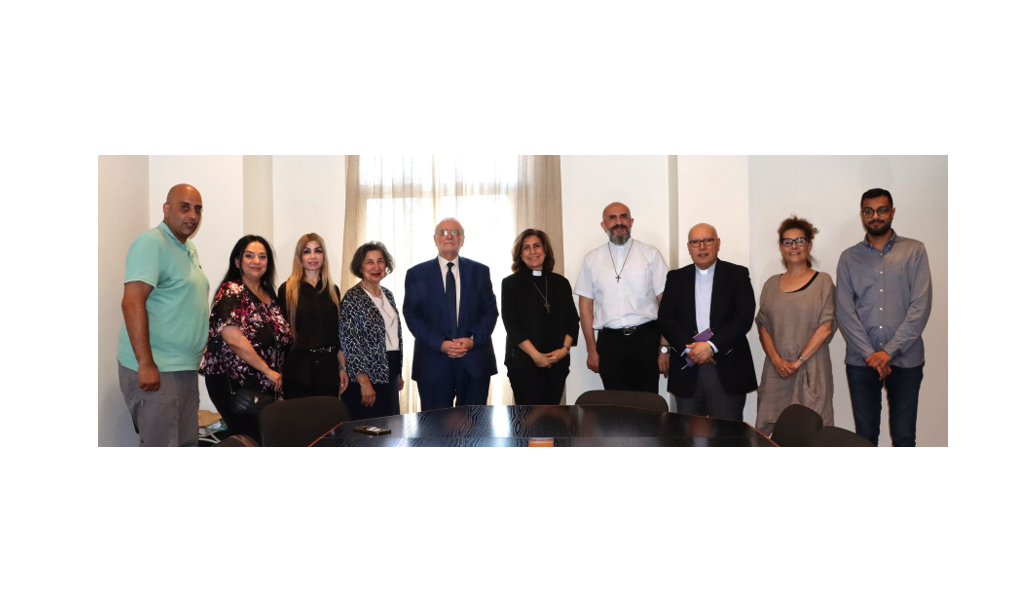
Congratulatory Visit to Reverend Dr. Rima Nasrallah
Pastor of the National Evangelical Church of Beirut and President of the National Evangelical Union of Lebanon
By an MECC Delegation Led by Secretary General Professor Michel Abs
Professor Abs: Reverend Rima is a worthy successor to a worthy predecessor, and the Evangelical Church carries a rich heritage of thought, culture, and learning
Reverend Rima: Ecumenical work lies at the heart of our faith and heritage… and it is essential to continue our cooperation with the Council
The Secretary General of the Middle East Council of Churches (MECC) Professor Michel Abs, accompanied by an MECC delegation, visited Reverend Dr. Rima Nasrallah, the Newly Elected President of the National Evangelical Union of Lebanon and Pastor of the National Evangelical Church of Beirut, on Wednesday, August 5, 2026, at her office in Beirut.
The delegation included the MECC Associate Secretaries General Father Dr. Nicolas Bustros and Mrs. Seta Hadeshian, Director of the Theological and Ecumenical Department Father Dr. Antoine Al Ahmar, Director of the Lebanon’s Office of the Diakonia and Social Service Department Ms. Nina Hallak, Coordinator of the Dialogue, Social Cohesion, and Human Dignity Rehabilitation Programs Professor Laure Abi Khalil, Media and Church Relations Coordinator Journalist Lea Adel Maamary, Social Media Officer Johnny Antoun, and Media and Communication Officer Elia Nasrallah. As well as, Associate Secretary General Reverend Dr. Rifaat Fikry joined the meeting virtually from Egypt.
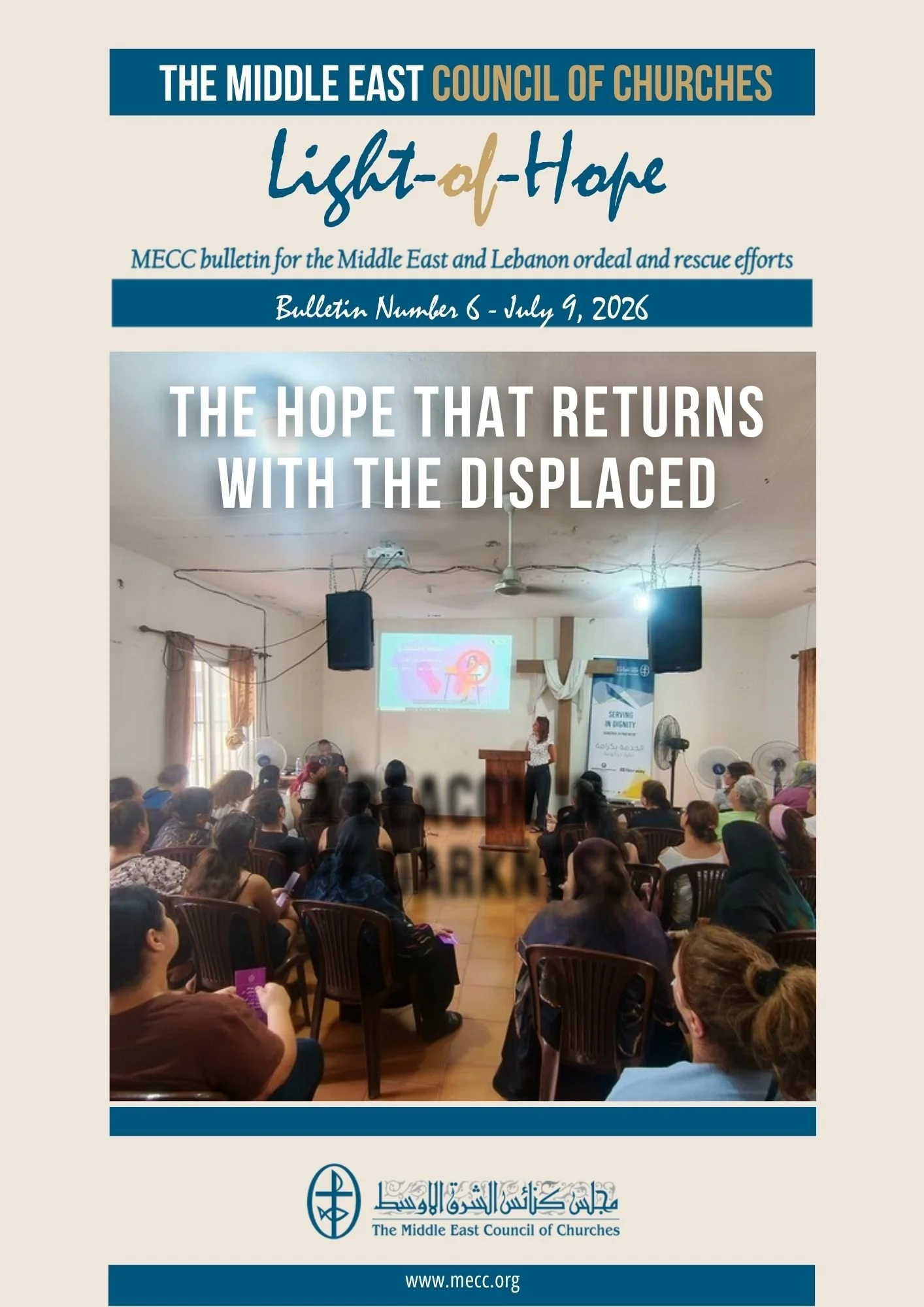
Light of Hope: MECC Issues the Sixth Bulletin About the Situations in the Middle East Region
The Middle East Council of Churches (MECC) has launched "Light of Hope," a new bulletin series dedicated to documenting the ongoing ordeal in the Middle East, with a primary focus on the catastrophic situation in Lebanon. This publication serves as a "cry" for the people of the Antiochian Levant who have endured decades of pain.
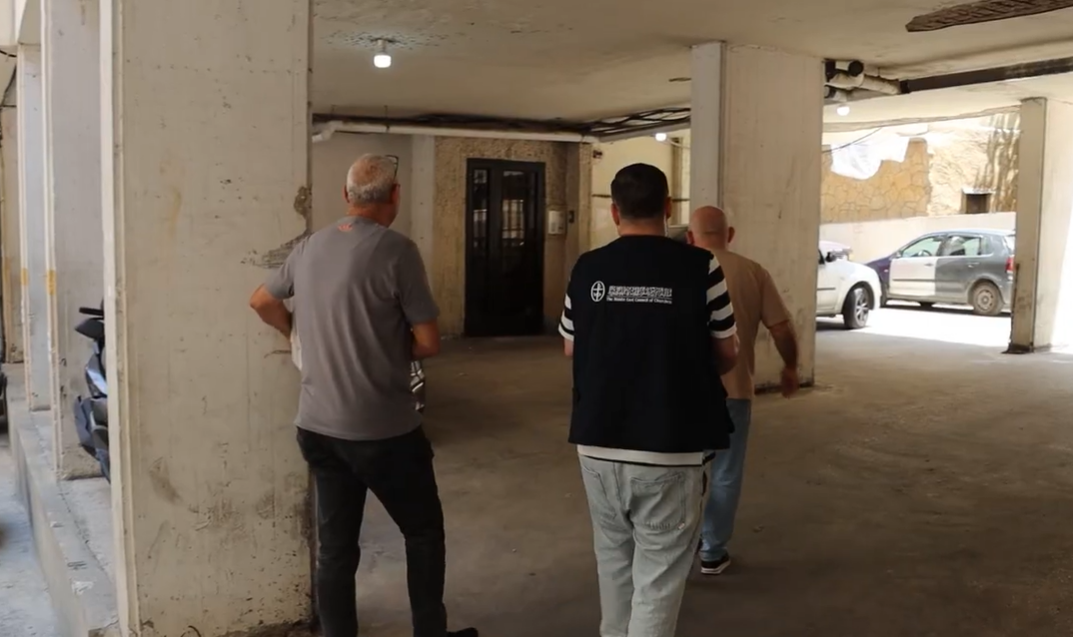
Video - The Middle East Council of Churches Continues Its Support for the Displaced Persons in Shelter Centers and Homes in Lebanon
Through the Diakonia and Social Service Department
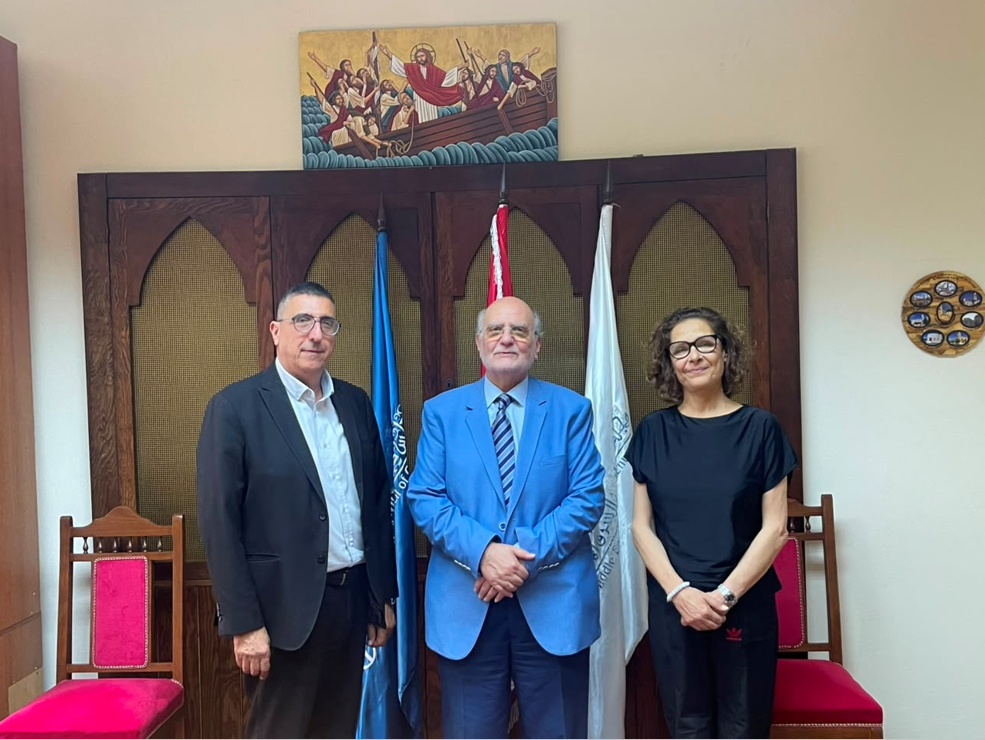
The MECC Secretary General Professor Michel Abs
Receives Former Lebanese Minister Dr. Hector Hajjar
Discussions centered on Enhancing humanitarian and Relief Work
As part of strengthening humanitarian services, the Former Lebanese Minister Dr. Hector Hajjar visited the Secretary General of the Middle East Council of Churches (MECC) Professor Michel Abs, in the presence of Ms. Nina Hallak, Director of the Lebanon’s Office at the MECC Diakonia and Social Service Department. The visit took place on Monday, July 6, 2026, at the MECC headquarters in Beirut.
During the meeting, discussions centered on the situation of the humanitarian and relief work in Lebanon, with a focus on the persons with disabilities and the challenges that the organizations and actors working in this field are facing, as well as ways to develop development programs aimed at meeting urgent humanitarian needs.