
On the Brink
Middle East Socioeconomic Overview
Report: February 2026
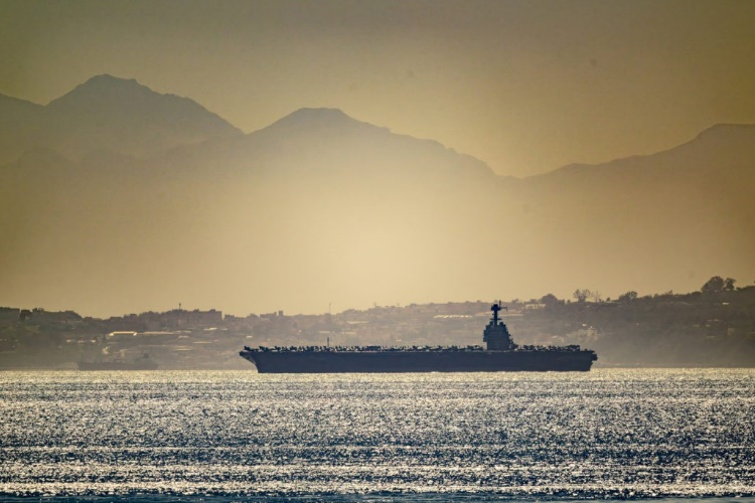
USS Gerald R. Ford aircraft carrier in the sea waters as seen from Gibraltar, Feb. 20, 2026 in this picture obtained from social media. Photo by @dparody/Instagram/via Reuters
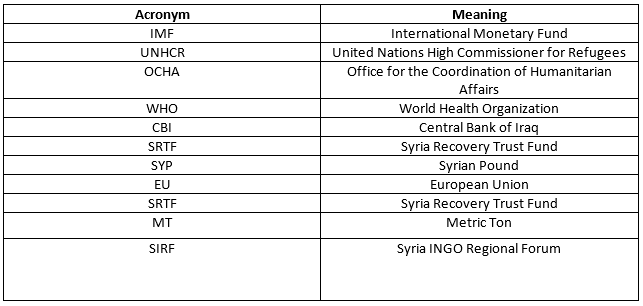
1. Table of Acronyms
2. Introduction
The region braces for a possible showdown that might ignite the Middle East. Either both sides reach an agreement that puts an end to the years of tension, or the region will have to wrestle with massive ramifications that will emanate from the conflict should it take place. Observers agree that such a conflict will have economic implications not just for the region but for the whole world, in addition to the grave humanitarian toll on countries touched by its flames.
3. The Socio-Economic Situation
Egypt
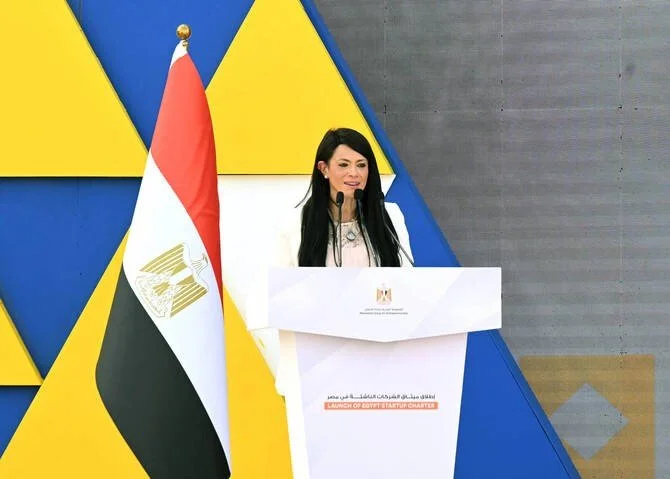
Egypt’s Minister of Planning, Economic Development, and International Cooperation Rania Al-Mashat speaks at an event organized to launch the country’s first national Startup Charter. Photo credit: Arab News.
In an attempt to stimulate new momentum within the economy, Egypt is conducting an extensive cabinet reshuffle that includes restructuring the economic ministries known as the "Economic Group," by creating and merging a number of ministries within the new government formation. This moved had gained the confidence of the Egyptian House of Representatives, following the vote approving the government formation presented by President Abdel Fattah al-Sisi. The new government, under the same Prime Minister, Moustafa Mabdouli, targets four main axes including national security and foreign policy, economic development, production, energy and food security, in addition to society and human development, according to a statement issued by the Presidency of the Republic. The Egyptian president tasked the economic group with prioritizing the improvement of the economic situation through the participation of the Deputy Prime Minister for Economic Affairs in developing future plans, coordinating among its members, achieving harmony between their tasks, and monitoring performance. President Sisi also stressed the continuation of the state ownership policy with concrete steps, and increasing the participation of the private sector in the economic field, as well as entering new fields to support the economy, especially in technology, rare metals and related industries, and encouraging innovations and funding their research and applications.
Parallel to this, Egypt is continuing its implentation of economic policies while attracting either investments or cash grants. For instance, Egypt has launched its first-ever national Startup Charter, committing $1 billion in funding and new policies to stimulate innovation, create jobs, and drive economic growth. It is designed to support 5000 startups, and stimulate 500,000 direct and indirect jobs, and accelerate international expansion, especially when startups have attracted $228 million in venture capital and debt financing during the first five months of 2025. The charter has placed several key objectives over the next five years, such as accelerating startup growth and helping them move to international markets, developing local talent to combat brain drain, promoting venture capital, and adopting a unified financing initiative to attract invest,ent. It also seeks to solve critical challenges in various sectors by making use of innovative solutions from startups. As for outside help, the EU has recently signed two grants totaling €125 million to develop renewable energy capabilities in Egypt and continue the green ammonia project in Ain Sokhna area. Also several countries such Greece and Germany are deepening their partnership with Egypt with aims of deepening economic ties and launching new investment projects within Egypt. Although the projects are yet to be mentioned, but it seems there is an international willingness to earmark funds to be invested within Egypt.
Jordan
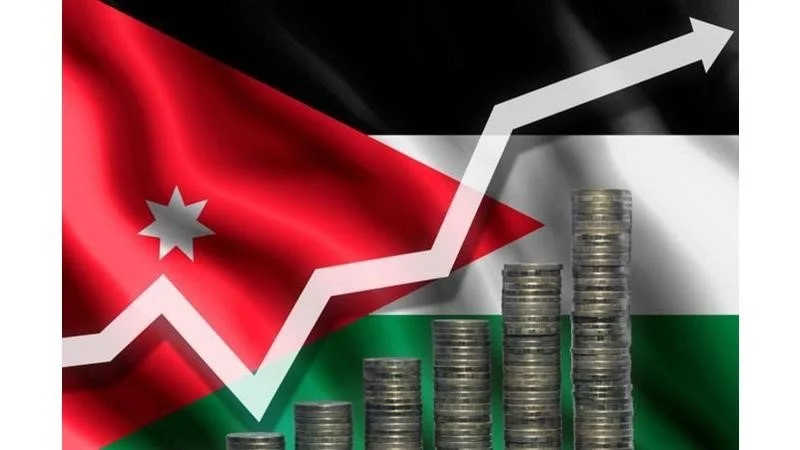
A financial expert told Al-Dustour: The rise in foreign reserves reflects the strength of the Kingdom's financial position. Photo credit: addustour.com
According to financial and economic experts, the recent economic indicators issued by the Central Bank of Jordan reflect a state of relative stability in the performance of the national economy at the beginning of 2026, despite the continued regional challenges and fluctuations in the global economy. The fact that real growth of about 2.75%, in parallel with inflation rates remaining at moderate levels of around 1.77%, reflects the success of monetary policies in achieving a balance between supporting economic activity and maintaining price stability. Moreover, the performance of the banking sector represents one of the most prominent elements of strength in the Jordanian economy, as it is witnessing an increase in customer deposits and sustainable growth in credit facilities, which reflects continued confidence in the banking system and its ability to finance productive sectors and support growth without compromising banking safety standards. The fact that foreign reserves at the Central Bank of Jordan rose to more than $26 billion by the end of January 2026 is a very important indicator of the strength of the Kingdom’s financial position, especially when this level of reserves covers the Kingdom’s imports of goods and services for approximately 9 months, a ratio that exceeds safe international standards and enhances the economy’s ability to withstand external shocks and global market fluctuations. Regarding the monetary policy, they noted that the Central Bank’s decision to keep interest rates unchanged at the Open Market Operations Committee meeting at the end of January 2026 reflects a cautious approach that balances the requirements of monetary stability and the stimulation of growth, especially in light of the continued uncertainty in global markets. They also claimed that the improvement in external sector indicators, the increase in total exports during 2025 by 7.7%, along with the growth in tourism revenue by 7.6% and remittances from workers abroad by 4.6%, strengthened the balance of payments and supports the Kingdom’s foreign currency reserves.
Iraq
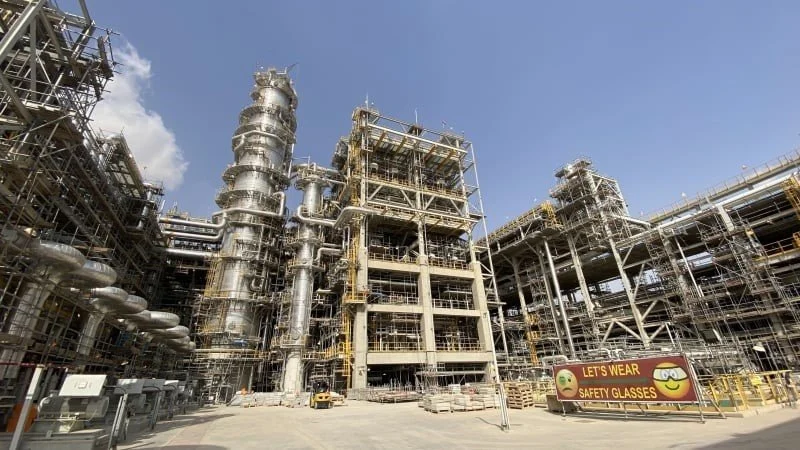
Iraq plans to increase fuel oil exports by more than one million bpd. Photo Credit: iraqinews.com
Although the Iraqi government has been trying to diversify its exports, boost non-oil revenues, and control public spending, Iraq is preparing for a new step to maximize its oil revenues by increasing fuel oil exports to more than one million barrels per day in 2026. This is part of a government attempt to boost the national economy while preserving the stability of local markets. The decision came after an endorsement by the cabinet of the suggestion by the Ministerial Council for the Economy to boost petroleum products. The recommendation was increasing production to export a minimum of 75 percent of the fuel oil produced during the refining process, aiming for exports of approximately 1.1 million barrels per day this year. While this move might benefit the Iraqi economy, it did raise the eyebrows of some observers, particularly the World Bank which has been warning of the fragility of the Iraqi economy because of its overdependence on a volatile oil sector. According to a previous World Bank report, Iraq remains committed to pursuing stability and sustainable growth, despite the significant challenges it has faced in recent years, including the war against terrorism and economic fluctuations. The government has focused on rebuilding infrastructure, improving public services, and pushing forward economic reforms, supported by international partnerships aimed at promoting sustainable development and human capital development. The bank explained that Iraq is among the countries most exposed to the effects and shocks of climate change, both in terms of physical risks, such as rising temperatures, water scarcity and extreme weather events, and in terms of financial vulnerabilities that exacerbate these challenges. Nevertheless, the Standard & Poor's (S&P) credit rating agency affirmed Iraq's credit rating at B-/B with a stable outlook, given that the country has been trying to turn its oil profits into somewhat more stable economy.
Lebanon
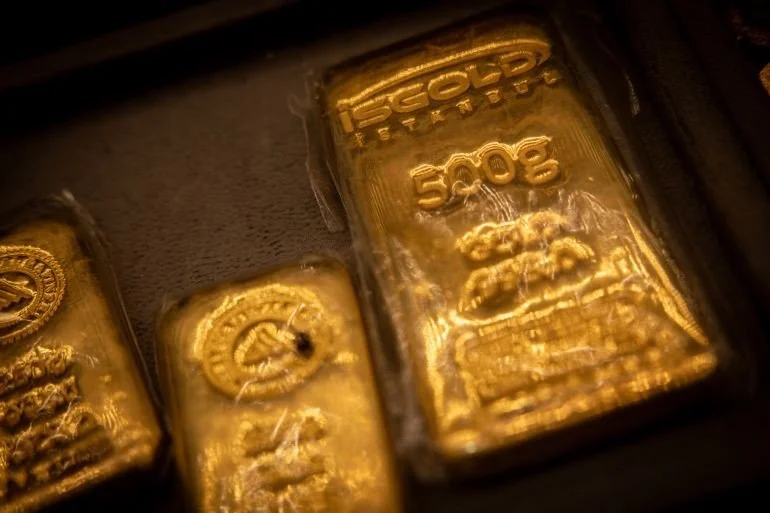
Lebanese decision makers are considering selling or leasing part of the gold reserves to alleviate the economic situation. Photo credit: www.aljazeera.net
According to the International Monetary Fund, the Lebanese economy has shown resilience despite regional conflicts, with the tourism sector contributing partly to the recovery, but restoring growth requires comprehensive reforms. The IMF spokeswoman, Julie Kozak, claimed that the Fund is still in discussions with the Lebanese authorities, who requested an IMF-supported program in March 2025, which included sending a team of IMF experts to Beirut in early February. She added that the talks focused on two main issues: the need to restructure the banking sector and to develop a medium-term financial strategy, according to Reuters. Kozak added that the economy has shown resilience despite the impact of conflicts in the region, and has seen a slight recovery thanks to tourism. At the same time, restoring strong and sustainable growth requires a comprehensive set of reforms to address some of the structural weaknesses that have already hampered Lebanon's economic performance for many years. She noted that reforms are necessary to attract international support to help Lebanon meet its large reconstruction needs. Kozak explained that Lebanon needs an updated medium-term fiscal framework that includes concrete measures to raise additional revenue for much-needed capital spending, as well as sovereign debt restructuring to restore the ability to manage debt obligations. From their end, Lebanese decision makers are considering the option of selling or leasing part of the central bank’s large gold reserves in order to save the country from the repercussions of its economic and financial crisis, given the rising prices of the precious metal in global markets. The price of gold rose 70% during the past year, reaching about $5,000 per ounce, which means that the value of Lebanon’s gold reserves reached about $45 billion in 2026, equivalent to more than half of the financial losses of Lebanese banks. For this reason, decision makers are considering this option to alleviate economic pressures by selling the gold. Unfortunately, Lebanese law prevents doing such an act and that’s why certain amendments are being considered.
Palestine
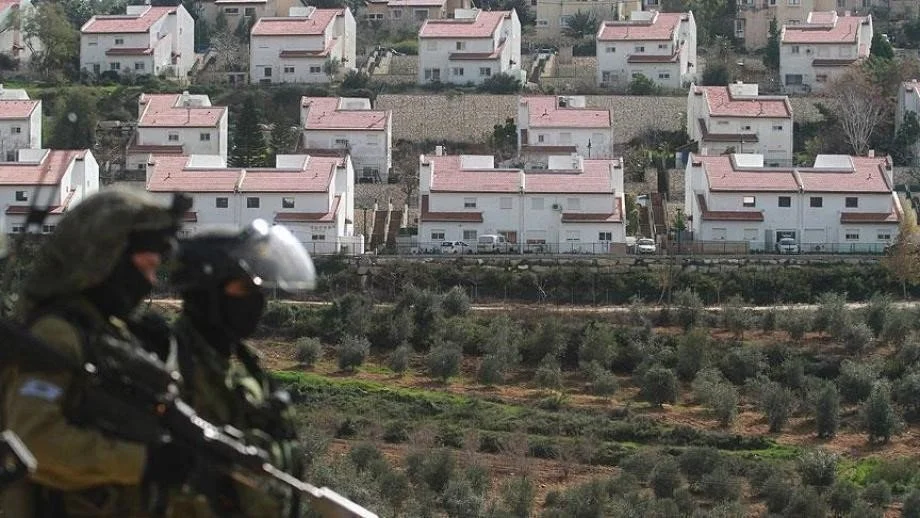
Occupier settlements are only expanding in the West Bank. Photo credit: felesteen.news/
The Palestinian economy in the West Bank is heading toward a concerning phase as the occupier accelerates its efforts to annex large swaths of land and legalize their sale. This is a development is a direct threat to the structure of the Palestinian economy and its chances of survival. Experts warn that these measures could lead to a sharp decline in living standards, a paralysis of investment, and an increasing loss of natural resources, in addition to deepening the isolation of communities and undermining food security. These actions follow occupier legislation and measures aimed at expanding de facto control over large parts of the West Bank, particularly in Area C, through legal and administrative measures that entrench the annexation and pave the way for settlement expansion and the transfer of powers to the occupier’s civilian authorities. Economic experts highlighted the serious repercussions of the Knesset's decisions regarding the annexation of areas in the West Bank and allowing occupier citizens to purchase Palestinian land, with the assertion that these steps constitute a direct attack on the infrastructure of the national economy and place unprecedented obstacles in the way of investment. These decisions will lead to a significant reduction in investment opportunities, as they will prevent both domestic and foreign investors from establishing projects in the targeted areas, particularly Area C, which witnessed attempts to launch major commercial projects before October 7th. The current uncertainty will push the private sector, particularly the construction and building sector, into a sharp decline. Among the most significant expected repercussions on the ground is the shrinking of grazing areas and the prevention of farmers and herders from accessing their lands in Areas B and C. This threatens livestock and impacts agriculture and olive harvesting across thousands of dunams that may fall under direct occupier control. Palestinian investors will face the challenge of obtaining permits from the [Israeli Civil Administration], a process that can take years and hinder construction activity, a key driver of the West Bank economy.
Syria

Syrian President Ahmad Al Shara and central bank governor Abdulkader Husrieh unveil the new banknotes in December. Photo Credit: thenationalnews.com
In a bid to revamp the industrial investment environment, the Director of Industrial Cities at the Syrian Ministry of Economy and Industry, Muayyad al-Banna, stated that the government has approved a package of legal and customs facilitations to encourage industrial investment in Syria and simplify its procedures. As such the plan is based on simplifying procedures, strengthening legal guarantees, and providing financial and customs incentives, which contributes to repositioning Syria on the industrial investment map in the region. Al-Banna explained that the Ministry of Economy and Industry issued an investment system specific to industrial cities under Resolution No. 432, which includes 26 articles aimed at facilitating the investment process and enhancing confidence in the legal environment. One of the most important aspects is the adoption of arbitration as a mechanism for resolving disputes between the investor and the state, while granting the investor the right to choose the arbitrator, whether local or international, which shortens the time of litigation and gives investors additional guarantees. The director of industrial cities at the Ministry also added that the new system allows investors to own industrial plots in installments over five years at regionally competitive prices, with the price per square meter reaching about $30 in Hassia Industrial City, and $35 in Sheikh Najjar in Aleppo and Adra in the Damascus countryside. Also modern investment models were adopted, such as public-private partnerships and the build-operate-transfer (BOT) system. Additionally, the one-stop shop principle for completing investment transactions was implemented. The spokesperson also pointed to the restructuring of customs policies to support local production by exempting imported production lines from customs duties entirely.
In line with Syria’s bid to attract investment to the country and in preparation for a potentially improving economy, the country’s central bank has succeeded in replacing more than a third of cash in circulation with newly printed banknotes. According to Central Bank governor Abdulkader Husrieh, replaced about 35 per cent of the 41 trillion Syrian pounds in cash circulating before the currency reform. The governor cited measurable progress in regaining control over liquidity and money supply. He also claimed that he expects reduced dollarization, improved confidence in the Syrian pound and greater monetary sovereignty. Moreover, he declared that the central bank has begun the first phase of a review known as a gap assessment to accelerate the resumption of ties with foreign lenders and boost the credibility of Syria’s financial sector. The assessment will be conducted by US consulting firm Oliver Wyman. This is a necessary homework to address lingering compliance concerns among foreign banks which have continued to hinder Syria’s reintegration into international banking channels. Moreover, it is a necessary step to reviving the country’s dilapidated banking sector is viewed as a top priority to manage the billions of dollars expected to flow into the country and fund its reconstruction. An additional step, Syria is aiming to do is to reactivating its account with the Federal Reserve Bank of New York, which is important towards restoring access to dollar transactions after years of financial isolation.
Cyprus
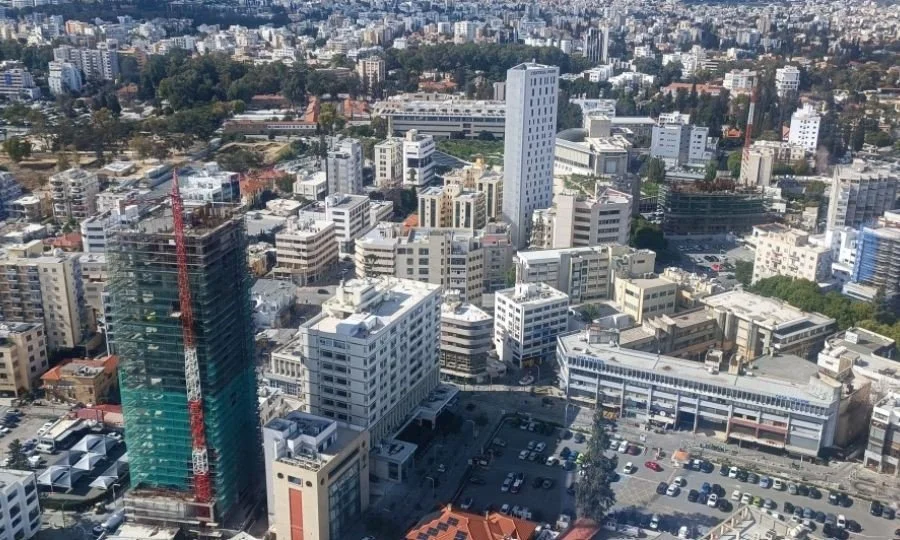
Cyprus’s credit rating boosted as public debt drops and economy strengthens. Photo Credit: knews.kathimerini.com.cy
Recently, the rating agency Scope Ratings has upgraded the Cypriot’s long-term sovereign credit rating from A- to A, with a stable outlook, reflecting sharp falls in public debt, ongoing budget surpluses, and a stronger banking sector. According Finance Minister, the move is another significant step and shows international confidence in the government’s economic management. He also claimed that the rating will give Cyprus further credibility and dynamism especially when the government has issued a 10-year government bond which has attracted a lot of attention. He also highlighted the government’s commitment to maintaining fiscal discipline while assisting citizens and targeting vulnerable groups. What also allowed Cyprus to do so is the economy’s continued growth. The GDP has expanded by 3.5% in 2025, driven by private consumption, rising wages, and investment. Unemployment decreased to 4.3%, the lowest in almost 20 years, while inflation stayed stable at 0.8%. Recent estimated show that growth is forecasted to remain solid at around 3% in 2026, supported by ongoing investments and consumer spending. The agency Scope Ratings did warn however that Cyprus’s small and open economy and some lingering banking sector weaknesses are limiting its ratings. It also cautioned that weaker demands in European markets can cause indirect risks. Nonetheless, the agency said the stable outlook reflects a balance between strong economic performance and these structural challenges.
4. The Humanitarian Situation
Egypt
Amnesty International voiced its concern about the Egyptian authorities renewed campaign of arbitrarily detaining and unlawfully deporting refugees and asylum seekers solely on the basis of their irregular immigration status in blatant violation of the principle of non-refoulement and Egypt’s own asylum law.[1]
Jordan
The UNHCR states that there are currently 413,430 registered refugees in Jordan up until the beginning of February.
The proportion of Syrian displaced people registered within the UNHCR, are distributed as follows:
-131,723 in Amman Governorate (31.9%)
-104,121 in Mafraq Governorate (25.2%)
-73,560 in Irbid Governorate (17.8%)
-61,510 in Zarqa Governorate (14.6%)
-11,243 in Balqa Governorate (2.7%)
-8,621 in Madaba Governorate (2.1%)
-4,936 in Jarash Governorate (1.2%)
-5,385 in Karak Governorate (1.3%)
-6,353 in Maan Governorate (1.5%)
-3,153 in Ajlun Governorate (0.8%)
-2,914 in Aqaba Governorate (0.7%)
-922 in Tafilah Governorate (0.2%)
-153 in other (0.1%)
The World Food program declared that there are severe funding constraints continued to limit the scale of assistance, with WFP providing reduced monthly food assistance of JOD 15 (USD 21) per person to 220,000 refugees in camps and communities. This only allowed refugees to meet the bare minimum of their essential food needs.[2]
Iraq
The UNHCR states that there are currently 350,110 registered refugees in Iraq who live outside of camos. 91,860 live in camps.
The proportion of refugee people (non-camp) registered within the UNHCR up until the beginning of February, are distributed as follows:
-150,890 in Erbil (43.1%)
-92,094 in Dahuk (26.3%)
-39,874 in Sulaymaniyah (11.4%)
-2,782 in Ninewa (0.8%)
-44,207 in Baghdad (12.6%)
-20,306 in other areas (5.8%)[3]
UNESCO and the Government of Japan launched the project “Reviving the Bridges for Peace in Ninewa: Education and Reconciliation for Conflict-Affected Communities”, aimed at supporting children, youth, and communities in West Mosul and Sinjar to overcome the long-lasting impacts of conflict. This initiative will strengthen social cohesion and peacebuilding through inclusive education, participatory training for schools and parents, youth empowerment and community engagement.[4]
Lebanon
[UNHCR Lebanon did not update distribution data for the month of February]
Since the beginning of January the number of registered Syrian refugees in Lebanon is 532,357.
Refugees in Lebanon are distributed as follows:
-189,605 in Bekaa (35.6%)
-165,737 in North Lebanon (31.1%)
-119,773 in Beirut (22.5%)
-57,242 in South Lebanon (10.8%)[5]
According to the World Food Programme, it continued to support over 622,000 vulnerable people, among heightened tension across the country to meet their food and basic needs in January, while providing support to the Ministry of Social Affairs in advancing its digital transformation plan.[6]
Syria
Qatar Red Crescent Society (QRCS) has launched a specialized medical convoy for Syria, with a group of consultant cardiac catheterization doctors and orthopedic surgeons deployed to provide life-saving health care for Syrian patients, amid the tough challenges facing the country’s failing health care system.[7]
SARD, a nongovernmental organization dedicated to building resilience and self-reliance in those affected by conflict and natural disasters, with the support of UN-Habitat and Japan, launched its first major project on Disaster Reduction Response (DRR), aimed at strengthening the resilience, preparedness, and risk reduction capacity of vulnerable communities living in informal urban settlements in Homs and Aleppo.[8]
The Government of Belgium has contributed USD 800,000 to support 25,000 drought‑affected livestock-keeping households.[9]
The Royal Humanitarian Foundation of the Kingdom of Bahrain and the United Nations High Commissioner for Refugees in Syria signed a grant agreement worth two million US dollars to support the restoration of damaged homes for Syrian families returning to the Al-Zarba area in the Aleppo countryside and the city of Harasta in the Damascus countryside.[10]
According to Save the Children, thousands of children who grew up in Al-Hol camp in northeastern Syria face an uncertain future with the loss of essential protection and support systems with the camp expected to close this week unless urgent action is taken.[11]
Cyprus
Members of the Cypriot House of Representatives began deliberating on a controversial bill on February 9 that would give the government sweeping authority to strip international-protection status from recognised refugees and to reject asylum claims on grounds of national security, public order or serious criminality.[12]
[1] Amnesty, Feb 16, 2025, https://www.amnesty.org/en/latest/news/2026/02/egypt-refugees-in-hiding-amid-crackdown-involving-arbitrary-arrests-and-unlawful-deportations/
[2] OCHA, Feb 16, 2026, https://reliefweb.int/report/jordan/wfp-jordan-country-brief-february-2026-reporting-period-january-2026
[3] https://data2.unhcr.org/en/situations/syria/location/5
[4] OCHA, Feb 20, 2026, https://reliefweb.int/report/iraq/unesco-and-japan-launch-initiative-revive-education-and-peace-ninewa-iraq-enar
[5] UNHCR, Oct 28, 2024, https://data2.unhcr.org/en/situations/syria/location/71
[6] OCHA, Feb 18, 2026, https://reliefweb.int/report/lebanon/wfp-lebanon-country-brief-february-2026
[7] OCHA, Feb 16, 2026, https://reliefweb.int/report/syrian-arab-republic/qrcs-deploys-medical-convoy-syria-enar
[8] OCHA, Feb 6, 2026, https://reliefweb.int/report/syrian-arab-republic/our-first-disaster-reduction-response-project
[9] OCHA, Feb 3, 2026, https://reliefweb.int/report/syrian-arab-republic/syrian-arab-republic-belgiums-contribution-through-special-fund-emergency-and-resilience-activities-sfera-safeguarding-livestock-based-livelihoods-and-food-security-drought-affected-communities
[10]OCHA, Feb 3, 2026, https://reliefweb.int/report/syrian-arab-republic/almfwdyt-walmwsst-almlkyt-llamal-alansanyt-twqwan-atfaqyt-ldm-mshary-trmym-almnazl-llasr-alswryt-alaydt-mfwdyt-allajyyn
[11] OCHA, Feb 19, 2026, https://reliefweb.int/report/syrian-arab-republic/news-quote-closure-syrias-al-hol-camp-leaves-thousands-children-risk-and-facing-uncertain-futures
[12] Visa HQ, Feb 10, 2025, https://www.visahq.com/news/2026-02-09/cy/cyprus-parliament-weighs-new-powers-to-revoke-refugee-status-and-fast-track-deportations/