
Palestine Observatory - Report: Friday 17 April 2026
مرصد فلسطين – تقرير الجمعة 17 نيسان/ أبريل2026
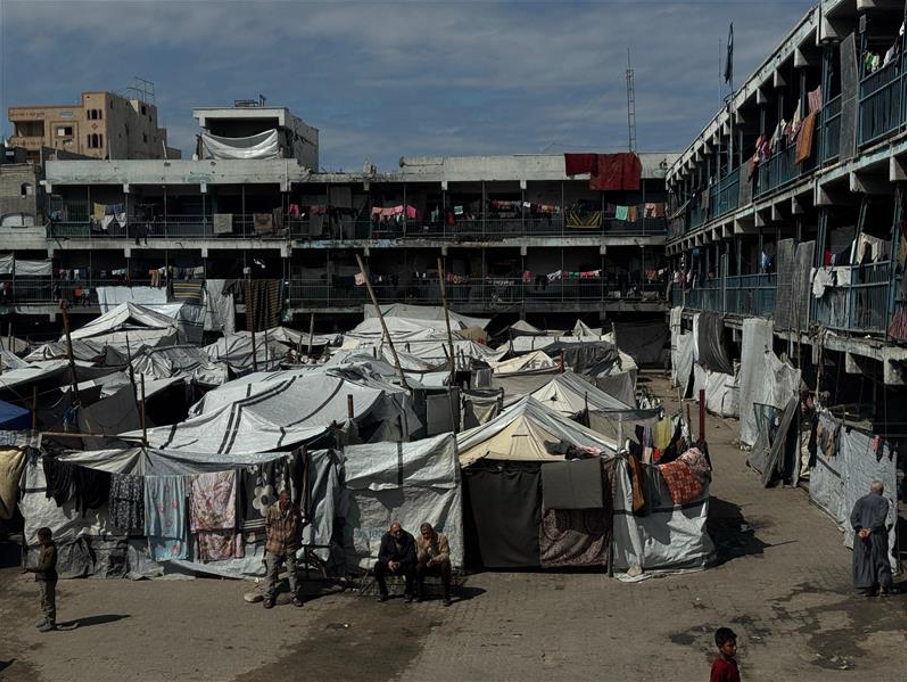
نازحون في غزّة يعيشون في خيام مؤقّتة داخل مدرسة تابعة للأونروا تحوّلت إلى ملجأ. الحقوق محفوظة للأونروا، نيسان/ أبريل 2026 - Displaced families living in makeshift tents in an UNRWA school-turned-shelter in Gaza © April 2026 UNRWA Photo
English Information Below
In light of the worsening humanitarian and social conditions in the region due to the escalation of security operations, the Middle East Council of Churches presents a weekly report entitled "Palestine Monitor," which includes the latest developments in Palestine, especially amid the deteriorating living, social, and security conditions in the country. Some texts will be in Arabic, and some others in English, depending on the source.
في ظلّ تفاقم الظروف الإنسانيّة والاجتماعيّة في المنطقة جرّاء تصاعد العمليّات الأمنيّة فيها، يقدّم مجلس كنائس الشرق الأوسط تقريرًا أسبوعيًّا بعنوان "مرصد فلسطين" حيث يتضمّن آخر المستجدّات الّتي تشهدها فلسطين خصوصًا وسط تدهور الظروف المعيشيّة والاجتماعيّة والأمنيّة في البلاد. ستكون بعض النصوص باللغة العربية، وبعضها الآخر باللّغة الإنكليزيّة، وذلك حسب المصدر.
في آخر المستجدّات:
كنسيًّا، وبحسب موقع البطريركيّة اللّاتينيّة في القدس، "ترأّس غبطة البطريرك الكاردينال بييرباتيستا بيتسابالا، بطريرك القدس للاتين، القداس الاحتفالي في كنيسة مزار عمواس القبيبة، يوم الاثنين 13 نيسان/ أبريل 2026، حيث أحيَت الكنيسة ذكرى ظهور القائم من بين الأموات لتلميذي عمواس.
واستهلّ غبطته الاحتفال بتحيّة كاهن الرعية الأب سبستيان إكليمس (رهبنة الفرنسيسكان)، والكهنة والمؤمنين القادمين من رعايا منطقة رام اللّه. وقد عكس الاحتفال واقع الكنيسة المحلية التي تعيش في ظلّ تحديات مستمرة وخيبات أمل متتالية، على مثال تلميذي عمواس. وفي هذا السياق، دعا البطريرك المؤمنين إلى قراءة أحداث حياتهم في نور الكتاب المقدّس وسرّ الإفخارستيا، لكي تُفهم من منظور المسيح القائم من بين الأموات.
من خيبة الأمل إلى رؤية القائم
وفي تأمّله في إنجيل تلميذي عمواس، شدّد البطريرك على راهنيّة هذا النص لحياة المؤمنين اليوم. فالتلميذان، وهما يغادران أورشليم، كانا مثقلين بخيبة أمل عميقة، بعدما ظنّا أنّ رجاءهما في يسوع قد انهار. وتعكس كلمتهما: «كنّا نرجو…» اختبارًا إنسانيًا عميقًا لانكسار التوقعات المبنية على رؤية بشرية محدودة.
غير أنّ يسوع يقترب منهما في هذه اللحظة من الارتباك والضياع. يسير معهما في الطريق، يُصغي إليهما، ثم يبدأ تدريجيًا بإعادة تفسير ما حدث في ضوء الكتب المقدسة، كاشفًا أن ما بدا فشلًا هو جزء من تدبير اللّه الخلاصي. وفي كسر الخبز تنفتح أعينهما ويتعرّفان إليه بصفته الرب القائم من بين الأموات.
رسالة لليوم
وأكّد البطريرك أنّ هذا الإنجيل ليس مجرّد رواية من الماضي، بل تعليم حيّ للمؤمنين اليوم. فكما دخل المسيح في حياة التلميذين في لحظة حيرتهما، لا يزال يدخل حياتنا—على المستويات الشخصية والاجتماعية والوطنية—خصوصًا في أوقات الإحباط وفقدان الرجاء.
وأشار إلى أنّ الإنسان غالبًا ما يتوق إلى واقع مختلف عمّا يعيشه، ويجد صعوبة في فهم مجريات حياته بمفرده. غير أنّ كلمة اللّه والاحتفال بالإفخارستيا يمنحان رؤية جديدة. وقال: "إن أمانتنا لهذه الأسرار تمكّننا من النظر الى أحداث حياتنا بنظرةوعقلية مختلفة".
وأضاف البطريرك أنّ التعرّف إلى الرب القائم يمرّ عبر الثبات في الكتاب المقدّس وفي كسر الخبز، كما حدث مع تلميذي عمواس.
وفي ختام عظته، عبّر غبطة البطريرك الكاردينال بييرباتيستا بيتسابالا عن أمله بأن يكون المؤمنون، بعد نيلهم نور المسيح من القبر المقدّس، شهودًا لهذا النور في مجتمعاتهم، مؤكدًا أنّ العالم اليوم في حاجة ماسّة إلى هذا النور، وأنّ المسيحيين مدعوون ليس فقط إلى استقباله، بل إلى حمله، خصوصًا في هذه الأرض الجريحة.
وفي نهاية القداس، وزّع غبطته خبزًا مباركًا على المؤمنين، تذكارًا للذروة في مسيرة التلميذين، عندما كسر يسوع الخبز فانفتحت أعينهم ليتعرّفوا إلى المسيح القائم من بين الأموات.
وجمع الاحتفال بين الذاكرة والإيمان الحاضر، في علامة هادئة على استمرار حضور الرب القائم في وسط شعبه".[1]
في سياق متّصل، ووفق صفحة كنيسة القدّيس بورفيريوس للروم الأرثوذكس في غزّة على موقع فيسبوك، احتفلت هذه الكنيسة ومختلف الكنائس في غزّة يعيد القيامة حيث كانت قد تابعت صلواتها وصولًا إلى هذا العيد.[2]
كما أقامت كنيسة القدّيس بورفيريوس للروم الأرثوذكس وبرعاية جمعية الراعي نشاطًا لابنائها المتواجدين في إيواء الكنائس، ضمن برنامج تعليمي: دروس في اللّغة العربيّة واللّغة الانكليزيّة والرياضياّت والعلوم العامة، وذلك في غطار برامج تنفّذ في غزة من خلال الكنيسة.[3]
أمنيًّا وإنسانيًّا، جاء في أحد تقارير وكالة الأمم المتّحدة لغوث وتشغيل اللّاجئين الفلسطينيّين:
"قطاع غزة
القتلى والجرحى
في الفترة ما بين 7 تشرين الأول/ أكتوبر 2023 وحتّى 8 نيسان/ أبريل 2026، وفقًا لوزارة الصحة في غزة، حسبما ذكره مكتب تنسيق الشؤون الإنسانية، فقد قتل 72,315 فلسطينيًا في قطاع غزة وأصيب 172,137 شخصًا آخر بجراح.
سجلت الأونروا مقتل 391 زميلًا في غزة منذ بدء الحرب (310 من موظفي الأونروا، بالإضافة إلى 81 شخصًا كانوا يدعمون أنشطة الأونروا)، حتّى 31 آذار/ مارس 2026.
الأزمة الصحية
لاحظت فرق الأونروا زيادة في حالات الإصابة بالطفيليات الخارجية وجدري الماء، مع وجود تحديات في تأمين الأدوية والمبيدات الحشرية ما يؤثر على القدرة على السيطرة على المشكلة. وتواصل الأونروا مراقبة اتجاه الأمراض المعدية عن كثب في العديد من ملاجئ الطوارئ الجماعية، مع تزايد المخاطر المتعلقة بالاكتظاظ، وتدهور أنظمة الصرف الصحي، ونقص إمدادات النظافة في السوق المحلية، والقيود المفروضة على دخول المنتجات الكيميائية.
النزوح وإدارة المواقع
تواصل الأونروا رصد تحركات النازحين ومواقع النزوح. ويقدر أن 67 ألف نازح يعيشون في 83 ملجأ جماعيًّا طارئًا تديرها الوكالة.
يوجد حاليًّا 127 مرفقًا تابعًا للأونروا داخل [المنطقة العسكرية الإسرائيلية] خلف ما يسمى "الخط الأصفر" وفي المناطق التي يخضع الوصول إليها إلى تنسيق/موافقة [إسرائيل].[4]
على صعيد آخر، أفاد موقع الأمم المتّحدة أنّ "المتحدث باسم الأمم المتحدة ستيفان دوجاريك أشار إلى أنّ تقارير وردت هذا الأسبوع أفادت باستمرار الهجمات في غزّة، بما في ذلك ضربات و[قصف إسرائيلي] طال مناطق سكنية في القطاع، مما يعرض مزيدًا من المدنيين الفلسطينيين للخطر.
وفي المؤتمر الصحفي اليومي، أفاد دوجاريك أنّه يوم السبت الماضي سُجّل إصابة شخصين بمن فيهم طفل رضيع، جراء تعرض مدرسة تابعة للأمم المتحدة، تُستخدم كمأوى للنازحين في مخيم جباليا، لإطلاق نار.
وأضاف دوجاريك: نؤكّد مجددا على ضرورة توفير الحماية للمدنيين والمنشآت المدنية في جميع الأوقات"...
علمًا أنّ "مكتب الأمم المتحدة لتنسيق الشؤون الإنسانية أفاد باستمرار مستويات النزوح المرتفعة في الضفة الغربية؛ إذ سُجِل خلال الأسبوعين الأولين من شهر نيسان/ أبريل نزوح نحو 150 شخصًا.
وأضاف أن ذلك يرفع العدد الإجمالي للنازحين حتى الآن في عام 2026 إلى أكثر من 2500 شخص، من بينهم ما يزيد على 1100 طفل.
وأوضح المكتب أن هذا النزوح يعود في الغالب إلى عنف المستوطنين والقيود المفروضة على حرية التنقل، ولكنه يرتبط أيضًا بعمليات الإخلاء وهدم المنازل الفلسطينية".[5]
Latest updates:
On the Church level, and according to the Website of the Latin Patriarchate of Jerusalem, “His Beatitude Patriarch Cardinal Pierbattista Pizzaballa, Latin Patriarch of Jerusalem, presided over the Eucharistic celebration in the village of El-Qubeibeh—traditionally identified with Emmaus—on Monday, April 13, 2026, at the local Sanctuary. Situated along the ancient road leading to Jerusalem, the Liturgy commemorated the Encounter of the Risen Christ with the two Disciples, Simeon and Cleophas.
The Patriarch opened the celebration by greeting the Parish Priest, Fr. Sebastian Eclimes, O.F.M., along with the priests and faithful pilgrims from neighboring villages in the Ramallah governorate. The gathering reflected the lived reality of the local Church, which continues to wrestle with a deferred hope for peace—much like the disciples themselves. Yet, drawing from the Gospel, the Patriarch invited the faithful to interpret the events of their lives through the light of Scripture and the Eucharist, receiving new sight in the Risen Lord.
From disappointment to recognition
Reflecting on the Gospel reading (cf. Lk 24:13–35), the Patriarch emphasized its enduring teaching. He recalled how the two disciples, leaving Jerusalem, were burdened by disappointment, convinced that their hopes and plans in Jesus had failed. Their words—“We had hoped…”—express a deeply human experience of shattered expectations shaped by limited, earthly perspectives.
Yet it is precisely in this moment of confusion that Jesus draws near. He walks alongside them on the road that leads them away from Jerusalem, listens to their pain, and gradually reinterprets the events they had lived through. Through the Scriptures, He sheds light on their sense of failure, revealing that what seemed like defeat was, in fact, part of God’s plan. Finally, in the breaking of the bread, their eyes are opened, and they recognize Him as the Risen Lord.
A message for today
The Patriarch stressed that just as Jesus entered the lives of the two disciples in their moment of confusion, He continues to enter our lives—on personal, social, and even national levels—especially when we feel lost or disheartened.
Often, he noted, we hope for a reality different from the one we are facing, and we struggle to understand our experiences on our own. However, it is through the Word of God and the celebration of the Eucharist that we are given a new perspective. “Our faithfulness to these sacraments,” he affirmed, “enables us to adopt a different attitude toward the events of life.”
If we wish to recognize the Risen Lord among us, the Patriarch continued, we must remain rooted in Scripture and in the breaking of the bread—just as the two disciples encountered Him on the road to Emmaus.
Called to be bearers of the light
Concluding his Homily, His Beatitude Patriarch Cardinal Pierbattista Pizzaballa expressed his hope that the faithful, having received the light of Christ, would in turn reflect that light within their communities.
“In our time,” he affirmed, “there is a great need for this light.” Christians, therefore, are called not only to receive the light of the Risen Christ but to become bearers of it, especially here in this wounded land.
Distributing bread
At the end of the Mass, His Beatitude Patriarch Cardinal Pierbattista Pizzaballa distributed blessed bread to the faithful, commemorating the culminating moment of the two disciples’ journey, when Jesus broke the bread and they recognized the Risen Lord.
The celebration in the village of El-Qubeibeh—located about 11 kilometers northwest of Jerusalem, near the separation wall, and traditionally identified with the house of Cleophas, where the remains of a Crusader basilica still stand—brought together memory and present-day faith, offering a quiet reminder of the Risen Lord’s abiding presence among His people.[6]
In a related context, and according to the Facebook page of the Saint Porphyrios Greek Orthodox Church in Gaza, this Church and various other Churches in Gaza celebrated Easter, having continued their Prayers leading up to this Feast.[7]
As well as, the Saint Porphyrios Greek Orthodox Church, in cooperation with the Shepherd Society, organized an activity for its children residing in Church shelters, as part of an educational program: lessons in Arabic, English, mathematics, and general science. This activity is part of programs implemented in Gaza through the Church.[8]
On another side, the United Nations Relief and Works Agency for Palestine Refugees in the Near East (UNRWA) indicated in one of its latest reports the following:
“The Gaza Strip
Fatalities and injuries
Between 7 October 2023 and 8 April 2026, according to the Ministry of Health, as reported by OCHA, 72,315 Palestinians were killed in the Gaza Strip and another 172,137 injured.
UNRWA has recorded 391 colleagues killed in Gaza since the start of the war (310 UNRWA personnel, and 81 persons who were supporting UNRWA), up to 31 March.
Health crisis
UNRWA teams have observed an increase in cases of ectoparasitic infection and chickenpox, with challenges in securing medication and pesticides affecting the ability to control the problem. UNRWA continues to closely monitor the trend in infectious diseases across multiple collective emergency shelters, with heightened risks related to overcrowding, deteriorating wastewater systems, shortages of hygiene supplies on the local market, and restrictions on the entry of chemical products.
Displacement, Site management
UNRWA continues to monitor the movement of displaced persons and displacement sites. An estimated 67,000 displaced people are living in 83 collective emergency shelters managed by the Agency.
Currently, 127 UNRWA facilities are located within the [Israeli-militarized zone] behind the so-called “Yellow Line” and in areas where access is subject to [Israeli] approval or coordination.[9]
On another side, the Website of the United Nations mentioned that “the war in Gaza has inflicted a far higher toll on women and girls than in previous conflicts in the Palestinian enclave…
The overall total includes at least 22,000 women and 16,000 girls and amounts to an average of at least 47 women and girls killed every day, the agency’s Sofia Calltorp, Chief of Humanitarian Action, told journalists in Geneva.
“Those killed were mothers, they were daughters, sisters, and friends, deeply loved by those around them,” she noted, adding that the killings have continued in recent months, despite a ceasefire between Hamas fighters and the [Israeli military].
Data also indicates that nearly 11,000 women and girls have been injured and that many have life-changing disabilities. The true toll is likely higher because many bodies are still trapped under rubble, UN Women said. According to the Gazan health authorities, more than 72,315 Palestinians have been killed in the Gaza Strip and another 172,137 injured since October 2023.
This has created a chronic humanitarian emergency in Gaza where many households are now headed by women facing increased economic hardship and protection risks.”[10]
[1]https://www.lpj.org/ar/news/from-disappointment-to-hope-in-the-risen-one-the-patriarch
[2]https://www.facebook.com/share/p/14atqy1E51T/
[3]https://www.facebook.com/share/p/18YitqNBCU/
[4]https://www.unrwa.org/ar/resources/reports/%D8%AA%D9%82%D8%B1%D9%8A%D8%B1-%D8%A7%D9%84%D8%A3%D9%88%D9%86%D8%B1%D9%88%D8%A7-%D8%B1%D9%82%D9%85-217-%D8%AD%D9%88%D9%84-%D8%A7%D9%84%D8%A3%D8%B2%D9%85%D8%A9-%D8%A7%D9%84%D8%A5%D9%86%D8%B3%D8%A7%D9%86%D9%8A%D8%A9-%D9%81%D9%8A-%D8%A7%D9%84%D8%A3%D8%B1%D8%B6-%D8%A7%D9%84%D9%81%D9%84%D8%B3%D8%B7%D9%8A%D9%86%D9%8A%D8%A9-%D8%A7%D9%84%D9%85%D8%AD%D8%AA%D9%84%D8%A9-%D9%82%D8%B7%D8%A7%D8%B9-%D8%BA%D8%B2%D8%A9
[5]https://news.un.org/ar/story/2026/04/1144532
[6]https://www.lpj.org/en/news/from-disappointment-to-hope-in-the-risen-one-the-patriarch
[7]https://www.facebook.com/share/p/14atqy1E51T/
[8]https://www.facebook.com/share/p/18YitqNBCU/
[9]https://www.unrwa.org/resources/reports/unrwa-situation-report-217-humanitarian-crisis-gaza-strip-and-occupied-west-bank