
World Council of Churches, Middle East Council of Churches, denounce attacks on civilian locations in Lebanon
The World Council of Churches (WCC) and Middle East Council of Churches (MECC), following the serious and catastrophic security escalation witnessed on 8 April in the city of Beirut, along with many other Lebanese regions, expressed deep concern and strong condemnation of what has occurred.
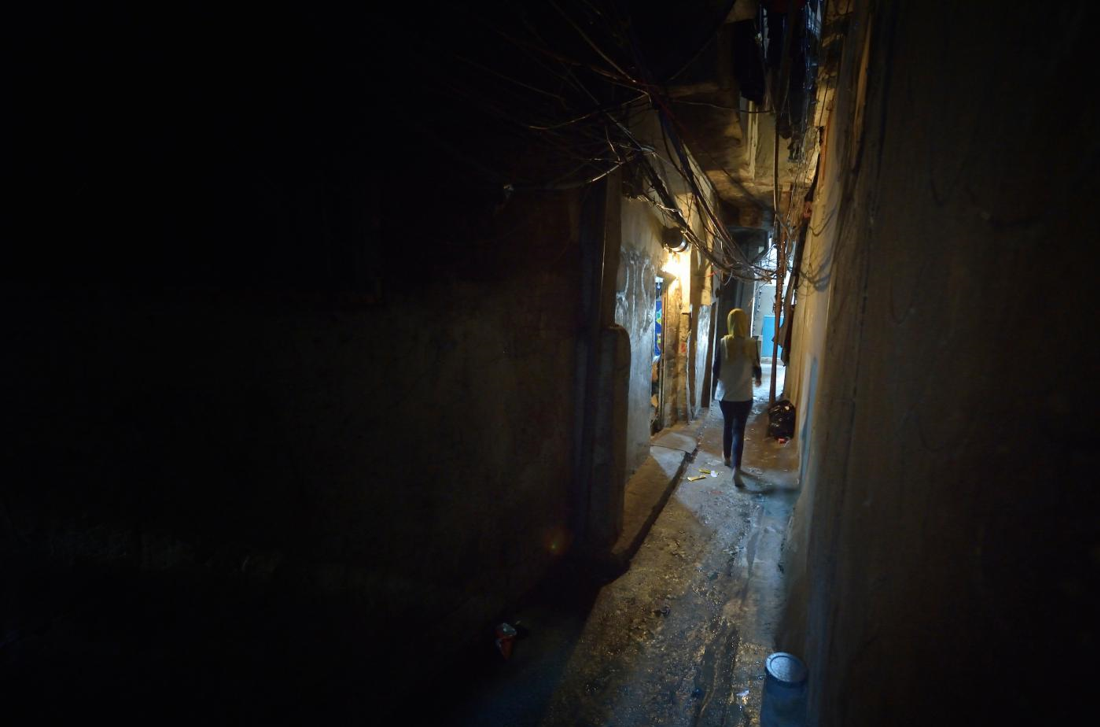
A narrow street in the Shatila refugee camp in Beirut, Lebanon, where refugees of Syria's civil war have moved in alongside Palestinians who have lived here for decades. Photo: Paul Jeffrey/Life on Earth
"A series of simultaneous, violent, and unprecedented airstrikes targeted 100 sites, including residential neighborhoods and civilian locations across various Lebanese areas, resulting in hundreds of wounded and martyrs among innocent civilians,” reads a joint message from the two organizations. “We strongly denounce these attacks and emphasize the necessity of protecting civilians and civilian infrastructure, based on the fundamental obligation under international humanitarian law.”
The World Council of Churches and Middle East Council of Churches affirmed that the world today faces a serious test of its humanity. “One does not need to be Lebanese or Arab to feel anger at what is happening in Gaza, Lebanon, and other Middle Eastern countries,” reads the message. “It is enough to be human in a time when we need to humanize humanity itself.”
The World Council of Churches and Middle East Council of Churches called on the concerned parties to work towards the immediate cessation of all attacks and to respect international law and human rights.
“This must be accompanied by ensuring the protection of civilians and allowing unhindered access to humanitarian aid, as people have become isolated from the basic necessities of life,” reads the message. “We also call upon the international community and all concerned parties to assume their responsibilities and prevent further deterioration that threatens the security and stability of Lebanon and the entire region.”
Full Statement:
“Blessed are the peacemakers, for they will be called children of God (Matthew 5: 9).
Following the serious and catastrophic security escalation witnessed today in the city of Beirut, along with many other Lebanese regions, The World Council of Churches and the Middle East Council of Churches express deep concern and strong condemnation of what has occurred. A series of simultaneous, violent, and unprecedented airstrikes targeted 100 sites, including residential neighbourhoods and civilian locations across various Lebanese areas, resulting in hundreds of wounded and martyrs among innocent civilians.
We strongly denounce these attacks and emphasize the necessity of protecting civilians and civilian infrastructure, based on the fundamental obligation under international humanitarian law.
We affirm that the world today faces a serious test of its humanity. One does not need to be Lebanese or Arab to feel anger at what is happening in Gaza, Lebanon, and other Middle Eastern countries. It is enough to be human in a time when we need to humanize humanity itself.
Accordingly, we call on the concerned parties to work towards the immediate cessation of all attacks and to respect international law and human rights. This must be accompanied by ensuring the protection of civilians and allowing unhindered access to humanitarian aid, as people have become isolated from the basic necessities of life.
We also call upon the international community and all concerned parties to assume their responsibilities and prevent further deterioration that threatens the security and stability of Lebanon and the entire region. We lament the fact that Lebanon was not included in the recent conditional two-week ceasefire.
In this context, we express our full solidarity with the Lebanese people during these difficult times and raise our Prayers for peace, truth and justice, and on the intention of the victims and the wounded.
Rev. Prof. Dr Jerry Pillay,
General Secretary
World Council of Churches
Dr Michel Abs,
Secretary General
Middle East Council of Churches