
On and Off
Middle East Socioeconomic Overview
Report: July 2026
Every once in a while, the US and Iran either fight it out or go into a cease fire. This is very destabilizing for the regional economy especially when prices keep fluctuating. Photo Credit: countercurrents.org
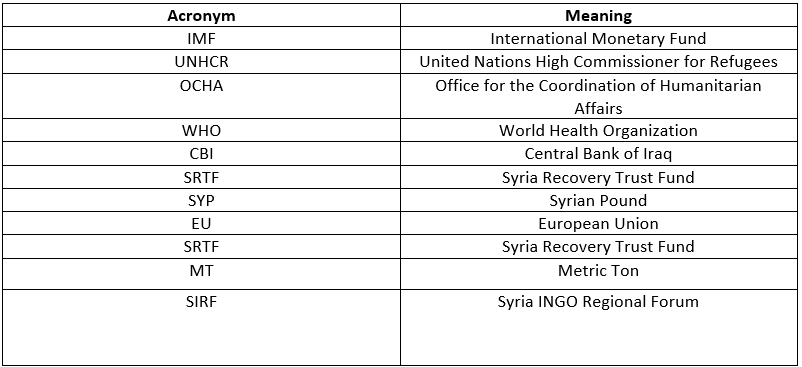
1. Table of Acronyms
2. Introduction
From time to time, the US and Iran exchange blows with one another and then go into a ceasefire. Then, a disagreement happens during negotiations and fighting resumes. Throughout the course of this year, regional and international economy has suffered a lot. Not only energy prices have increased but countries dragged into the conflict had their economies directly affected as businesses and investments took a hit. To make matters worse, the conflict, albeit gradually, seems to be expanding attracting new players into the ordeal. Moreover, the Russo-Ukrainian war which is also still ongoing, is intersecting with what is happening in the Middle East thus further complicating things. Mediators should intervene at a larger level before things get any worse.
3. The Socio-Economic Situation
Egypt
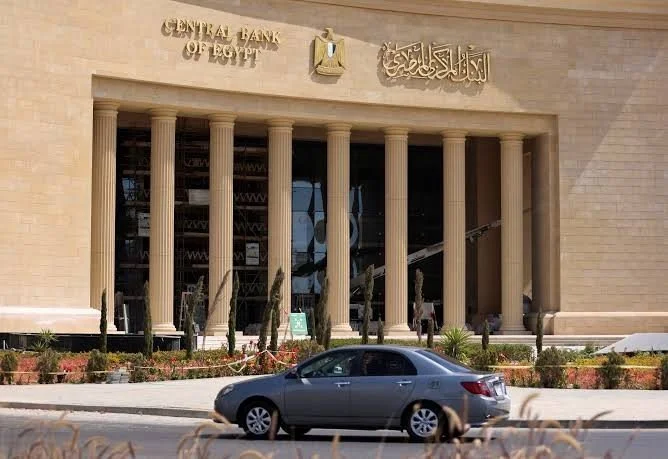
Although the crisis in the region has affected Egypt, it remains resilient despite the obstacles. Photo credit: reuters.com
Egyptian markets have begun to be affected by the renewed military escalation in the Gulf and the Middle East. July’s trading saw a decline in stock market performance and a rise in the dollar exchange rate against the pound, while gold prices remained high, coinciding with a surge in global oil prices. Economic analysts believe that the resurgence of geopolitical tensions in the region has brought uncertainty back to the markets, prompting investors to reassess their positions amid fears that the ongoing crisis could trigger a new wave of inflationary pressures and drive up import costs, particularly in the energy sector. Experts point out that the Egyptian economy is among the most affected in the region by rising energy prices due to their given the impact on the import bill, production costs, and inflation levels. This situation that could limit the room for maneuver available to economic policymakers in the coming period. Moreover, the Central Bank of Egypt stated that the current account deficit widened to $14.6 billion compared to $13.2 billion in the previous fiscal year—driven by a rise in the merchandise trade deficit, which increased by 24.6% to reach approximately $47.8 billion. If it weren’t for several factors, such as 32% increase in remittances from Egyptians working abroad, which rose to $34.9 billion from $26.4 billion, the gap would have been larger. Economists estimate that central banks may move to keep interest rates high for a longer period, given escalating geopolitical risks and uncertainty regarding the inflation trajectory. Observers believe this trend could pose additional challenges for the Egyptian economy, as it raises the cost of attracting foreign investment and increases financing burdens, all at a time when Egypt is striving to maintain exchange market stability and implement its economic reform program in cooperation with the International Monetary Fund.
Despite all this, Egypt is still resilient and is able to score some wins. In its statement, the Central Bank noted an improvement in the balance of payments performance during the period from July to March of the 2025–2026 fiscal year, as the overall deficit narrowed to approximately $1.8 billion—down 2.9% from $1.9 billion during the corresponding period of the previous fiscal year. Another positive contributor is the tourism sector whose revenues rose by 14.9% to reach $14.4 billion, compared to $12.5 billion during the same period of the previous year. Suez Canal revenues also rose by 22.1% to reach $3.2 billion, driven by an 18.5% increase in the net tonnage of transiting vessels—reaching 426.9 million tons—and a 7.6% rise in the number of vessels to approximately 10,000. The Central Bank stated that the improved performance of the services sector coincided with the Suez Canal beginning to regain some of its previous levels, following disruptions to shipping traffic caused by recent regional tensions. Net foreign direct investment inflows to Egypt reached approximately $13 billion, compared to $9.8 billion in the corresponding period; this figure includes inflows associated with the $3.5 billion "Alam El-Roum" mega-development project executed during the second quarter of the fiscal year. Also, Egypt's foreign currency reserves surpassed the $55 billion mark for the first time in the country's history, reaching $55.072 billion by the end of last June. This reflects the continued improvement in Egyptian economic indicators and underscores the state's ability to bolster its foreign currency reserves and support its financial stability.
Jordan
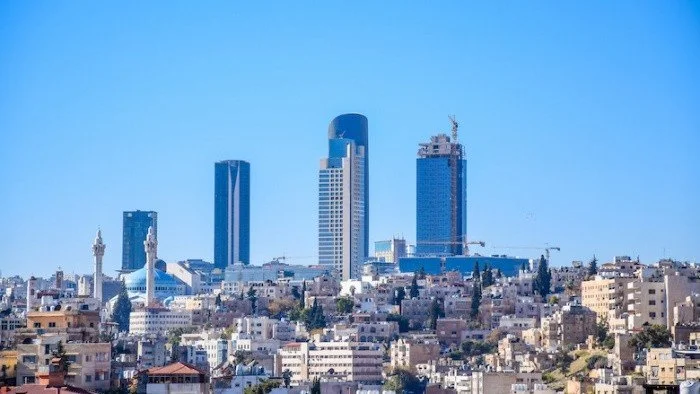
IMF: Jordanian economy remains resilient despite the war. Photo Credit: menafn.com
Despite the repercussions of the regional war and the uncertainty that came with it, the International Monetary Fund (IMF) affirmed that the Jordanian economy has continued to demonstrate resilience in the face of regional challenges, noting that the government's economic reform program remains on track. According to the IMF, economic activity in Jordan remained resilient throughout 2025, supported by sustained domestic demand and improved performance across several sectors, while inflation remained low and foreign reserves stayed at comfortable levels. The Fund noted that the government has made progress on reforms under its economic program, having met all quantitative performance criteria through the end of December 2025 and achieved most indicative targets through the end of December 2025 and March 2026. The IMF explained that the Jordanian economy faced new pressures due to the war including a decline in tourism activity, reduced trade, rising oil prices, and increased electricity production cost, prompting a revision of certain economic forecasts. The Fund lowered its forecast for Jordan’s economic growth in 2026 to 2.7% down from a previous projection of 2.9%. Yet it still anticipates a rebound to 3.1% in 2027, supported by the continued implementation of economic reforms and the launch of several investment projects. The Fund projected that average inflation in 2026 would reach approximately 2.5% driven by rising energy and food prices, while remaining low compared to many other economies. Public debt reached 83.6% of GDP by the end of 2025, while the government reaffirmed its commitment to gradually reduce it to 80% of GDP by 2028. The report indicated that the war would lead to a temporary widening of the fiscal deficit in 2026, driven by rising energy costs and a decline in certain revenues. Nevertheless, the government has pledged to contain these pressures by reprioritizing spending, securing additional budget grants, and continuing to adapt to the rising global oil prices.
Iraq
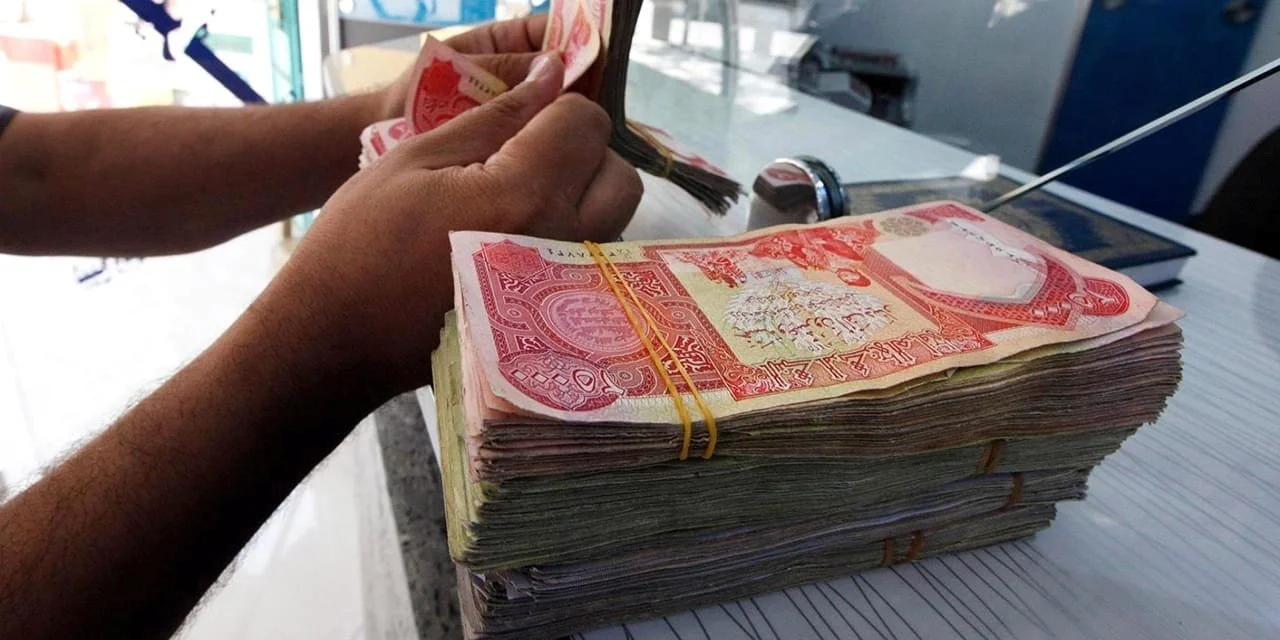
As a result of the war, the Central Bank is unable to improve the value of the dinar with respect to the dollar. Photo Credit: gulfhouse.org
With the resumption of military operations in the region, Iraq is one of the first to be affected. Stagnation returned to the real estate and automotive markets as soon as both sides started to exchange fire. Moreover, the value of the dinar to the dollar reached 1530 and the resumption of the war will make it impossible for the Central Bank to restore the Iraqi dinar to its pre-war value of 1,450 dinars. Iraq continues to export less than 10% of the oil volume it sold globally prior to the war with Iran and the closure of the Strait of Hormuz. As such, it currently exports only about 250,000 barrels, compared to a daily export volume of over 3.6 million barrels prior to the war. Economists warns that if the closure of the Strait of Hormuz persists for another month, Iraq will face will have to rely on two options for funding its operational budget: domestic borrowing, which is already taking place, or drawing upon its financial reserves. To make matters worse, Iraq’s financial reserves are in continuous decline. In November 2025, Iraq had over $103 billion. However, it then fell to $97 billion in March of this year, and most recently to $92 billion last month. This drop stems from ongoing withdrawals to fund expenditures following the loss of oil which is the economy's primary revenue source. What’s more, there is a likely risk that armed groups may resume attacks on American interests within the country, thus destablizing the country internaly and hindering intercity trade. Also, the Iraqi market relies heavily on trade with Iran and Turkey, which accounts for up to 70% of its trade volume. Therefore, any disruption to this balance, such as a slowdown in the flow of goods from Iran to Iraq, would trigger another crisis, particularly given the more than two decades of stable trade relations with Iran in the food and commodities sector. Already, the volume of gas supplied by Iran to Iraq for operating power plants has dropped by half. This will make it difficult to provide electricity to businesses, industries, and homes which will lead to a further slowdown of the economy. Commentators fear that alll this will lead to negative outcomes such as degraded security conditions within the country and the further detrioration of the value of the dinar.
Lebanon
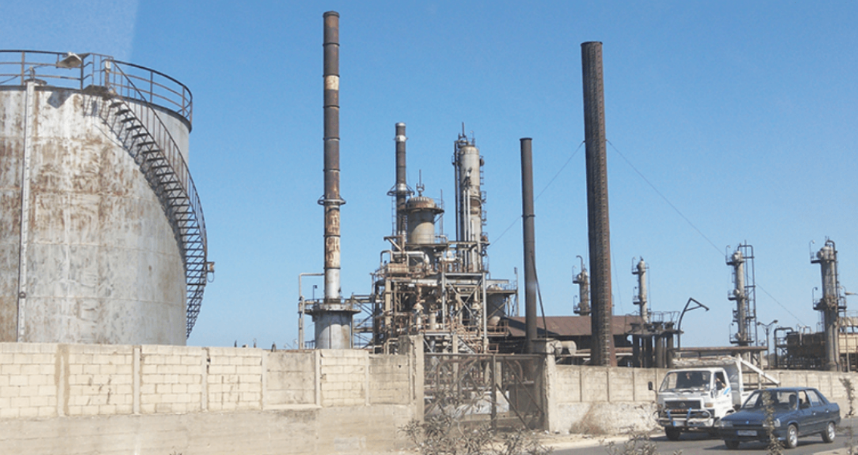
Oil facilities in Tripoli, North Lebanon. (Archive photo: NNA)
In an attempt to save Lebanon’s economy, the government is trying to reach new agreements with neighboring countries. From one end, Minister of Economy and Trade Amer El Bsat visited Syria to discuss new areas of strategic partnership and examine opportunities for investment in vital sectors, thereby enhancing economic integration between the two countries. This would be done by strengthening cooperation between the relevant ministries in both countries through setting up new agreements, and expanding communication with the businessmen and investors who accompanied the Lebanese delegation. Al-Bassat noted that the discussions in Damascus addressed a wide range of future investment opportunities, as well as technical matters particularly those concerning border crossings. Regarding the anticipated agreements, Al-Bassat explained that priority would be given to the key issues emphasized during his meeting with Syrian official Ahmad al-Sharaa, foremost among them are electricity network, gas transmission lines, ports, and infrastructure. Prime Minister Nawaf Salam also had a role in the rapprochement with neighboring countries. He visited Iraq to examine an opportunity which involves the transportation crude oil from the Basra fields (southern Iraq) to the Lebanese port of Tripoli via Syria. This deal is important so that to achieve economic recovery goals, especially in the areas of interconnection and strategic integration; the proposed oil connection between Iraq and Lebanon is not only strategic given Lebanon's storage capacities but it presents opportunities that matches Iraq's intention to increase its oil production. The prime minister also announced the launch of a preliminary phase of creating a Lebanese-Iraqi technical commission, tasked with advancing cooperation between the two countries, particularly as part of the future special economic zone. The Lebanese government also plans to rehabilitate storage tanks to facilitate overland oil transport, inspired by the current model with the Syrian port of Banias. By invigorating its relationship with Syria and Iraq, Lebanon can achieve a healthier economic status and more stability.
Palestine
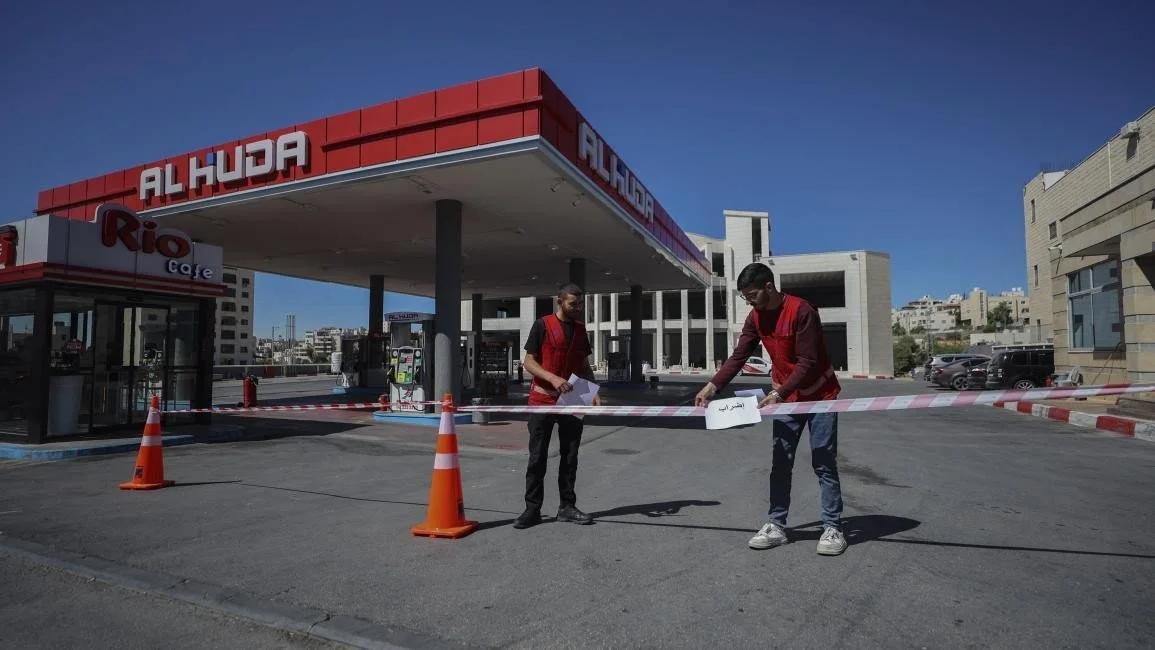
A gas station participating in the private sector strike. Photo Credit: https://www.aajeg.com/
A crisis of accumulating Occupier currency in the West Bank is intensifying, permeating various aspects of economic life and exacerbating Palestinian hardship. Warnings are mounting economic repercussions that threaten commercial activity and financial liquidity, as solutions remain absent and pressures on the Palestinian economy persist. The West Bank witnessed protests actions involving chambers of commerce and gas stations, as fuel stations across the territory temporarily closed their doors at 11:00 a.m. This coincided with protest sit-ins organized outside the headquarters of chambers of commerce and industry across various governorates, in rejection of the ongoing crisis regarding the accumulation of Occupier currency in Palestinian banks, which of course was a result of Occupier restrictions on shipping out surplus currency. The Occupier is using the issue of currency shipments as a tool for economic pressure, as Occupier banks refuse to accept the accumulated quantities of the currency held by Palestinian banks. Efforts by the Palestine Monetary Authority and the Palestinian government have not yielded tangible results in pressuring the European Union to persuade the Occupier to accept the currency surplus or raise the transfer ceiling. Trade between the Palestinian and Occupier markets contributes to deepening the crisis; approximately 54 billion of Occupier currency change hands annually between the two sides, while the Palestinian market sources fulfil between 57% and 62% of its needs from the Occupier, reflecting a high level of economic dependency. According to a member of the General Union of Palestinian Economists, current data indicates ongoing official efforts across multiple channels. These include EU-led diplomatic pressure to raise the annual transfer ceiling from 18 billion to 32 billion, alongside contacts between the Palestine Monetary Authority and the Occupier side to facilitate the receipt of currency.
Syria
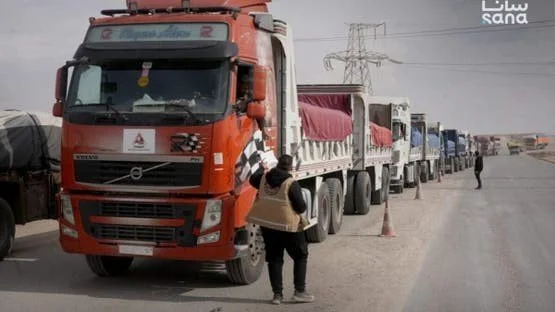
The Chinese government is in discussions with the Syrian government to improve the transport sector in Syria. Photo Credit: alarabiya.net
In the context of supporting economic recovery and enhancing cooperation with the international world, the Syrian government held throughout July, a series of meetings and initiatives. For instance, Syrian Finance Minister Mohammad Yasar Barnia convened with representatives of the International Monetary Fund to discuss the economic and financial developments in Syria. The Ministry of Finance stated that the meeting focused on developing a medium-term macroeconomic and fiscal framework, improving the quality of economic and financial data, and enhancing coordination among government entities, thereby supporting the formulation of more efficient and accurate fiscal policies. The two sides also discussed the sustainability of public debt, financial sector reform, and the development of tax administration, in addition to the Ministry of Finance's efforts to develop modern financing tools. During the meeting, the importance of continued cooperation in the areas of capacity building and the development of financial institutions was emphasized, contributing to enhanced economic stability and the creation of an environment more conducive to investment and growth. To improve its integration with the international world, Syria also launched the National Strategy to Combat Money Laundering, Terrorist Financing, and the Proliferation of Weapons, in cooperation with the United Nations Development Programme during a consultative workshop in the Syrian capital, Damascus. This move should pave the way for economic and financial stability, as well as a key element in protecting the national economy, enhancing the integrity of the financial system, solidifying confidence in institutions, and fostering an environment conducive to investment and sustainable development.
Another initiative Syria has undergone to rewind the years of isolation the past years have incurred, is meeting with Chinese ambassador to enhance bilateral cooperation in the transport sector. Both sides discussed prospects for developing the partnership between the two countries, particularly in the areas of sustainable transport, technological transformation, and support for transport infrastructure. Both sides emphasized the importance of leveraging China's advanced experience in developing the road and railway sectors, while expressing a desire to enhance cooperation and benefit from Chinese grants and programs dedicated to capacity building and training. They highlighted the importance of the Belt and Road Initiative, known as the New Silk Road, and Syria’s potential role within the initiative in light of recent regional changes, particularly developments in the Strait of Hormuz and their impact on global supply chains. The Syrian side emphasized the Ministry of Transport recently issued an international call for tenders to implement strategic projects for the rehabilitation and development of Syria's road network, inviting Chinese companies to participate in these projects. The project relates to the rehabilitation of the main international road linking the Jordanian border with the Turkish border, and includes the re-implementation of the pavement layers, and upgrading the road to become a highway. For its part, the Chinese side affirmed his country's readiness to continue strengthening cooperation with Syria and developing bilateral relations in the transport sector, thereby contributing to the implementation of projects that meet its development needs.
Cyprus
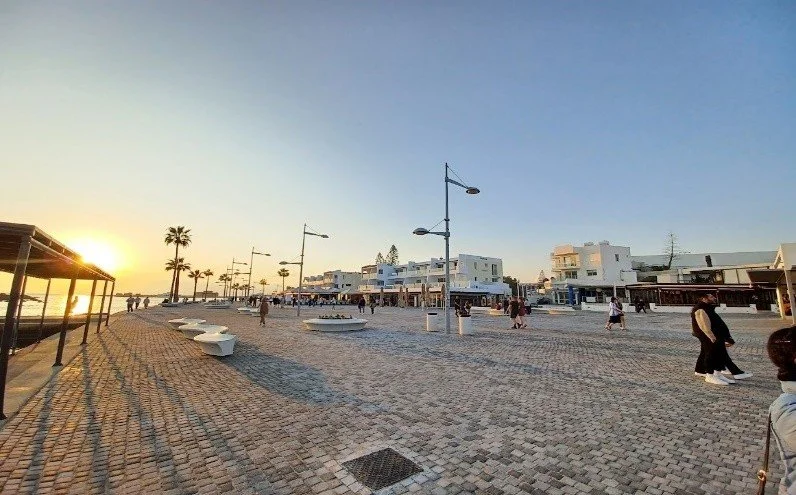
Although Cyprus’s economy is resilient when compared to others, economic growth slows to weakest pace in ten quarters. Photo Credit: cyprus-mail.com
Due to the increase of energy prices which resulted of the ongoing war in the region, Cyprus’s economy suffered a slowdown in the first quarter of 2026. Deemed as the worst quarter in the past ten years, the Eurobank declared that the GDP decreased from 4.6% in 2025 to 3% in 2026. According to the bank, the economy continued to register strong trade growth, but the revenue from net exports decreased due to increased transportation and energy costs. What also contributed to this regression is the unusually low investment in transport equipment, including ships and aircraft, a year earlier. Over the past years, exports have increased by 10.5 per cent year-on-year, while imports rose by 10.4 per cent. However, once the war started a significant shift from the other years have been registered: exports grew by only 3.4 per cent and imports contracted by 3.9 per cent. Opposite to external trade, the country’s domestic demand strengthened across most components of the economy. Private consumption increased by 4.9% in 2026 which is higher than in 2025 where it grew by 4.6%. The bank pointed that one major factor behind this increase is the decrease of unemployment to a record low of 4.0 per cent. Similarly, government consumption also increased albeit modestly expanding by 4.6 per cent year-on-year, compared with 4.3 per cent in the final quarter of 2025. However, all this might change if the situation in the region prolongs or becomes worse as unemployment might increase especially in tourism, administrative services and logistics-related activities which are taking a hit. There is also the issue of inflation which has already sharply risen from 0.9% in February to 4%. There is a chance that the trend will continue thus impacting consumption levels. Nevertheless, the bank was satisfied by the country’s overall performance for it remains favorable for investment. Cyprus is supported by strong public finances and is steadily improving its financing conditions. Moreover, the business-friendly regulatory and tax framework it possesses, and the island’s strategic geographical location is still allowing investments to poor into the economy.
4. The Humanitarian Situation
Egypt
U.S Chargé d’Affaires (CDA) Robert Silverman announced that the United States provided more than twenty-four million dollars to the World Food Program to assist Sudanese refugees in Egypt.[1]
UNHCR offices in Egypt are reporting increased crowding of Sudanese refugees at their offices due to rising fears of deportation and Egypt’s new deportation laws. [2]
Jordan
The UNHCR states that there are currently 370,179 registered refugees in Jordan up until the beginning of July.
The proportion of Syrian displaced people registered within the UNHCR, are distributed as follows:
-115,451 in Amman Governorate (31.2%)
-96,232 in Mafraq Governorate (26.0%)
-64,209 in Irbid Governorate (17.3%)
-55,214 in Zarqa Governorate (14.9%)
-9,996 in Balqa Governorate (2.7%)
-7,852 in Madaba Governorate (2.1%)
-4,206 in Jarash Governorate (1.1%)
-4,870 in Karak Governorate (1.3%)
-5,676 in Maan Governorate (1.5%)
-2,828 in Ajlun Governorate (0.7%)
-2,707 in Aqaba Governorate (0.7%)
-889 in Tafilah Governorate (0.2%)
-220 in other (0.1%)
According to the UNHCR, more than 208,000 Syrian refugees registered with the agency returned to Syria between December 8, 2024, and July 18, 2026.[3]
The Government of Japan has reaffirmed its continued support to UNHCR, through a contribution of $6,000,000 helping families access essential services, reliable information, and assistance to meet their most urgent needs with dignity.[4]
According to the World Food Program a severe funding shortage has halted the food assistance to several refugees. Currently, it is only able to deliver food to refugees within camps. [5]
Iraq
The UNHCR states that there are currently 351,015 registered refugees.
The proportion of refugee people registered within the UNHCR up until the beginning of July, are distributed as follows:
-149,048 in Erbil (42.5%)
-92,499 in Dahuk (26.4%)
-39,497 in Sulaymaniyah (11.3%)
-2,818 in Ninewa (0.8%)
-46,425in Baghdad (13.2%)
-20,358 in other areas (5.8%)[6]
United Nations World Food Programme (WFP) in partnership with the International Center for Biosaline Agriculture (ICBA) and with financial support from Global Affairs Canada (GAC), has launched the MURUNA to help Iraqi communities to address water scarcity.[7]
Lebanon
Since the beginning of July the number of registered Syrian refugees in Lebanon is 889,625.
-286,316 in Bekaa (32.18%)
-238,808 in North Lebanon (26.84%)
-278,523 in Beirut (31.3%)
-85,978 in South Lebanon (9.7%)[8]
According to the Norwegian Refugee Council (NRC) more than 700,000 people remain unable to return home or rebuild their lives, despite a ceasefire. [9]
The United Nations World Food Program (WFP) welcomed a contribution of USD 1 million from the Government of Japan to provide life-saving in-kind food assistance to 59,000 vulnerable people affected by the recent escalation of conflict.[10]
Syria
Human Appeal, one the UK’s leading humanitarian charities, launched a new, localised wheat supply chain project in northwest Syria to help 1000 returning farmers restore agricultural production, protect livelihoods and support the country's long-term food security.[11]
With funding from the Kingdom of Saudi Arabia through King Salman humanitarian aid and relief Centre (KSrelief), UNOPS, in close coordination with the Syrian Ministry of Health, has started equipping three hospitals and establishing pediatric intensive care units (ICUs) in Hama governorate.[12]
The board of the Green Climate Fund (GCF), approved WATER-RES, its first project in Syria. As the world's largest climate fund dedicated to developing countries, the GCF plays a critical role in mobilizing climate finance and supporting transformative climate action around the world.[13]
Cyprus
Cyprus’s Asylum Service revoked refugee status from 95 people, including 80 Syrian citizens, after reviewing their legal situations. The move is part of a government policy to reassess protection granted in the past.[14]
[1] US Embassy, July 16, 2026, eg.usembassy.gov/the-united-states-supports-egypt-through-more-than-24-million-in-humanitarian-assistance-for-refugees/
[2] New Arab, July 17, 2026, https://www.newarab.com/news/thousands-sudanese-refugees-leave-egypt-amid-restrictions
[3] Enab Baladi, July 27, 2026, https://english.enabbaladi.net/archives/2026/07/over-208000-syrian-refugees-return-to-syria-from-jordan/
[4] UNHCR Lebanon, July 7, 2026, https://www.unhcr.org/jo/news/press-releases/support-japan-unhcr-sustains-critical-assistance-refugees-jordan-0
[5] Jordan News, July 26, 2026, https://www.jordannews.jo/Section-109/News/WFP-83-000-Syrian-Refugees-in-Jordan-Receiving-Reduced-Food-Assistance-53487
[6] https://data2.unhcr.org/en/situations/syria/location/5
[7] OCHA, July 9 2026,https://reliefweb.int/report/iraq/wfp-and-icba-partner-strengthen-water-governance-and-climate-smart-agriculture-food-security
[8] UNHCR, Oct 28, 2024, https://data2.unhcr.org/en/situations/syria/location/71
[9] OCHA, July 2, 2026, https://reliefweb.int/report/lebanon/lebanon-100000s-unable-return-amid-continued-military-activity-despite-agreements-nrc
[10] OCHA, July 13, 2026, https://reliefweb.int/report/lebanon/japan-contributes-usd-1-million-support-conflict-affected-people-lebanon-life-saving-food-assistance
[11] OCHA, July 14, 2026, https://reliefweb.int/report/syrian-arab-republic/human-appeal-supports-syrian-farmers-through-new-wheat-supply-chain-project
[12] OCHA, July 13, 2026, https://reliefweb.int/report/syrian-arab-republic/funded-ksrelief-unops-started-equipping-three-hospitals-hama-coordination-ministry-health
[13] OCHA, July 1, 2026, https://reliefweb.int/report/syrian-arab-republic/water-res-major-climate-adaptation-initiative-15-million-people-syria
[14] OCHA< Enab Baladi, July 15, 2026, https://english.enabbaladi.net/archives/2026/07/cyprus-revokes-asylum-status-for-80-syrians/