A Special Session on the Middle East Bearing the Concerns and Issues of the Region
At the Sixth World Conference on Faith and Order Commission of the World Council of Churches
You can find some photos at the end of the text.
Media of the Middle East Council of Churches (MECC) - Egypt
Photos: World Council of Churches (WCC)
The Middle East, its most prominent challenges and concerns about Christian unity... Titles and issues conveyed a true picture of the reality the region has been experiencing for decades, reflecting the aspirations of its people to the entire world.
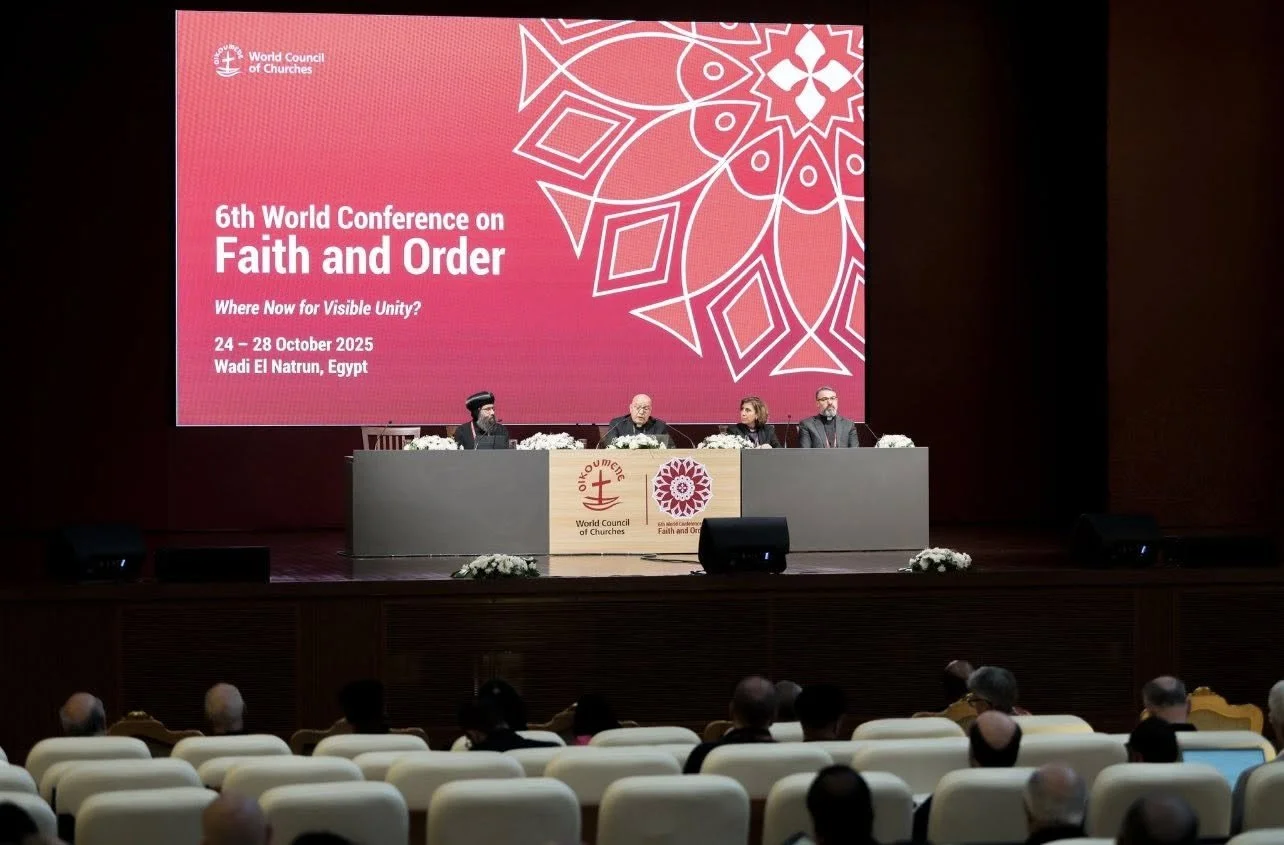
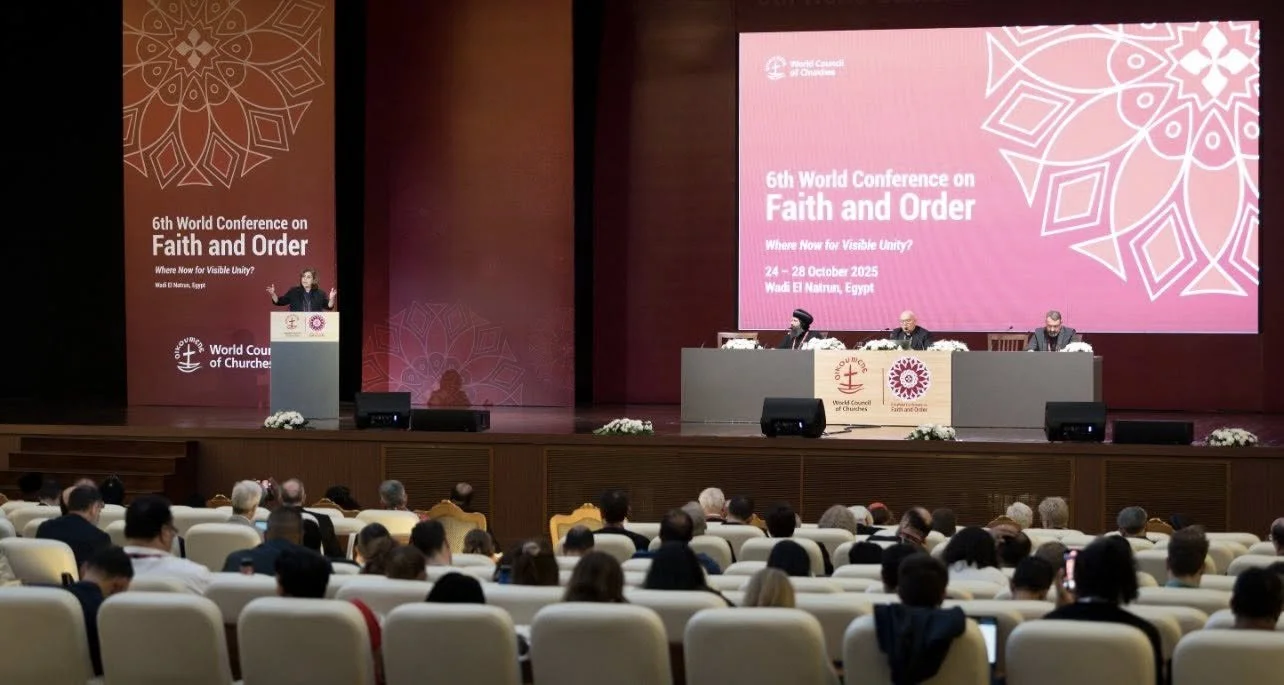
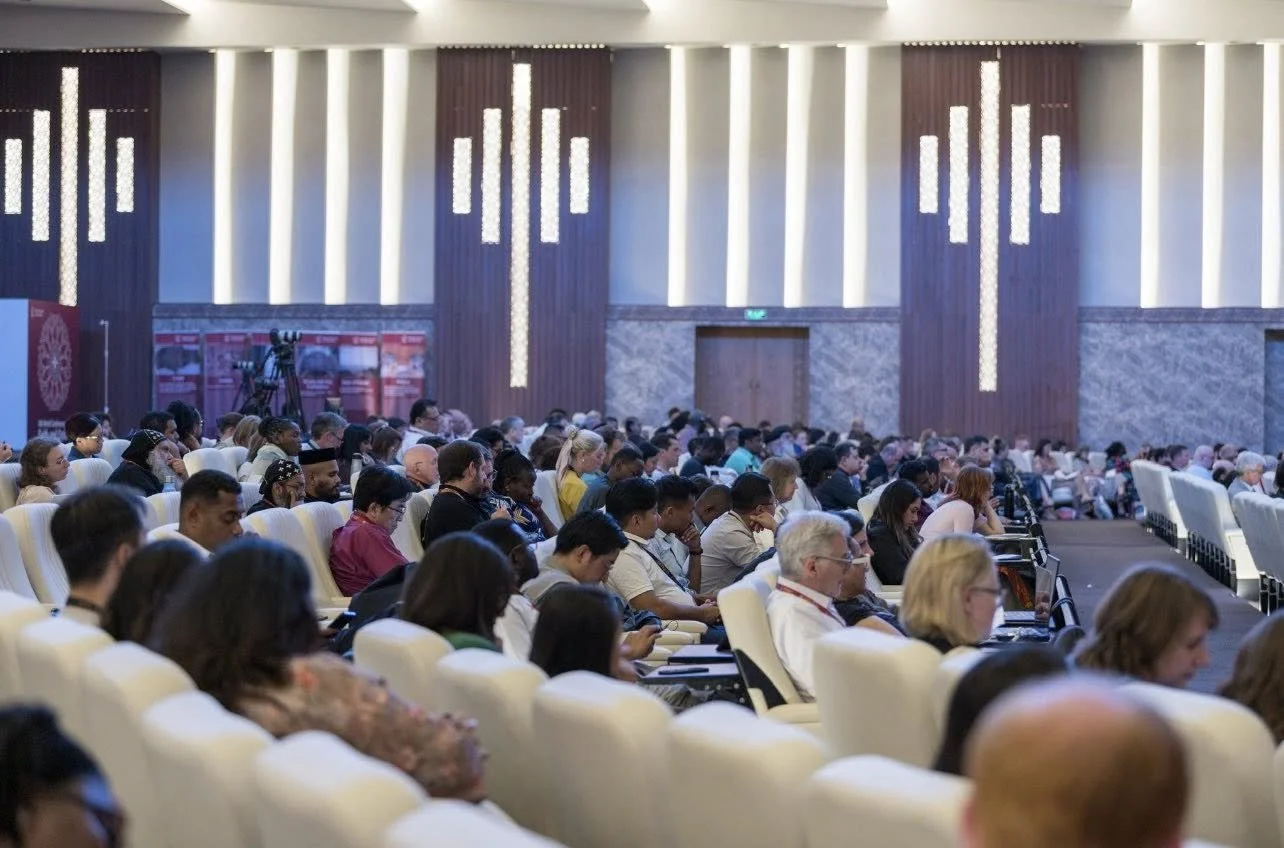
This was the theme of one of the sessions on the first day of the Sixth World Conference on Faith and Order Commission of the World Council of Churches (WCC), held under the theme "Where now for visible unity?" from October 24 to 29, 2025, at the Papal Logos Centre in Wadi El Natrun, Egypt.
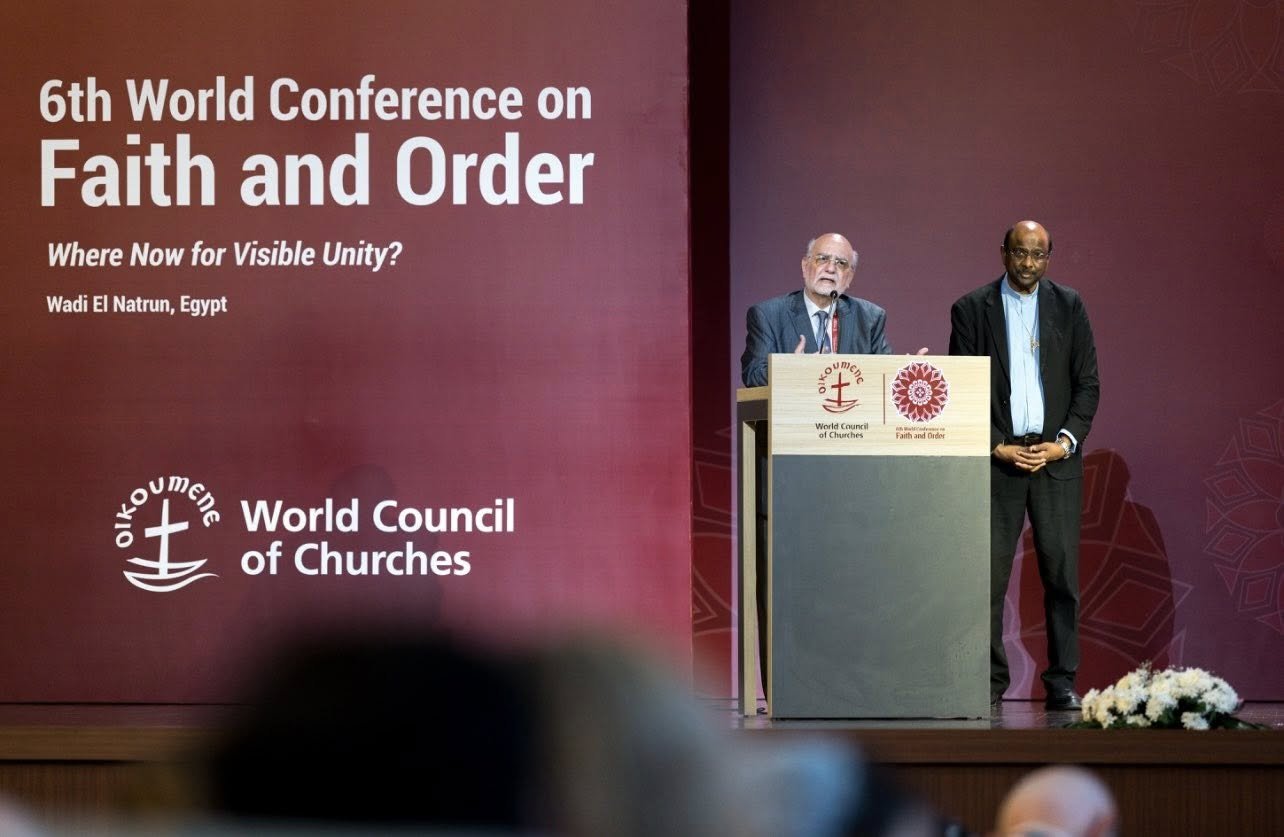
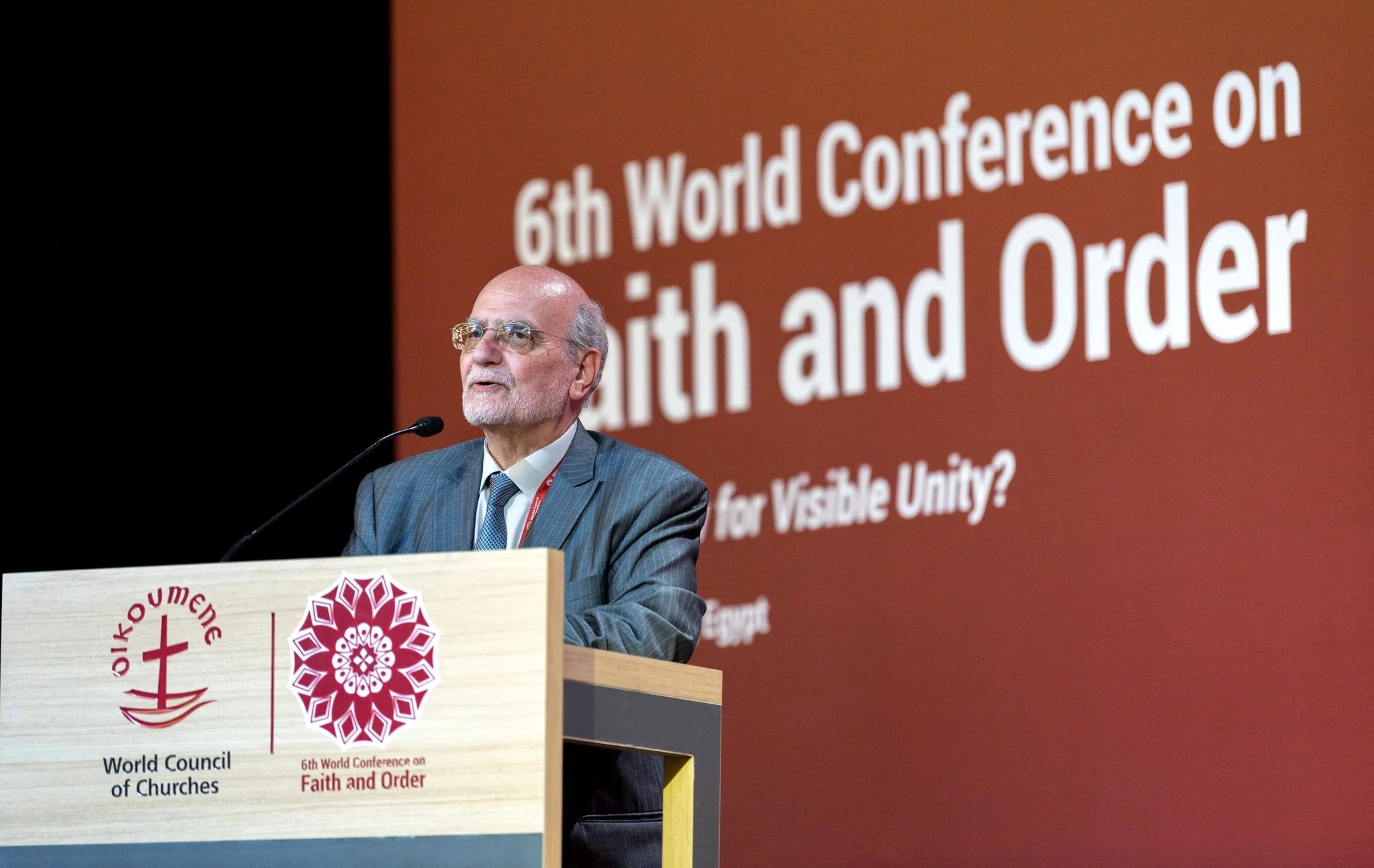
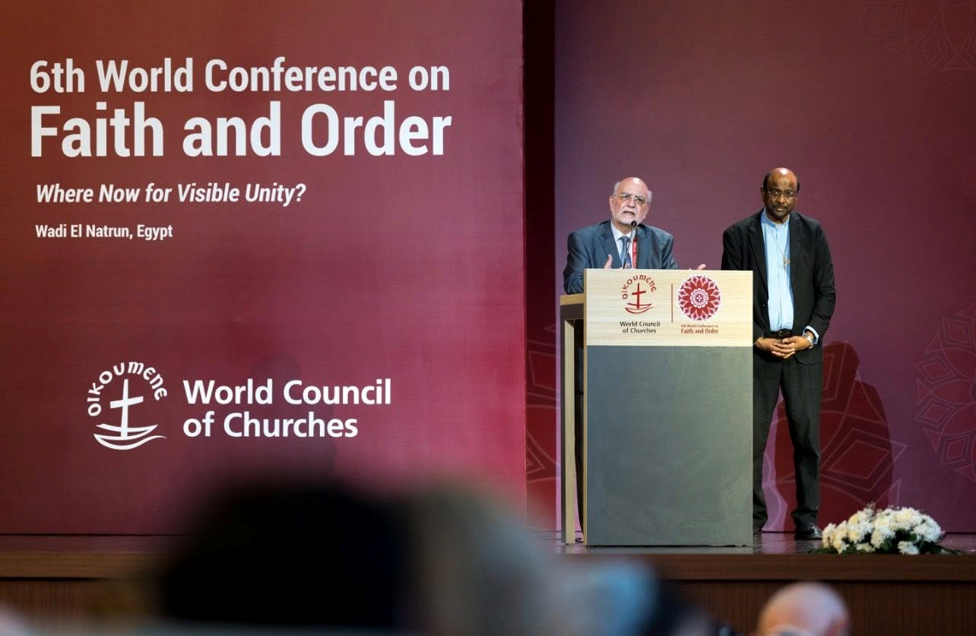
The session began with a word delivered by the Secretary General of the Middle East Council of Churches (MECC) Professor Michel Abs who stressed that “Christian unity is much more visible than we think… The Christ is one and we are one, and in His name we celebrate life and salvation.”
He said: “As Christians, we develop huge number of togetherness settings. Christians accept each other regardless their differences. We are in a way one… Unity is there we just need to know how to live it”.
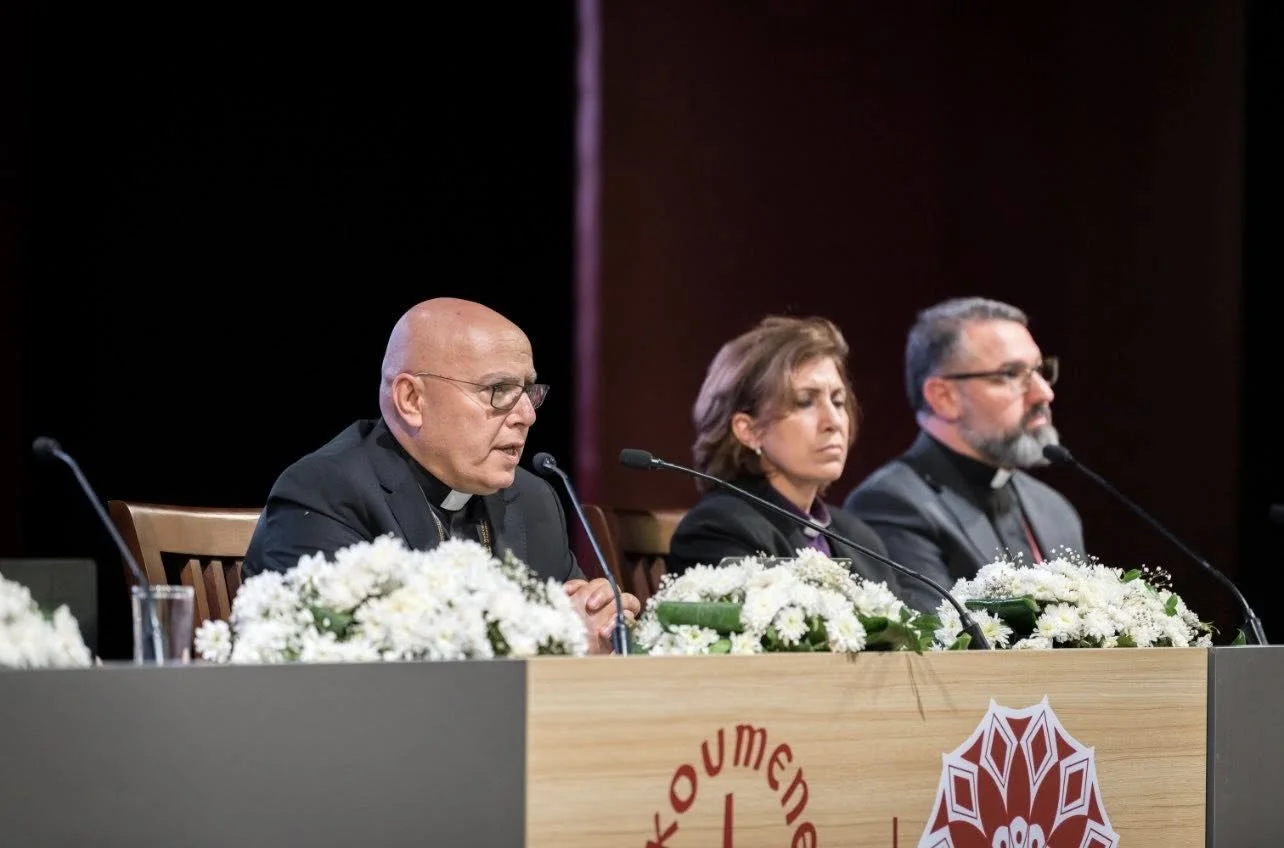
The session, organized by the Middle East Council of Churches (MECC), was moderated by Father Dr. Antoine Al Ahmar, Director of the MECC Theological and Ecumenical Department, who noted in his word that “The Middle East is not only the birthplace of Christianity, but also a living testimony to the endurance, transformation, and vitality of faith across centuries. Here, the testimony of faith became martyrdom (it remains until today), and defenders of the faith such as Saint Athanasius and the early Church Fathers bore courageous witness to the truth of the Gospel.”
He added, “This session seeks to deepen our understanding of Christian faith in the Middle East — a faith shaped by history, enriched by diversity, and tested by complex social, political, and interreligious realities.”
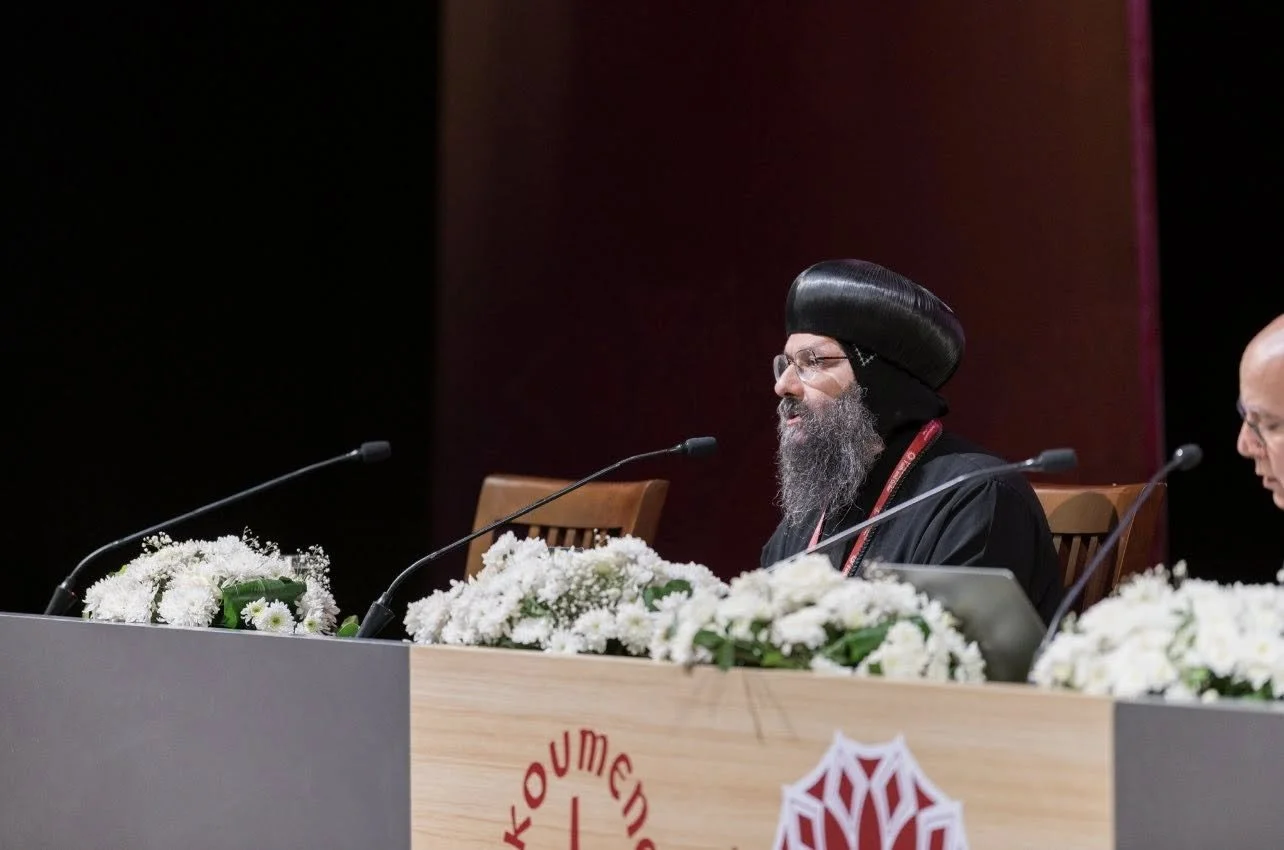
Then, a speech was delivered by His Grace Anba Hermina, General Bishop, Coptic Orthodox Church, who addressed four themes: “the Christian faith — deeply rooted in the soil of the Middle East, the Christian faith in the Middle East — a living and suffering faith, the Coptic Orthodox Church — a living witness to the apostolic faith, and the present reality of the Christian Church in the Middle East — challenges and opportunities.
He concluded his speech by emphasizing that “The Christian faith in the Middle East is not merely a heritage of the past but a life renewed by the Holy Spirit — a vocation of faithfulness: to our roots, to our present, and to our future.”
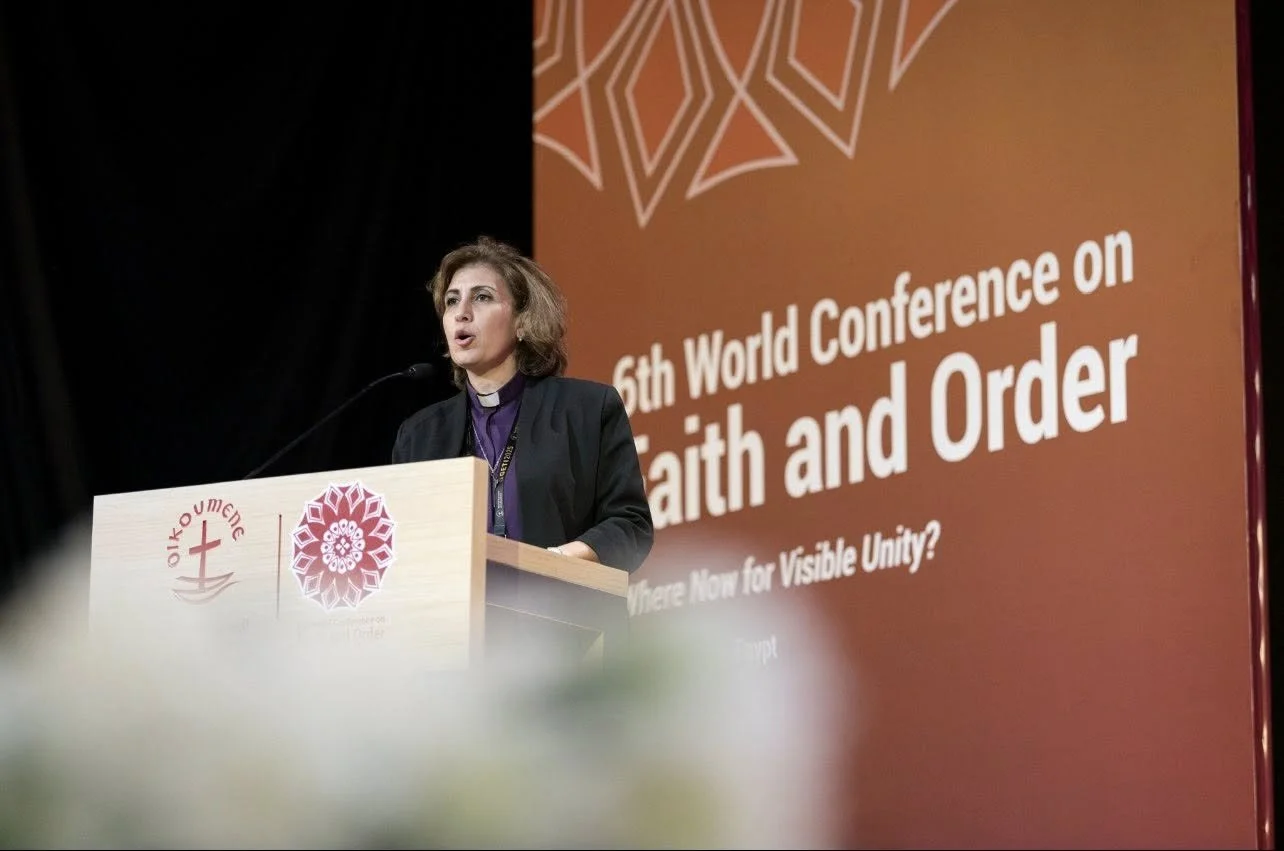
Afterwards, Reverend Dr. Rima Nasrallah, Academic Dean of the Near East School of Theology, Lebanon, delivered a speech in which she noted that in the Middle East, “where God and Religion are used to justify violence and oppression, to dispossess, vilify and eliminate the other; we need to accept the Risk! We accept the Risk because we believe that we have a role to play in the transformation of our societies - and we who are natives to these lands, who know the culture and share in the pain, can best fulfil this role.”
She continued, “We embrace the risk so we can counter hatred with love, pain with understanding, and suffering with compassion. We embrace this RISK together, as the churches of the middle east, but we also invite you all not to shy away from Risk but to walk with us as equal companions, not to secure our own survival, but for the life we share with the most vulnerable among us.”
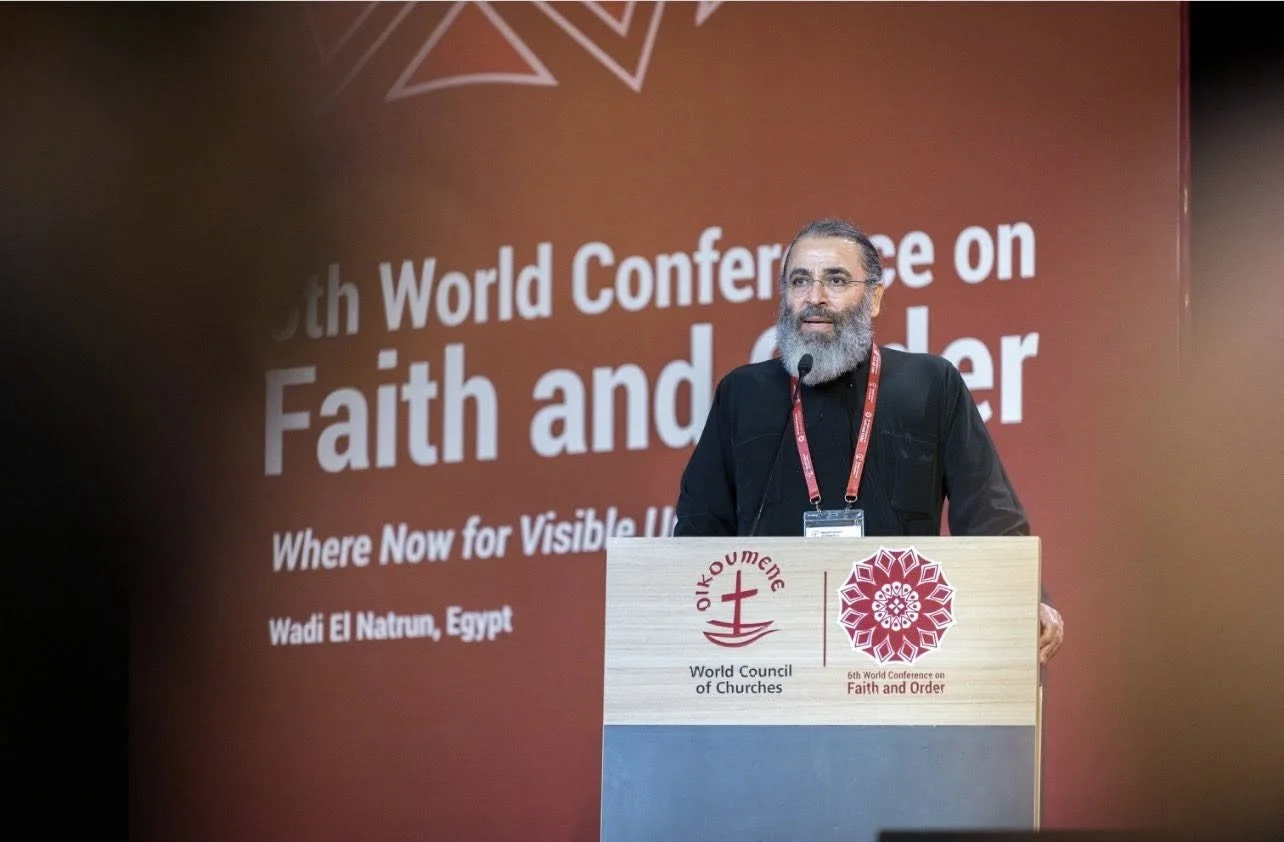
The next word was delivered by Father Dr. Karam Shamasha, Provost of the Catholic University in Erbil, Iraq, who said: “Christians in the Middle East, through their experiences in Iraq, Lebanon, Syria, Palestine, and other nations where they face persecution, enrich our global understanding of faith and unity. They show us that faith is not just a set of beliefs we recite; it is a way of life demonstrated through the witness of action, through our action and presence, and if necessary, for which we are willing to sacrifice our lives…”
He added, “As the Universal Church, let us work together to honor the witness of persecuted Christians and respond to their call for a unity that is not just spoken but truly visible through solidarity and communion.”
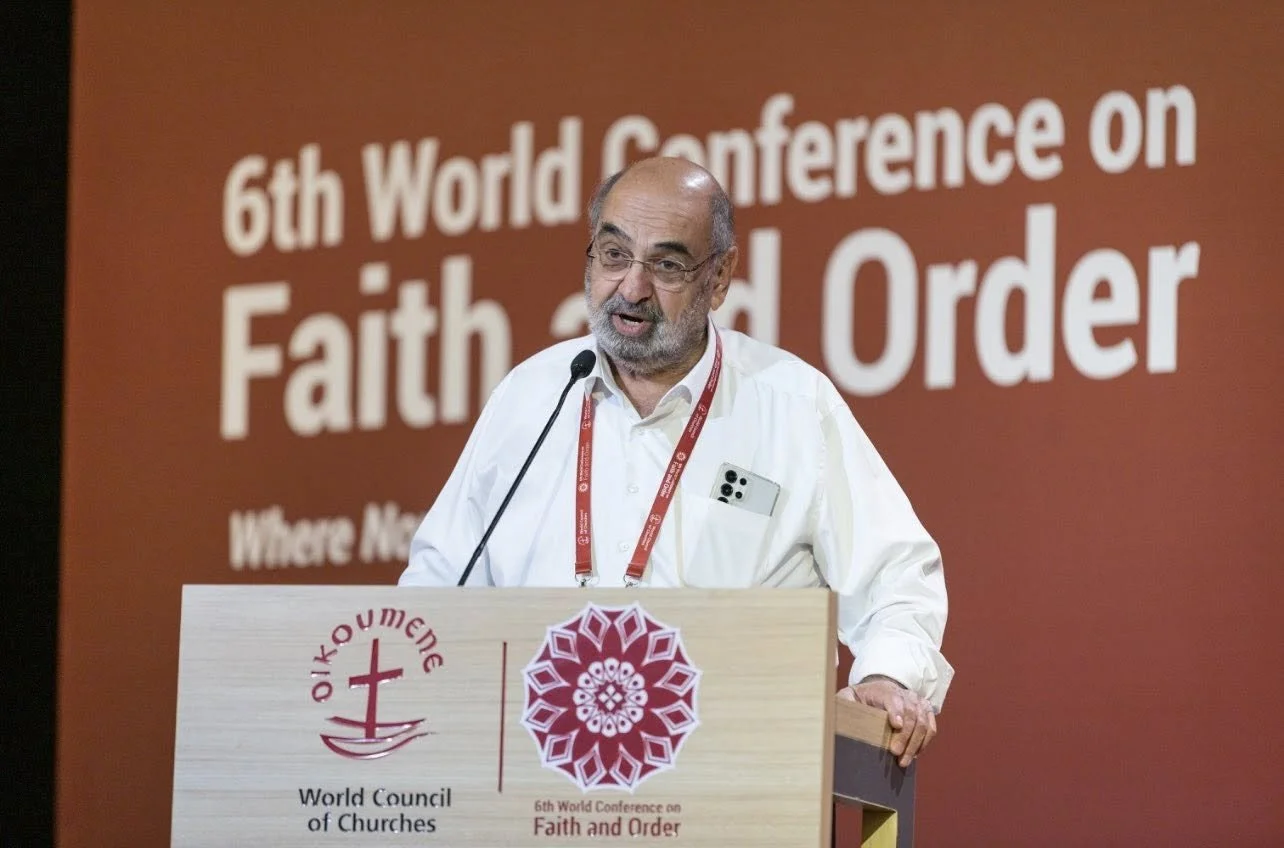
At the end, Rt. Reverend Archimandrite Jack Khalil, Dean of the St. John of Damascus Institute of Theology, Lebanon, delivered a speech in which he expressed the extent of the suffering of the people of the region, emphasizing the depth of their steadfast faith in the face of all challenges.
He pointed out that “Christians in the Middle East revived their faith from their teachers, not only in words, but also by consecrating their lives to Christ."
Dr. Audeh Quawas, Member of the WCC Executive Committee and Member of the MECC Executive Committee, talked about the suffering of the people of Palestine, especially the Christians, and their most prominent challenges today.
Hence, this session dedicated to the Middle East provided a new opportunity to shed light on the hopes of its people and their determination to survive, persevere, and exist.