
مرصد فلسطين - تقرير الجمعة 6 آذار/ مارس 2026
Palestine Observatory - Report: Friday 6 March 2026
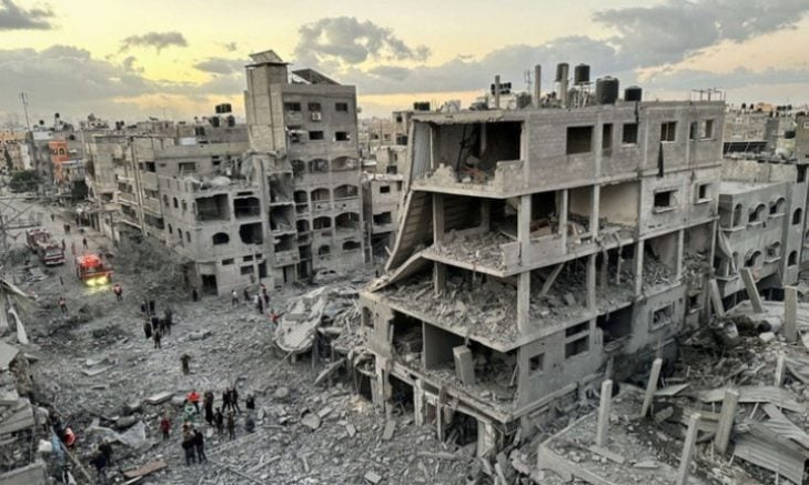
مشهد دمار في غزّة – مصدر الصورة: موقع "القدس العربي" / Scene of destruction in Gaza – Photo Source: “Al-Quds Al-Arabi” Website
في ظلّ تفاقم الظروف الإنسانيّة والاجتماعيّة في المنطقة جرّاء تصاعد العمليّات الأمنيّة فيها، يقدّم مجلس كنائس الشرق الأوسط تقريرًا أسبوعيًّا بعنوان "مرصد فلسطين" حيث يتضمّن آخر المستجدّات الّتي تشهدها فلسطين خصوصًا وسط تدهور الظروف المعيشيّة والاجتماعيّة والأمنيّة في البلاد. ستكون بعض النصوص باللغة العربية، وبعضها الآخر باللّغة الإنكليزيّة، وذلك حسب المصدر.
In light of the worsening humanitarian and social conditions in the region due to the escalation of security operations, the Middle East Council of Churches presents a weekly report entitled "Palestine Monitor," which includes the latest developments in Palestine, especially amid the deteriorating living, social, and security conditions in the country. Some texts will be in Arabic, and some others in English, depending on the source.
Other English Information Below.
في آخر المستجدّات:
كنسيًّا، وجّه سيادة المطران د. عماد حداد، مطران الكنيسة الإنجيلية اللوثرية في الأردن والأراضي المقدسة، رسالته الرعويّة الأولى حيث استهلّها بالآية "مُكْتَئِبِينَ فِي كُلِّ شَيْءٍ، لكِنْ غَيْرَ مُتَضَايِقِينَ. مُتَحَيِّرِينَ، لكِنْ غَيْرَ يَائِسِينَ. مُضْطَهَدِينَ، لكِنْ غَيْرَ مَتْرُوكِينَ. مَطْرُوحِينَ، لكِنْ غَيْرَ هَالِكِينَ. حَامِلِينَ فِي الْجَسَدِ كُلَّ حِينٍ إِمَاتَةَ الرَّبِّ يَسُوعَ، لِكَيْ تُظْهَرَ حَيَاةُ يَسُوعَ أَيْضًا فِي جَسَدِنَا." (2كورنثوس 4: 8-10)".
كما قال فيها:
"أخوات والإخوة الأعزاء،
أعضاء وأصدقاء الكنيسة الانجيلية اللوثرية في الأردن والأراضي المقدسة
نعمة لكم وسلام من لدن ربنا الفادي،
أكتب لكم اليوم رسالةً رعوية أولى، كنت أرجو أن تأتي في زمنٍ غير زمن الحرب والخوف، وانعدام الأمان، وتراجع العدالة والسلام. لكننا، وللأسف، نجد أنفسنا مرة أخرى في قلب واقعٍ ليس غريبًا عن مسيرتنا في هذه الأرض.
في أيام الحرب هذه، ومع تزايد الإغلاقات وعزل المناطق بعضها عن بعض، تتعاظم قسوة الحياة على مستوياتٍ عديدة: اقتصاديًا واجتماعيًا وسياسيًا. وفي خضم هذا الواقع المؤلم، أجد نفسي، كما كثيرون منكم، أتساءل: أين نرى الله وسط هذه الصعوبات؟ وكيف نصغي إلى صوت عدالة الله ورحمته بينما تعلو أصوات طبول الحرب؟
إن إيماننا المسيحي يعلّمنا أن الله ليس بعيدًا عنّا. بل إن ايماننا يؤكد لنا أن الرب حاضر في عمق الألم، يسير معنا في وادي الخوف والحزن، ويحملنا على ذراعيه عندما تثقل الخطى. هذا هو رجاؤنا الذي لا يخزى.
وانطلاقًا من هذا الإيمان، فإن الكنيسة، جسد المسيح على الأرض، لا يمكن أن تكون بعيدة عن واقع الألم والحرب. دعوتنا واضحة: أن نرافق كل متألم، وأن نسند كل خائف، وأن يكون حضورنا في المجتمع حضور رجاء في زمن الخوف. لا يجب ان نكتفي بالصلاة اللفظية، بل علينا ان نجسّد إيماننا عملًا حيًّا، لأننا عندما نخدم الإنسان المتألم إنما نخدم المسيح نفسه.
يقول اللاهوتي ديتريش بونهوفر: "أؤمن أن الله يستطيع ويريد أن يُخرج الخير من كل شيء، حتى من أعظم الشرور. ولذلك فهو يحتاج إلى أناس يجعلون كل شيء يعمل لخيرهم. أؤمن أن الله يعطينا في كل ضيق قدرًا من المقاومة بقدر ما نحتاج. لكنه لا يعطينا إياه مسبقًا، لكي لا نتكل على أنفسنا بل عليه وحده." وهذا الإيمان هو ما يثبت خطواتنا اليوم.
أيها الأخوات والإخوة الاعزاء،
أدعوكم إلى الصلاة بلا انقطاع. وأدعوكم أيضًا أن تكونوا سندًا بعضكم لبعض. وأن ترعوا بعضكم بعضًا بمحبة عملية ملموسة.
نصلّي ألّا تطول هذه الأيام العصيبة والصعبة. ونصلّي ايضا من أجل الحكمة لقادة الدول والسياسيين، حتى يدركوا أن الحرب لن تكون طريق خلاص لشعوب منطقتنا، أنما العدل والحق، اللذين يشملان الجميع، هما السبيل الوحيد نحو سلام عادل وشامل.
ليثبتنا الرب في الرجاء الحي والايمان العامل، وليستخدم كنيسته أداة شفاءٍ وسلام في هذه الأرض المكلومة.
لتكن بركة الرب معكم جميعًا".[1]
في سياق متّصل، وبحسب موقع "أبونا: إعلام من أجل الإنسان"، وصف الأب إبراهيم فلتس الفرنسيسكاني، مدير عام مكتب مدارس تراسنطا، استمرار المعاناة الواسعة في غزة، بعد أربعة أشهر من توقيع خطة السلام الخاصة بغزة، بالإضافة إلى المعاناة التي يواجهها المسيحيين في الضفة الغربية المحتلة.
وفي مقابلة مع إذاعة Radio Cusano Campus، قال الأب فلتس: «منذ إعلان الهدنة، قُتل نحو 700 شخص، معظمهم من الأطفال والمسنين والنساء». وأضاف: «الوضع مأساوي أيضًا في الضفة الغربية. الحركة محدودة، والناس يعيشون حالة يأس. المسيحيون يغادرون الأراضي المقدسة؛ أكثر من 200 عائلة غادرت بيت لحم ولن تعود. وهناك عائلات أخرى كثيرة تستعد للمغادرة لأنها لا ترى مستقبلًا لأطفالها... ».
الأوضاع في غزة
وعن الوضع في قطاع غزة قال الكاهن الفرنسيسكاني: «نحن نتحدث عن 350 ألف قتيل وجريح، مع وجود أكثر من 10 آلاف فلسطيني ما زالوا تحت الأنقاض. منذ دخول الهدنة حيّز التنفيذ انخفض عدد القتلى نسبيًا: فبعد أن كان يتراوح بين 300 و400 يوميًا، أصبح 700 خلال أربعة أشهر. لكن الأدوية والمساعدات الإنسانية لا تدخل».
وأضاف: «يقول البعض إن عدد القتلى تجاوز 100 ألف، لكن حتى لو كان 75 ألفًا بحسب التقديرات الرسمية، فهناك 200 ألف جريح، و20 ألف طفل بحاجة إلى مغادرة غزة لتلقي العلاج، ولا نستطيع إخراجهم. وكانت إيطاليا أول دولة تستقبل هؤلاء الأطفال»...".[2]
أمنيًّا وإنسانيًّا، جاء في أحد تقارير وكالة الأمم المتّحدة لغوث وتشغيل اللّاجئين الفلسطينيّين:
"قطاع غزة
القتلى والجرحى
في الفترة ما بين 7 تشرين الأول/ أكتوبر 2023 وحتى 16 شباط/ فبراير 2026، وفقًا لوزارة الصحة في غزة، حسبما ذكره مكتب تنسيق الشؤون الإنسانية، فقد قتل 72,063 فلسطينيًا في قطاع غزة وأصيب 171,726 شخصًا آخر بجروح.
الأزمة الصحية
وفقًا لمكتب الأمم المتحدة لتنسيق الشؤون الإنسانية، منذ وقف إطلاق النار في تشرين الأول/ أكتوبر 2025 وحتى 16 شباط/ فبراير 2026، أُصيب 853 شخصًا إضافيًا بإعاقات ناجمة عن الحرب، من بينهم 496 حالة بتر أطراف، و186 إصابة في النخاع الشوكي، و171 إصابة دماغية رضية. ورغم تزايد الاحتياجات، لا تزال ]السلطات الإسرائيلية[ تصنف الأجهزة المساعدة، بما فيها الأطراف الاصطناعية، على أنها مواد "ذات استخدام مزدوج"، مما يُقيّد دخولها إلى قطاع غزة بشدة.
تواصل فرق الاستجابة الطبية السريعة التابعة للأونروا رصد الزيادة في حالات الالتهابات الجلدية المُبلَّغ عنها عن كثب في عدد من الملاجئ الطارئة الجماعية التابعة للأونروا. وتقوم الأونروا، بالتعاون مع شركائها في القطاع الصحي، بتوزيع مستلزمات النظافة الشخصية في المواقع المتضررة. وبينما تُسهم هذه الإجراءات في احتواء تفشي المرض، إلا أن حالات العدوى الجلدية المبلغ عنها، بما في ذلك الجرب وجدري الماء، لا تزال في ازدياد في بعض المناطق.
النزوح وإدارة المواقع
تواصل الأونروا رصد حركة النازحين ومواقع النزوح. يقدر أن 73 ألف نازح يعيشون في الملاجئ الطارئة الجماعية التابعة للأونروا والمناطق المحيطة، بما في ذلك 83 موقع نزوح تديرها الوكالة.
يوجد حاليا 117 مرفقًا تابعًا للأونروا داخل [لمنطقة العسكرية الإسرائيلية] خارج ما يُسمى بـ "الخط الأصفر"، والمناطق التي يتطلّب الوصول إليها تنسيق/موافقة [إسرائيل]".[3]
Latest updates:
On the Church level, His Eminence Bishop Dr. Imad Haddad, Bishop of the Evangelical Lutheran Church in Jordan and the Holy (ELCJHL), issued message to the ELCJHL partners in which he started it with the following Bible Verse: “They shall beat their swords into plowshares, and their spears into pruning hooks; nation shall not lift up sword against nation, neither shall they learn war anymore.” (Isaiah 2:4).
Below you can find the full text of the message:
“In the face of yet another escalation of war in our region, our hearts are filled with deep anguish. As we journey through this Lenten season, a season that calls us nearer to God and closer to our neighbor, we here in the Holy Land are confronted once more with the devastating cost of military aggression. Families are anxious. Communities are unsettled. The fragile rhythms of daily life are again disrupted. This latest war does not stand alone; it imposes yet another layer of pressure, fear, and restriction upon an already burdened people. No people are created to live under the sound of war. War is not the life God intends for humanity.
We must speak with moral clarity: the continued decision to resort to war is a failure of human responsibility before God. Each new escalation tightens the grip of dread, deepens the lived reality of siege, and further constricts the space in which human dignity can breathe. Political calculations and security arguments must never be allowed to eclipse the sacred worth of human life.
From our Palestinian Christian context, we affirm without hesitation: life, not death, is God’s choice for humanity. Yet from this land we call holy, wounded yet steadfast, we refuse the temptation of despair. With the prophet Isaiah, we raise our voice with renewed urgency: “They shall learn war no more.” We remain committed to preaching the Gospel of reconciliation entrusted to us, the good news that through Christ, God reconciles humanity to Godself and calls us to the hard and holy work of reconciliation with one another.
Dear partners, we urge you: pray, and pray fervently. But do not let prayer become a substitute for responsibility. Let your prayers be joined with courageous and concrete action. Stand publicly with those who are afflicted. Advocate persistently for a just peace that safeguards the dignity and security of all people. Challenge policy makers whose narratives make endless war appear inevitable.
In this critical hour, we also call upon you, our partners around the world, to accompany the Evangelical Lutheran Church in Jordan and the Holy Land with renewed commitment and solidarity. The people we serve are already facing severe economic hardship, instability, and fear, and this current escalation deepens their suffering. Despite our limited resources, we remain steadfast in supporting all who are in need and in sustaining the Christian presence in this land. Yet the magnitude of these challenges requires us to intensify our ministries of diakonia, pastoral care, and humanitarian response. We therefore invite you to walk closely with us—through prayer, advocacy, and generous partnership—so that together we may strengthen hope in this difficult time.
Our region and people are weary of cycles of violence that have stolen too many futures and burdened too many generations. The Church must not be content with calls for a superficial calm. Now is the time for the global body of Christ to embody its vocation as peacemaker, seeking not the quiet of managed conflict, but the costly, just peace that transforms hearts, structures, and the life of our region.
In this Lenten season, may God grant us the courage to choose life, the clarity to speak truth, and the steadfast faith to walk in the way of Christ, the Prince of Peace.”[4]
On another side, the United Nations Relief and Works Agency for Palestine Refugees in the Near East (UNRWA) indicated in one of its latest reports the following:
“The Gaza Strip
Fatalities and injuries
Between 7 October 2023 and 16 February 2026, according to the Ministry of Health (MoH), as reported by OCHA, 72,063 Palestinians were killed in the Gaza Strip and another 171,726 injured.
Health crisis
According to OCHA, since the ceasefire in October 2025 and up to 16 February 2026, an additional 853 people have war-induced disabilities, including 496 amputations, 186 spinal cord injuries, and 171 traumatic brain injuries. Despite rising needs, assistive devices, including prosthetics, continue to be classified by the [Israeli authorities] as “dual-use” items, which severely restricts their entry into the Gaza Strip.
UNRWA rapid response medical teams continue to closely monitor the rise in reported skin infections across multiple collective emergency shelters. UNRWA, together with health partners, is distributing hygiene kits in the affected locations. While these measures are helping to contain the outbreak, reported cases of skin infections, including scabies and chickenpox, continue to increase in certain areas.
Displacement, Site management
UNRWA continues to monitor the movement of displaced persons and displacement sites. An estimated 73,000 displaced people are living in UNRWA collective emergency shelters and the surrounding areas, including in 83 displacement sites managed by the Agency.
Currently, 117 UNRWA facilities are located within the [Israeli-militarized zone] behind the so-called “Yellow Line” and in areas where access is subject to Israeli approval or coordination.”[5]
[1]https://www.facebook.com/share/p/18DTKf72Bc/?mibextid=wwXIfr
[2]https://www.abouna.org/content/%D8%A7%D9%84%D8%A3%D8%A8-%D9%81%D9%84%D8%AA%D8%B3-%D8%BA%D8%B2%D8%A9-%D8%A3%D8%B5%D8%A8%D8%AD%D8%AA-%D9%85%D9%82%D8%A8%D8%B1%D8%A9-%D9%81%D9%8A-%D8%A7%D9%84%D9%87%D9%88%D8%A7%D8%A1-%D8%A7%D9%84%D8%B7%D9%84%D9%82-%D9%88%D8%A7%D9%84%D9%85%D8%B3%D9%8A%D8%AD%D9%8A%D9%88%D9%86-%D9%8A%D8%BA%D8%A7%D8%AF%D8%B1%D9%88%D9%86-%D8%A8%D9%8A%D8%AA-%D9%84%D8%AD%D9%85
[3]https://www.unrwa.org/ar/resources/reports/%D8%AA%D9%82%D8%B1%D9%8A%D8%B1-%D8%A7%D9%84%D8%A3%D9%88%D9%86%D8%B1%D9%88%D8%A7-%D8%B1%D9%82%D9%85-211-%D8%AD%D9%88%D9%84-%D8%A7%D9%84%D8%A3%D8%B2%D9%85%D8%A9-%D8%A7%D9%84%D8%A5%D9%86%D8%B3%D8%A7%D9%86%D9%8A%D8%A9-%D9%81%D9%8A-%D9%82%D8%B7%D8%A7%D8%B9-%D8%BA%D8%B2%D8%A9-%D9%88%D8%A7%D9%84%D8%B6%D9%81%D8%A9-%D8%A7%D9%84%D8%BA%D8%B1%D8%A8%D9%8A%D8%A9
[4]https://www.facebook.com/share/p/1BxZDLAUhQ/?mibextid=wwXIfr
[5]https://www.unrwa.org/resources/reports/unrwa-situation-report-211-humanitarian-crisis-gaza-strip-and-occupied-west-bank