
Feast of Creation: New Liturgical Feast, Gift for the Third Millennium
The “Feast of Creation”, also known as “Creation Day” or “World Day of Prayer for Creation”, is officially entering the liturgical calendars of many churches. Celebrated on September 1st or – most frequently – on the following Sunday, the feast is inspired by an ancient liturgical tradition of the Eastern Orthodox church.
Many non-Byzantine churches will begin their celebrations this September, with the Feast formally enshrined in their lectionaries and liturgical books. Given the Christological nature of the liturgical year in many traditions, a title that is sometimes used is “Feast of Creation in Christ”. Among other highlights, the Feast is being added to the Revised Common Lectionary used by many Protestant and Anglican churches, in time for this year’s celebrations.
The words of Prophet Isaiah capture well what is happening: “See, I am doing a new thing! Now it springs up; do you not perceive it?” (43:19).
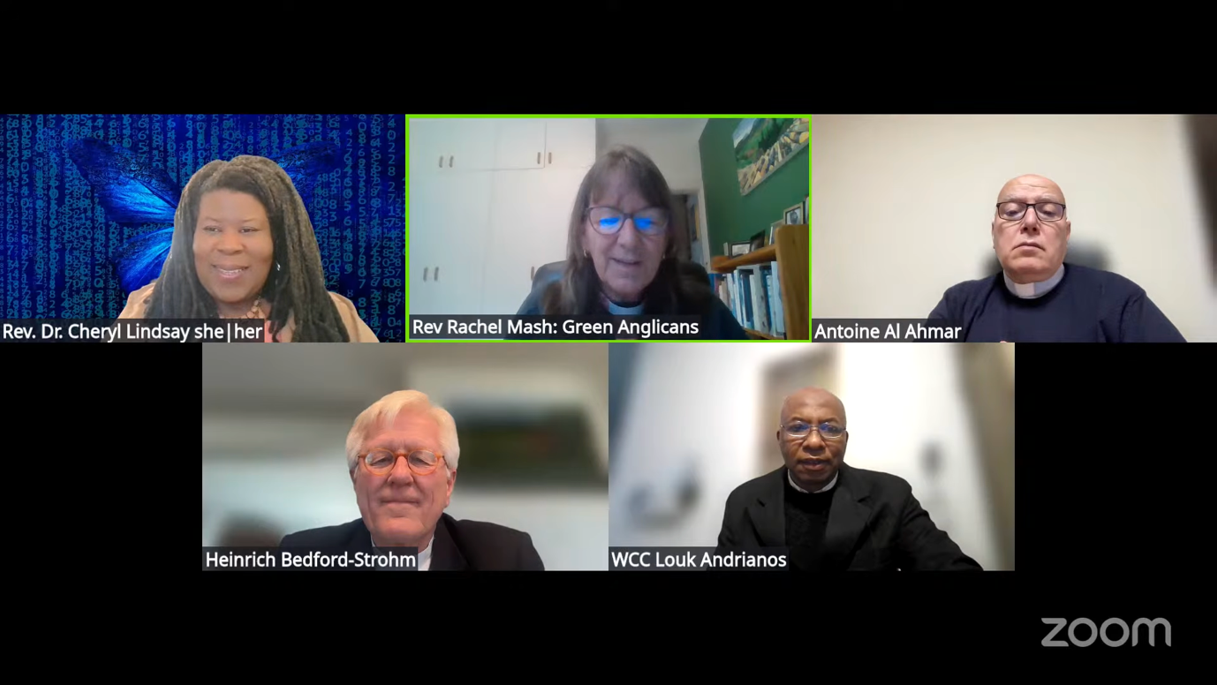
To explore this promising ecumenical process, a major online event was held on March 18-19, entitled “The Feast of Creation: A New Liturgical Feast, a Gift for the Third Millennium”. Convened by the World Council of Churches, Middle East Council of Churches, and various Christian world communions and regional ecumenical bodies, the event drew registrations from over 600 church leaders worldwide.
Bishop Heinrich Bedford-Strohm, moderator of WCC and chair of the Feast of Creation committee, offered inspirational welcome remarks, grounded in the recent celebrations of the 1,700th anniversary of the Council of Nicaea. “The ecumenical process towards a common liturgical Feast of Creation started with a powerful conference in Assisi in March 2024,” he said. “If the Assisi Process continues to develop and reach its goal, it might become a landmark in the history of Christianity. The strong backing by so many church families can be seen as an encouraging sign that the ecumenical miracle of joint ecumenical action for establishing this feast in the church calendar globally could become a reality.”
In turn, Dr. Louk Andrianos from WCC made a presentation from the Eastern Orthodox perspective, reminding the audience of the rich theological symbolism of the Feast in that tradition. Citing the 10th-century Menologion of Basil II, which is the oldest Byzantine liturgical calendar, he explained that “September 1st represents ‘the day of Creation’, God’s act of the creation of the universe. It symbolizes the expression ‘In the beginning’, when God said ‘Let there be light’.” Moreover, in 1989, its Creation symbolism was expanded, when Ecumenical Patriarch Demetrios invited “the entire Christian world to offer every year on this day prayers and supplications to the Maker of all.” In recent decades, Creation Day has gained steady momentum alongside the extended “Season of Creation”, both at the grassroots and leadership levels in many churches.
The next presentation was by Rev. Dr. Antoine Al Ahmar, a theologian of the Maronite Catholic Church and the Director of the Theological Department of the Middle East Council of Churches. As he is based in Beirut, a humbling moment of silence was offered for the victims of war there in Lebanon and the wider Middle East. Fr. Al Ahmar presented a new report titled “Theological Overview of the Feast of Creation” (www.bit.ly/feast-of-creation-theology), which synthesizes the main themes emerging from a series of three academic conferences in Assisi in recent years. He explained: “Creation is a multi-faceted mystery. Therefore, the Feast of Creation is a multi-faceted feast.”
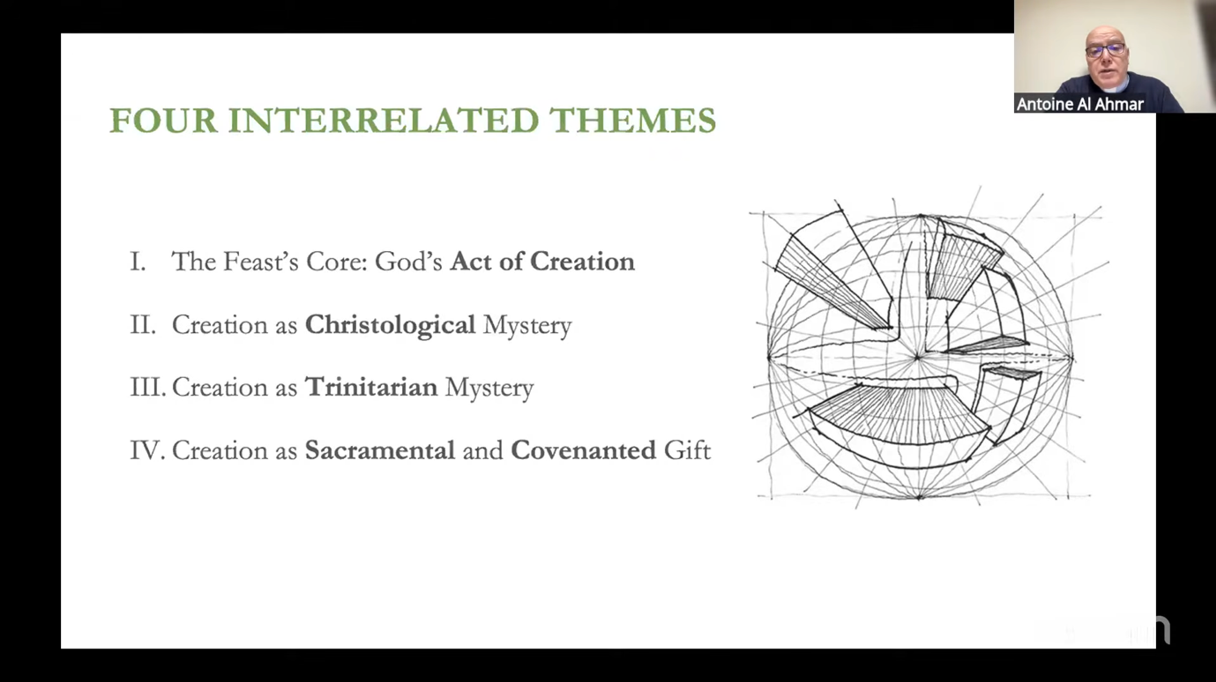
Four interrelated themes are celebrated on this holy day: “(1) God’s act of creation, (2) Creation as a Christological mystery, (3) Creation as a Trinitarian mystery, and (4) Creation as a sacramental and covenanted gift. Together, these themes help us appreciate the richness and depth of the mystery being celebrated.”
Lastly, Rev. Dr. Cherly Lindsay (Consultation on Common Texts) and Rev. Tony Franklin-Ross (World Methodist Council) introduced various resources available to support non-Byzantine churches in implementing the new feast in their liturgical books and calendars. A highlight is the addition of the Feast to the Revised Common Lectionary in April 2026, with a new set of biblical readings to assist the liturgical celebrations starting this year. Other resources shared included:
1. Proposal for National Churches: www.bit.ly/new-feast
2. Invitation letter to National Churches: www.bit.ly/letter-feast
3. Upcoming workshops for Liturgists: www.bit.ly/feast-workshops
4. Theological Overview of the Feast: www.bit.ly/feast-of-creation-theology
5. Pastoral resources for the Feast: www.FeastOfCreation.com
6. Pastoral resources for extended Season: www.SeasonOfCreation.com
Participants then had denomination-specific dialogues in breakout sessions, to plan their celebrations in September 2026. Great enthusiasm was reported across the groups.
Grounding all this reflection and preparation, the event counted with beautiful prayers offered by Frances Namoumou (Pacific Conference of Churches) and Karen Westerfield Tucker (World Methodist Council), helping contextualize the importance of this Feast in light of the tragic destruction of God’s gift of creation in this day and age.
Bottom line, the main takeaway is that the Holy Spirit has been clearly at work in recent decades, nourishing the soil so that this gift of the Eastern Orthodox church might flourish in the worldwide Christian family. The Feast of Creation is a precious gift for the third millennium.
The full recording of this historic event is available here: