
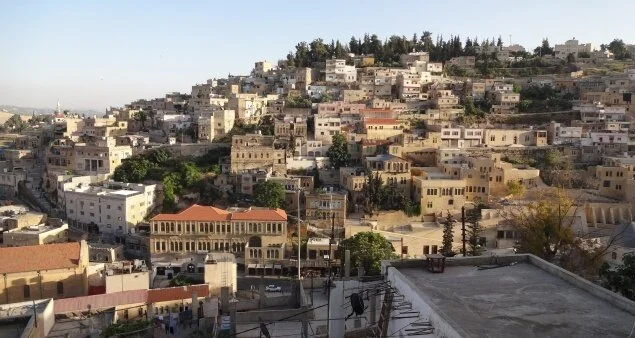
Jordan’s Salt inscribed on UNESCO World Heritage List
By: Layal Hazboun/ lpj.org
JORDAN – On Tuesday, July 27, 2021, the World Heritage Committee of the United Nations Educational, Scientific and Cultural Organization (UNESCO), voted to inscribe the Jordanian city of Salt (As-Salt) as “the Place of Tolerance and Urban Hospitality”, on the World Heritage List. Salt is home to the first Latin Patriarchate parish that was established in Jordan by Patriarch Vincent Bracco in 1866.
This came during the extended 44th session of the World Heritage Committee, which was organized by UNESCO and held virtually from Fuzhou in China, from July 16-31.
According to Petra News Agency, Salt became the sixth Jordanian landmark to be declared a World Heritage Site, succeeding Petra, Wadi Rum, Qasir Amra, Umm Al-Rasas, and the Baptism Site.
Mr. Nayef Al Fayez, Jordanian Minister of Tourism and Antiques, said that “the city of Salt is among Jordan’s top priorities for its significance in showing the characteristics of tolerance, coexistence and social care among its residents”.
“The social solidarity between the families of the city of Salt and its visitors, as well as the absence of separate neighborhoods on a religious basis, is one of the clear features of the city”, added Mr. Al Fayez during his participation in the committee’s virtual meeting on Tuesday, stressing that the inclusion of Salt on the World Heritage List will support a culture of heritage, tolerance, and interfaith harmony.
On Wednesday, July 28, Fr. Rifaat Bader, Director of the Catholic Center for Studies and Media in Jordan, extended his congratulations to the Jordanian leadership, government, and people following this achievement, and said: “The city of tolerance reflects the Jordanian image as a whole, which is a model of coexistence between Christians and Muslims who are in solidarity for better or worse, in all the circumstances that Jordan has experienced over the past decades, which constitutes a civilized image that we convey to the whole world with the beginning of the new centenary”.
The old name of the Salt was Gadara, whereas the name goes back to the Middle Ages. Salt remained the capital of Balqa until 1924.
In 1220, Sultan al-Malik built a fortress in Salt, which was later demolished by the Mongols and rebuilt by Sultan Baybars. In 1832, Balqa and East Jordan fell under the rule of Ibrahim Pasha al-Masri, who demolished what remained of the fortress and placed an Egyptian garrison in it. In 1840, Salt and East Jordan fell again under the Turkish rule …
This article was originally published on the Latin Patriarchate of Jerusalem website. Please click here to read the full text.