
Meditation of His Beatitude Patriarch Cardinal Pierbattista Pizzaballa for the XXXIII Sunday of Ordinary Time C
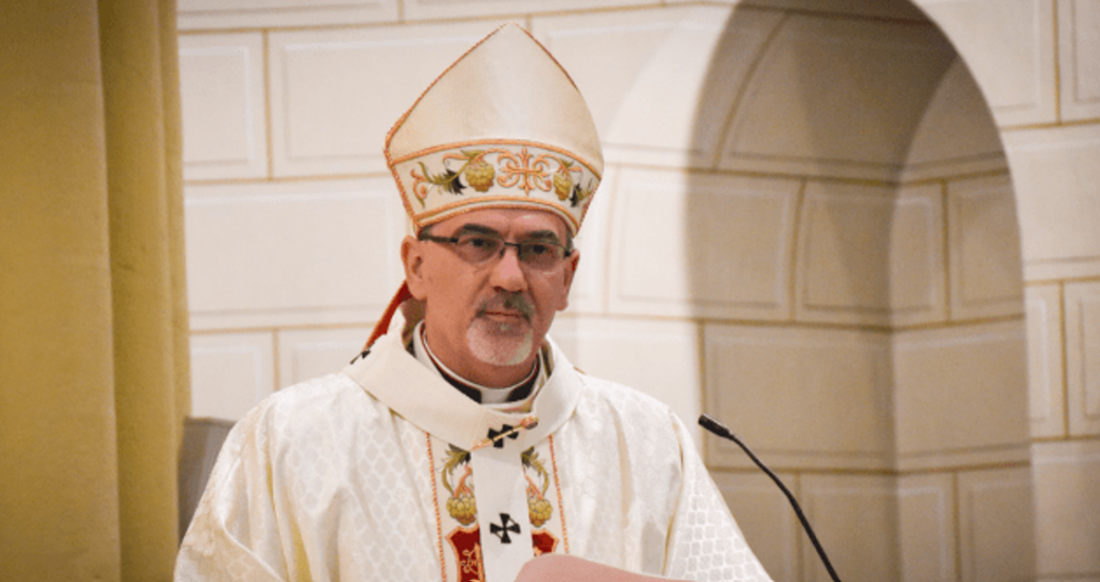
Below you can find the Meditation of His Beatitude Patriarch Cardinal Pierbattista Pizzaballa, Latin Patriarch of Jerusalem, for the XXXIII Sunday of Ordinary Time C, Sunday 16 November 2025.
The Gospel passage of today (Lk 21:5–19) is taken from chapter 21 of Luke, which recounts the so-called “eschatological discourse” of Jesus.
It all begins with a gaze — that of “some people” who speak admiringly of the beauty of the Temple and its ornaments (Lk 21:5).
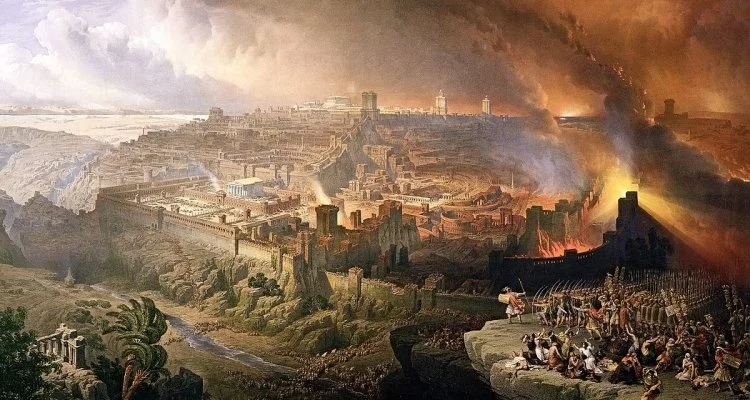
And yet, of all this that they look upon with admiration, nothing will remain (Lk 21:6).
Jesus announces this, fully aware of the symbolic importance of that building: it was the heart of the people’s faith, the symbol of a nation and a religion.
The Temple will collapse, and with it a whole world will collapse — a religiosity, an era.
But Jesus continues his reflection and announces that there is something which, unlike the Temple, despite the great trials it will have to endure, will not pass away.
The trials are indeed countless and of every kind.
Jesus lists them in an impressive way, such that it seems it will be very difficult to endure: wars and revolutions, uprisings, earthquakes, famines and plagues, terrifying events and great signs in the sky; not to mention persecutions, hatred and betrayals, even by one’s own friends and family members (Lk 21:9–17). Everything that could possibly go wrong.
It seems impossible to remain steadfast amid such turmoil. And yet, no.
The Temple, with all its grandeur, is destined to fall.
But not a single hair from the head of the disciples will be lost (Lk 21:18).
What does this mean?
It certainly does not mean that the disciples will always be safe, or that evil will have no power over them. In verse 16, in fact, Jesus clearly says that some, betrayed even by their own relatives, will be killed.
Rather, it means that all this will not be the end.
It will not be the end of life, nor of faith, nor of hope. It means there is something beyond — that from there, something new can be born.
And how will all this be possible? The Gospel passage offers three answers.
The first is that those who trust in the Lord will know a new beginning — those who believe that the Lord has not abandoned this history, and has not failed in his promise.
Those who believe that the Lord is especially close to those who suffer and are persecuted, and that He is there to inspire new words and a wisdom different from mere human wisdom (Lk 21:15).
Then, those who will endure are those who have a different way of looking at life.
At the beginning, we found some who stopped to admire the beautiful stones of the Temple; but as the passage continues, we find other ways of seeing.
There is the gaze of those who are not deceived, who do not follow whoever claims to be the Lord (21:8); in other words, those who have learned to know Him through His Paschal traits, and do not confuse Him with anyone else…
This Meditation was originally published on the Facebook Page of the Latin Patriarchate of Jerusalem. Please click here to read the full text.