
Meditation Of His Beatitude Patriarch Cardinal Pierbattista Pizzaballa for the Solemnity of the Most Holy Trinity C
Published from the Website of the Latin Patriarchate of Jerusalem.
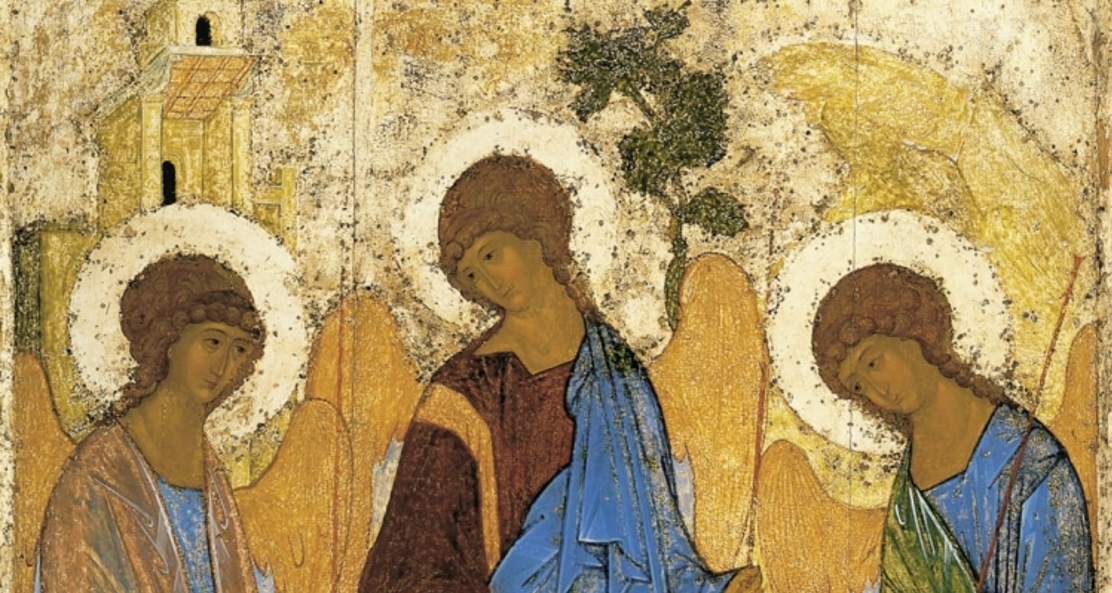
Below you can find the Meditation of His Beatitude Patriarch Cardinal Pierbattista Pizzaballa, Latin Patriarch of Jerusalem, for the Solemnity of the Most Holy Trinity C, Sunday 15 June 2025.
Jn 16:12-15
In today’s Gospel passage (Jn 16:12-15), we hear that when Jesus speaks of the Holy Spirit. He repeats a somewhat strange expression twice. For he says that the Spirit “will take what is mine and declare it to you” (Jn 16:14,15).
To understand what Jesus is trying to tell us with this expression, let’s take a step back and come to an Old Testament passage where we see an opposite situation to what Jesus is talking about.
The passage in question is Genesis 3:1-12. God had just created man and entered into a dialog with him. The passage is well known: God hands over to man all the wonderful creation he has just made and, with the commandment about the tree of knowledge of good and evil, asks him to remain in a meek attitude, the attitude of a person who owns nothing but accepts everything as a gift. The filial attitude of a person who knows that he is not the master of everything.
At a certain point, however, the serpent appears and also enters into a dialog with the woman. The serpent takes up God’s words, but he does not do so with respect for God’s thinking. He adds his own words: small, insidious words that are enough to generate in the woman’s suspicion that God is different from what he had shown himself to be in the garden.
God had said that man may eat from all the trees in the garden except one “You are free to eat from any of the trees of the garden” - Gen 2:16-17); the serpent asks if it is true that they should not eat from any tree in the garden (“Did God really say, ‘You shall not eat from any of the trees in the garden’?” - Gen 3:1). The words hardly change, but the meaning changes completely.
The serpent wants to separate humanity from its Creator, and he does this by speaking words that generate in the human heart a lie, a distorted image of God. But it is not just a distorted image of God. For it corresponds to a distorted image of man, who ceases to be a beloved creature and lives in guilt, in the deception of a man who must win back God's benevolence.
This image remains imprinted in the depths of human memory, and it spreads quickly, as only lies can do. Thus man becomes unable to bear the burden of truth (“I have much more to tell you, but you cannot bear it now” - John 16:12) and becomes a slave to a lie from which he alone cannot free himself.
What can bring people back to the truth about themselves, to the truth about God? This is what Jesus describes in today’s Gospel.
The Spirit does not do what the serpent did: he adds nothing to Jesus’ words and takes nothing away. He does not add his own to them, because he lives in the same reality as Jesus, because he knows that they are true words that are sufficient for man’s salvation. These words are also his own.
Then he can take them, because in the Trinity everything is common, and the Three Persons give honor to one another by taking from one another without fear. If everything is in common, I can take what belongs to the other and I take nothing away from him: in doing so, I confirm the truth of the communion that unites us…
This Meditation was originally published on the Website of the Latin Patriarchate of Jerusalem. Please click here to read the full text.