
The Stones Speak: Excavations Reshaping the History of the Holy Sepulchre
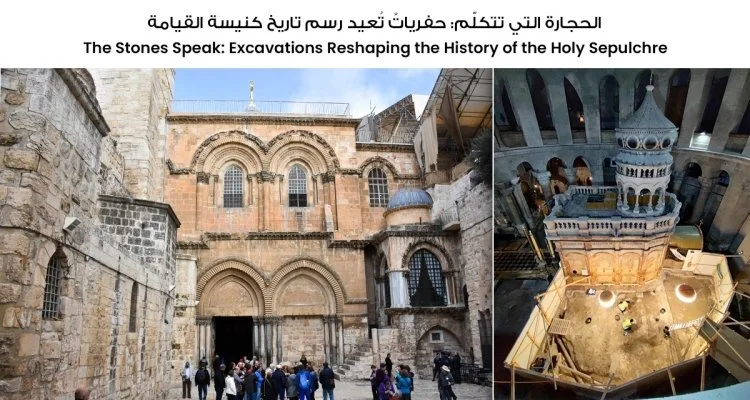
Jerusalem – Beneath the incense-filled vaults of the Church of the Holy Sepulchre, one of the most intricate and profound archaeological operations in the Holy Land is unfolding. What began in 2022 as a restoration project for the church’s deteriorating floor has become a journey into the deep layers of sacred history. Led by Prof. Francesca Romana Stasolla of Sapienza University of Rome, and coordinated by the three main Christian communities— the Franciscans (Custody of the Holy Land), the Greek Orthodox, and the Armenians—in collaboration with the Antiquities Authority, this project seeks to preserve the past while protecting the present.
Restoration That Sparked Revelation
The current archaeological project stems from urgent conservation work launched in 2016, when engineers detected alarming signs of structural degradation in both the Edicule (the Tomb of Christ) and the church as a whole—including the flooring, plumbing, and ventilation systems. The urgency was both spiritual and structural.
In a historic event during that early phase, the original burial slab of Christ was uncovered for the first time in over 500 years, a moment described by many as a rare intersection of faith and science. This moment rekindled global interest in the site and laid the groundwork for the broader archaeological campaign launched in 2022.
To allow ongoing worship and pilgrimage, the restoration was divided into 11 zones within the basilica. Excavation proceeds around the clock in shifts, pausing during major liturgical events like Holy Week and Easter.
From Quarry to Tomb: A Sacred Timeline Beneath the Floor
Accompanied by visitors and journalists, Prof. Stasolla guided tours down to one of the deepest excavation areas, nearly six meters below the surface. “This zone offers a remarkably compressed historical sequence,” she explains.
Archaeologists discovered that the site once functioned as an active quarry in the Iron Age, used for cutting limestone. As quarrying ceased, the area was gradually filled in and converted into an agricultural garden, with olive trees and grapevines—a transformation confirmed by archaeobotanical evidence, including ancient olive pits, grape seeds, pollen, and animal bones. These findings echo the Gospel of John’s description: “In the place where He was crucified, there was a garden” (John 19:41).
Stasolla emphasizes, “Analysis isn’t limited to stone remains. We’re also studying sediments, pollen, and botanical layers, to reconstruct the environmental and human activity that once animated this part of Jerusalem.”…
This News was originally published on the Website of the Latin Patriarchate of Jerusalem, click here to read more.