
Meditation of His Beatitude Patriarch Cardinal Pierbattista Pizzaballa for the Feast of the Baptism of the Lord
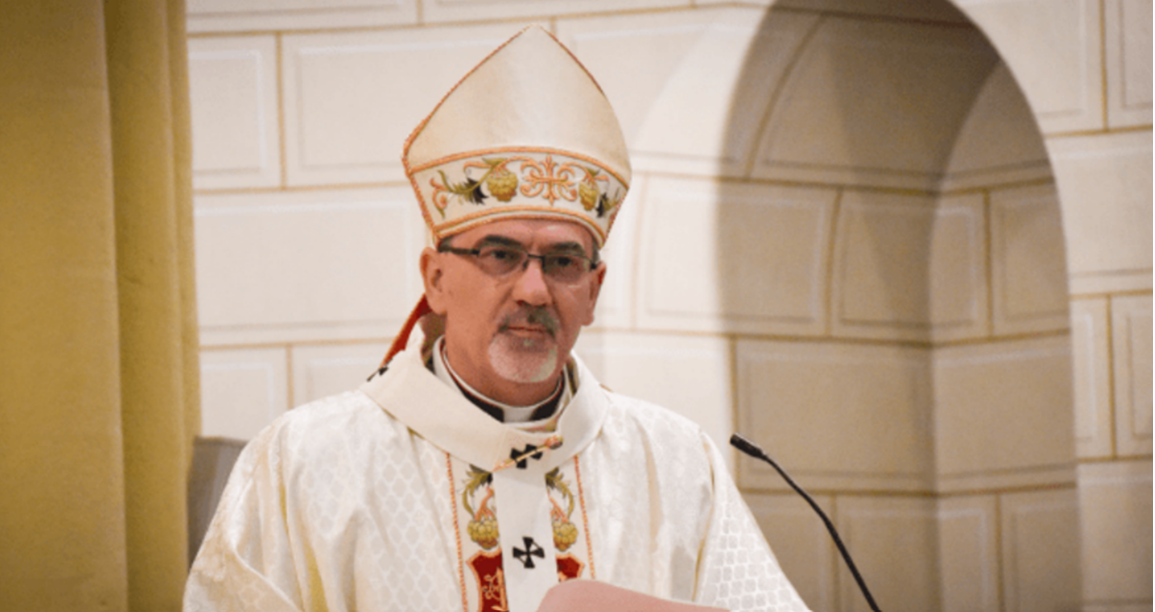
Below you can find the Meditation of His Beatitude Patriarch Cardinal Pierbattista Pizzaballa, Latin Patriarch of Jerusalem, for for the Feast of the Baptism of the Lord Year A, Sunday 11 January 2026.
Mt 3, 13-17
The Gospel of the Epiphany gives rise in us to the same question that set the Magi on their journey: “Where is the child who has been born?” (Mt 2:2). Because Jesus was born in Bethlehem (Mt 2:1), the Magi can ask this question and begin their search. If Jesus had not been born, if God had not come among us, this question would make no sense and would have no answer: it would be useless to ask it.
But God truly is Emmanuel, God with us, and in today’s Gospel (Mt 3:13–17) we can begin to find an answer to this question: where is the one who has been born?
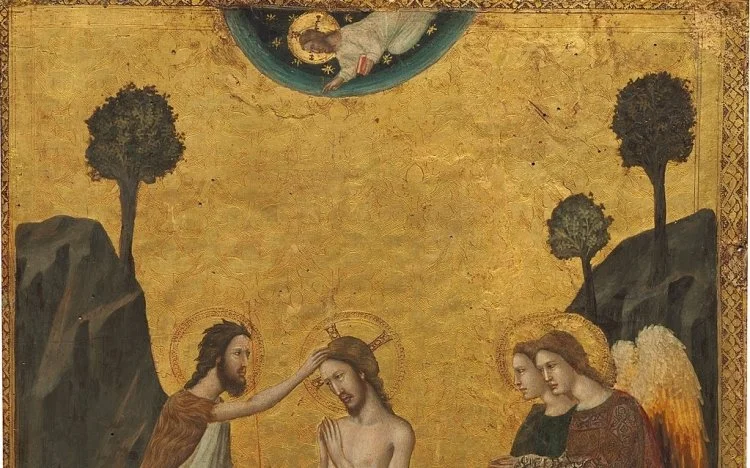
The account begins with a surprising act: “Then Jesus came from Galilee to John at the Jordan to be baptized by him” (Matt. 3:13). Jesus goes down from Galilee to the Jordan; He descends into the ranks of sinners, descends into the waters that bear the weight of sin and the conversions of others. It is a movement that is not spectacular: it is a movement of silent solidarity. He descends to the Jordan without fanfare, a loud public announcement.
He carries nothing to display nothing, nothing to proclaim he carries only himself, surrendered to the Father and in solidarity with humanity. He is a God who does avoid the waters made heavy by others; he is a God who enters where we are.
Here, then, is where the one who has been born is found: the Son allows Himself to be led to the place where the Father desires Him to be.
John cannot understand what is happening (“I need to be baptized by you, and yet you are coming to me?” – Mt 3:14): it overturns his religious and rigorous logic completely. In his view, God should not be there. Jesus’ response is simply this: “Allow it for now” (Mt 3:15). It is a word that does not force, does not impose, does not explain everything or resolve everything: it merely asks for space and leaves the answer open.
This response, “let it be,” is an important one: it is not about doing more or doing better, but about letting things happen, letting God do within us what He desires, namely, to make us children, loved as the Son is loved, in whom He is well pleased (Mt 3:17).
When Jesus reaches the lowest point (the place of Baptism is the lowest point on earth), the heavens are opened (Mt 3:16). They do not open when He performs an extraordinary deed, but when He descends, when He allows Himself to be led.
At this point, two things happen: Jesus sees the Spirit descending upon Him (Mt 3:16), and then hears the voice of the Father declaring Him His beloved Son ("After Jesus was baptized, he came up from the water and behold, the heavens were opened, and he saw the Spirit of God descending like a dove coming upon him. And a voice came from the heavens, saying, ‘This is my beloved Son, with whom I am well pleased’"- Matt. 3:16-17).
We no longer find only Jesus. Together with Him we find the Father and the Spirit, also engaged in the same movement of descent: the Spirit descends, and the voice of the Father comes down.
Another thing should be noted: the Spirit descends after Jesus has entered the water. Not before! He does not descend to persuade Him or even to support Him, but descends in response to His lowering himself, in solidarity with Him and alongside Him. The Spirit reveals who Jesus is: the Son who descends into the depths of humanity, the Son who lives in total obedience to the Father, a Son who allows things to be done…
This Meditation was originally published on the website of the Latin Patriarchate of Jerusalem. Please click here to read the full text.