Holy Lent 2026 Letter of His Holiness Patriarch Mor Ignatius Aphrem II
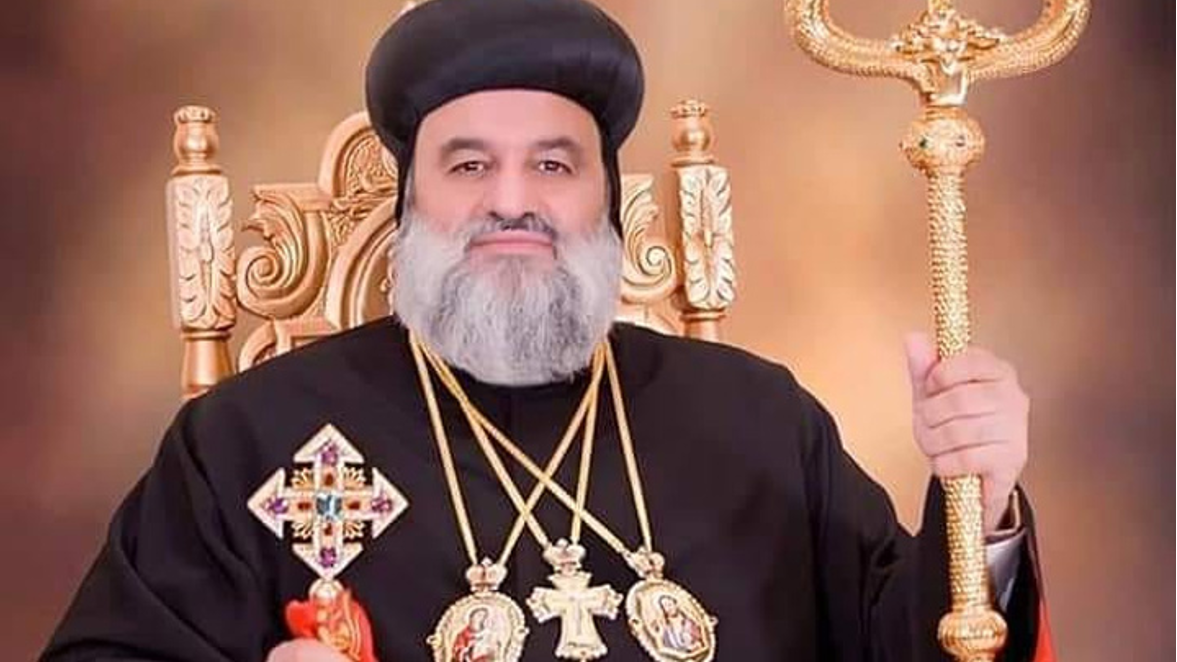
Below you can find the Holy Lent 2026 Letter of His Holiness Patriarch Mor Ignatius Aphrem II, Patriarch of Antioch and All the East, Supreme Head of the Syriac Orthodox Church of the World, and Honorary President of the Middle East Council of Churches (MECC).
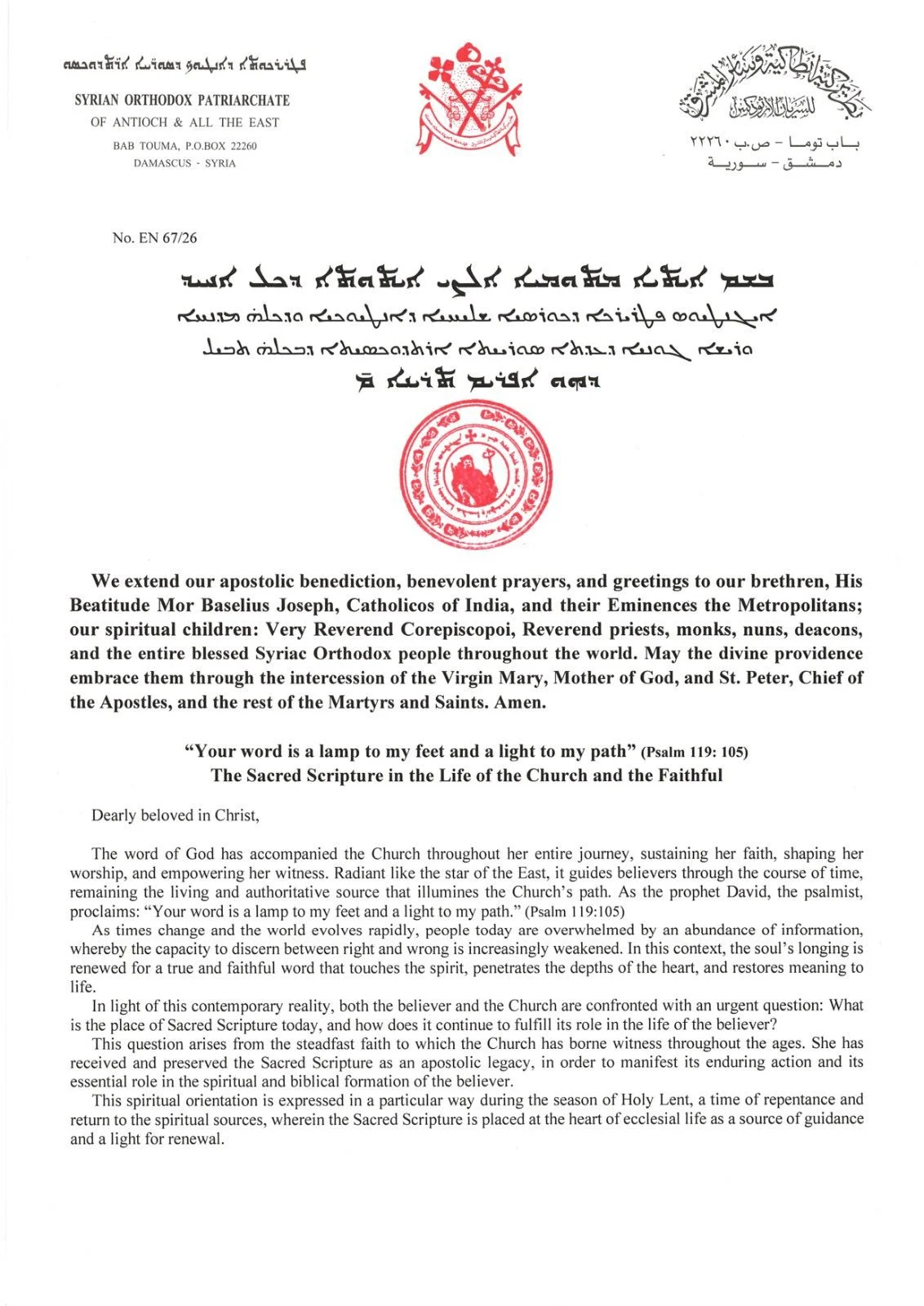
No. EN 67/26
ܒܫܡ ܐܝܬܝܐ ܡܬܘܡܝܐ ܐܠܨܝ ܐܝܬܘܬܐ ܕܟܠ ܐܚܝܕ
ܐܝܓܢܛܝܘܣ ܦܛܪܝܪܟܐ ܕܟܘܪܣܝܐ ܫܠܝܚܝܐ ܕܐܢܛܝܘܟܝܐ ܘܕܟܠܗ̇ ܡܕܢܚܐ
ܘܪܝܫܐ ܓܘܢܝܐ ܕܥܕܬܐ ܣܘܪܝܝܬܐ ܐܪܬܕܘܟܣܝܬܐ ܕܒܟܠܗ̇ ܬܒܝܠ
ܕܗܘ ܐܦܪܝܡ ܬܪܝܢܐ ܡ̄
We extend our apostolic benediction, benevolent prayers, and greetings to our brethren, His Beatitude Mor Baselius Joseph, Catholicos of India, and their Eminences the Metropolitans; our spiritual children: Very Reverend Corepiscopoi, Reverend priests, monks, nuns, deacons, and the entire blessed Syriac Orthodox people throughout the world. May the divine providence embrace them through the intercession of the Virgin Mary, Mother of God, and St. Peter, Chief of the Apostles, and the rest of the Martyrs and Saints. Amen.
“Your word is a lamp to my feet and a light to my path” (Psalm 119: 105)
The Sacred Scripture in the Life of the Church and the Faithful
Dearly beloved in Christ,
The word of God has accompanied the Church throughout her entire journey, sustaining her faith, shaping her worship, and empowering her witness. Radiant like the star of the East, it guides believers through the course of time, remaining the living and authoritative source that illumines the Church’s path. As the prophet David, the psalmist, proclaims: “Your word is a lamp to my feet and a light to my path.” (Psalm 119:105)
As times change and the world evolves rapidly, people today are overwhelmed by an abundance of information, whereby the capacity to discern between right and wrong is increasingly weakened. In this context, the soul’s longing is renewed for a true and faithful word that touches the spirit, penetrates the depths of the heart, and restores meaning to life.
In light of this contemporary reality, both the believer and the Church are confronted with an urgent question: What is the place of Sacred Scripture today, and how does it continue to fulfill its role in the life of the believer?
This question arises from the steadfast faith to which the Church has borne witness throughout the ages. She has received and preserved the Sacred Scripture as an apostolic legacy, in order to manifest its enduring action and its essential role in the spiritual and biblical formation of the believer.
This spiritual orientation is expressed in a particular way during the season of Holy Lent, a time of repentance and return to the spiritual sources, wherein the Sacred Scripture is placed at the heart of ecclesial life as a source of guidance and a light for renewal.
The Sacred Scripture in the Life of the Church
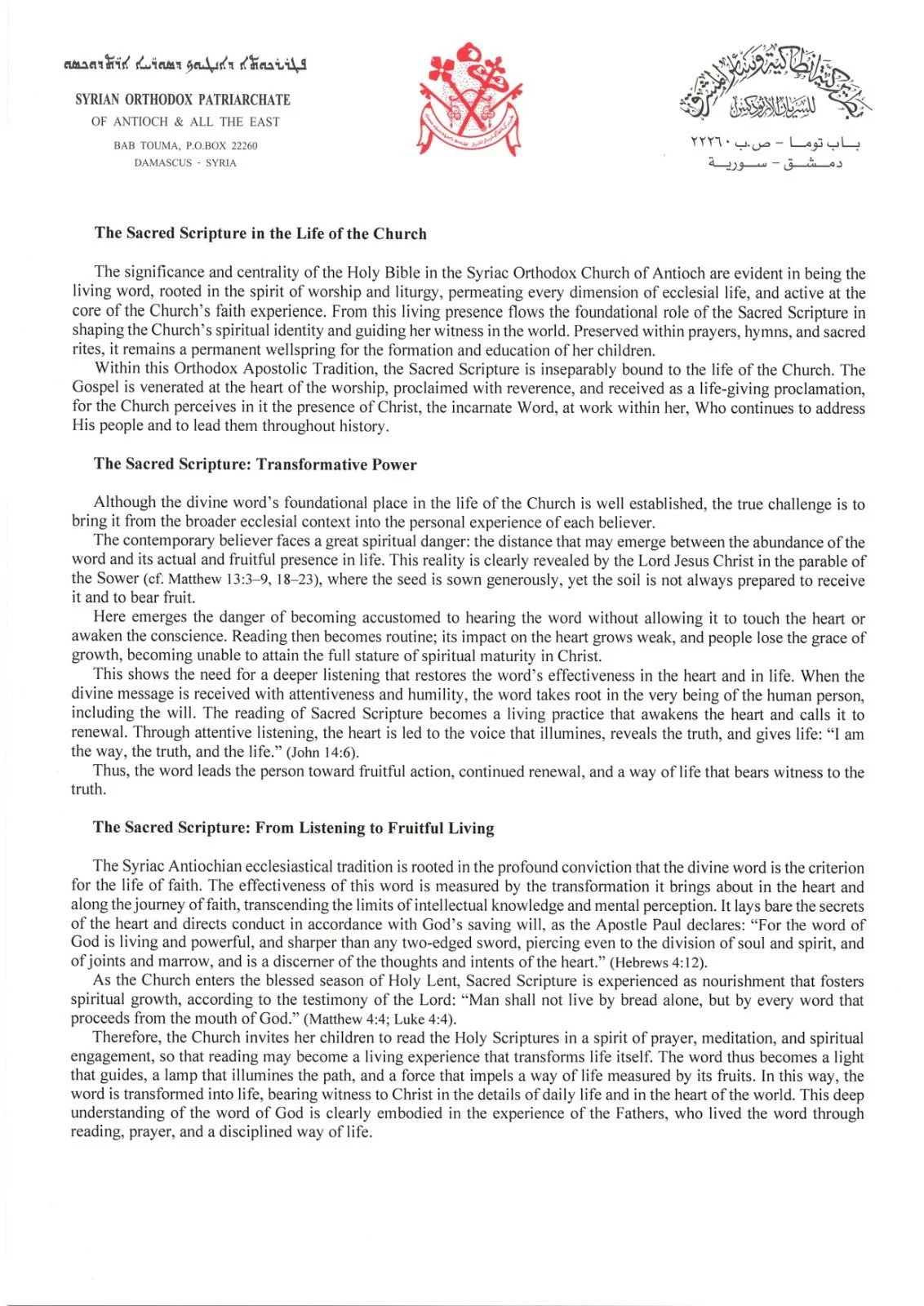
The significance and centrality of the Holy Bible in the Syriac Orthodox Church of Antioch are evident in being the living word, rooted in the spirit of worship and liturgy, permeating every dimension of ecclesial life, and active at the core of the Church’s faith experience. From this living presence flows the foundational role of the Sacred Scripture in shaping the Church’s spiritual identity and guiding her witness in the world. Preserved within prayers, hymns, and sacred rites, it remains a permanent wellspring for the formation and education of her children.
Within this Orthodox Apostolic Tradition, the Sacred Scripture is inseparably bound to the life of the Church. The Gospel is venerated at the heart of the worship, proclaimed with reverence, and received as a life-giving proclamation, for the Church perceives in it the presence of Christ, the incarnate Word, at work within her, Who continues to address His people and to lead them throughout history.
The Sacred Scripture: Transformative Power
Although the divine word’s foundational place in the life of the Church is well established, the true challenge is to bring it from the broader ecclesial context into the personal experience of each believer.
The contemporary believer faces a great spiritual danger: the distance that may emerge between the abundance of the word and its actual and fruitful presence in life. This reality is clearly revealed by the Lord Jesus Christ in the parable of the Sower (cf. Matthew 13:3–9, 18–23), where the seed is sown generously, yet the soil is not always prepared to receive it and to bear fruit.
Here emerges the danger of becoming accustomed to hearing the word without allowing it to touch the heart or awaken the conscience. Reading then becomes routine; its impact on the heart grows weak, and people lose the grace of growth, becoming unable to attain the full stature of spiritual maturity in Christ.
This shows the need for a deeper listening that restores the word’s effectiveness in the heart and in life. When the divine message is received with attentiveness and humility, the word takes root in the very being of the human person, including the will. The reading of Sacred Scripture becomes a living practice that awakens the heart and calls it to renewal. Through attentive listening, the heart is led to the voice that illumines, reveals the truth, and gives life: “I am the way, the truth, and the life.” (John 14:6).
Thus, the word leads the person toward fruitful action, continued renewal, and a way of life that bears witness to the truth.
The Sacred Scripture: From Listening to Fruitful Living
The Syriac Antiochian ecclesiastical tradition is rooted in the profound conviction that the divine word is the criterion for the life of faith. The effectiveness of this word is measured by the transformation it brings about in the heart and along the journey of faith, transcending the limits of intellectual knowledge and mental perception. It lays bare the secrets of the heart and directs conduct in accordance with God’s saving will, as the Apostle Paul declares: “For the word of God is living and powerful, and sharper than any two-edged sword, piercing even to the division of soul and spirit, and of joints and marrow, and is a discerner of the thoughts and intents of the heart.” (Hebrews 4:12).
As the Church enters the blessed season of Holy Lent, Sacred Scripture is experienced as nourishment that fosters spiritual growth, according to the testimony of the Lord: “Man shall not live by bread alone, but by every word that proceeds from the mouth of God.” (Matthew 4:4; Luke 4:4).
Therefore, the Church invites her children to read the Holy Scriptures in a spirit of prayer, meditation, and spiritual engagement, so that reading may become a living experience that transforms life itself. The word thus becomes a light that guides, a lamp that illumines the path, and a force that impels a way of life measured by its fruits. In this way, the word is transformed into life, bearing witness to Christ in the details of daily life and in the heart of the world. This deep understanding of the word of God is clearly embodied in the experience of the Fathers, who lived the word through reading, prayer, and a disciplined way of life.
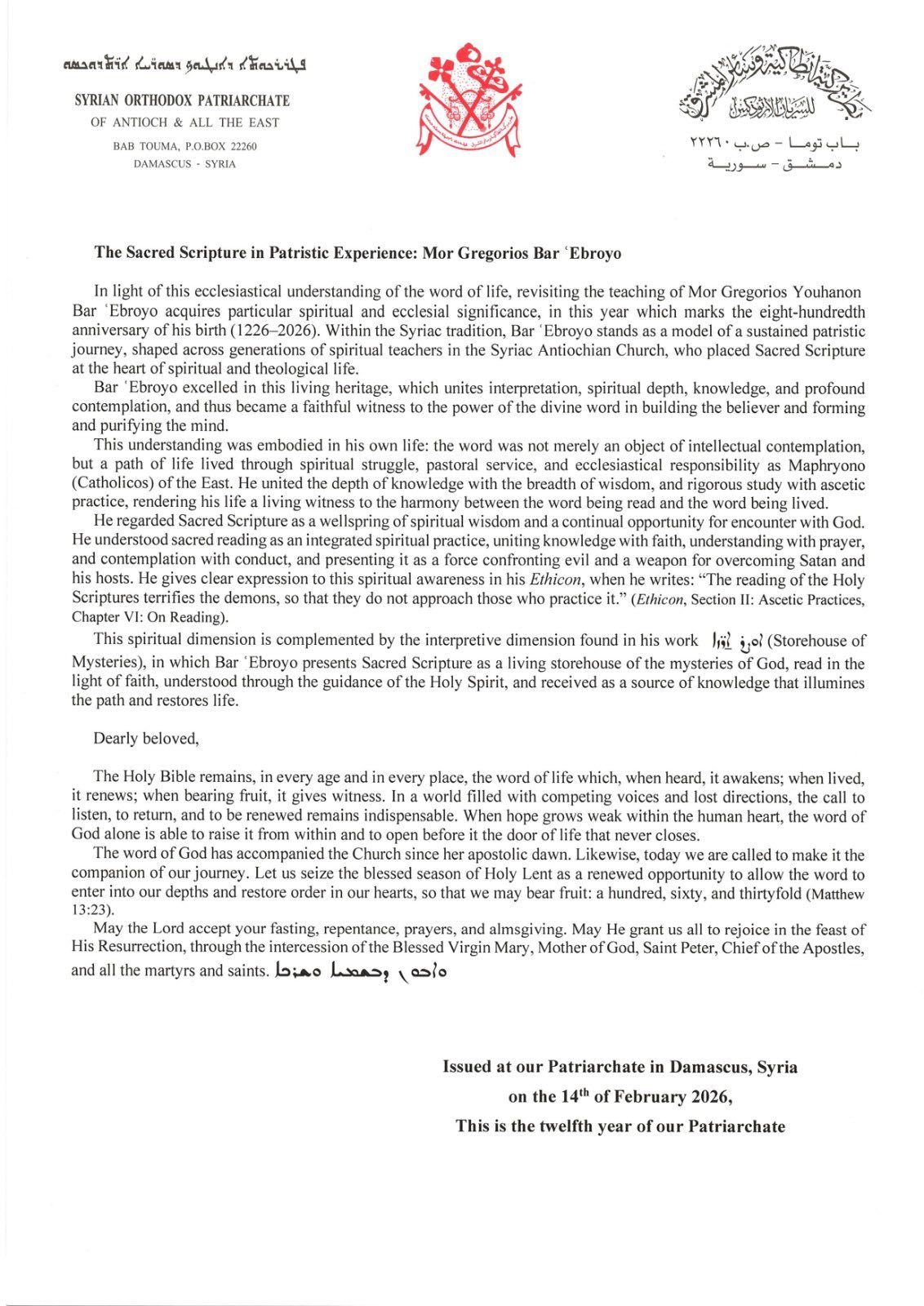
The Sacred Scripture in Patristic Experience: Mor Gregorios Bar ʿEbroyo
In light of this ecclesiastical understanding of the word of life, revisiting the teaching of Mor Gregorios Youhanon Bar ʿEbroyo acquires particular spiritual and ecclesial significance, in this year which marks the eight-hundredth anniversary of his birth (1226–2026). Within the Syriac tradition, Bar ʿEbroyo stands as a model of a sustained patristic journey, shaped across generations of spiritual teachers in the Syriac Antiochian Church, who placed Sacred Scripture at the heart of spiritual and theological life.
Bar ʿEbroyo excelled in this living heritage, which unites interpretation, spiritual depth, knowledge, and profound contemplation, and thus became a faithful witness to the power of the divine word in building the believer and forming and purifying the mind.
This understanding was embodied in his own life: the word was not merely an object of intellectual contemplation, but a path of life lived through spiritual struggle, pastoral service, and ecclesiastical responsibility as Maphryono (Catholicos) of the East. He united the depth of knowledge with the breadth of wisdom, and rigorous study with ascetic practice, rendering his life a living witness to the harmony between the word being read and the word being lived.
He regarded Sacred Scripture as a wellspring of spiritual wisdom and a continual opportunity for encounter with God. He understood sacred reading as an integrated spiritual practice, uniting knowledge with faith, understanding with prayer, and contemplation with conduct, and presenting it as a force confronting evil and a weapon for overcoming Satan and his hosts. He gives clear expression to this spiritual awareness in his Ethicon, when he writes: “The reading of the Holy Scriptures terrifies the demons, so that they do not approach those who practice it.” (Ethicon, Section II: Ascetic Practices, Chapter VI: On Reading).
This spiritual dimension is complemented by the interpretive dimension found in his work ܐܘܨܪ ܐ̱ܪ̈ܙܐ (Storehouse of Mysteries), in which Bar ʿEbroyo presents Sacred Scripture as a living storehouse of the mysteries of God, read in the light of faith, understood through the guidance of the Holy Spirit, and received as a source of knowledge that illumines the path and restores life.
Dearly beloved,
The Holy Bible remains, in every age and in every place, the word of life which, when heard, it awakens; when lived, it renews; when bearing fruit, it gives witness. In a world filled with competing voices and lost directions, the call to listen, to return, and to be renewed remains indispensable. When hope grows weak within the human heart, the word of God alone is able to raise it from within and to open before it the door of life that never closes.
The word of God has accompanied the Church since her apostolic dawn. Likewise, today we are called to make it the companion of our journey. Let us seize the blessed season of Holy Lent as a renewed opportunity to allow the word to enter into our depths and restore order in our hearts, so that we may bear fruit: hundred, sixty, and thirtyfold (Matthew 13:23).
May the Lord accept your fasting, repentance, prayers, and almsgiving. May He grant us all to rejoice in the feast of His Resurrection, through the intercession of the Blessed Virgin Mary, Mother of God, Saint Peter, Chief of the Apostles, and all the martyrs and saints. ܘܐܒܘܢ ܕܒܫܡܝܐ ܘܫܪܟܐ
Issued at our Patriarchate in Damascus, Syria
on the 14th of February 2026,
This is the twelfth year of our Patriarchate
This Letter was originally published on the Facebook Page of His Holiness Patriarch Mor Ignatius Aphrem II.