
Meditation of His Beatitude Patriarch Cardinal Pierbattista Pizzaballa on the First Sunday of Lent, A
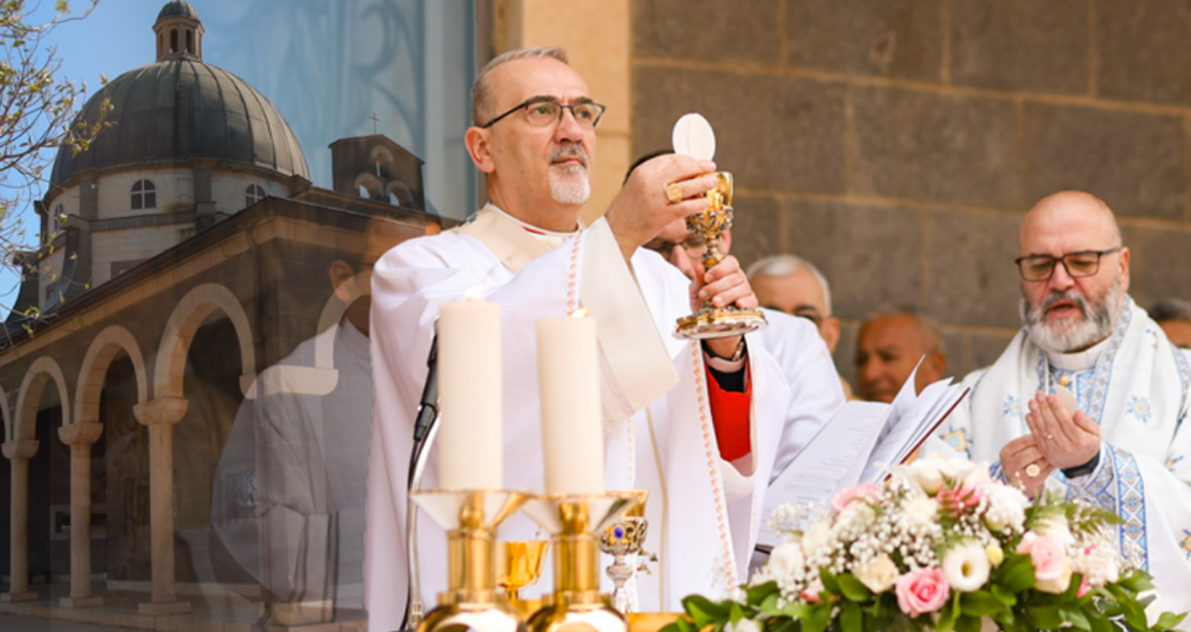
Below you can find the Meditation of His Beatitude Patriarch Cardinal Pierbattista Pizzaballa, Latin Patriarch of Jerusalem, on the First Sunday of Lent , Year A, Sunday 22 February 2026.
Mt 4:1–11
The account of the first sin committed by Adam and Eve, which we read in chapter three of Genesis, tells us that evil occurs in the heart of Man when one forgets the Word with which God spoke to him/her, allowing oneself to be confused by other voices, which insinuate themselves and distract from the truth that has been already revealed.
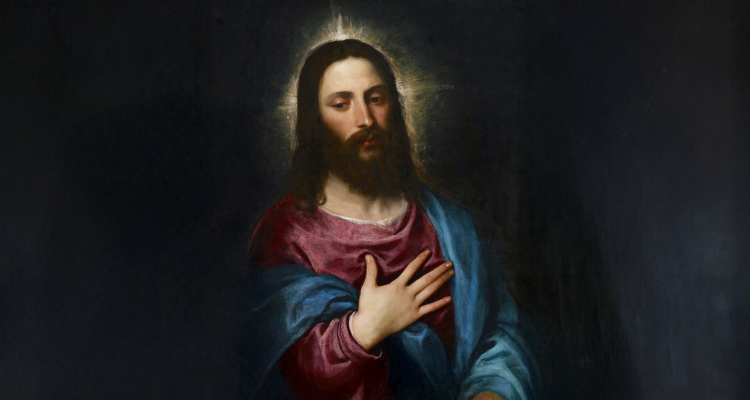
Today’s Gospel passage (Mt 4:1–11) follows this exact pattern: at the Jordan river, Jesus received a word from the Father, a word that revealed to him his identity as the beloved Son.
Immediately after this, Jesus must face a trial, which consists precisely in a voice different from that of the Father, a voice that proposes a different path from the one inaugurated at his Baptism.
It does not only propose that he do things differently, but that he assumes an identity not his own: Jesus is the beloved Son, who can trust the Father in everything and live by his Word, without seeking to secure his identity through achievement.
And the tempter tests him precisely on this, on what makes him Son: “If you are the Son of God...” (Mt 4:3, 6), on the meaning of this sonship. He does not say to him, “If you are strong, if you are rich, if you are powerful...”, but precisely, “if you are the Son”.
The first temptation insinuates that if Jesus is the Son of God, then he can do anything.
“If you are the Son of God, command that these stones become loaves of bread” (Mt 4:3). This is the temptation of self-sufficiency, of not needing anyone, of not having to ask, receive or give thanks. It is a Son who does not really need the Father.
The second temptation insinuates that if Jesus wants to be sure He is the Son of God, the Beloved Son, He must first put the Father to the test.
“If you are the Son of God, throw yourself down. For it is written: He will command his angels concerning you and with their hands they will support you, lest you dash your foot against a stone.” (Mt 4:6). It is a Son who cannot trust the Father.
The third temptation insinuates that even if Jesus is the Son of God, He has nothing and can do nothing. The Father does not share his riches with him; the Father does not give him what he needs, but he must engage with evil in order to live fully: “All these I shall give to you, if you will prostrate yourself and worship me.” (Mt 4:8). It is as if being a son were not enough to be blessed.
These three temptations touch deeply on three human fears.
The first reveals our most primordial fear: the fear of lack. That feeling that if we do not get what we need by ourselves, no one else will. It is the fear of not being supported, of not being loved enough to be able to depend on others.
The second reveals the underlying fear that God does not truly want our good, that he is not really the “God with us”. From this comes the need to constantly test Him, as if He had to prove that He is trustworthy.
The third reveals the fear of not being good enough, of being insignificant: sin insinuates that if you don't have everything, if you can't do everything, then you are worth nothing…
This Meditation was originally published on the Website of the Latin Patriarchate of Jerusalem. Please click here to read the full text.