
His Holiness Pope Leo XIV: Only peaceful hearts can build just and lasting peace
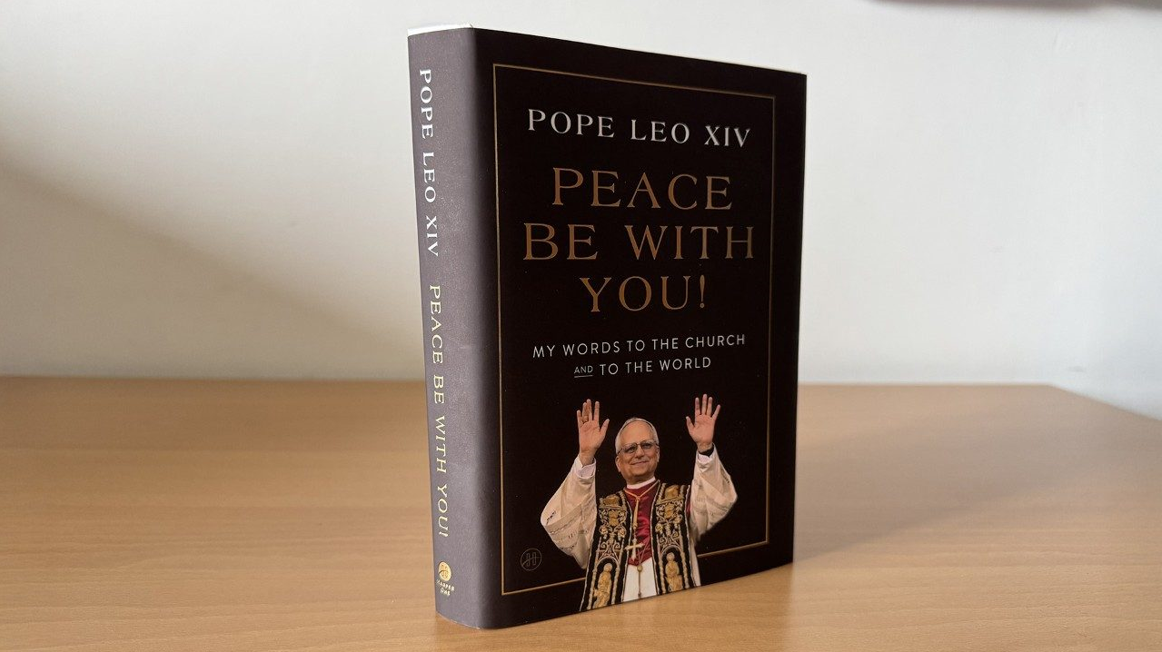
Cover of His Holiness Pope Leo XIV’s book "Peace Be with You!"
We publish the text of His Holiness Pope Leo XIV’s new introduction to the book “Peace Be with You!” published by HarperCollins and available in bookstores in the United States and English-speaking countries starting February 24, which is the English-language version of the volume “E pace sia!” published in August 2025 by the Vatican Publishing House.
By His Holiness Pope Leo XIV
Peace is one of the great issues of our time, and is both a gift and a commitment: a gift from God built by men and women throughout the ages.
We live in a world wounded by too many conflicts and struck by bloody hostilities. Bitter nationalism tramples on the rights of the weakest. Even before it is crushed on the battlefield, peace is defeated in the human heart when we give in to selfishness and greed and when we allow partisan interests to prevail instead of looking to the common good. Many writers have said that it is when we refuse to listen to other people’s stories that we begin to deprive them of their dignity. Depersonalizing others is the first step in any war. To know others, on the other hand, is a foretaste of peace. But in order to know, one must first know how to love. Saint Augustine said that “no one can be known except through friendship” (Eighty-three Different Questions, 71).
I would like to reflect here on this dual dimension of peace, which is vertical (peace as a gift from Above) and horizontal (peace as the responsibility of each person).
Peace is a gift that God has given to men and women of every age through Jesus’ birth in Bethlehem. The angels announced peace on earth because God became man. He embraced humanity so deeply that with his cross he destroyed the enmity of sin. Saint Augustine writes: “We, too, shall be a source of additional glory to God in the highest when, after the resurrection of our spiritual body, we shall be lifted up in the clouds to meet Christ, on condition, of course, that we work for peace with good will while we are here on earth” (Sermons, 193). The glory of God descended upon the earth to make us participants in his infinite goodness. This gift calls into action the responsibility of our answer, of our “good will”, as the Saint of Hippo writes.
Furthermore, peace is the gift that the Risen One gave to his disciples. It is a peace “injured” by the wounds of the crucifixion, because Jesus’ peace gushes forth from a heart that loves and lets itself be struck by the suffering of every time and place. “The Lord appeared to His disciples after His resurrection, as ye have heard, and saluted them, saying, ‘Peace be unto you.’ This is peace indeed, and the salutation of salvation: for the very word salutation has received its name from salvation” (Saint Augustine, Sermons, 116).
However, peace is also a commitment and responsibility for each one of us. Peace means teaching children to respect others and not to bully others when they play. Peace means overcoming our personal pride and making room for the other, in our family, at work, in sports. Peace is when our heart and our life are inhabited by silence, meditation and listening to God; because God never blesses violence, he never approves of taking advantage of others, or of the frenzied abuse of the one Earth that is disfiguring Creation, a caress of the Creator.
We may feel powerless before the many wars being fought around the world. We can respond in various ways to what I called the ‘globalization of powerlessness’: believers can, first and foremost, give voice to prayer. Prayer is an “unarmed” force that that seeks only the common good, without exclusions. By praying, we disarm our ego and become capable of gratuitousness and sincerity…
This introduction was originally publsihed on the Website of Vatican News. Please click here to read the full text.