
Algeria a first stop… A Papal visit with spiritual and human messages
An Article by Father Dr. Rif’at Bader
An Article by Father Dr. Rif’at Bader, Director of the Catholic Center for Studies and Media, Publisher of Abouna Website, and Representative of the Executive Committee for Media Affairs at the Middle East Council of Churches (MECC)
When it was announced in the Vatican and in Algeria of His Holiness Pope Leo XIV’s intention to undertake an official visit to Algeria in April, I felt a particular joy, not only because it concerns a papal visit to a brotherly Arab country, but because I came to know Algeria closely during two personal stops that left a deep impression on me.
My first visit was in 2008 to bid farewell to Bishop Ghaleb Bader, when Pope Benedict XVI appointed him as archbishop of Algiers, thus making him the first Arab to sit on that episcopal seat. The second visit was a transit visit to the Diocese of Algiers, during which I had the opportunity, in the company of a bishop friend, to closely observe the religious and human reality of this vast country, a country that has nearly 48 million people, with an overwhelming Muslim majority and a modest Christian presence numerically, yet one that is active through educational, healthcare, and social institutions serving people without distinction of religion or ethnicity.
From this premise, the papal visit appears to be an event that transcends an internal ecclesial dimension to become a national and humanitarian message of encouragement. As has been the case during previous visits to Lebanon and Turkey, the media are expected to shed light on Algeria’s true face, namely as a country of ancient civilization, a deep-rooted history, as well as being marked by cultural and religious diversity, and a constant striving for stability and common living.
Yet, the question that arises is: “why did the Pope choose Algeria as his first stop?
His first pontificate visits, namely to Turkey and Lebanon, took place as a continuation of the dreams and choices of his predecessor, Pope Francis. However, the choice of Algeria conveys a special significance. Pope Leo, who is American by origin, belongs to the Order of St. Augustine, had served for several years as its prior general. The Order of St. Augustine inspires the thoughts and teachings of Saint Augustine, the son of Algeria, born in 354 in Tagaste (currently known as Souk Ahras), who became bishop of Hippo (currently known as Annaba) for 34 years until his death there in 430. He is regarded as one of the most brilliant theologians and philosophers in human history.
It is a spiritual return to the roots. The Augustinian Pope chooses to land in the land of Great Augustine, author of “Confessions” and “The City of God”, to reaffirm the values that shaped his thought, namely the constant search for truth, the depth of spiritual life, as well as the openness to God and to humanity. These are the values that the world desperately needs at present, at a time marked by escalating conflicts and schisms.
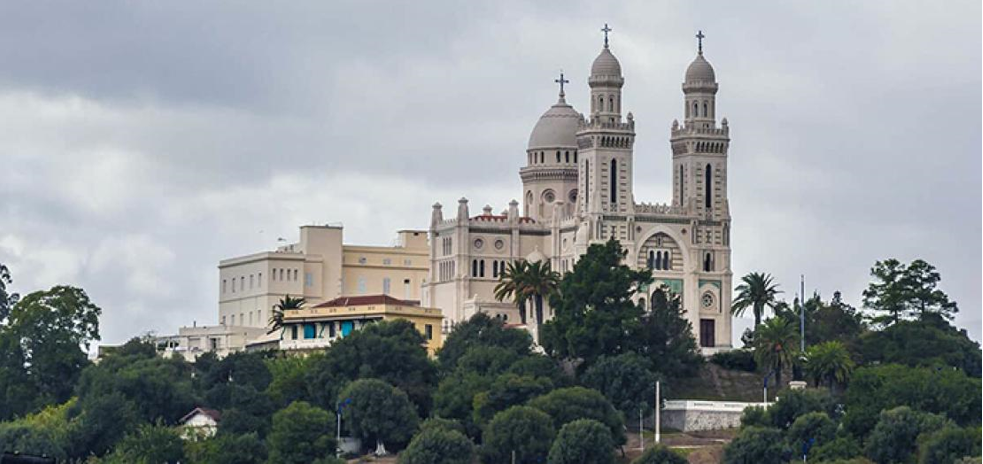
Algeria is not merely a glorious past; it is rather a living present. The Catholic Church is there, where despite the small number of its faithful it has been a witnessing and an active Church. Algeria has four dioceses and the archbishop of Algiers serves as metropolitan and president of the Bishops’ Conference. Currently, this post is held by Cardinal Jean-Paul Vesco of French origin, who participated in the papal election and stated to the French newspaper La Croix that the Holy Father’s visit will be a great source of encouragement for all. He stressed that the Pope is not coming to visit Catholics alone, but to extend a public humanitarian message to all the nation’s people.
The visit also extends an additional symbolic dimension, namely as the year 2026 marks the 30th anniversary of the martyrdom of several monks and nuns whom the Church declared blessed after they fell victim during the years marked by terrorism and violence that swept through Algeria in the 1990s. It is a coincidence that the Pope’s election took place on May 8, the Feast of the Martyrs of Algeria, which gives this upcoming visit a particular spiritual significance. An exhibition about these martyrs is currently being held in New York and is scheduled to proceed to several countries.
It is a visit with multiple significances, namely spiritual, cultural, humanitarian, and diplomatic. It contributes to consolidating the relations between the Holy See and the Republic of Algeria, namely between the Pope in his capacity as head of the Vatican State and Algerian President Abdelmadjid Tebboune, who was among the first heads of state who visited the Vatican and congratulated the new Pope. Undoubtedly, it is a spiritual visit aimed at encouraging Christians, despite being few in number, to continue their spiritual and humanitarian mission. Definitely, it is a visit to reinforce cultural cooperation between the East and the West, and the spiritual encounter between Christians and Muslims in Algeria, in northern Africa and throughout the world.
This Article was originally published on the Website of Abouna.org.