
Vatican News: New DNA Research Confirms Shroud of Turin's Passage Through the Middle East
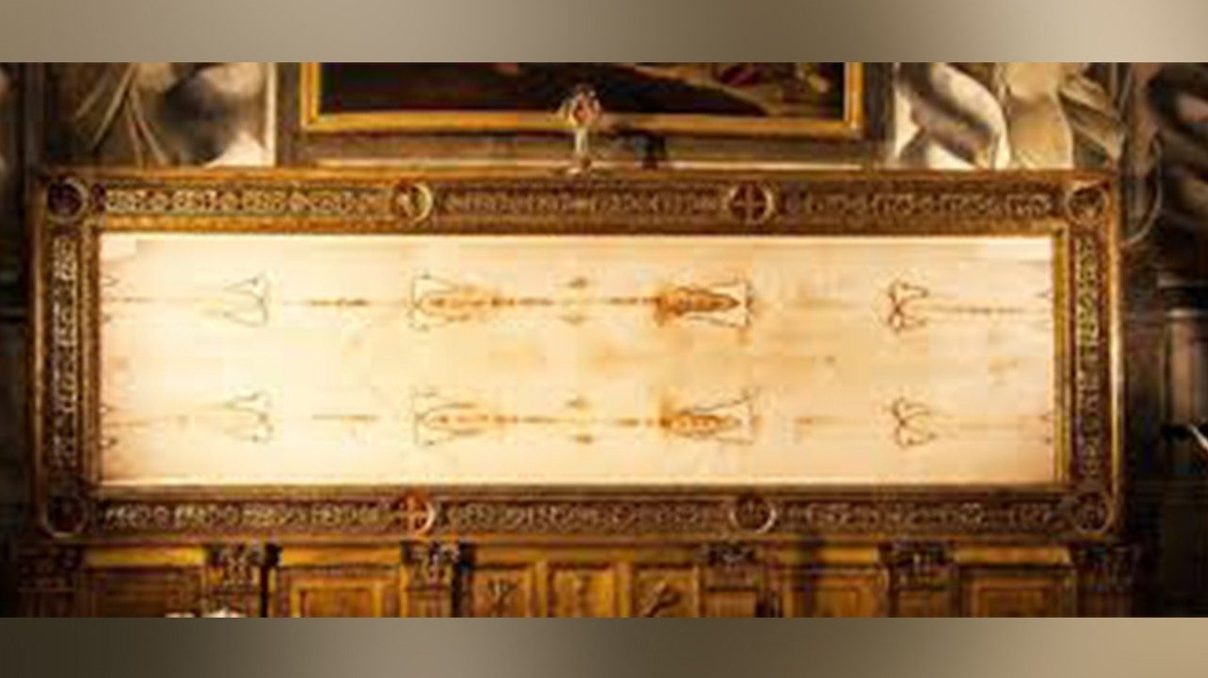
The Holy Shroud of Turin passed through the Middle East, reveals new DNA research in the scientific article authored by Dr. Gianni Barcaccia, Professor of Genetics and Genomics at the University of Padua, along with other researchers. The scientists confirm the presence of a genome predominantly from the Middle East and show that microorganisms thriving in extremely saline environments, such as the Dead Sea, were detected.
Vatican News
New research on DNA traces found on the Shroud of Turin suggests the likelihood that the cloth passed through the Middle East. A scientific article, soon to be published and already available in pre-print, reports the results of new investigations conducted on material from the Shroud provided by Professor Pier Luigi Baima Bollone, a renowned Professor of Forensic Medicine who, in the 1980s, claimed to have identified the presence of human blood of the AB group on the Shroud.
The new article is authored by Dr. Gianni Barcaccia, Professor of Genetics and Genomics at the University of Padua, together with other researchers from various universities, including Baima Bollone, who unfortunately passed away before the article’s publication.
Dr. Barcaccia and his colleagues had already published an important article in Nature Scientific Reports in 2015, announcing the discovery of DNA contamination from people who had touched the Shroud: over 55.6% from the Near East, around 38.7% from India, while Europeans accounted for less than 5.6%. The presence of Indian DNA can be explained by the presence of fine Indian linen at the Temple of Jerusalem, used for the garments of the High Priest, who wore them during the afternoon rituals of Yom Kippur, as noted by paleographer Ada Grossi.
The journal Archaeometry, which had published the hypothesis of Brazilian researcher Moraes, released a rebuttal by specialists Casabianca, Marinelli, and Piana.
The authors of the new article write: "The presence of approximately 38.7% of Indian ethnic lineages could result from historical interactions or the importation of linen by the Romans from regions near the Indus Valley, associated with the term ‘Hindoyin’ in rabbinical texts. In particular, the term ‘Shroud,’ derived from the Greek ‘Sindôn,’ meaning fine linen, could be linked to Sindh, a region renowned for its high-quality textiles. Historical evidence supports commercial connections between India and the Mediterranean, highlighting the importance of these textiles and inviting further exploration of ancient cultural interactions and trade practices. Indeed, biblical scholar Lavergne has stated that the term ‘Sindôn’ refers to a fabric of Indian origin, valued for its qualities and used for various purposes. In short, a reevaluation of these DNA trace analyses on the Shroud of Turin suggests the potential broad exposure of the cloth in the Mediterranean region and the possibility that the yarn was produced in India."
They add: "Overall, our results, both previous and current, provide valuable insights into the geographic origins of the individuals who interacted with the Shroud during its historical journey across various regions, populations, and eras"…
This report was originally published on the Website of Vatican News. Please click here to read the full text.