
His Beatitude Patriarch Cardinal Pierbattista Pizzaballa Presides Over the Traditional Procession of Our Lady of Mount Carmel - the Ascent of the Virgin
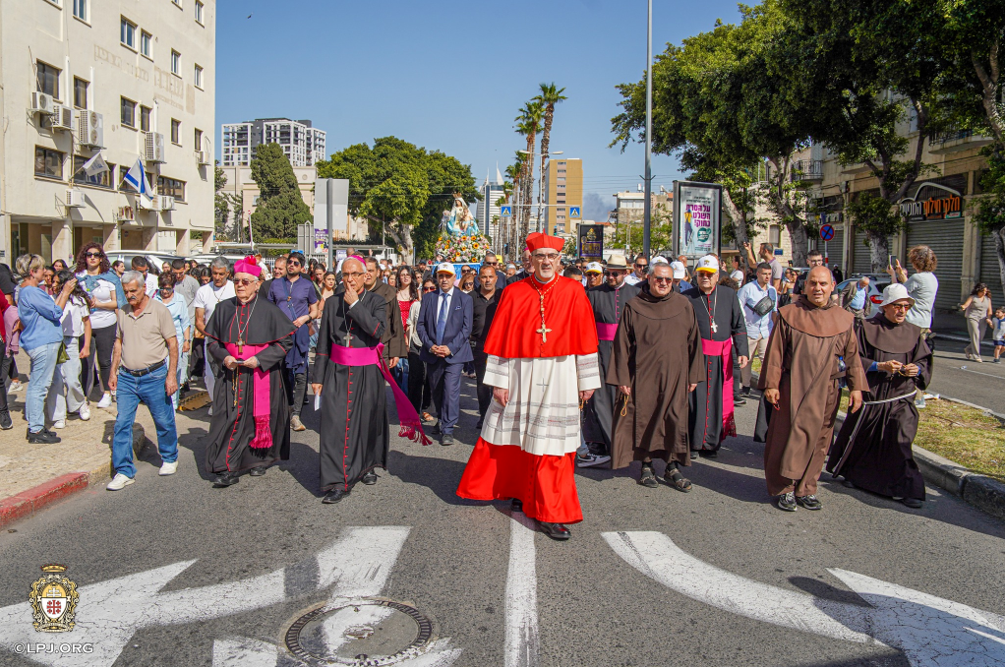
On Sunday, May 10, 2026, the city of Haifa witnessed the traditional Procession of Our Lady of Mount Carmel, locally known as Taalat al-Adra (the Ascent of the Virgin), as thousands of faithful gathered in Prayer and devotion to accompany the revered statue of the Virgin Mary from St. Joseph’s Latin Parish to the Carmelite monastery of Stella Maris atop Mount Carmel.
As the afternoon sun slowly began its descent, scouts, Clergy and faithful took to the streets in a solemn yet joyful procession. Pulling the 900-kilogram statue of Our Lady of Mount Carmel through the main roads of the city, rosaries in hand and Prayers rising in one voice.
The procession was led by His Beatitude Patriarch Cardinal Pierbattista Pizzaballa, Latin Patriarch of Jerusalem, accompanied by the Apostolic Nuncio Archbishop Giorgio Lingua, Msgr. Rafiq Nahra, Patriarchal Vicar of Galilee, alongside clergy from different sister churches and thousands of faithful who came from different cities to honor the Virgin Mary of Carmel.
Usually held on the third Sunday after Easter, this year’s procession had been postponed. Yet, the delay seemed only to deepen the spiritual meaning of the event, as it took place in the month of May, dedicated to honor the Blessed Virgin Mary. “This year in particular, after the procession was postponed due to security concerns, the faithful returned with a deeper spirit of Prayer,” said Fr. Koubrianos Koubrianos, parish priest of the Latin parish in Haifa. “It was as if the faithful were saying: despite our fear, we continue to walk with Mary; and despite our weariness, we continue to lift our eyes toward God, who alone leads us to life and salvation.”
He reflected on the symbolic nature of the ascent itself, noting that the procession's route from the streets of the city toward the Shrine of Our Lady of Mount Carmel mirrors the journey of humanity: “It is an image of humanity ascending from the weariness and anxiety of this earth toward the presence of God, with the Virgin accompanying them as a mother and patron along the way.”
"Faith is not lived only within the walls of the Church, but carried into the streets and daily life. Like Mary, we are all called to be messengers of peace and love — bringing hope that is stronger than fear, and becoming bridges of love and light in a wounded and divided world” he added.
More than a historical tradition, the procession remains a living testimony of faith deeply rooted in the life of the local people. The tradition itself dates back to the First World War, when Ottoman soldiers ordered the Carmelite Fathers to evacuate the Stella Maris Monastery within three hours. The religious left carrying only a few archival documents and the statue of the Virgin Mary. Following the end of the war, on April 27, 1919, the statue was solemnly returned to the monastery in procession of thanksgiving for the Virgin’s protection over the city during the years of conflict. Since then, the annual ascent has become one of the most beloved Christian traditions in the Holy Land…
This report was originally published on the Website of the Latin Patriarchate of Jerusalem. Please click here to read the full text.