
Sixth World Conference of the Faith and Order Commission of the World Council of Churches
A Call to Walk Together in Unity, Reconciliation, and Justice
His Holiness Pope Tawadros II in an Exclusive Interview: "Relationships Strengthens love and dialogues foster understanding of faith, and through both we reach unity"

Media of the Middle East Council of Churches (MECC)
Photos: World Council of Churches (WCC)
Several weeks have passed since the Sixth World Conference of the Faith and Order Commission of the World Council of Churches (WCC), held under the theme "Where Now for Visible Unity?" This historic Ecumenical event, held in the Arab Republic of Egypt, specifically at the Papal Logos Center in Wadi El Natrun, instilled much hope and Ecumenical optimism throughout the world.
While many weeks have gone, it is essential to reiterate the significance of the outcomes of this conference, which took place from October 24 to 28, hosted by the Coptic Orthodox Church, under the blessings and with the presence of His Holiness Pope Tawadros II, Pope of Alexandria and Patriarch of the See of St. Mark.
A Fraternal Ecumenical Oasis
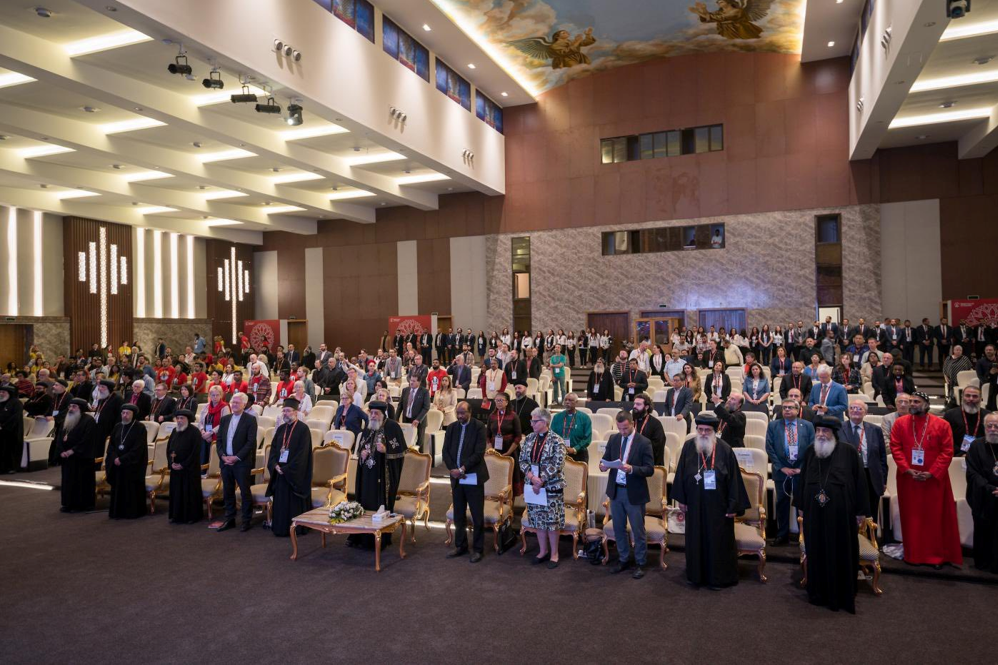
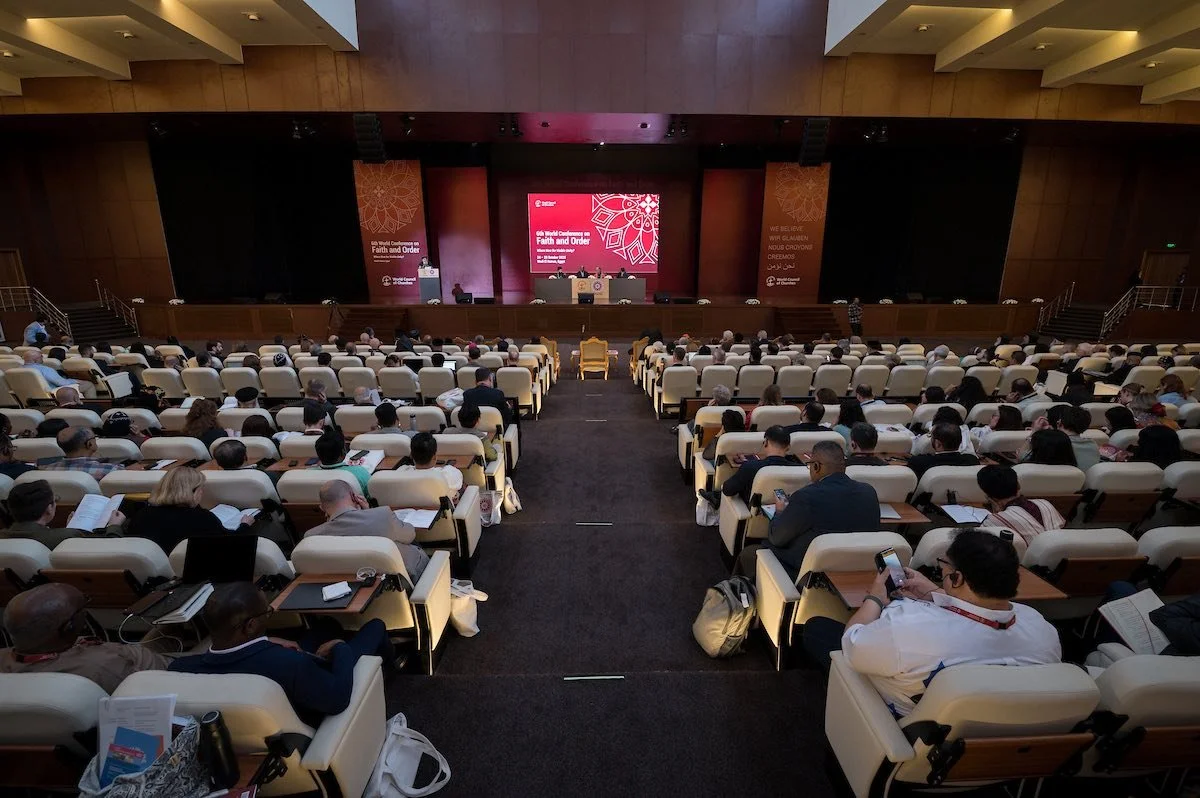
More than 400 participants, including Church Leaders, Theologians, experts, and representatives from Churches and regional and international organizations, and institutions, gathered for a week to discuss, through lectures and workshops, various issues related to Christian unity, its challenges, future, and ways to strengthen it.
We cannot forget that the conference was held on the occasion of the 1700th anniversary of the First Ecumenical Council of Nicaea. Therefore, its sessions also addressed many aspects of this Council, analyzing its meanings and to examine the current state of Christianity.
The conference was characterized by a comprehensive Ecumenical spirit, which translated into human fraternity among the participants. They demonstrated their love through their encounters, believing that they are walking together on a journey of faith, justice, and reconciliation. Thus, the conference became an oasis of Prayer and culture, enabling the participants to exchange their experiences, insights, and perspectives.
A Call to Work Together
At the end, the participants issued a message that warrants further review, study, and deeper reflection. It affirmed that Christians share "share faith in God – Father, Son, and the Holy Spirit – which brings them together across time and traditions," noting that "Trinitarian faith is not merely a heritage to be preserved, but living water to be offered through both word and deed. We are called not only to believe, but to walk by faith."
The participants emphasized that the mission entrusted to Christians " is rooted in the very identity of the Church, whose task is to proclaim the gospel. The faith of the Nicene Creed is not focused on itself, but reminds us that the Church exists to be sent into the world.... In our time, mission must be marked by repentance and a reorientation toward decolonisation and justice, reconciliation and unity."
The message stressed that unity is more than agreement: it is communion... and it manifests itself "when we live together in ways that embody faith, hope, and love: not in isolation, but in solidarity with those who are marginalized... The Nicene Creed, ancient yet ever new, reminds us that we share a gift and call to full, visible unity."
His Holiness Pope Tawadros II and Christian Unity
His Holiness Pope Tawadros II spoke about this unity in an exclusive interview which was the culmination of a media collaboration undertaken during the conference between the World Council of Churches (WCC), the Middle East Council of Churches (MECC), and the Coptic Orthodox Church (COC). The interview affirmed that the Coptic Orthodox Church's decades-long commitment to consolidating its heritage, preserving its traditions, and strengthening Christian and communal unity for a better future.
His Holiness pointed out that "there are what are called relationships, and there are what are called dialogues between the Churches of the world. Relationships are built to strengthen love, our love in Jesus Christ. This is what we witness in the World Council of Churches, the Middle East Council of Churches, the Egyptian Council of Churches, and all the regional, national, and international meetings and Councils..."
He added, "Dialogues are always Theological dialogues in which each Church has official representation. These dialogues are conducted in an organized manner according to a specific agenda, and they aim to reach a unified understanding based on faith in order to achieve unity."
He continued, "Thus, we have both relationships and dialogues: relationships for the sake of love, and dialogues for the sake of understanding the faith. Through both, we reach unity. This is the path that all the Churches of the world follow, and we too are walking this path."
Media for Humanity
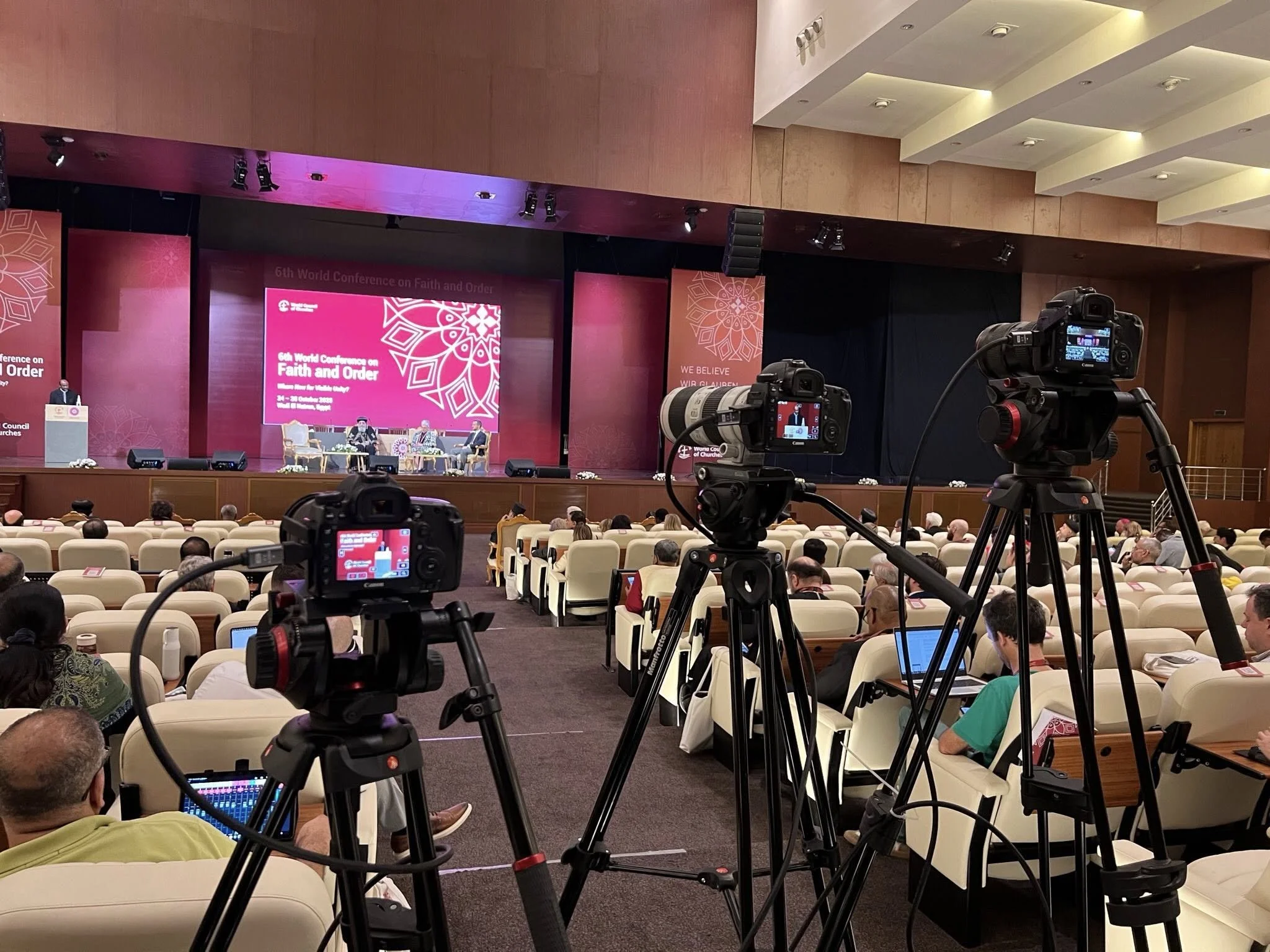
In parallel with the conference activities, joint ecumenical media efforts were made by the World Council of Churches, the Middle East Council of Churches, and the Coptic Orthodox Church, to convey a true picture of the love experienced by the conference participants. This media collaboration effectively reinforced the universal message, the shared faith, and the insistence that media is not merely tools and technologies, but a message of fraternity and a humanitarian cause.
News, articles, reports, interviews, and videos were released by each of these Ecumenical media outlets on their respective pages and platforms, providing real-time coverage so that people around the world could follow the conference proceedings, even online, and share in these historic Ecumenical experiences that will mark a new milestone in the global Ecumenical movement.
The interview with His Holiness Pope Tawadros II crowned this media collaboration, as did other special interviews conducted with Reverend Prof. Dr. Jerry Pillay, General Secretary of the World Council of Churches (WCC); Bishop Dr. Heinrich Bedford-Strohm, Moderator of the World Council of Churches (WCC); Cardinal Kurt Koch, Prefect of the Dicastery for Promoting Christian Unity in the Vatican; Archbishop Dr. Antje Jackelén, Archbishop Emerita of the Church of Sweden; and Archbishop Dr. Samy Fawzy, Archbishop of of the Episcopal Anglican Province of Alexandria.
In addition, media interviews with participants from various Churches, cultures, and countries emphasized that living together in harmony requires meaningful and strong relationships based on love, fraternity, and mutual respect, and most importantly, solidarity and working together to consolidate the desired unity.
Ecumenically, theologically, culturally, humanitarian, and in terms of media, the conference was a unifying platform that builds bridges and bridges distances, and a call to walk together on a journey of hope, reconciliation, repentance, and living in peace, respect, and justice.
However, all of this requires continued follow-up, Prayer, and sustained effort.