
Between Religion and Politics… A Confounded Society
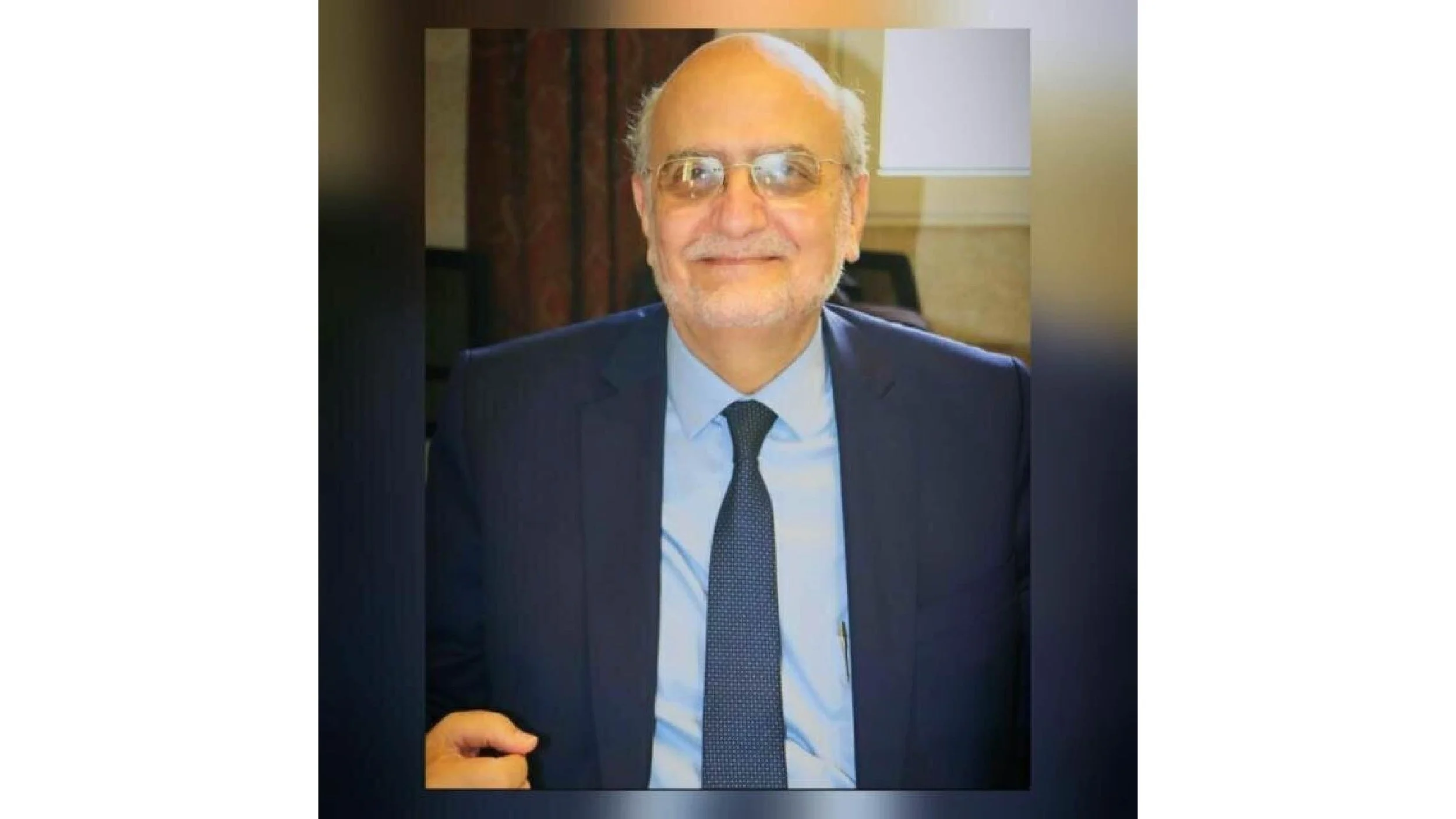
Speech of the Secretary General of the Middle East Council of Churches (MECC) Professor Michel Abs at the Conference "Christians in the Arab East and Aspirations of Unity and Enlightenment", held on 7 and 8 May 2025, in Amman.
Session Two: Religion and Politics Between Civil Society and the Political Utilization of Religion.
Between religion and politics lie strong ties, whose manifestations fill the pages of history and have been deeply analyzed, criticized, and condemned for the calamities they have brought upon humanity. We in Lebanon, and the Antiochian-Arab East, live through the ugliest expressions of this bond, with Lebanon’s experience exported to the rest of the region. The alliance between religion and politics seems eternal here, and any exit from it appears costly on all fronts.
However, the intersection of religion and politics presents challenges that can only be properly addressed by assigning each its rightful domain and maintaining a deliberate, barren distance between the two. The risks posed by politics to religion—and vice versa—are grave, potentially shaping human destiny as history has often shown.
Methodology of Approach
My approach is grounded in field observation and personal experience in social, developmental, and political work amidst sectarian conflicts—beginning as a volunteer in social relief before the 1975 war, continuing through my role as director of Lebanon's relief and development programs, and presently as Secretary-General of the Middle East Council of Churches.
It also draws on seminars, debates, surveys, and analysis of field and statistical data on religious conflicts during my academic studies and teaching in economics and sociology. I also specialized in massacres in northern Syria and Anatolia.
Further, it stems from my long-standing participation in the National Islamic-Christian Dialogue Committee, where I have represented the Greek Orthodox Patriarchate of Antioch and All the East since 1997.
This is a sociological perspective. I ask readers not to judge the opinions and analyses presented—most are based on scientific analysis or field observation. We are not judging phenomena or individuals, but analyzing conditions to help build a better future for humanity and society, where religion remains a cornerstone.
Religion: Its Place and Role in Organizing Life and Society
Scholars across disciplines have examined the religious phenomenon and recognized its importance in creation’s life, opening endless debates and interpretations.
Émile Durkheim, the father of modern sociology, defined religion as a unified system of beliefs and practices related to sacred things. He argued that religion brings believers into one moral community—a "faithful community" or sect—and that it fosters solidarity through shared beliefs and rituals, ensuring social cohesion and order.
Max Weber saw religion as belief in a supernatural power inexplicable by science. He believed religion could drive social change and functions as a social institution meeting societal needs.
Karl Marx, despite his atheism, didn’t see religion as inherently evil. While calling it the “opium of the people,” he also described it as “the heart of a heartless world” and “the soul in a soulless condition.”
Mircea Eliade considered religious existence inherent to human nature, describing Homo sapiens as inherently religious.
Ultimately, we must recognize religion as a universal cultural element found in all social groups. Roger Bastide noted religion’s indispensable social and cultural function, necessary for all societies regardless of advancement.
Politics and Its Role in Preserving Groups and Developing Society
Political authority guarantees social order. In times of chaos, only supreme political authority—be it the state or spiritually empowered group leadership—can restore order.
Authority rebuilds reality amid disintegration to preserve and continue the group’s existence.
Leadership, as the human factor, helps articulate collective goals and steer the group toward them. The leader must engage in politics to control events and guide the community toward desired ends.
The leader becomes protector and refuge for the group or society, deriving power from either capabilities or communal fear and insecurity. This role entails participation—and thus accountability—to the community.
Religion and Politics – A Shifting Dynamic
Throughout history, the relationship between religion and political power has been contentious, especially in societies that have not adopted social contract logic or full citizenship inclusive of diversity.
Political leaders often exploit religion to mobilize and control groups, creating or embedding religiously based ideologies. They may enlist ideological "contractors" to ensure the project’s success.
Opposition groups may mirror this strategy, using the same religious tools to fight power with its own weapons—often effectively.
Studies show ideology is a potent tool to subdue communities, keeping them submissive to populist or political leaders. Religious elements are usually central, often mythologizing leaders, sects, beliefs, or phenomena.
Through religion, political leaders pacify public anger, obscure societal awareness, and divert attention from real problems toward imaginary threats—especially "enemies of religion or the sect."
When religion is exploited by corrupt people, ideologized faith claims absolute truth and usurps all values—declaring itself the sole source of justice, truth, goodness, and beauty.
Politicians found that controlling religion allowed them to control the people via compliant religious leaders. This created a state of submission where people accepted all forms of authority and rhetoric.
Such a system suffocates souls and wills before it harms bodies. It kills or discourages freedom, aspiration, and hope.
Here, the believer—grateful and loving toward the Creator—becomes a political tool used in projects that don’t serve their interests, individually or collectively.
Cultural and economic conditions also play a role. Societies plagued by ignorance, unemployment, and marginalization are more vulnerable to religious exploitation by political elites. These groups are most prone to fundamentalism, takfir, and aligning with any religion-based project promising a better life.
The true catastrophe arises when atrocities are committed in religion’s name—displacing populations, exterminating groups, and staining the land with blood. Modern Antiochian history is rife with such events.
Lebanese philosopher Nassif Nassar argued that the Arab world is governed by a compound ideology of religious delusion and anti-modern identity preservation. He called both delusions—religious and political—fueled by misery and ignorance. He saw religious-political feudalism as rooted in turning religion into politics through the sanctification of power. He concluded that religion imprisoned people in "sacred time," strategically perpetuating ignorance, backwardness, fragmentation, and internal conflict.
In discussing the religion-authority relationship—even critically—we never forget that human civilization was built upon religion, the ultimate belief that pushed humanity toward the impossible. Describing how religion is misused in politics doesn’t harm religion or its leaders. Many religious figures were martyred defending their people against tyrants and invaders. History is adorned with iconic leaders who sacrificed their lives for justice and collective good.
Lebanon: Caught Between Religion and Politics
No society exemplifies the entanglement of religion and politics like Lebanon, where religion is the foundation of political life—from public representation to appointments in government, from ministries to the smallest public job.
Lebanon was founded on political sectarianism in 1943, when so-called founding fathers created the "National Pact," stating that, in pursuit of justice and equality, political representation would be temporarily based on sect. That “temporary” became permanent.
This was reinforced in the 1990 "Taif Agreement" after the civil war, which was supposed to abolish political sectarianism, create non-sectarian political representation, and establish a Senate representing sects. None of this occurred. Instead, political sectarianism deepened and became culturally ingrained, shaping Lebanon’s political and economic systems.
Forms of Sectarianism in Lebanon
Previous studies identified three main forms of sectarianism in Lebanon, based on historical period and political context:
1. Religious Sectarianism
This is the faith-based solidarity of a praying religious group led by a clergy. It’s a natural, non-harmful sense of cohesion if confined to pure religious practice. It doesn’t threaten other faiths since it’s centered on the divine.
In this framework, institutions manage the group’s inner life (e.g., places of worship, religious schools), fostering a sub-identity compatible with broader national identity. Religious communities often coexist respectfully, even without sharing beliefs.
2. Social Sectarianism
This evolves from shared geographical presence, leading to a unified social life across one or more religious groups. It produces a hybrid subculture influenced by local majorities and shared religious spaces.
People of different religions adopt the same local identity, erasing sectarian distinctions. Social customs mix, and communities participate in each other's occasions like one society:
3. Political Sectarianism
Here, the religious or social group becomes politicized—sect transforms into party and becomes the basis for political representation. This traces back to the Ottoman millet system and Western protective arrangements.
Religious belief and social identity disappear, replaced by power, money, influence, and patronage. Religion becomes a façade for political goals.
Politics uses the strongest form of solidarity—sectarianism—to entrench power. If faster-bonding solidarities existed, they’d be used instead.
When under threat, politicians invoke "religious honor" to convert political crises into sectarian ones, using stereotypes, hate speech, and takfir. The “other” disappears, replaced by the sect. Friends become enemies. This logic, applied broadly, results in civil cold wars or their potential.
Thus, the root problem in Lebanese reform and representation is political sectarianism.
Stages of Sectarian Transformation in Lebanon
Three phases since 1943:
Pre-1975: A “sectarian coma”—a golden era of social harmony and subdued sectarian feeling.
Civil War (1975–1990): Awakening of sectarianism and internal fragmentation. Still, religious and social sectarianism held in parts of Lebanon, helping later reconciliation.
Postwar (1990–Present): “Brazen sectarianism” and renewed phobias. The Taif Accord enforced parity, opening the door to quotas and reestablishing political sectarian identity via corrupt funds The "Christian frustration" period began and persists.
Challenges of Religion and Politics
Discussing religion’s ties to politics immediately evokes two quotes from the Incarnate Lord:
"My house shall be called a house of prayer, but you have made it a den of thieves."
"Render unto Caesar what is Caesar’s, and unto God what is God’s."
How does religion become a tool for political manipulation, distracting people from their vital interests?
Religion is the easiest tool to mobilize people, exempting its users from accountability. Once the metaphysical enters, accountability vanishes—without it, there are no institutions, democracy, or progress.
The challenge lies in preventing religion’s deviation under political/economic pressure—an age-old alliance. The challenge is to separate religion from the state.
O God, bear witness that I have delivered the message.
Amman, May 7, 2025