
On their World Day
Refugees Are Still Searching for their Dignity Despite Some International Efforts
The Middle East Council of Churches Carries their Cause Since Its Founding. So What Are Its Programs?
Exclusive: Media of the Middle East Council of Churches (MECC)
They know neither place nor time, but heavenly justice remains their only hope amidst all of life's tragedies. Refugees constantly face enormous challenges that weigh heavily on them and place them before an unknown future. Daily pressures still surround them, hampering their normal activities. What is the solution? Is there a solution amidst societies immersed in injustice and oppression?
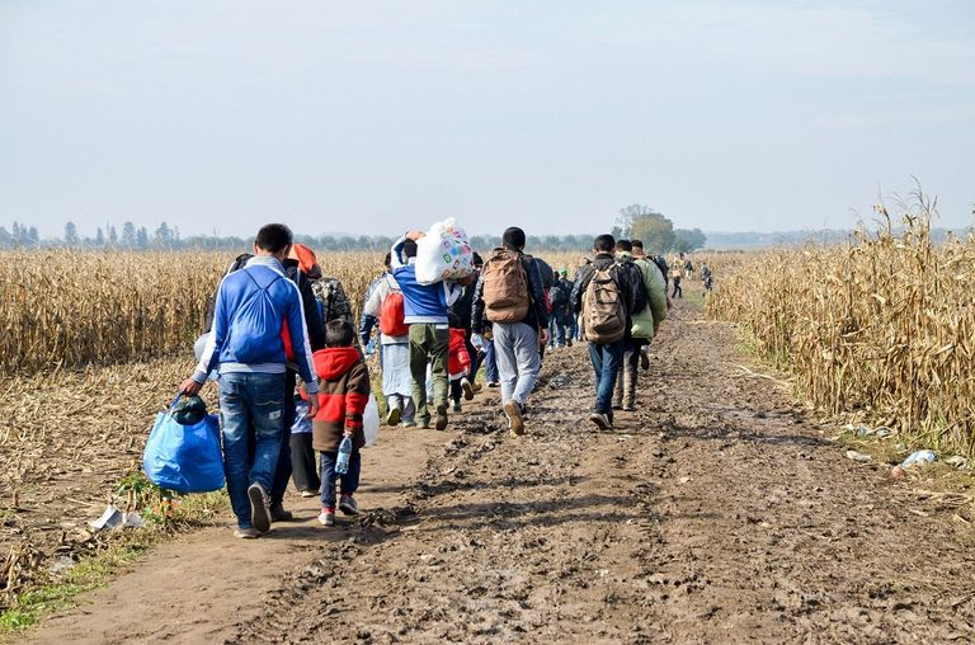
The alarm bell continues to ring as the number of refugees around the world rises. They flee wars, conflicts, and crises to preserve their freedom or save their lives, searching for a safe haven that will heal their wounds and sow in their hearts a glimmer of hope they long to seek.
The United Nations has designated in its calendar a World Refugee Day, which falls on June 20 of each year, as a day dedicated to honoring the courage, resilience, and ability of refugees to confront the bitterness of life and build a new life based on the rights they have been robbed of and the dignity they dream of.
Solidarity with Refugees
This year, the United Nations has chosen the theme "Solidarity with Refugees" for the World Refugee Day. It seeks to renew the call for action and efforts at a time when the number of people forced to flee their homes is increasing at a record rate, and when access to humanitarian assistance has become difficult or almost non-existent.
Hence, the World Refugee Day urges all countries, concerned parties, and international organizations to take urgent action and move forward to implement appropriate and concrete measures. This is to support all those forced to flee and assist them in regaining their dignity and overcoming the hardships they face, especially since refugees are not seeking charity but rather an opportunity to contribute to their communities.
But how can we stand in solidarity with refugees? What are the practical steps to achieve this goal?
The United Nations explains, according to what was stated on its website, that this solidarity carries several meanings, the first of which is “centering the voices of refugees by listening to their stories and conveying them to others, particularly by highlighting their strength, courage, and talents that go beyond the displacement.”
In this context, the United Nations emphasizes “the need to build inclusive communities by creating welcoming environments that provide refugees with a safe space where they can find someone to listen and interact with them.” This gives them opportunities to express themselves and contribute effectively and positively to host communities.
The United Nations also calls for joint action for peace, as it specified on its website, “defending people's right to safety, resolving conflicts, and supporting a long-term sustainable future.” This is in addition to “supporting relief workers who continue their efforts and humanitarian duty in the most difficult circumstances, ensuring that aid reaches those in need.”
Humanitarian Message
Humanitarian organizations are doing their best to accompany refugees and meet their needs as quickly as possible, despite the difficult circumstances facing the region and the world, not to mention the restrictions that may hinder access to this aid.
For its part, the Middle East Council of Churches (MECC) has sought, since its founding, to empower the most vulnerable groups, regardless of discrimination or religious, social, or ethnic background, through its social, humanitarian, and development services programs implemented throughout the year. The MECC adoption of various Diakonia programs stems from a firm belief that Jesus Christ Himself founded this service through his healing of physical and psychological diseases, and his similarity to the hungry, the sick, the prisoner and the naked.
In Lebanon, the Diakonia and Social Service Department at the Middle East Council of Churches, works as a humanitarian actor to protect society in an inclusive way, including refugees. Therefore, it implements many programs aimed at preventing and raising awareness in society, and responding to crises and situations within it.
These programs include awareness sessions on mental and physical health and gender-based violence, held at the Our Lady Dispensary, affiliated to MECC, as well as in schools and shelters. We also offer community awareness sessions, or training sessions conducted by the MECC team to empower working groups to spread awareness in various communities. This is in addition to providing social support, such as medical, psychological, and legal assistance, providing medication and medical consultations, as well as providing health and food rations and multi-purpose cash assistance.
Given all the ongoing efforts to support refugees and amidst the pressures and tragedies of life, we ask: Are host communities still capable of embracing their guests or their own children, despite their limited resources?
This is a question whose answer remains unknown!