
The MECC Secretary General Calls for the Protection of Religious Sites and the Criminalization of Hate Speech at the Congress of Religious Leaders
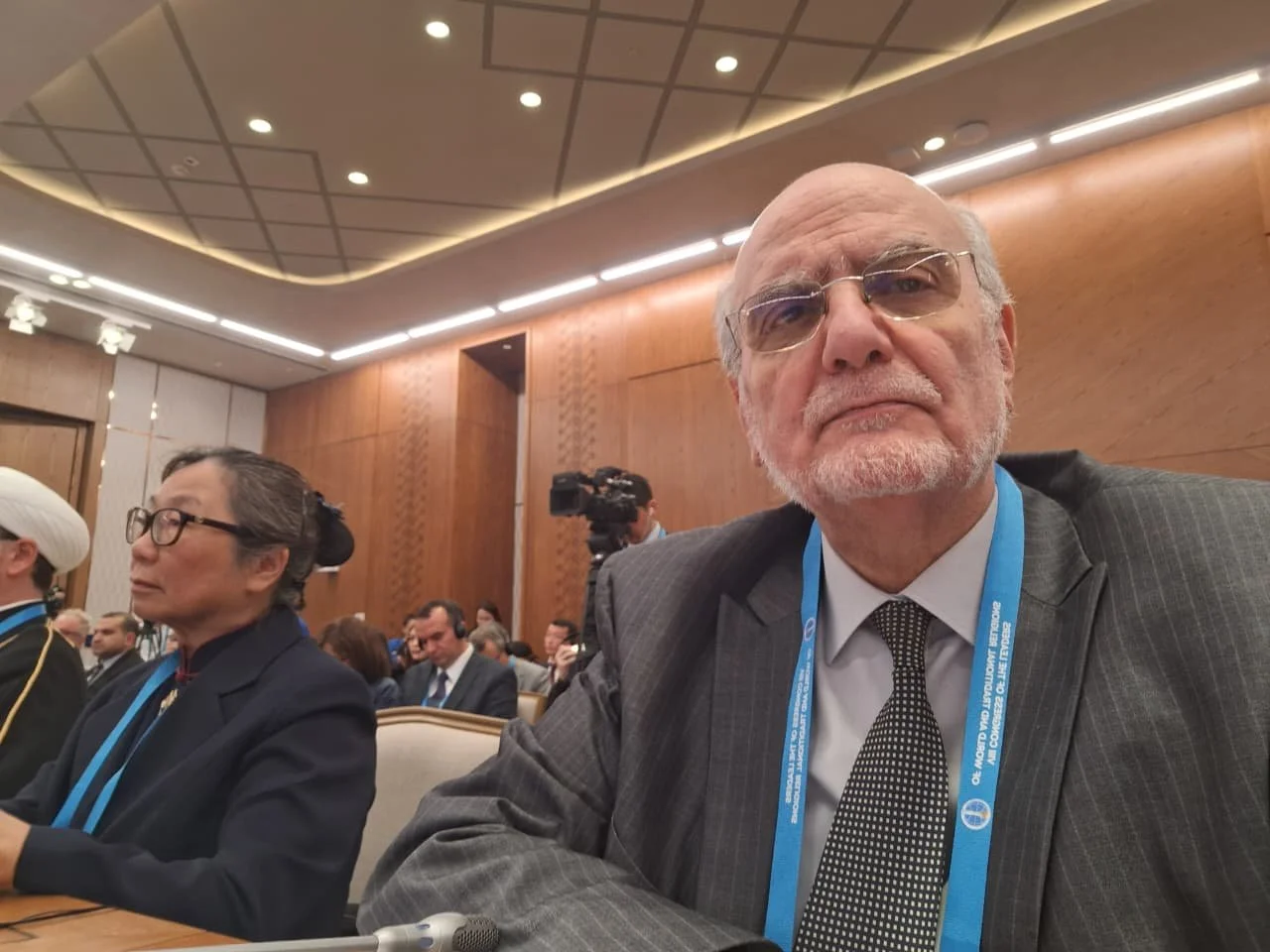
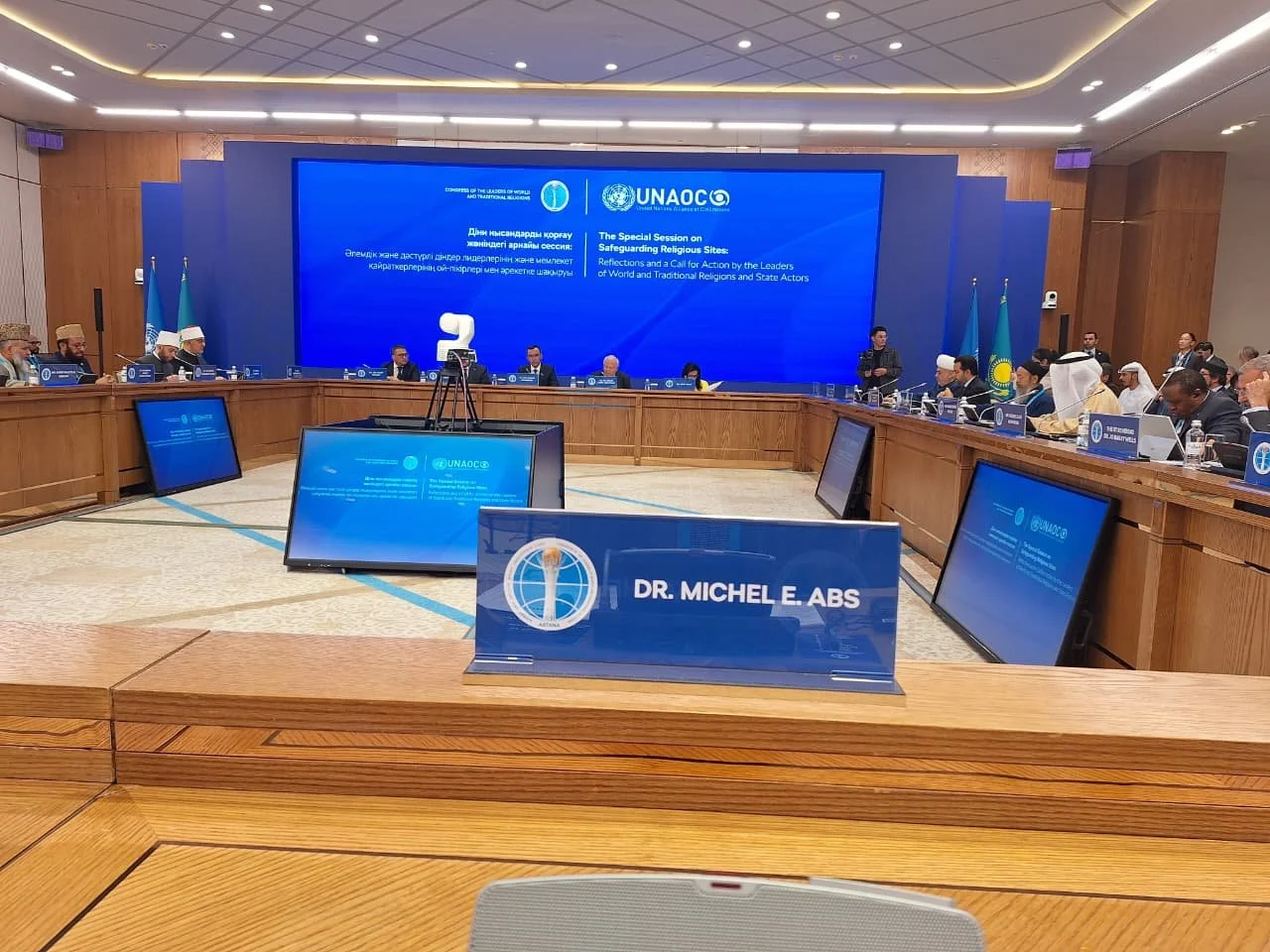
Astana, Kazakhstan
During the special session entitled "Safeguarding Religious Sites: Reflections and a Call to Action" at the VIII Congress of Leaders of World and Traditional Religions in Astana, the Secretary General of the Middle East Council of Churches (MECC) Professor Michel Abs called for a joint approach between Religious Leaders and states to protect Religious sites of all affiliations, as they are part of humanity's shared spiritual memory and an authentic cornerstone of human heritage. He emphasized that protecting these sites is not a privilege for one group of believers over another, but rather a moral and legal obligation, as they are a symbol of the humble relationship between humanity and the Creator. He warned that their disappearance means erasing a chapter in collective memory, which necessitates their preservation as an educational and cultural memory for future generations.
Professor Michel Abs linked the demolition of places of worship to hate speech and the demonization of Religious groups, on the one hand, and to the prelude to genocide and ethnic cleansing, on the other. He described these practices as manifestations of a "distorted culture" that denies the dignity and rights of others. He called for respect for freedom of Religion and belief as an integral part of the human rights system, and for the criminalization of hate speech and incitement based on religion, along with the activation of monitoring and early warning mechanisms on digital platforms and in the public sphere.
He urged the implementation of existing UN frameworks, foremost among them the United Nations Plan to Safeguard the Religious Sites (2019) and General Assembly Resolution A/RES/75/258 on promoting a culture of peace and tolerance. He emphasized the need to transform these principles into clear national policies that include an updated inventory of sites at risk, along with risk management and prevention plans, urgent response protocols during conflicts and crises, joint education and awareness programs that promote mutual respect and face extremism, and practical partnerships between Religious authorities, official bodies, and civil society to guard and maintain sites.
The Secretary General Professor Michel Abs presented many executive mechanisms to face violent extremism and hate speech and protect shared Religious memory. These mechanisms include establishing multi-sectoral working groups including representatives from ministries, Religious and cultural institutions, and civil society organizations; creating a national and regional register of threatened monuments, updated periodically in cooperation with international organizations; developing a coherent timeline for preventive activities that include monitoring, analysis, intervention, and evaluation; launching digital and media awareness campaigns explaining the dangers of hatred and the importance of heritage preservation; and conducting field surveys to identify areas and groups most vulnerable to extremism and developing tailored intervention programs.
He also stressed the need to develop curricula to integrate shared history and Religious heritage into formal and non-formal education, train local teams in conservation and restoration, and involve communities in protection. He also emphasized the need to allocate clear budgets for prevention and protection programs with transparent monitoring and evaluation mechanisms, in addition to activating international legislation on the protection of heritage in conflicts, particularly the 1954 Hague Convention and the 1972 UNESCO Convention. He called for adopting a community cooperation model that collects data, monitors hotbeds of extremism in cities and rural areas, and integrates civic education into schools as a first line of defense.
In addition to practical mechanisms, Professor Michel Abs presented many general recommendations that constitute a guiding framework for decision-makers. He called for developing a national and regional strategy to counter violent extremism based on good governance and social cohesion, taking into account the specificities of communities; activating the role of public institutions and civil society as key partners in prevention and countering extremism, while involving citizens in decision-making; and addressing the roots of conflict through economic and social reforms that achieve justice and preserve the rights of minorities; integrating education on citizenship and tolerance into school and university curricula, training teachers to deconstruct extremist concepts, and developing intellectual rehabilitation programs for individuals vulnerable to extremism by combining psychosocial support and religious guidance.
The recommendations also included launching sustainable platforms for Religious and cultural dialogue between sects and denominations, adopting a "code of honor" to protect religious and archaeological monuments, protecting places of worship and heritage sites through national legislation consistent with international agreements and linking them to responsible Religious tourism initiatives, adopting comprehensive educational policies that promote "educational security," foster critical thinking, and consolidate a unified national identity, and strengthening international coordination with the United Nations, UNESCO, and ISESCO to obtain technical and financial support in the areas of dialogue and heritage protection.
The Secretary General Professor Michel Abs concluded by emphasizing that "spiritual diplomacy," when combined with political will and legal authority, is capable of transforming the protection of Religious memory and the criminalization of hate speech into the first line of defense against violent extremism. He called for a joint declaration to be issued by the special session and the congress proceedings, specifying clear implementation steps, timetables, and monitoring and evaluation mechanisms, ensuring that pledges are translated from congress halls into a reality that protects human beings, their dignity, and their spiritual heritage wherever they may be.