
The Feast of the Epiphany: A Fundamental Essence of Faith Amidst Popular Symbols and Traditions
Deyim Deyim!
Media of the Middle East Council of Churches (MECC)
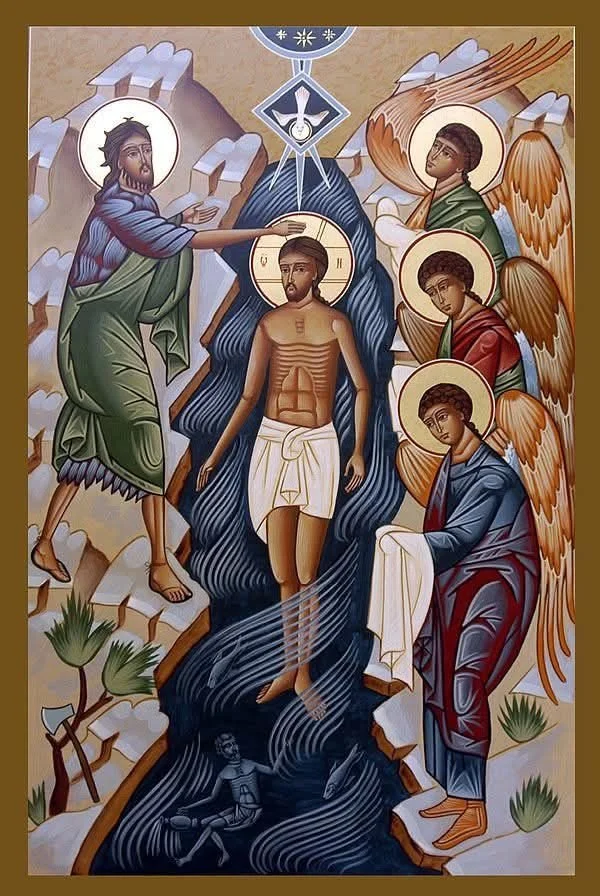
A historic event that changed the course of humanity... Through it, the gates of heaven were opened, the Holy Spirit descended, and life was transformed from the old to the new... a life filled with purity, holiness, and faith. It is the Feast of the Epiphany, the Feast of the Baptism of the Lord Jesus Christ in the Jordan River by the Forerunner, John the Baptist.
Christians celebrate this Feast annually on January 6th. Church sources indicate that with the opening of heaven, a new covenant was established between heaven and earth, and God entered into a new communion with humanity in the person of His Baptized Son, Jesus Christ. The Holy Spirit also descended on Him in the form of a dove, which symbolizes the community of believers, that is, the Church founded by Christ through the Holy Spirit.
Names of the Feast
This Feast is known by many names, each symbolizing a different meaning. One of these names is the Divine Manifestation. According to Church beliefs, the heavens opened and a voice declared, "This is my beloved Son." The name Epiphany refers to the Baptism of the Lord Jesus in the water.
The Chaldean, Maronite, and Syriac Churches also use the name “Denha”, a Syriac word meaning manifestation, revelation, and shining, especially as it expresses the true Theological meaning of the Epiphany: the first appearance of the Lord Jesus to humanity.
The name Feast of Lights is also used because God is light, and as light He appears, and because it is given to people to become lights from this revealed light. The name Baptism refers to the Baptism of Jesus Christ in the Jordan River by John the Baptist.
The Feast of the Epiphany is also called Theophany. Epiphany is a Greek word meaning manifestation, and the Church Fathers called the Feast Theophany, meaning the Divine Manifestation.
The Consecration of Water
Liturgically and during the Service of the Epiphany Feast, the water is consecrated through the invocation of the Holy Spirit. The believers kneel and raise prayers with hopeful hearts, anticipating a new birth for humanity.
The rite of consecrating the water carries several meanings, according to various sources. Water is considered a fundamental element among the four elements of the universe: water, air, fire, and earth. Water is also a symbol of life and death. In Baptism, we are buried with the Lord in a death like His, so that we may rise with Him in a resurrection like His.
As well as, water symbolizes inner purification, and the believers drink the consecrated water to be sanctified by it.
Popular Traditions
Year after year, the faithful rejoice in many popular traditions that have solidified their seasonal customs over the decades. In this context, it is said that on the eve of the Epiphany, Christ visits homes at midnight, saying " Deyim Deyim" (meaning "Always, always"). Whoever stays awake, waiting, and keeps their doors open will receive blessings throughout the year. This night is also called "Laylat Al-Qadr" (the Night of Power), and many believe that Prayers are answered on this night because the gates of heaven remain open all night, and angels descend from them to earth.
Another popular tradition is that some people believe that all trees bow down to Christ as he passes by on this night, except for the arrogant mulberry tree, which is punished for its arrogance. It is also said that on this night, the housewife moves her Mouneh (traditional food) with her hands while saying "Deyim Deyim!" (meaning "Always, always!"), believing that blessings will descend upon them and increase.
Amidst all these popular traditions, which vary from country to country and town to town, the essence of the feast remains fundamental because Christ, from his Incarnation and Baptism to His Death and Resurrection, brought humanity a path of salvation and redemption for a more just and peaceful world.