
The Middle East Council of Churches Holds a Day of Solidarity and Prayer for Peace in the Region
“A Beacon for Human Dignity”
Reverend Dr. Paul Haidostian: “Peace must first dwell in the human heart before it becomes a reality in the world”
Secretary General Professor Michel Abs: “We are a nation that has known the truth, and the truth has set it free, as the Incarnate Lord says”
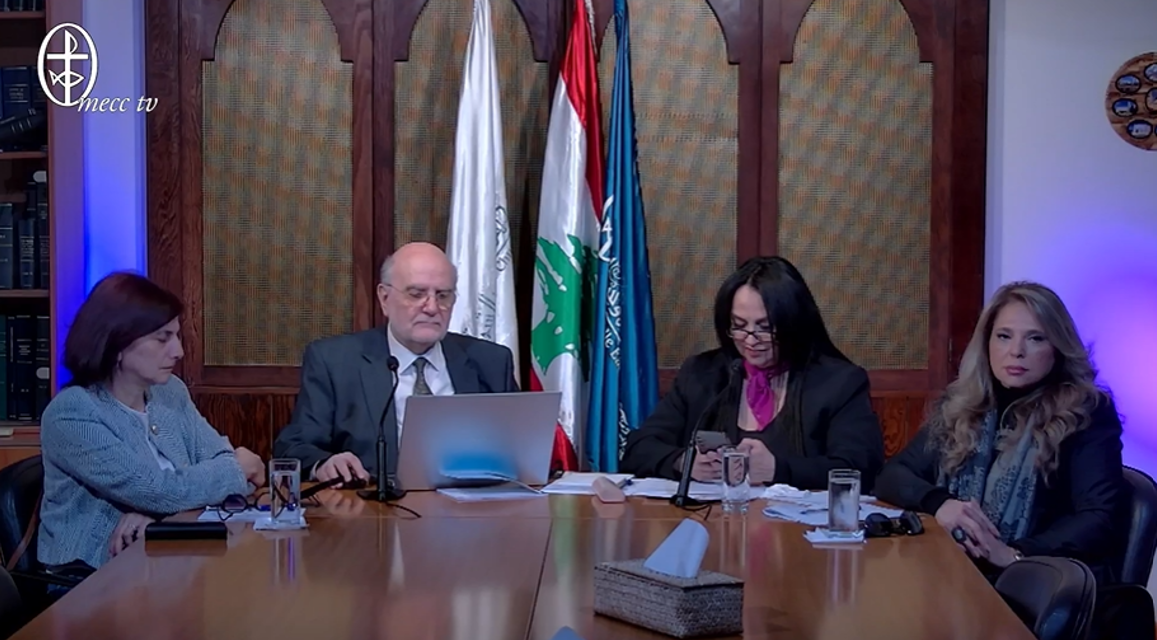
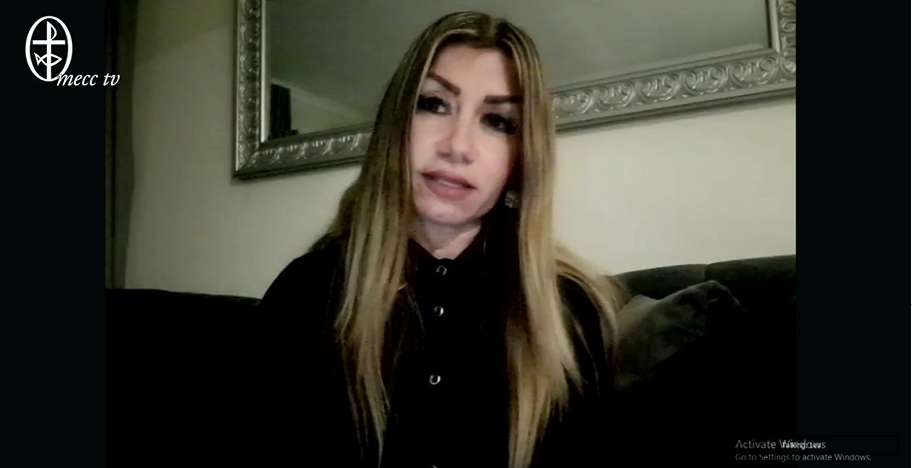
Amidst the painful war currently affecting the Middle East, the Middle East Council of Churches (MECC) organized a Day of Solidarity and Prayer for Peace in the region under the title “A Beacon for Human Dignity” on Thursday, March 12, 2026. The event was held both online and in person at the MECC headquarters in Beirut.
This spiritual and humanitarian initiative aimed to call for an end to violence and injustice, promote the values of justice and human dignity, and strengthen the concepts of love and fraternity in the Middle East.
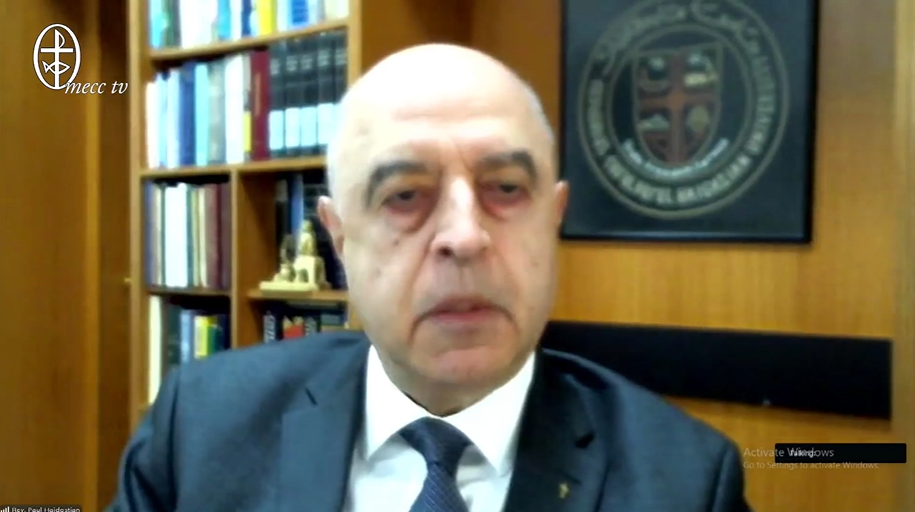
Participants were by Reverend Dr. Paul Haidostian, President of the Union of the Armenian Evangelical Churches in the Near East (UAECNE), President of Haigazian University in Lebanon, and MECC President for the Evangelical Family; MECC Secretary General Professor Michel Abs; members of the MECC General Secretariat team; as well as many participants: clergy, thinkers, and researchers from various fields and specializations.
The gathering was as a space for joint Prayer and reflection on the suffering of the peoples of the region. Prayers were raised for peace and for an end to the wars and conflicts that have cast their shadow over the countries of the Middle East. The meeting also included speeches and interventions from all the participants addressing the current crises in the region, and emphasizing the importance of dialogue and human solidarity in confronting these challenges.
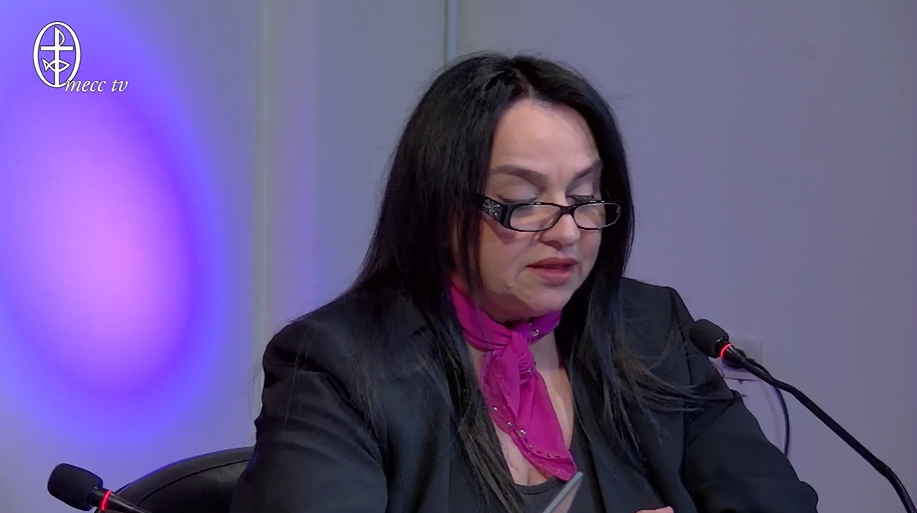
The event started with an opening speech by the Coordinator of the “Dialogue, Cohesion, and Human Dignity” Programs at MECC Professor Laure Abi Khalil, who moderated the meeting alongside the Coordinator of Church and Media Relations at MECC Journalist Lea Adel Maamary.
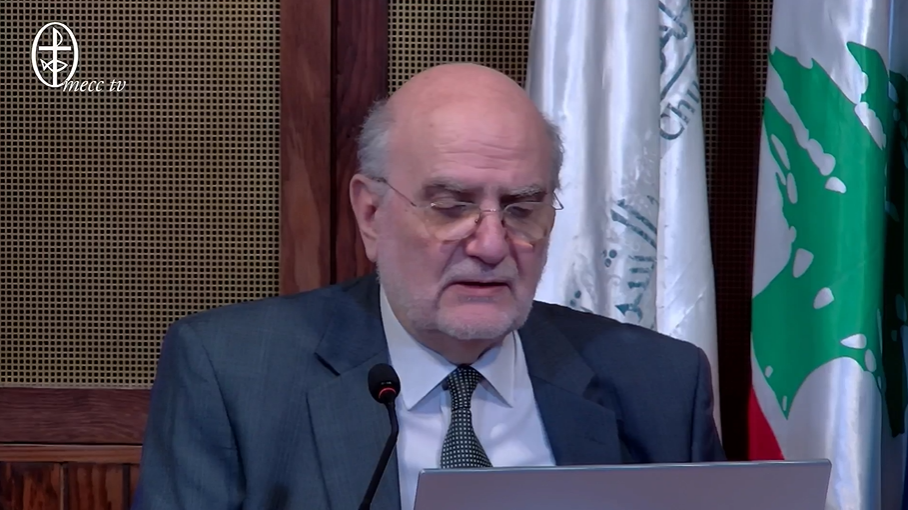
The interventions began with a speech delivered by the MECC Secretary General Professor Michel Abs, entitled “When Homelands and Nations Become Commodities.”
He stated: “today we are at the peak of the struggle between attempting to regain sovereignty or preserve what remains of it, and losing it for the benefit of projects woven over decades for our region, executed gradually—moment by moment, day by day, year by year, decade by decade. Until today, our peoples have prevented the realization of these conspiracies against us and their ultimate goal: fragmentation for submission.”
He continued: “in all of this, woe to those who resist, for we would then be the only nation in the world denied the right to resist. We are a nation that has known truth, and truth has liberated it, as the incarnate Lord said, who took his whip and drove out the money-changers from the Temple. Dignity and truth are rooted in our cells, deep within our souls and minds.”
He added that at MECC “we work to advocate for our national causes and just causes worldwide, through communication with the global ecumenical movement. We also operate in humanitarian service, development, dialogue, networking, and research. We monitor all events in our region and strive to convey the voice of our peoples to the world, thanks to our partners in world church councils, the Holy See, and other institutions concerned with justice and peace.”
For his part, Reverend Dr. Paul Haidostian emphasized in his word that "from its earliest days, the Middle East Council of Churches has sought to nurture a culture of dialogue, reconciliation and social responsibility, through its programs and witness and it continues to do so today.”
He also raised his Prayers to God saying, “In times of distress my Prayer is to call upon the name of the Lord and together with the family of faith to seek inner strength and endurance for peace. Before it becomes a reality in the world, peace must first dwell in the human heart, “Let the peace of Christ rule in your hearts” (Colossians 3:15)”.
Reverend Dr. Haidostian expressed his profound gratitude to the people of the world for their solidarity with those suffering in our lands and regions today. He expressed his sadness at “cruelty and violence are tolerated” and mourns that “military power is celebrated as the ultimate answer, and that justice and integrity are often pushed aside while ideological arrogance replaces the pursuit of genuine peace”.
In this context, participants stressed the need for joint action among the various Religious and components of society to spread a culture of peace and justice. They emphasized the importance of healing national memory, and that Prayer, cooperation, and humanitarian work are essential pillars in rejecting violence, division, and hate speech.
The organizers and participants also called on relevant authorities to protect civilians and intensify international efforts to stop the escalation in the region, as well as to address the worsening humanitarian crises. As well as, the meeting concluded with a Prayer.
It is worth noting that the Middle East Council of Churches (MECC) had previously issued a humanitarian appeal regarding the war taking place in the region and its catastrophic humanitarian consequences, calling for strengthened solidarity among the region’s communities and for work towards a just and comprehensive peace that safeguards human dignity.