
A Conflict on Hold?
Middle East Socioeconomic Overview
Report: April 2026
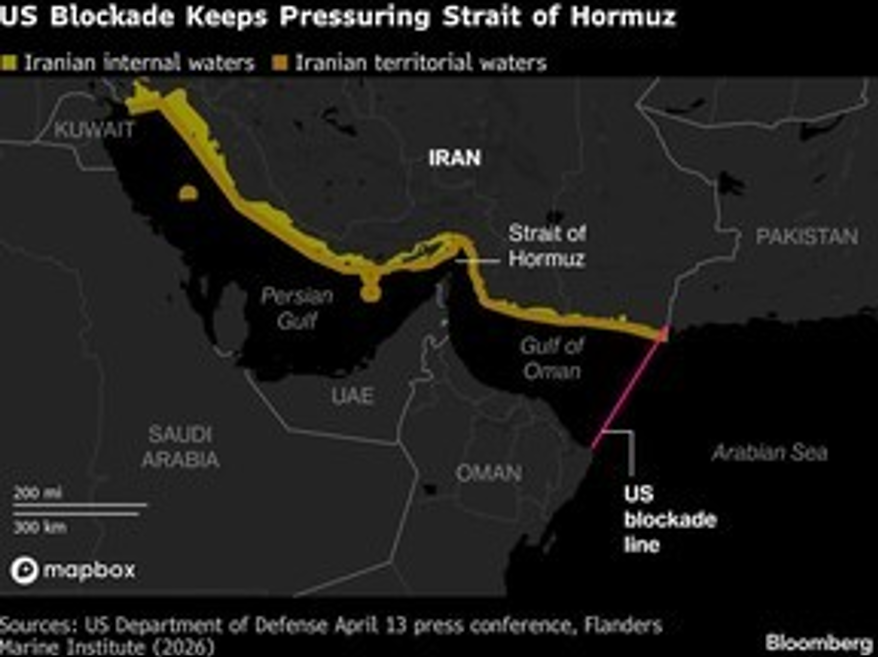
A long-lasting blockade imposed by US on Iran is creating tension in the region. Photo credit: National Post
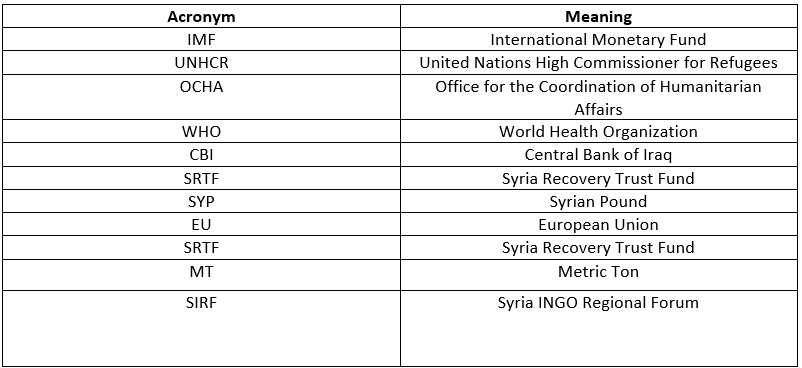
1. Table of Acronyms
2. Introduction
The United States and Iran declared a ceasefire so that negotiations can take place. While back and forth talks are underway and ideas are being circulated between involved parties, one cannot help but notice that only minor achievements are being made. Still both sides refuse to bulge and make critical concessions that would put an end to the war. Currently, there is an ongoing maritime blockade enforced by the US on Iran to steer negotiations the way it pleases. Yet, Iran seems to be determined to hold on to its demands at all costs. Whether or not that changes in the future, things remain obscure. What is for certain, things are heading towards a final scenario: conflict or resolution.
3. The Socio-Economic Situation
Egypt
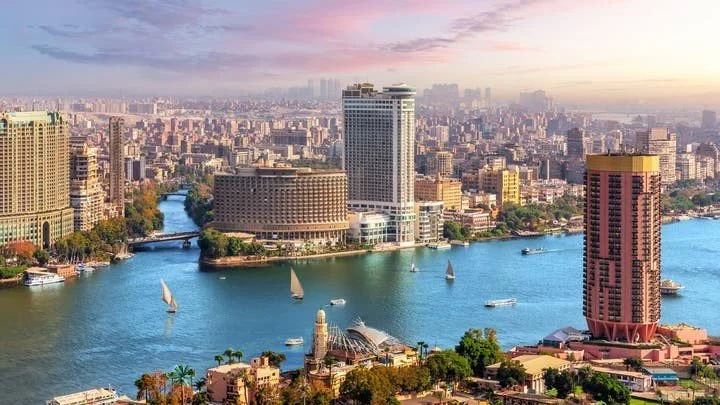
The International Monetary Fund lowers its forecast for Egyptian economic growth. Photo Credit: alarabiya.net
From the first day of the war, the subsequent decision by Tehran to close the Strait of Hormuz, and the beginning of the crisis rising oil prices crises, the Egyptian government raised the prices of gasoline, diesel, gas, and other petroleum products, after it became clear that the war on Iran would be protracted, even if it stopped for a few months or weeks, and that the price increases would continue due to the intensification of the conflict. From here, and as a result of the repercussions of rising oil prices on the prices of other goods and services, including transportation, which is directly and first affected by the decision to raise energy prices, all economic indicators related to recession and inflation together began to increase. It is true that many countries have suffered the same, but what characterized Egypt was that it was struggeling with a economic crises before the war began, and its economy was more affected by the rise in crude oil prices. The increase of energy prices has directly resulted into a lower capacity for manufacturing and a lower ability to produce locally, and these two issues are causing the Egyptian economy to suffer the most. Moreover, the high prices of production materials and bureaucratic procedures, and the low capacity for external marketing also caused Egypt’s productive cability to suffer. There is no doubt that the Egyptian government, over the past years have attempted to increase local production by attracting more investment and has recently, about two months ago, reduced the interest on deposits by investors. However, the energy crisis is the overruling factor that setting the stage for any success or failure. Also, the reduction of interest rate decision angered many who are unable to invest, especially from the middle and lower classes.
As the Egyptian economy was impacted by the war the IMF, lowered its forecast for Egyptian economic growth by 0.5 percentage points for the current fiscal year, to 4.2%, compared to its previous forecast of 4.7% in January. In its latest World Economic Outlook report, the IMF also lowered its forecast for Egyptian economic growth for the next fiscal year by 0.6 percentage points to 4.8%. The IMF also raised its forecast average inflation levels for Egypt during the current fiscal year to 13.2%, compared to 12.4% in its previous forecast. The IMF projected average inflation of 11.1% for the next fiscal year, compared to 9.3% in its previous forecast. The IMF also raised its forecast for Egypt's current account deficit for the current fiscal year to 4.2% of GDP, up from 3.9% in its previous projection. Furthermore, the IMF expects Egypt's current account deficit to widen to 4.6% of GDP in the next fiscal year, compared to 3.9% in its previous forecast. These forecasts come during a time the IMF also predicted that all of of North Africa will witness an economic slowdown due to the war. From its end, Egypt is trying to reorgonize its financial matters by abiding by the recommendation of the IMF. It has to deal with the direct financial implications that might emenate from the recession. One issue it is trying to tackle is maintaining the value of the local currency, which has already taken a hit. The direct reason is external as the increase in prices of oil coming from abroad has increased the demand on the dollar which has deraled the value of the local currecny.
Jordan
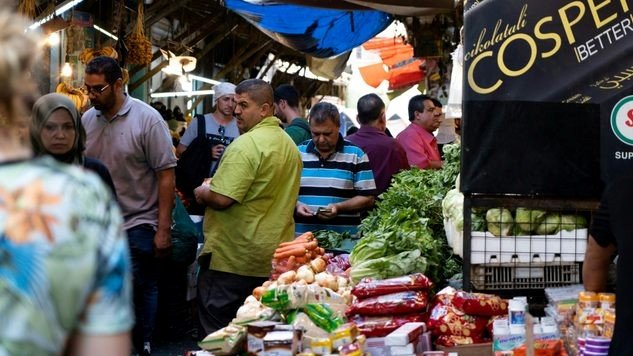
A market in Amman, Jordan. The country’s economy entered the regional conflict with strong momentum and continues to demonstrate resilience, the IMF said
The International Monetary Fund announced that it has reached a staff-level agreement with the Jordanian authorities on the fifth review under the Extended Fund Facility (EFF) program and the second review under the Resilience and Sustainability Facility (RSF), paving the way for the disbursement of approximately $200 million to support the Jordanian economy. In a statement issued following a mission to Washington from April 2-14, 2026, the IMF clarified that the completion of the two reviews remains contingent upon approval by senior management and the Executive Board. This is expected to unlock approximately $140 million under the Extended Fund Facility and about $57 million under the Resilience and Sustainability Facility. The IMF noted that the Jordanian economy has demonstrated resilience despite regional challenges, bolstered by sound economic policies and continued international support. Economic growth reached 2.8% in 2025, with momentum continuing into early 2026, while inflation remained low, below 2%. In contrast, the Fund noted that the repercussions of the war in the Middle East have begun to cast a shadow on the Jordanian economy, particularly through rising energy prices and a decline in tourism activity, which is expected to lead to a slowdown in growth to about 2.7% in 2026, and a slight increase in inflation to 2.3%. He explained that the Jordanian authorities responded quickly to these challenges through a package of multiple measures, including strengthening energy security, facilitating supply chains, ensuring the availability of liquidity, and providing targeted support to the most affected groups, while maintaining financial and monetary stability. The IMF confirmed that Jordan’s reform program remains “on track,” with all quantitative performance criteria for the fifth review met, and structural reforms proceeding according to plan, including improving the business environment and strengthening the role of the private sector. In a related context, the authorities renewed their commitment to reducing public debt to about 80% of GDP by 2028, through the implementation of gradual fiscal reforms that balance controlling spending and maintaining social spending. Reforms are also continuing within the Resilience and Sustainability Programme, particularly in the water and electricity sectors, along with strengthening the capacity to cope with health and climate crises, with support from international institutions including the World Bank.
Iraq
International Monetary Fund: Sharp contraction to hit Iraq's economy in 2026. Photo Credit: www.economy-news.net
The International Monetary Fund’s Regional Economic Outlook report revealed expectations that the Iraqi economy will contract significantly during 2026, due to the repercussions of the war and disruptions to trade and production in the region. According to the report, issued in April, Iraq’s GDP is expected to contract by 6.8% in 2026, compared to a slight contraction of 0.4% in 2025, placing it among the worst-performing economies in the Middle East and North Africa region. The report noted that these projections represent a sharp downward revision, as Iraq’s 2026 growth estimates were reduced by about 10.4 percentage points compared to the October 2025 projections, reflecting the magnitude of the negative impacts resulting from geopolitical tensions and disruptions to supply chains. This decline comes at a time when Iraq is facing complex challenges like trade disruptions. However, mostly impacted is the oil sector which Iraq heavily relies on, and this putting pressures on public finances. During March, Iraq's crude oil exports fell by more than 81% as the US-[Israeli] war on Iran broke out. This is putting the economy in a difficult phase that requires balanced policies to support stability and recovery. Another pessimistic report was by Moody’s, the renowned economic ratings agency. It lowered its outlook on Iraq's credit rating to negative from stable, while affirming the long-term rating at "Caa1", amid escalating risks related to the Iran war and its repercussions on energy flows and security conditions. The agency explained that the downgrade reflects the increased risks to Iraq's creditworthiness, at a time when the country relies heavily on oil exports passing through the Strait of Hormuz, which represent about 90% of its exports. It noted that any continued disruption to this vital waterway would lead to a significant deterioration in dollar revenues and public finances. Moody's added that the risk of Iraq becoming more deeply involved in the conflict has increased, especially after attacks on energy facilities, security and diplomatic interests. According to the agency, this could increase the risk of targeting oil infrastructure and deepen political instability.
Lebanon
An economy on decline across all sectors. Photo Credit: MTV.com.lb
In light of the ongoing attacks by the Occupier on Lebanon since March 2nd, the Lebanese economy is once again at the forefront of danger. The consequences of the war are not limited to security issues only, but extend to the fragile economic structure, where the tourism season has been largely affected (by 95%), investments decline, and consumption shrinks. To make matters worse, the country’s food security is at risk as food prices are rising once again. Since 80% of the food Lebanon consumes is imported, the situation has been made worse by an increase in energy prices. Gasoline has gone up by around 80%, while diesel has risen by 85%. These increases affect every stage of the supply chain, from production to transportation to storage. Likewise, the agricultural sector has been impacted since the prices of fertilizers have increased by 40% that will directly affect crop and food prices. Other goods, unrelated to the food sector, had their prices increase by 5% or 7%. In the past, what cushioned the Lebanese economy’s fall was the remittances coming from Lebanese working in the Gulf. However, even that decreased due to the economic shake-up in the region that resulted from the war concerning Iran. There is no doubt that the decline in remittances from Lebanese expatriates poses a threat to the Lebanese economy as it is a main source of dollars, which may exacerbate the hard currency shortage crisis. This also happening during a time with there is an increasing trade deficit due to global inflation, rising oil prices and shipping costs. As a result, this led to certain projections that the Lebanese economy will be contracting further in the future. The Institute of International Finance, global association of the financial industry, claimed that the Lebanese economy will contract between 12 and 16 percent in 2026 as a result of the war, in addition to projections that the current account deficit will widen to 17 percent of GDP by the end of 2026. The most dangerous factor, both monetarily and financially, remains the decline in the Bank of Lebanon’s foreign currency reserves and the challenge the central bank faces in maintaining the stability of the exchange rate. In the coming months or weeks, the truth of the matter might soon surface.
Palestine
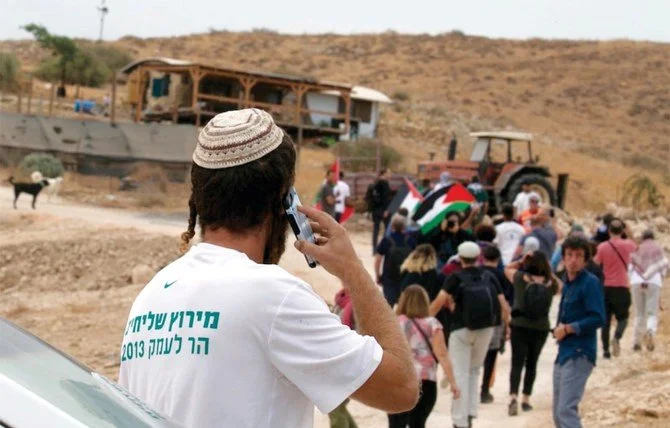
The Palestinian economy is shrinking due to Occupier constraints and attacks by settlers. Photo Credit: www.arabnews.jp
More than half a year after the ceasefire agreement came into effect, Palestinians in the Gaza Strip are suffering under the weight of the deplorable humanitarian and living conditions, in light of a deteriorating economic situation that is the result of the blockade made by the occupier. Six months have passed, during which the sector was supposed to witness a breakthrough on the humanitarian level under the agreement based on US President Donald Trump’s plan to end the war. However, the occupier continues to stall in implementing its obligations stipulated in the agreement, while Palestinians believe that it is practicing a systematic policy of “engineering the siege” rather than lifting it. In addition to its violations on the ground and the military escalation that causes the killing of Palestinians on a daily basis, the occupier imposes strict restrictions on the entry of aid and the movement of trucks coming into Gaza, as it controls the types and quantities of goods and merchandise, and prevents the entry of multiple items. As for the West Bank, the Palestinian economy is also shrinking due not only to war time measures but to the continued illegal practices of occupier’s settlers. For example, in villages east of Ramallah such as Taybeh and Al-Ma'rajat, farmers are no longer able to access their lands planted with wheat and olives, which are essential crops for local food security. The settlers' surprise attacks and the theft of sheep and water tanks have led to the near-complete displacement of Bedouin communities. Residents were forced to sell their livestock for fear of theft, depriving them of their primary source of income and plunging them into systemic poverty. To make matters worse, this is happening in other areas as well where wheat crops are taking a hit and olive oil production is taking a hit. Settlers have resorted to bringing their own cattle and releasing them on Palestinian crops and agricultural produce to devour them. Sometimes settlers resort to burning the crops just to cause harm. Of course settlers do not just target the agricultural sectors but Palestinian businesses outside the agricultural sector. All this happens in parallel to systematic oppression the government does in the West Bank by enforcing detrimental ‘security’ measures that impact local businesses. These cases reflect a systematic policy of emptying the land of its inhabitants and drying up their sources of livelihood, which translates economically into a decline in local production and an increase in dependence on imports, thus exacerbating the Palestinian trade deficit.
Syria
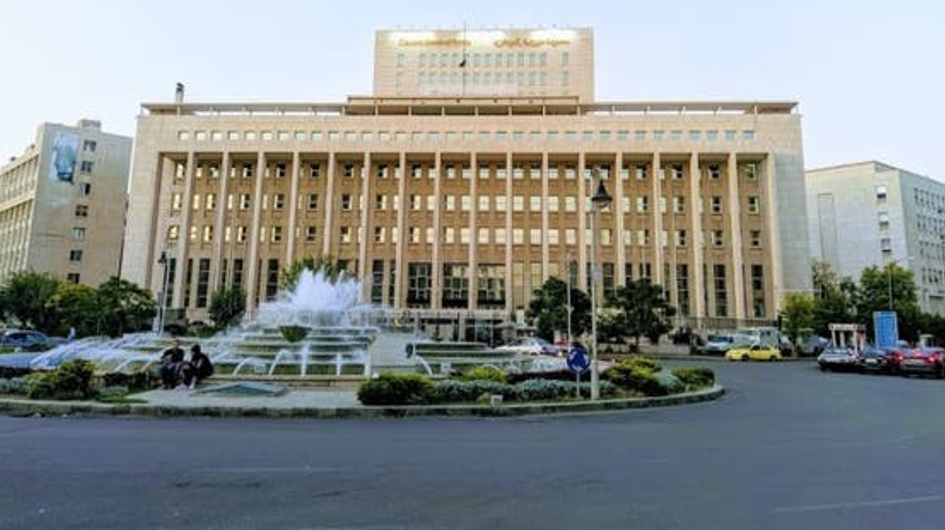
The Central Bank of Syria receives support from the World Bank to develop asset and reserve management. Photo Credit: alarabiya.net
The Levantine country continues to receive vital support that can be a stepping stone in undoing the years of war. A World Bank delegation visited Syria and convened with Governor of the Central Bank of Syria, Abdul Qader al-Hasriya in the capital of Syria, Damascus. The meeting resulted in an agreement to provide specialized technical assistance targeting the Reserves and Gold Management Department at the Central Bank of Syria, with support from a dedicated World Bank program aimed at developing the institutional structure and enhancing efficiency in managing assets, reserves, and gold. This meeting comes in light of current changes, particularly the lifting of sanctions, and the opportunities this provides to revitalize investment and improve the management of reserves and gold at the Central Bank. The governor of the Central Bank of Syria saw this step as the beginning of a reform process that would enhance financial stability and support efforts to rebuild the Syrian economy. Finance Minister Mohammed Yasser Barnieh and Central Bank of Syria Governor Abdul Qader al-Hasriya also discussed with senior officials in the Monetary and Capital Markets Department of the International Monetary Fund technical support and capacity-building programs to develop the financial and banking sector and capital markets in Syria. Also on the international level, news broke out that the EU is also getting ready to fully resume the cooperation agreement with Syria and begin a high-level political dialogue with the Syrian transitional authorities on May 11, as part of an organized process to re-engage with Damascus. All this points out to that Syria is being reengaged by the international community as the world sees a promise for a future for Syria.
On the domestic level however, Syria is having trouble with improving the value of its local currency. The US dollar is experiencing a clear rise and fluctuation against the Syrian pound, causing a wave of inflation that has robbed Syrian markets of their vitality and activity. Some markets, such as those for clothing and electrical appliances, have even entered a state of clear stagnation and recession. This rise does not appear to be entirely related to the war but due to several complex factors behind the decline of the Syrian pound, most notably the continuation of the policy of restricting liquidity and the clear decline in remittances, the contraction of productive and service economic activities, in addition to the large import bill that led to a large and unprecedented imbalance in the trade balance. For example, the car import bill has reached $5.5 billion since the fall of the regime until now. According to Damascus Chamber of Commerce Director Amer Kharboutli, the successive increases in foreign exchange rates is due to the trade deficit, as the percentage of Syrian exports covering imports does not exceed 20 percent. He added that under the current circumstances, Syria needs more time to improve supply chains, provide energy and production inputs, and benefit from economies of scale by covering all fixed operating costs. Although exports increased in 2025 by about 40 percent compared to 2024, which is a good and important percentage. More importantly however, these exports must be able to cover the import side, which represents a negative dollar value. In this case, the value of the Syrian pound improves relatively, taking into account other supporting factors such as local and foreign investments and remittances.
Cyprus
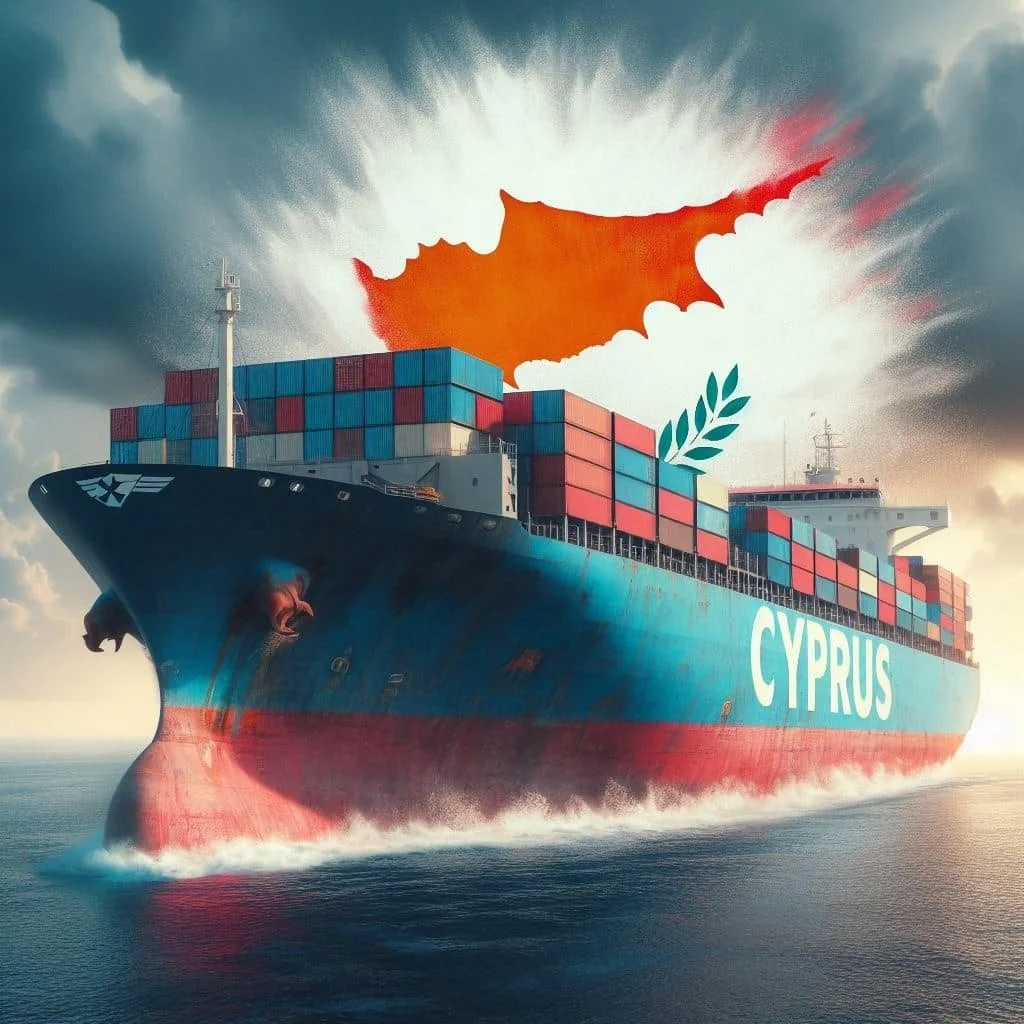
Despite the war in the region, Cyprus’s economy was more resilient than other countries in the region. Photo credit: https://cyprus-mail.com/
According to the International Monetary Fund, Cyprus registered real economic growth of 3.8% in 2025 and 3% in 2026, indicating that the economy, despite the regional slow-down, was more resilient than other economies in the region. Moreover, Cyprus’ public debt stood at 55.0% of GDP at the end of the fourth quarter of 2025, according to data published by Eurostat, recording a decline on both a quarterly and annual basis. Also, Cyprus has become among the EU countries with the largest reductions in the debt ratio, both quarter-on-quarter and year-on-year. Cyprus’ public finances remained healthy in 2025, with the state recording a budget surplus of €1.24 billion, according to preliminary fiscal results released by the Cyprus Statistical Service (Cystat). Also, the surplus corresponds to 3.4% of the GDP as public debt is at 20.08 equivalent to 55% of GDP. Moreover, Cyprus’ economy showed mixed but generally positive developments in early 2026, with gains in construction, tourism, and vehicle registrations offset by declines in trade. Manufacturing production rose by 1.5 per cent in January 2026 compared with the same month a year earlier. In construction, the total area of authorized building permits reached 3,274,200 square meters in 2025, an increase of 41.0 per cent compared with 2024. As for motor vehicle registrations it increased by 15.1 per cent to 9,020 units during January to February 2026. However, what truly allowed Cyprus to maintain its stability is its shipping sector with revenues reaching €1 billion and accounting for 5.4 per cent of GDP. Of course, more recent estimates have yet to be reported, however the war would have surely affected this sector in 2026.
4. The Humanitarian Situation
Egypt
According to the Syrian Network of Human Rights, the situation of Syrians in Egypt has transformed from fragile tolerance to actual persecution. In this context, Egyptian security forces launched an unprecedented arrest campaign that began in the third week of January 2026, and estimates attributed to sources in the United Nations High Commissioner for Refugees indicate that at least 3,000 refugees and asylum seekers were detained during the first two months of 2026.[1]
Jordan
The UNHCR states that there are currently 396,640 registered refugees in Jordan up until the beginning of April.
The proportion of Syrian displaced people registered within the UNHCR, are distributed as follows:
-125,668 in Amman Governorate (31.7%)
-100,954 in Mafraq Governorate (25.5%)
-70,097 in Irbid Governorate (17.7%)
-58,014 in Zarqa Governorate (14.6%)
-10,818 in Balqa Governorate (2.7%)
-8,322 in Madaba Governorate (2.1%)
-4,644 in Jarash Governorate (1.2%)
-5,272 in Karak Governorate (1.3%)
-6,167 in Maan Governorate (1.5%)
-2,985 in Ajlun Governorate (0.8%)
-2,813 in Aqaba Governorate (0.7%)
-906 in Tafilah Governorate (0.2%)
-225 in other (0.1%)
Germany donated 10,000,000 euros for the sake of Syrian refugees in Jordan. 8.5 million euros ($10 million) of that aid will be used to improve the water sector provided to Syrian refugees and develop its services and the rest of the amount will be allocated to improving their health conditions.[2]
Iraq
The UNHCR states that there are currently 349,402 registered refugees. 91,969 live in camps.
The proportion of refugee people (non-camp) registered within the UNHCR up until the beginning of April, are distributed as follows:
-148,985 in Erbil (42.6%)
-92,244 in Dahuk (26.4%)
-40,012 in Sulaymaniyah (11.5%)
-2,798 in Ninewa (0.8%)
-44,812 in Baghdad (12.7%)
-20,964 in other areas (6%)[3]
As part of its ongoing commitment to creating inclusive, resilient, and people-centered urban communities, UN-Habitat is expanding its support to ensure that children in Mosul have better access to safe and quality education.[4]
Lebanon
Since the beginning of April the number of registered Syrian refugees in Lebanon is 532,357.
Refugees in Lebanon are distributed as follows:
-174,592 in Bekaa (35.6%)
-153,036 in North Lebanon (31.2%)
-110,455 in Beirut (22.5%)
-52,341 in South Lebanon (10.7%)[5]
The Order of Malta – Lebanon, in cooperation with the Municipality of Rmeish, announced the availability of a mobile women's health clinic to provide healthcare for women of all ages.
Jordan dispatched a second convoy of relief and medical aid to Lebanon where it was received by Jordanian ambassador and Lebanese authorities.
To respond to increased demand linked to displacement, the ICRC conducted repairs to water infrastructure and equipped boreholes in three areas in the Bekaa region (Niha, Deir Al Ahmar) and Hermel serving 24,000 people.
The ICRC conducted repairs on water networks in two villages (Britel and Nabi Shit) in the Bekaa reserving 45,000 people.
The ICRC conducted repairs on main water distribution lines serving 13 collective shelters hosting about 2,000 displaced persons, as well as surrounding host communities in Jezzine district.
The ICRC conducted repairs to to water networks in Marjayoun in southern Lebanon that serve 18,000 people.
To reinforce local capacities, the ICRC provided tools, materials and consumables to South Lebanon Water Establishment (SLWE) and Bekaa Water Establishment (BWE) to support maintenance. These included 50 batteries and 5,000 liters of engine oil for generators, spare parts for repair and two 20,000-liter fuel steel storage tanks to SLWE and a donation of hydraulic crimping tools, three electrofusion machines, and maintenance for 41 vehicles to BWE.
The ICRC supported the continuity of essential health services in Lebanon by providing fuel to critical hospitals, including 35,000 liters to the Rafik Hariri University Hospital, 18,000 liters to Tebnine Governmental Hospital, and 40,000 liters to four hospitals in conflict-affected areas.
To sustain operations, ICRC trucked 6,000 liters of water daily to Salah Ghandour hospital in southern Lebanon, while medical oxygen, oxygen cylinders, and other deliveries helped maintain life-saving services in nine hospitals.
Spare parts, pumps, maintenance tools, anti-blast films, and generator consumables were also provided by ICRC to strengthen infrastructure resilience in Tebnine Governmental Hospital, alongside the installation of one generator in Sohmor Hospital in the Bekaa governorate.
Plumbing spare parts, passive security items, maintenance tools and materials, and consumables and maintenance for generators, were provided by ICRC to hospitals including Rafik Hariri University Hospital, Tebnine, Hasbaya, Marjayoun, Sohmor, Jabal Amel, Hiram and Lebanese Italian Hospital.
The UK government announced £20.5 million in new support for the Government of Lebanon’s crisis response.
Qatar has launched an urgent humanitarian intervention to support affected families. Funded by the Qatar Fund for Development (QFFD) and implemented in partnership with Qatar Charity and the Qatar Red Crescent Society (QRCS), the intervention will provide immediate relief assistance to displaced and crisis-affected households in Lebanon, with a total value of US$400,000 targeting 40,500 displaced families.
Since the beginning of the hostilities the ICRC supported 9,860 individuals in conflict-affected areas or in displacement benefited with 1,892 food parcels, 1,892 hygiene parcels, 400 mattresses, 750 blankets, and 37 tarpaulins across 11 villages.
Syria
Qatar Red Crescent Society (QRCS) has launched phase 1 of its emergency humanitarian aid project for displaced families in southern Syria. It involves food parcels, heating oil to 40,000 beneficiaries.[6]
The United Nations World Food Program (WFP) has received a contribution of 2,400 metric tons of rice from the Republic of Korea, helping strengthen support to vulnerable families across Syria and reach approximately 1.2 million people for one month.[7]
Cyprus
Officials claim returns in 2026 outnumber new arrivals after years of being the opposite. The government has continued to tighten its migration policy in an effort to reduce both the number of asylum applications and the number of migrants living irregularly on the island. Already more than 2000 people have been returned in 2026.[8]
[1] Syrian Network for Human Rights, April 22, 2026, https://snhr.org/blog/2026/04/22/who-will-protect-syrians-in-egypt/
[2] AA, www.aa.com.tr/ar/archive/ألمانيا-تقدم-12-مليون-دولار-لدعم-اللاجئين-السوريين-في-الأردن/344374
[3] https://data2.unhcr.org/en/situations/syria/location/5
[4] OCHA, April 1, 2026, https://reliefweb.int/report/iraq/un-habitat-and-japan-expand-access-education-new-school-mosuls-japan-village-enar
[5] UNHCR, Oct 28, 2024, https://data2.unhcr.org/en/situations/syria/location/71
[6] OCHA, April 7, 2026, https://reliefweb.int/report/syrian-arab-republic/qrcs-provides-emergency-humanitarian-aid-displaced-families-southern-syria-enar
[7] OCHA, April 8, 2026, https://reliefweb.int/report/syrian-arab-republic/republic-korea-supports-wfp-response-food-insecurity-syria
[8] Info Migrant, April 26, 2026, https://www.infomigrants.net/en/post/71005/cyprus-pushes-for-record-number-of-deportations