
The Path of Holiness in a Wounded East
Mother Dolly Chaaya, Superior General of the Lebanese Maronite Order of Nuns, During a Spiritual Retreat for the MECC General Secretariat Team:
A Wound Transformed into Hope and Resurrection
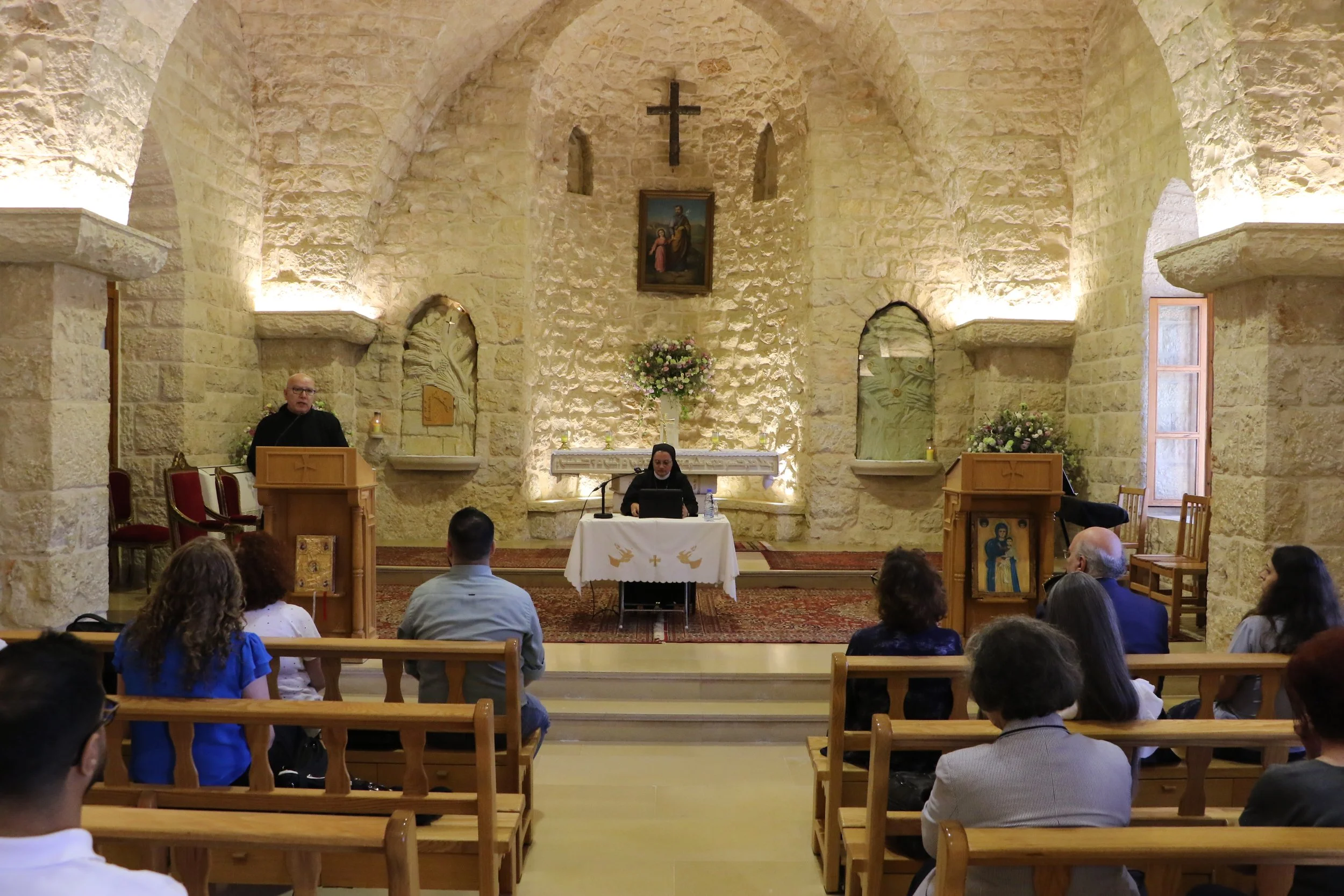
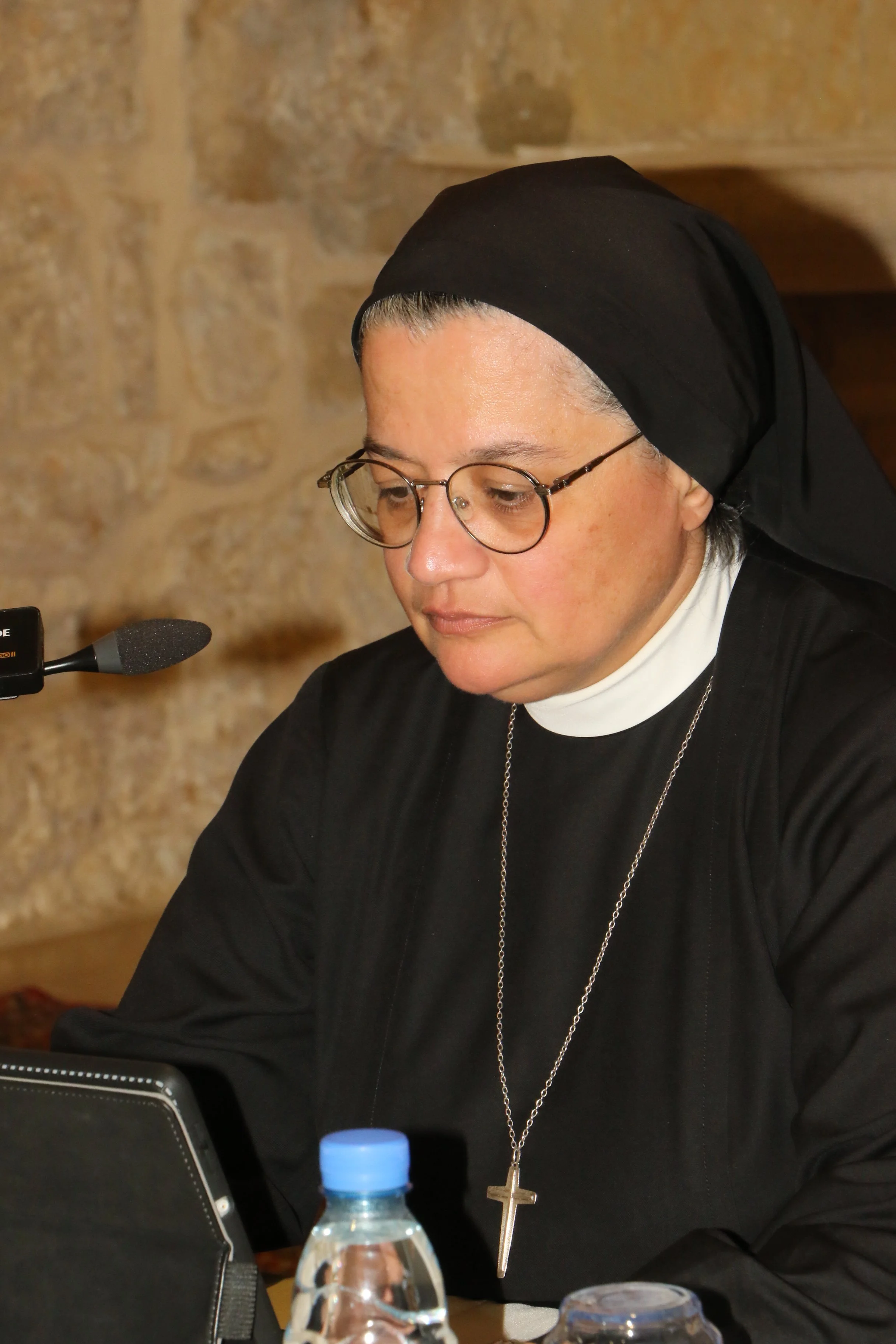
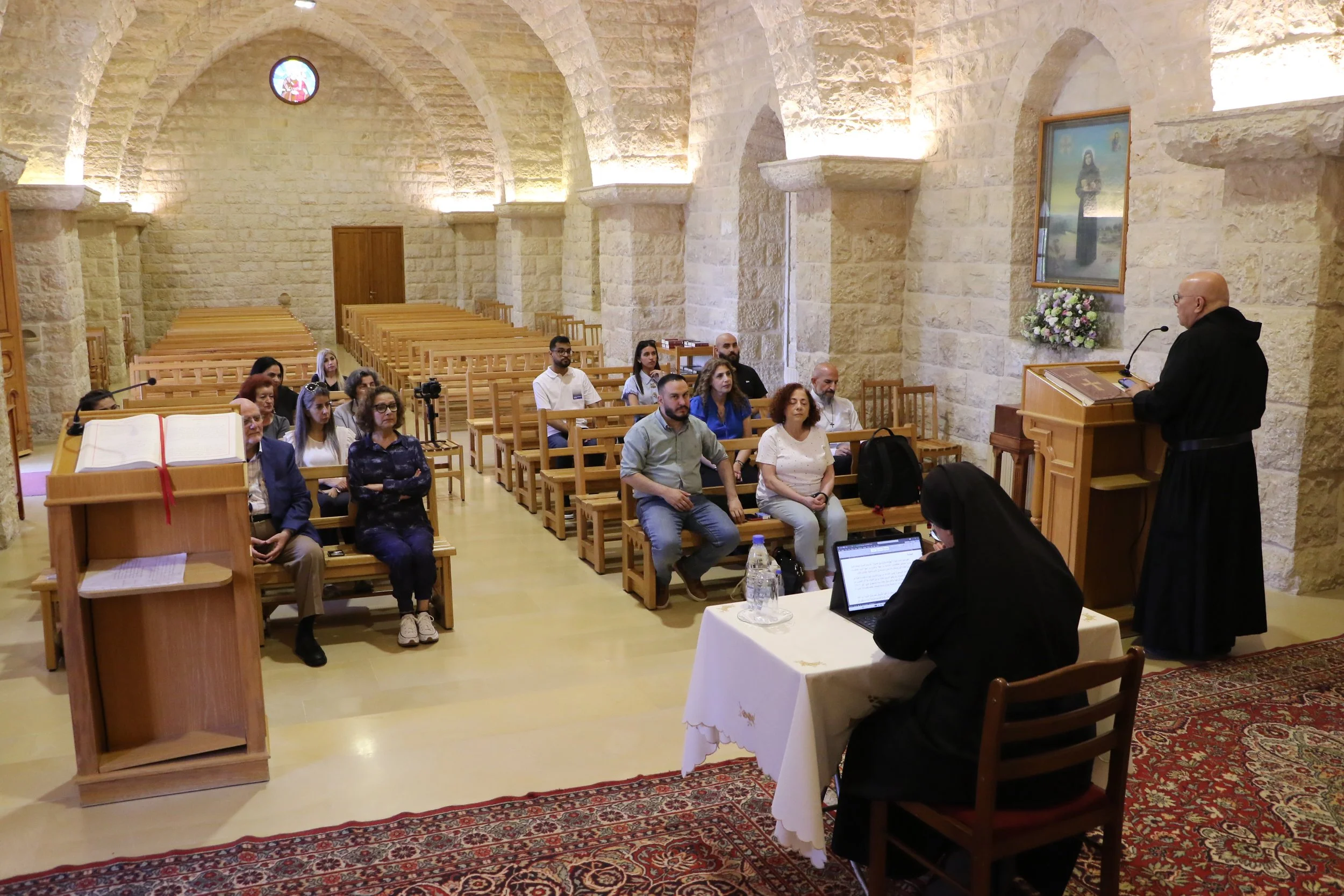
During a spiritual and intellectual gathering with the General Secretariat team of the Middle East Council of Churches (MECC) on Wednesday, June 17, 2026, at Saint Joseph Monastery in Jrebta, Tomb of Saint Rafqa, Mother Dolly Chaya, Superior General of the Lebanese Maronite Order of Nuns, delivered a reflection entitled “The Path of Holiness in a Wounded East.”
Drawing from the life of Saint Rafqa and the wounds of the contemporary Middle East, Mother Dolly explored the meaning of holiness in everyday life. She emphasized that holiness is neither a distant ideal nor an image preserved in memory, but rather a daily path lived in the heart of suffering, in the face of fear, and in the continual search for hope.
Her reflection came at a time when many people in the region feel deprived of security and burdened by fear, migration, displacement, and wounded belonging. Yet Mother Dolly urged not to view this reality solely through the lens of defeat, but through the lens of faith, which sees that a wound, when touched by the Mystery of the Risen Christ, no longer remains a sign of death but can become a testimony of love and hope.
The Wounded East and the Invisible Wound
Mother Dolly Chaaya reflected on the reality of the Middle East, a region marked by many wounds. Some are visible in destroyed buildings, abandoned homes, villages emptied of their inhabitants, and communities anxious about their future and survival. Others are less visible, dwelling in memory, emotions, and relationships.
A wound is not always geographical or material. It may be an enduring fear, a painful memory, a sense of betrayal, or the feeling of having lost one's place and security. For this reason, she stressed that Eastern societies need not only the reconstruction of buildings but also paths of inner healing that restore the human person at a deeper level.
Despite its wounds, the East still possesses immense spiritual and human richness, rooted in profound traditions. Yet this richness must become a source of healing rather than a memory trapped in suffering.
Rafqa: A Wound That Did Not Harm Others
Drawing on the life of Saint Rafqa, Mother Dolly Chaaya highlighted a particular understanding of holiness. Saint Rafqa endured great suffering, yet she never allowed her pain to become hardness of heart, anger, or harm toward others. She carried her wounds without turning them into bitterness or revenge.
She explained that this is the essential message: it is not the wound itself that defines a person, but how one lives with that wound. Suffering can become a wall separating us from others, or it can become a doorway to mercy and love.
Holiness, therefore, does not mean living without pain. Rather, it means learning to carry pain in the light of God. A saint is not someone who is never wounded, but someone who does not allow wounds to destroy love within the heart.
Thomas and the Wounds of Christ
Mother Dolly Chaaya recalled the encounter between the Apostle Thomas and the Risen Christ. Thomas wanted to place his hand in Christ's wounds, and Christ did not hide them but revealed them openly. Yet after the Resurrection, those wounds were no longer signs of defeat; they had become signs of the triumph of love.
The Resurrection did not erase the wounds but transformed their meaning. The wounds remained, but they were no longer symbols of suffering; they became witnesses to a love that had conquered death.
This raises questions for every believer: What do I do with my wounds? Do I turn them into accusations against others, or do I offer them to Christ so that they may become a message of peace?
When Christ entered the Upper Room, He did not condemn the Disciples who had abandoned Him. Instead, He greeted them with the words, “Peace be with you.” He transformed His wounds not into anger but into peace. This, Mother Dolly said, is the school of holiness.
A Paschal Memory, Not Merely a Memory of Wounds
Mother Dolly Chaaya emphasized that Christian memory is not a museum of pain but a Paschal memory. It knows the Cross but does not stop there. It knows the tomb but believes that the tomb is not the end. It recognizes wounds but lives in the light of the Resurrection.
In the reality of the Middle East, people often devote much time to grief and fear while giving too little place to the Resurrection in daily life. Yet Christian faith rests on the conviction that the Resurrection is the decisive event because it gives new meaning to all suffering.
Today, the East does not need a memory that deepens division but a purified memory capable of transforming pain into hope, wounds into responsibility, and fear into love.
Holiness as a Way of Life, Not an Image
Mother Dolly Chaaya stressed that holiness is not an idealized image we admire and then forget. It is a continuous way of life. While an image may remain distant from reality, a path enters daily details: the way we speak, exercise authority, relate to others, stand honestly before God, and continue loving despite wounds.
Saint Rafqa is not merely a beautiful example from the past but a path of discipleship in following Christ. The supreme model remains Christ Himself, who revealed that every human being is called to reflect the image of God.
In this sense, holiness is not an escape from humanity but the fullest expression of it. Human beings rejoice and grieve, suffer and struggle, yet they can allow their weakness to become a place where grace works.
Honesty Before God and Oneself
According to Mother Dolly Chaaya, holiness begins when a person stands before God without a mask. One must reconcile with oneself and acknowledge one's weakness, wounds, and need for grace.
No one can heal alone. People need God, community, attentive listening, and companions who help them interpret their wounds in a new way.
Thus, holiness does not begin with perfection but with honesty. It begins when a person says to God: “This is who I am—with my wounds, weaknesses, and fears. Transform what is within me into life.”
Love Works Miracles
Mother Dolly Chaaya shared an experience from her years in education. At one point, she felt that her students were not responding to her in the classroom. Later, she discovered that a single word spoken with love had deeply affected one student and helped him navigate a difficult relationship with his brother.
This experience taught her that we do not always know the fruits of the good we sow. We may think our words go unheard and our efforts bear no fruit, but grace often works silently.
For this reason, we should not judge others, or the results of our actions, too quickly. Love operates in hidden ways, and a sincere word may open a door we cannot yet see.
From Self to Gift
Mother Dolly Chaaya noted that Christian life reaches its fullest meaning when the self becomes a gift. Holiness is not the hoarding of grace but its sharing. Whoever experiences God's love cannot keep it for themselves but is called to share it with others.
The East possesses immense spiritual wealth, yet it must become visible in the human face: in service to those who suffer, in attentive listening, in reconciliation, and in the capacity to love until the end.
The Good Samaritan and Healing
Reflecting on healing, Mother Dolly Chaaya turned to the Parable of the Good Samaritan. The Samaritan saw what others failed to see. He did not merely pass by the wounded man but approached him, bound his wounds, and cared for him.
This is precisely what societies today need: people who see the wounded and do not avoid them. Service is neither a Theological speech nor a public display; it is a concrete act of mercy.
Healing begins when we truly see the other person, listen to them, and carry part of their suffering with them.
The Human Person Before the Place
Mother Dolly Chaaya warned against becoming so preoccupied with protecting places that we forget to protect people. Land matters, memory matters, and presence matters, but the human person remains the greatest value. Once human beings are lost, they cannot be replaced.
Therefore, fostering peace, listening, and respect for human dignity remains among the most urgent tasks that Churches and societies need in the Middle East.
Hope does not mean denying reality. It means persevering in goodness despite the harshness of reality.
Children of the Resurrection in a Wounded East
In her concluding remarks, Mother Dolly Chaaya invited her listeners to view Saint Rafqa's path of holiness as a call to love and hope in a region marked by wounds in body, memory, and emotion.
The Holy Spirit continues to breathe life into humanity every day, and the Lord chose this land for His Incarnation. This means that the East, despite its suffering, remains called to be a place of presence and hope.
We do not need an East that denies its wounds, but an East that knows how to offer them to Christ. We do not need wounds that become anger and revenge, but wounds transformed into love and peace.
Holiness means loving despite suffering, persevering in goodness without excusing evil, and living as children of the Resurrection in a world that is still searching for the light.