
"Oyoun Al Warak": A Novel by Father Dr. Michel Kanbar
Revives Historical Memory and Celebrates the Beauty of Language
At a Cultural Seminar in Beirut
With the Participation of an MECC Delegation
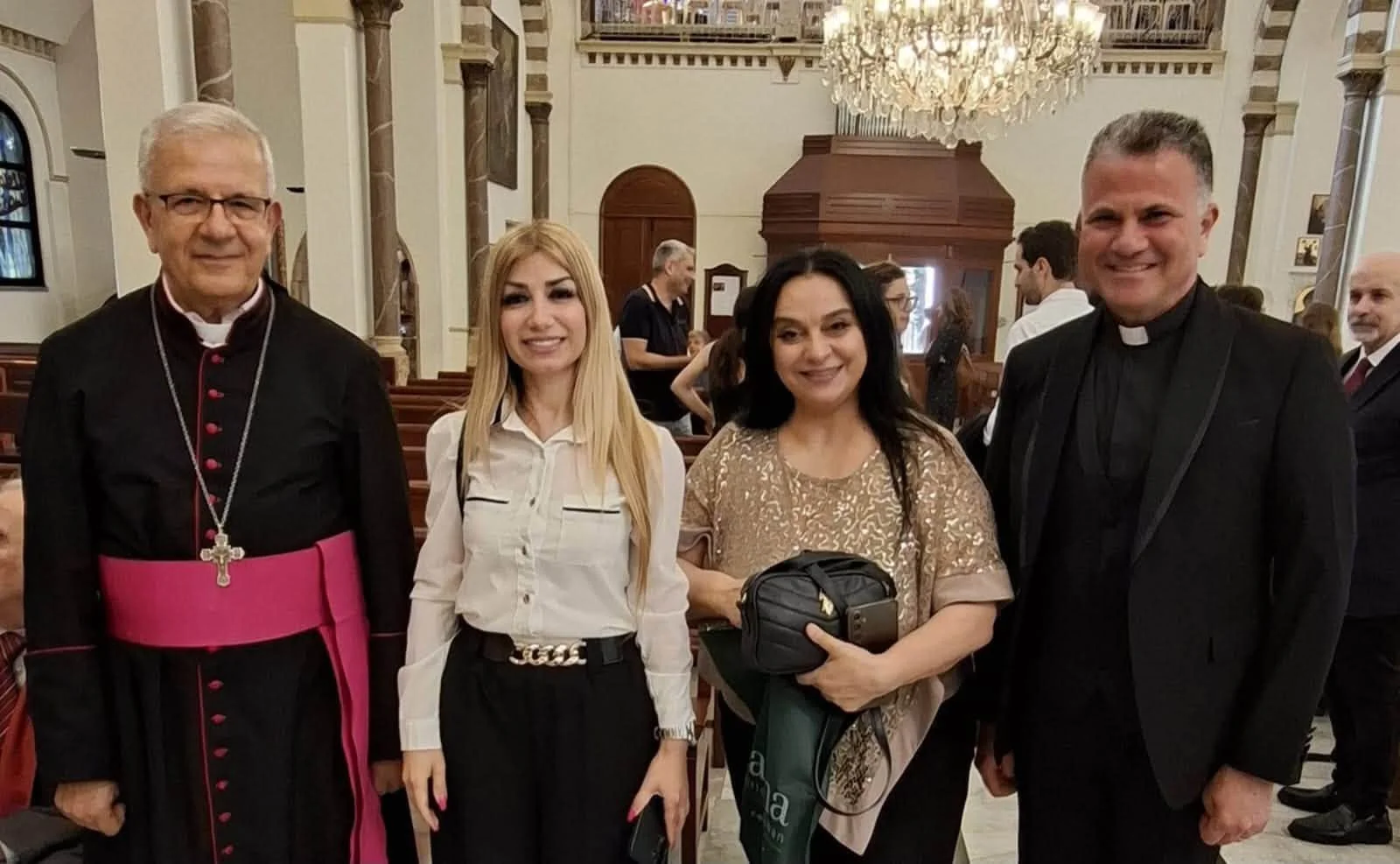
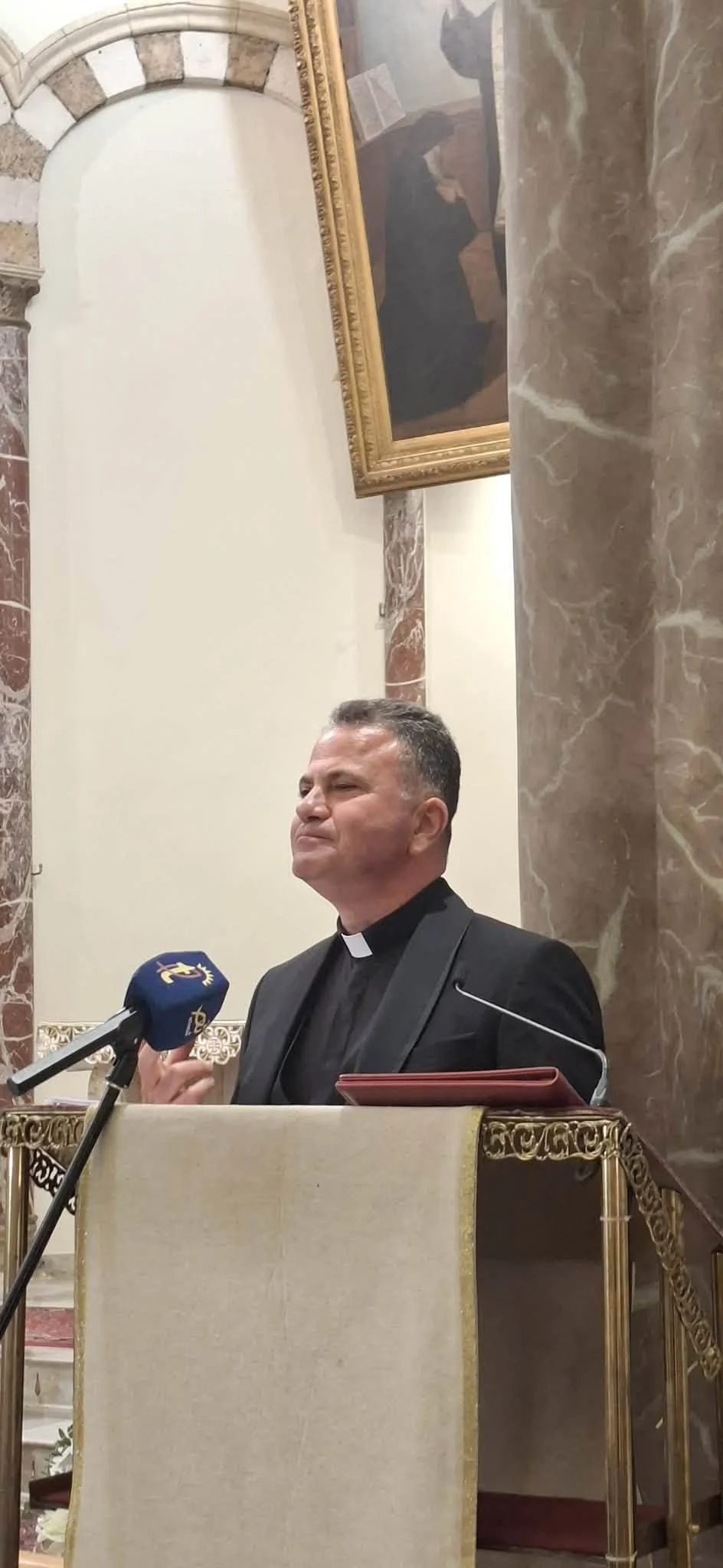
In a cultural evening distinguished by its audience and vibrant literary engagement, St. Maron Church in Gemmayzeh hosted a seminar and book-signing ceremony for the novel “Oyoun Al Warak (meaning “Eyes of Pape “) by Father Dr. Michel Kanbar, Former Executive Secretary of Association of Theological Institutes in the Middle East (ATIME), published by Kalima Art Liban Publishing House. The event was attended by a large gathering of Church, cultural, academic, media, and social figures.
Attendees were His Eminence Bishop Maroun Ammar, Maronite Bishop of Sidon, His Eminence Bishop Chokrallah Nabil El Hajj, Former Member of Parliament and Minister Edmond Rizk; Maroun Helou, President of the Maronite League, together with members of its Executive Council, and a delegation from the Middle East Council of Churches (MECC) including Father Dr. Antoine El Ahmar, Director of the Theological and Ecumenical Department, Professor Laure Abi Khalil, Coordinator of the Dialogue, Social Cohesion, and Human Dignity Rehabilitation Program, Journalist Lea Maamary, Coordinator of Church Relations and Media, Dr. Sultan Nassereddine, President of Dar Al Banan, the Mayor of Al-Hajja, several municipal leaders, as well as Priests, academics, students, friends of the publishing house, and members of the family of Bishop Youssef Rizk.
The seminar opened with a word by Mrs. Nidal Haddad, who welcomed the audience and expressed her pride in the publication of “Oyoun Al Warak”. She described the novel as a valuable addition to Lebanese literature and a reflection of Kalima Art Liban's commitment to supporting serious literary works.
In his word, Bishop Maroun Ammar expressed his appreciation for Father Dr. Michel Kanbar and for his intellectual and cultural contributions, which combine historical research with literary creativity. He noted that the novel brings renewed attention to the figure of Bishop Youssef Rizk, who led the Ain Wark School for more than fifty years and devoted most of his life to its educational and academic mission.
He emphasized that the author went beyond publishing historical documents about Bishop Rizk by giving them new life through an outstanding novel. Quoting the introduction written by poet and literary figure Henri Zoghaib, Bishop Ammar described Father Kanbar as "a creative writer" with an exceptional ability to construct compelling narrative scenes.
Bishop Ammar also praised the novel's literary language, highlighting its rich imagery and poetic metaphors. He said the author had successfully transformed historical documents into a vivid literary work, offering a distinctive contribution to contemporary Lebanese literature.
Poet and literary critic Henri Zoghaib devoted his word to the novel's aesthetic qualities, arguing that “Oyoun Al Warak” is not merely a historical novel but a work overflowing with poetic expression. Comparing Father Kanbar’ style with that of leading Arab novelists, Zoghaib observed that the author achieves remarkable narrative density without sacrificing depth or richness.
He cited several striking passages and sentences from the novel, describing it as one of the finest poetic images he had encountered in modern fiction, seeing it as further evidence of the author's ability to weave poetry into prose. Recalling the Rahbani Brothers' famous expression about "adorning the wind," he remarked that Father Kanbar sustains this elevated level of poetic eloquence throughout much of the novel.
Speaking on behalf of Bishop Youssef Rizk's family, Mr. Amin Rizk thanked Father Dr. Michel Kanbar for the work, noting that the novel revealed many previously unknown aspects of their grandfather's life and introduced his scholarly and spiritual legacy to a new generation.
In his closing word, Father Dr. Michel Kanbar thanked Bishops Ammar and El Hajj, the writer Henri Zoghaib, Mrs. Nidal Haddad, the family of Bishop Youssef Rizk, and all the attendees. In a poetic and literary word, he emphasized that the novel is not an attempt to rewrite history but to restore life to the human beings who make history, adding that a historical document reaches its fullest meaning when it becomes a human experience capable of touching the reader's heart.
The ceremony ended with a book-signing session, during which many attendees met the author and discussed the novel. The event reflected the considerable interest generated by “Oyoun Al Warak” as a work that successfully combines the precision of a historian, the imagination of a novelist, and the lyricism of poetic language.