
Secretary General Professor Michel Abs at Webinar Organized by Orthodox Christians for Palestine:
“For the MECC, the Palestinian cause is part of its historical memory, pastoral responsibility, humanitarian mission, and Christian witness”
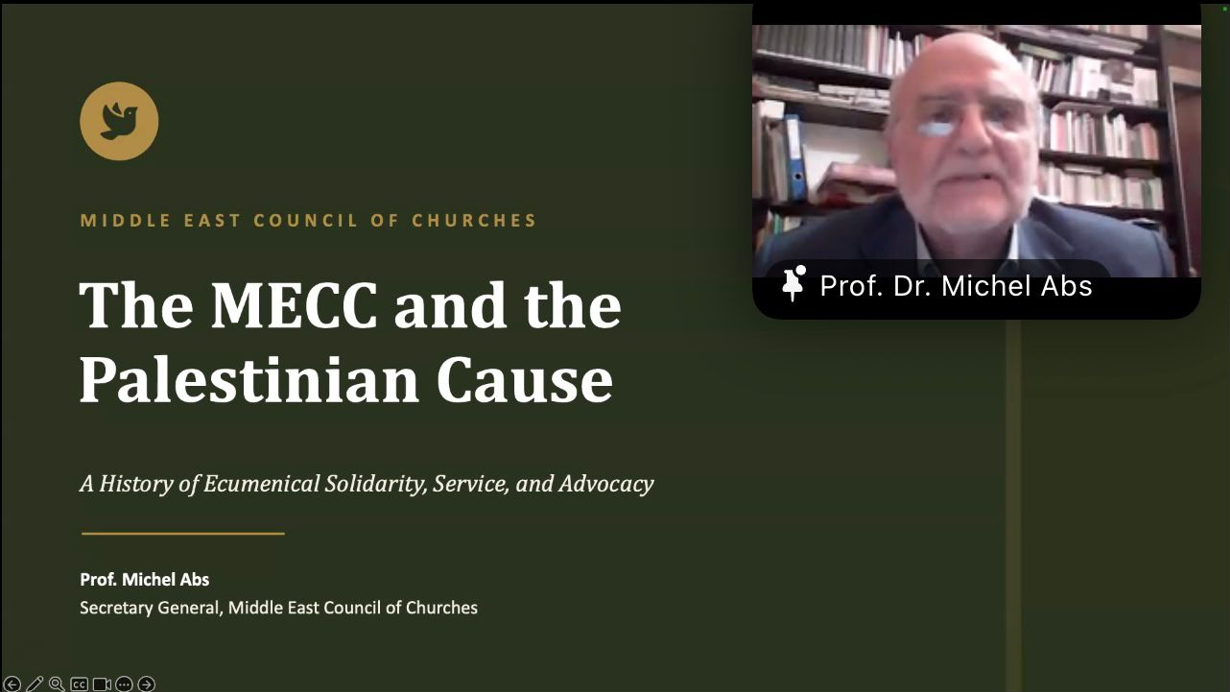
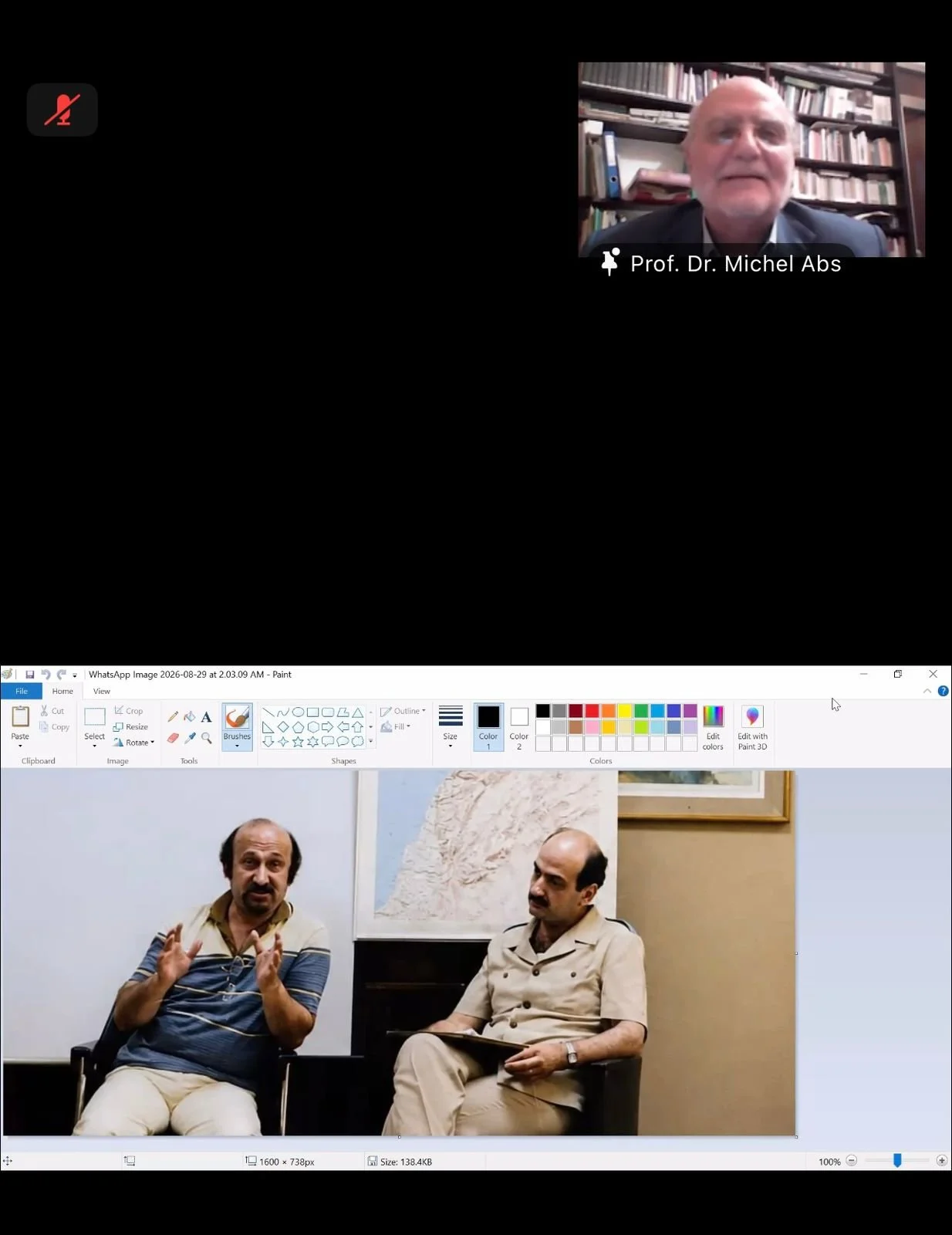
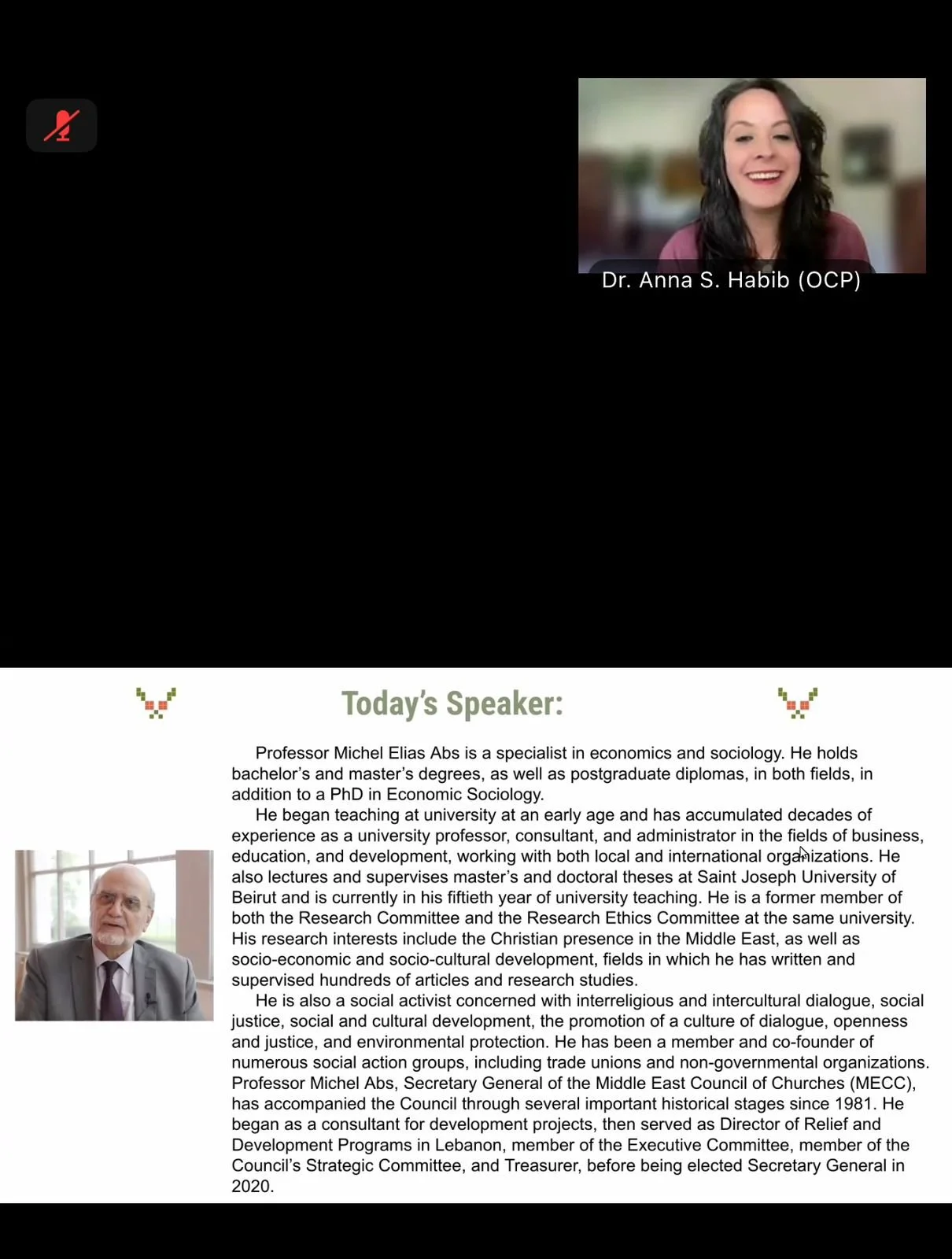
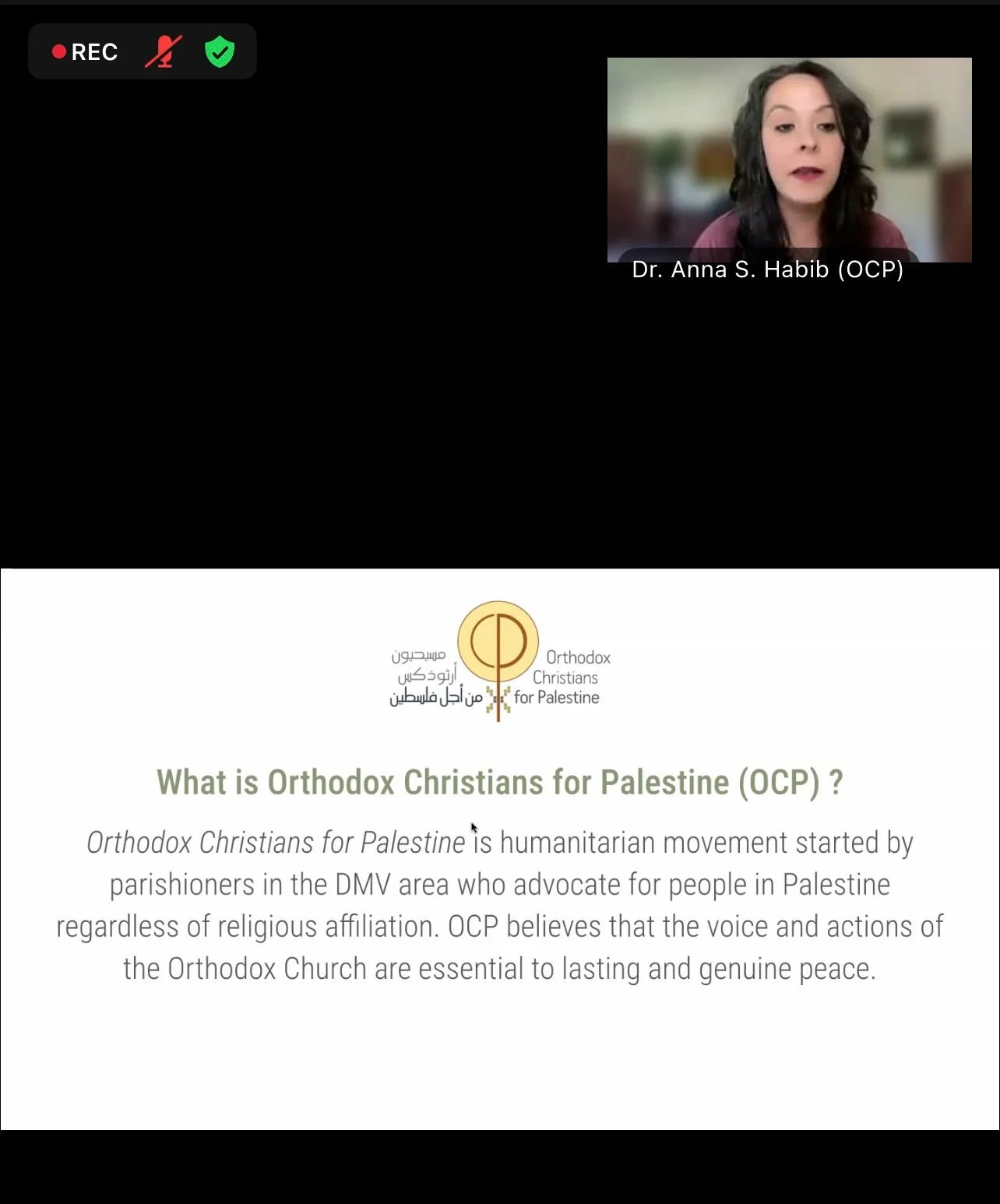
The Secretary General of the Middle East Council of Churches (MECC), Professor Michel Abs, delivered a lecture entitled “MECC and the Palestinians”, as part of a webinar entitled “Faith is Action, Conversations on Palestine,” organized by “Orthodox Christians for Palestine.”
The webinar was held on Saturday, August 29, 2026, in the presence of the MECC Associate Secretary General Mrs. Seta Hadeshian, colleagues from the General Secretariat team, as well as specialists, experts, and attendees concerned with the topic from various countries across the region.
Following an introduction by Dr. Anna Habib, daughter of the Former MECC Secretary General Mr. Gabi Habib, Secretary General Professor Michel Abs spoke about the fraternal relationship that connected him with the Former Secretary General Gabi Habib. He conveyed a message of peace for his soul and recalled his active role in the Middle East Council of Churches and in the Ecumenical movement.
During his lecture, Professor Abs addressed the role of the Middle East Council of Churches with regard to the Palestinian cause, highlighting the responsibilities of the Department of Service to Palestinian Refugees, as well as the Council’s work in accompanying Palestinians on Theological, Ecumenical, humanitarian, social, and media-related levels.
At the beginning, Professor Abs noted that “the Middle East Council of Churches (MECC) has maintained a longstanding commitment to the Palestinian people, rooted in the history of the ecumenical movement in the Middle East. This relationship predates the formal establishment of the MECC in 1974 and began through Christian churches and ecumenical organizations responding to Palestinian displacement following the Nakba.”
He added: “For the MECC, the Palestinian cause is therefore not an external political issue but part of its historical memory, pastoral responsibility, humanitarian mission, and Christian witness. Its engagement has developed through three interconnected dimensions: service, advocacy, and awareness building.”
Professor Abs concluded by saying: “throughout this history, service and advocacy have remained two dimensions of one Christian mission. Service without addressing the causes of suffering is incomplete, while advocacy without concrete solidarity risks becoming rhetoric. The MECC therefore understands its vocation as both presence and witness: accompanying displaced families, treating the wounded, educating children, defending the vulnerable, and speaking internationally for justice.”
He continued: “the enduring principle underlying this commitment is clear: where human dignity is wounded, the Church must be present; where justice is denied, it must speak; where people suffer, it must serve; and where peace appears impossible, it must continue to work and pray for peace.”
The lecture ended with a question-and-answer session and a discussion of the topic presented.