
MECC

Beirut, en el corazón de la Iglesia
Beirut, ciudad de la resurrección
Ha pasado un año y la tragedia de la explosión Beirut sigue creciendo, con más rabia y fuerza. Ningún recuerdo puede contener el dolor que causó, mientras que ningún tiempo podría hacerlo desaparecer. Desde el pasado mes de agosto, Beirut reza en nombre del Padre por cada hijo, hermano, hermana, madre o padre que fue a trabajar y nunca volvió. 216 víctimas en segundos. Miles de heridos, cientos de los cuales quedaron con discapacidades permanentes.

Su Santidad el Papa Tawadros II: ¿Un año después de la explosión...?
Ha pasado un año entero desde el desafortunado suceso, la masiva explosión del Puerto de Beirut, nuestra querida capital libanesa, el 4 de agosto de 2020, después de que se almacenaran allí productos químicos inflamables durante mucho tiempo sin ninguna precaución. La aterradora imagen que vimos por la televisión nos apretujó el corazón... En ese momento, lo consideramos una crisis y un incidente horribles que unirían a los pueblos y unificarían los corazones para hacer frente a este desastre con todas sus dimensiones humanitarias, sociales, económicas y vitales.

A Year After Beirut Blast
Another Thunderous And Violent Truth of Collective Culpability
Born in Lebanon, I had lived the golden days of 60’s and early 70’s when the economic growth was at its peak. Labor and money were abundant, cultural life was full of artistic and rich performances, theatres were full, exhibitions of renowned artists made the pride of the Lebanese, restaurants packed with people, tables abundant with marvelous and delicious countless mezzes, attracting tourist from around the world.
Between The Port of Beirut and St. Anthony the Great, a Story of Neighbors, Blood, and Tears
Parish Priest: “Resilience is the word of the year, it is impossible to forget”
“100% of the parish children sought emigration, but church remained their only safety net”
Explosion victims: “They killed us and nobody cared to check on us!”
Before the evening of August 4, 6:07, the port of Beirut was considered one of the most important ports of the Middle East, and a breather to Lebanon and its neighboring countries.
Before that unfortunate seventh minute, St. Anthony the Great church facing the seaside, neighboring the port, was engulfed with trees, its dome nested birds, one step closer to heaven.

After the August 4 Explosion
A Call from the Middle East Council of Churches to Help 45 Thousand Affected Beiruties
Till this day, our world still witnesses painful events and structural economic, social, and political changes. These events only affect the lower social classes, or what became today 85% of citizens in the countries still facing crises and a continuous worsening of economic, social, and political conditions. Corona introduced a new lifestyle, altering our social and familial relationships, imposing an online education that affected our children's mental health and academic performance.

Beirut, in the Heart of the Church
Beirut, a City of Resurrection
One year has passed and the Beirut explosion tragedy is still growing, angrier and stronger. No memory can contain the pain it caused, while no time could ever make it go away. Since last August, Beirut is praying in the name of the Father for every son, brother, sister, mom, or dad wo went to work and never came back. 216 victims within seconds. Thousands of injured, hundreds of whom made it with no permanent disabilities. More than 80 thousand household, business, school, hospital, and historical location that stood long enough to watch Beirut grow and bloom were destroyed.

His Holiness Pope Tawadros II: One Year Post-Explosion…?
A whole year has passed since the unfortunate event, the massive Beirut port explosion, our beloved Lebanese capital, on August 4, 2020, after flammable chemicals were stored there for a long time with no precautions. The terrifying picture we saw on TV made our hearts sink... At the time, we considered it a horrific crisis and incident that would bring people together and unify hearts to face this disaster with all its humanitarian, social, economic and life dimensions. Peoples have always united in the face of disaster, hoping to get out of it with the strength and determination...

Nunca te olvidaremos...
Escrito por la periodista Melvine Khoury / 4 de agosto de 2020. Superviviente de la explosión del puerto de Beirut
Este es el 4 de agosto, lo que se suponía que iba a ser un día normal, a pesar de las circunstancias inusuales por las que estábamos pasando a muchos niveles.
Estaba en casa, lo que todo el mundo llama un «lugar seguro». No sabía que había una bomba de relojería a punto de estallar, privándonos de la vida a los mártires, las víctimas, los heridos y los condenados.
Quisieron mancharnos aquel 4 de agosto de sangre, miedo, desesperación y rendición, porque son hijos de las tinieblas y líderes de un mundo ajeno a la misericordia y a la humanidad.

Matar a un pueblo seguro... es un asunto que no se debe considerar
Otro capítulo de la tragedia épica de nuestro Levante antioqueno fue taladrado hace un año en Beirut.
Digo taladrado y no escrito, porque lo sucedido ha quedado grabado en nuestros cuerpos, así como en nuestra memoria, e igualmente en la memoria de quienes se ocupan de nosotros.
La marcha de la carne y la sangre y el desamparo no ha terminado aún sus capítulos.
Más de doscientos muertos, seis mil heridos y cientos de miles de personas sin hogar han sido un golpe para la humanidad, para el mundo entero, para la extensión del mundo árabe y para la propia humanidad.
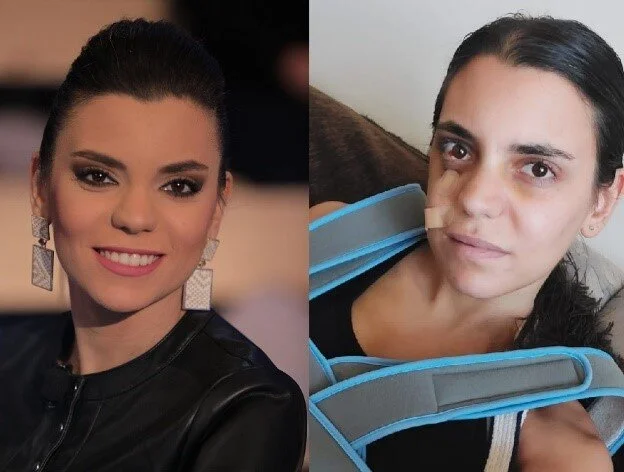
We Will Never Forget You…
Written by the journalist Melvine Khoury/ August 4, 2020 Beirut Port Explosion Survivor
This is the fourth of August, what was supposed to be an ordinary day, despite the unusual circumstances we were going through on many levels.
I was home, what everyone calls a “safe place”. I didn’t know there was a ticking bomb about to explode, depriving us martyrs, victims, injured, and doomed of our lives.
They wanted to stain us that August 4 with blood, fear, despair, and surrender, for they are the sons of darkness, and leaders of a world unfamiliar to mercy and humanity. But once these negative feelings touch our souls, we take our gowns of worry and disability off. We are now stronger, and surrender is not an option we are willing to consider.
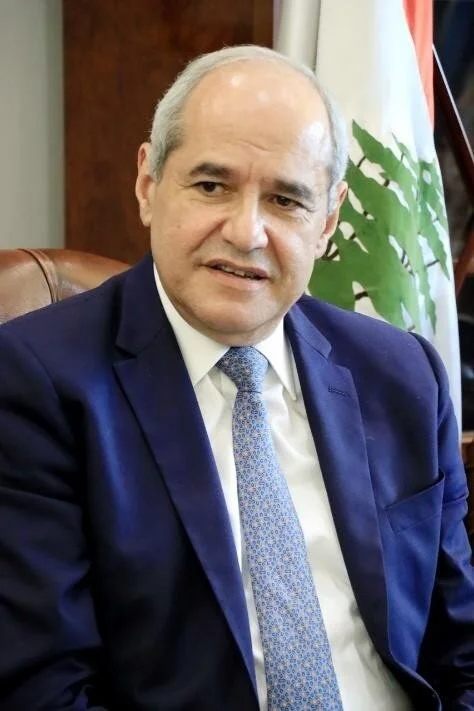
When Lebanon’s Lawyers represent their People
Head of the Beirut Bar Association Melhem Khalaf: The Beirut Port Explosion was an intentional crime
“We will not let Lebanese people sink in despair”
As a first response to the crime of the century, and so the criminal does not escape from justice, the Beirut Lawyers Syndicate filed a lawsuit as a party affected by the blast and started an office presided by the Syndicate President Melhem Khalaf to represent all those who fell victims of the explosion.
Melhem Khalaf then directed the founding of a central operation room and the setup of a few offices in different locations in Beirut to help people file lawsuits.
They were the first to raise their voices when everyone was afraid. They sent a letter to the Secretary General of the United Nations with explicit clauses asking for help in their fight for justice.
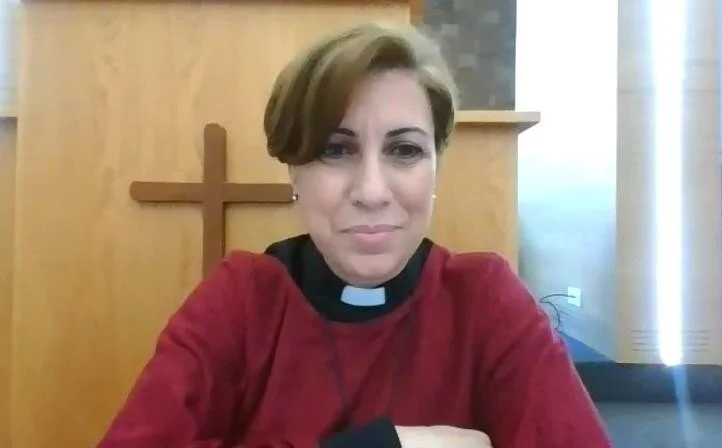
Between Faith and Confusion, We Won’t Forget the August 4 Tragedy
Dr. Rima Nasrallah from the Evangelical Churches of Beirut
“We try as much as possible to encourage one another, putting our fate in the hands of Jesus Christ”
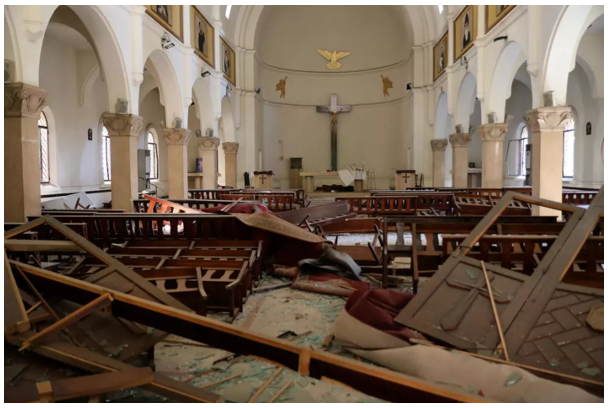
On the August 4 of last year, joy turned into sadness and hope into despair. A tragedy targeted us all. Even churches were wounded crying from their children’s pain. It is true that churches were severely damaged, but it stood tall and remained the one refuge that spread strength and will. It saved people from despair and put them back of the path of hope, tranquility, and safety, for there is no savior other than Jesus Christ who tell us: “Come to me, all you who labor and are burdened, and I will give you rest.” (Matthew 11:28)
The Evangelical churches in Beirut got their fair share of damages.
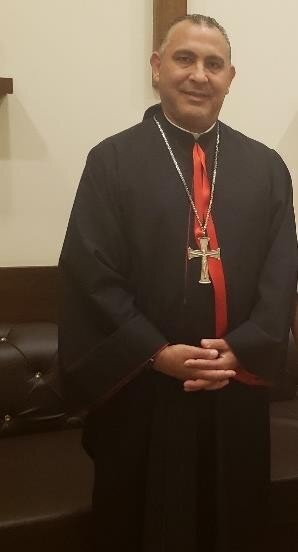
The Syriac Catholic Church in Beirut, Living the Tragedy Alongside its Parish
His Eminence Bishop Mathias Charles Mrad: ‘August 4 was a hard test that we passed with faith and solidarity’
It was destroyed and went through pain alongside its children, it mourned and cried with them in times of despair, then it rose and held on to its hope in Jesus Christ. Indeed, these are the churches of Beirut, houses od God, the one safe refuge, source of faith and resilience amidst the tragedy and loss that took over Lebanon on August 4,2020. A date holding a memory of death, despair, distress, and fear… however, churches refused to surrender and chose to rise, as once did Jesus Christ.
The churches of Beirut weren’t spared from the explosion destruction. Each was severely damaged to its core, as it suffered the unbearable losses of its children.

His Eminence Archbishop Shahe Panossian:
The Armenians of the World Rushed to Help their Communities in Lebanon
The restoration and rehabilitation committee taking care of the August 4 explosion destruction completed its duties with success
The Beirut port explosion damaged a big part of Armenian residences in Beirut. The Armenian Orthodox Church played a big role in rehabilitating what was destroyed during what we may call the biggest crime against Lebanon. His Eminence Archbishop Shahe Panossian, Primate of the Armenian Orthodox Church in Lebanon explains how the Church stood by its children.
A few days after the tragedy that burdened Beirut, Archbishop Panossian says: “A committee was started with the blessing of the Holy Catholicos Aram the First of the Armenian house of Cilicia.

Archbishop Abdel Sater:
“We finished 30% of restorations and what’s left is the damage the state needs to fix”
“Church property, if sold, like some suggested, would not be enough to save Lebanon from collapse”
“People turn to the Church as a mother and a home”
One year after the Beirut port explosion, 131 Maronite parishes had their churches destroyed and 145 priests went from serving masses to becoming relief teams. From focusing on the spiritual life to protecting dignities, homes, and rights… After one year, we meet with the Curial Bishop of the Maronite Archdiocese of Beirut HE Archbishop Boulos Abdel Sater to ask him: “How did you treat the wounds of Beirut? Are there still bleeding wounds left?” Archbishop of Beirut said a few weeks before the 4th of August that he does not trust that the identity of the person behind the explosion would be exposed.