MECC
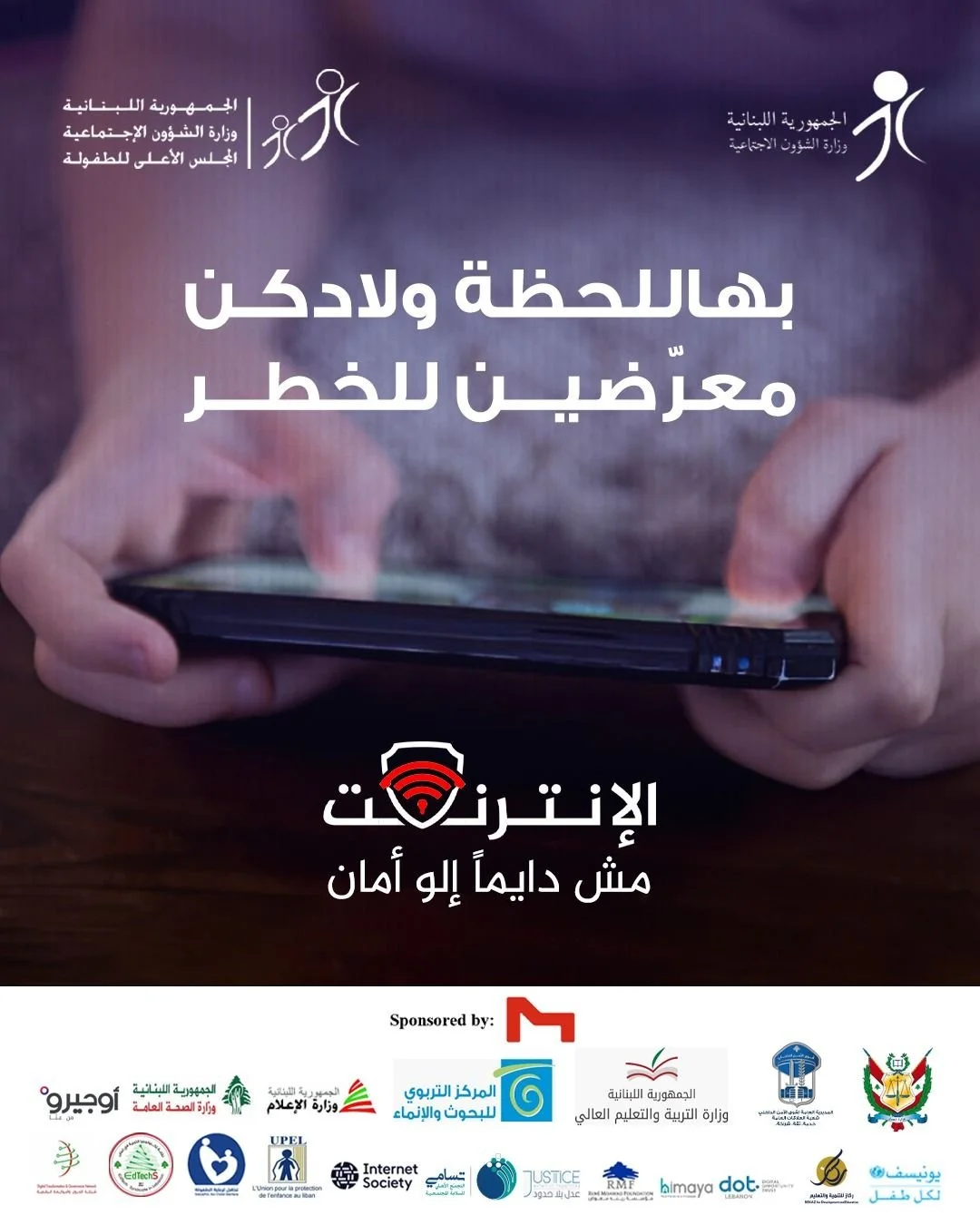
At this Moment, Your children Are At Risk... The Internet Is Not Always Safe
A Campaign on the Occasion of the International Day for the Protection of Children from Internet Abuse
The Lebanese Ministry of Social Affairs, through the National Program for the Protection of Family and Childhood and the Higher Council for Childhood, in partnership with the relevant ministries (Ministry of Education and Higher Education, The Center for Educational Research and Development, Ministry of Justice, Internal Security Forces - Cybercrime Bureau, Ministry of Public Health, Ministry of Information, Ogero), UNICEF, and civil society organizations (Himaya Association, Union for the Protection of Juveniles in Lebanon, Justice Without Borders Association, Internet Society Association, Dot Lebanon Association, Tasami Association, Rakaz Association, René Moawad Foundation, Takaful Association for Child Welfare, Syndicate of Educational Technology in Lebanon, Digital Transformation and Digital Governance Network), with the support of Promomedia, launches the media and advertising campaign entitled:
"At this Moment, Your children Are At Risk... The Internet Is Not Always Safe"
On the occasion of the International Day for the Protection of Children from Internet Abuse.

The Eminent Scholar Sheikh Muhammad Mahdi Shams al-Din
Dialogue and Safeguarding the Nation
A speech by Professor Dr. Michel Abs
Secretary General of the Middle East Council of Churches
Delivered at the seminar on the thought of Imam Sheikh Muhammad Mahdi Shams al-Din
on the 24th anniversary of his passing
February 5, 2025
At the Supreme Islamic Shiite Council in Hazmieh – Lebanon
When I think of the eminent scholar Sheikh Muhammad Mahdi Shams al-Din, I am first reminded of his gentle, loving smile and his kind countenance, behind which there was a far-sighted vision gazing into the distance, trying to decipher its secrets, perhaps to protect the nation and strengthen the future of its children. His sharp insight was one of his principal characteristics, and he employed it in the service of the faithful community, the Shi‘a of Lebanon—I avoid using the word “sect”—and the nation.
Allow me to interject a brief personal note: I sensed that same good spirit in his son, my friend and His Excellency the Minister Ibrahim, as well as in his grandson Khalil, the diligent student in the master’s program I used to lead at Saint Joseph University.
I got to know Sheikh Muhammad Mahdi Shams al-Din through my membership, starting in 1997, in the “Islamic-Christian National Committee for Dialogue,” which he helped establish. Through it, through the activities of its members and thanks to his guidance and support, we contributed to safeguarding civil peace and preventing strife on many occasions. God alone knows where such strife would have led us when it often began with a seemingly minor incident of little apparent importance.
Whenever we visited him to draw from his wisdom, it was clear that he embraced the idea of Lebanon as the final homeland, stressing the need to preserve all components of the nation and to protect civil peace as a means of safeguarding the country. He would present his thoughts and opinions to us gently and simply, like a loving father who refuses to allow anyone to compromise the nation.
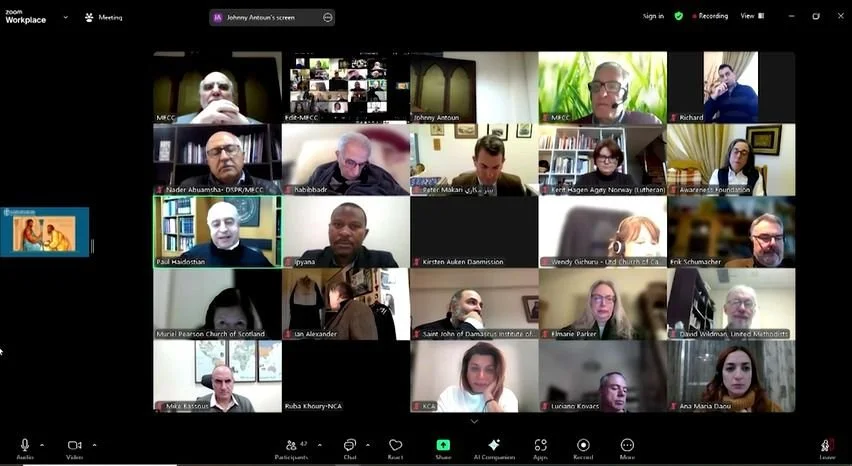
MECC Holds Its Annual Meeting with Its International and Regional Partners:
Together In an Ecumenical Journey
Reverend Dr. Paul Haidostian: Our partners have accompanied the MECC quite closely and they still do, and we are blessed by a global partnership
Secretary General Professor Dr. Michel Abs: MECC has been a tool of paradigm change in the area, among the churches and in society, and shall continue to be so
Under the title “Partners Ongoing Accompaniment of MECC in the Ecumenical Journey”, the General Secretariat of the Middle East Council of Churches (MECC), headed by the Secretary General Professor Dr. Michel Abs, held its annual meeting with the MECC partners from international and regional organizations and institutions, on Thursday, February 6, 2025. It aimed at presenting the achievements made by the Council, as well as the upcoming entitlements, in addition to exchanging opinions and experiences in order to develop the work mechanisms and achieve the desired goals, working together towards a more effective future partnership.
The meeting was attended online by representatives of various organizations and institutions partnering with the Middle East Council of Churches from around the world, Reverend Dr. Paul Haidostian, President of the Union of the Armenian Evangelical Churches in the Near East (UAECNE), President of Haigazian University in Lebanon, and President of the Middle East Council of Churches (MECC) for the Evangelical Family, and Members of the MECC Executive Committee, as well as Directors and Coordinators of the Council’s departments and the team work in person from the MECC headquarters in Beirut.

The Supreme Islamic Shiite Council in Lebanon Holds a Symposium about the Thought
Of the Late Imam Sheikh Muhammad Mahdi Shams Al-Din
Sheikh Ali Al-Khatib: The basis of the Islamic religion rejects sectarianism but adopts sects and living with sects in peace
The MECC Secretary General Professor Dr. Michel Abs: Any word or action issued by the Scholar Imam Sheikh Muhammad Mahdi Shams Al-Din are deeply imprinted with the logic of dialogue that the Great Imam lives as a logic of life
On the twenty-fourth commemoration of the passing of Imam Sheikh Muhammad Mahdi Shams Al-Din, and under the patronage of the Scholar Sheikh Ali Al-Khatib, the Vice-President of the Supreme Islamic Shiite Council, the Supreme Islamic Shiite Council in Lebanon held a dialogue symposium about the thought of Sheikh Shams Al-Din, on Wednesday, February 5, 2025, at the headquarters of the Islamic Shiite Council in Hazmieh - Lebanon.
The symposium was moderated by Dr. Jihad Saad, and the speakers were the Editor-in-chief of Al-Liwaa Newspaper Mr. Salah Salam, the Secretary General of the Middle East Council of Churches (MECC) Professor Dr. Michel Abs, and the Dean of the Higher Doctoral School of Literature, Humanities and Social Sciences at the Lebanese University Dr. Hussein Rahal.

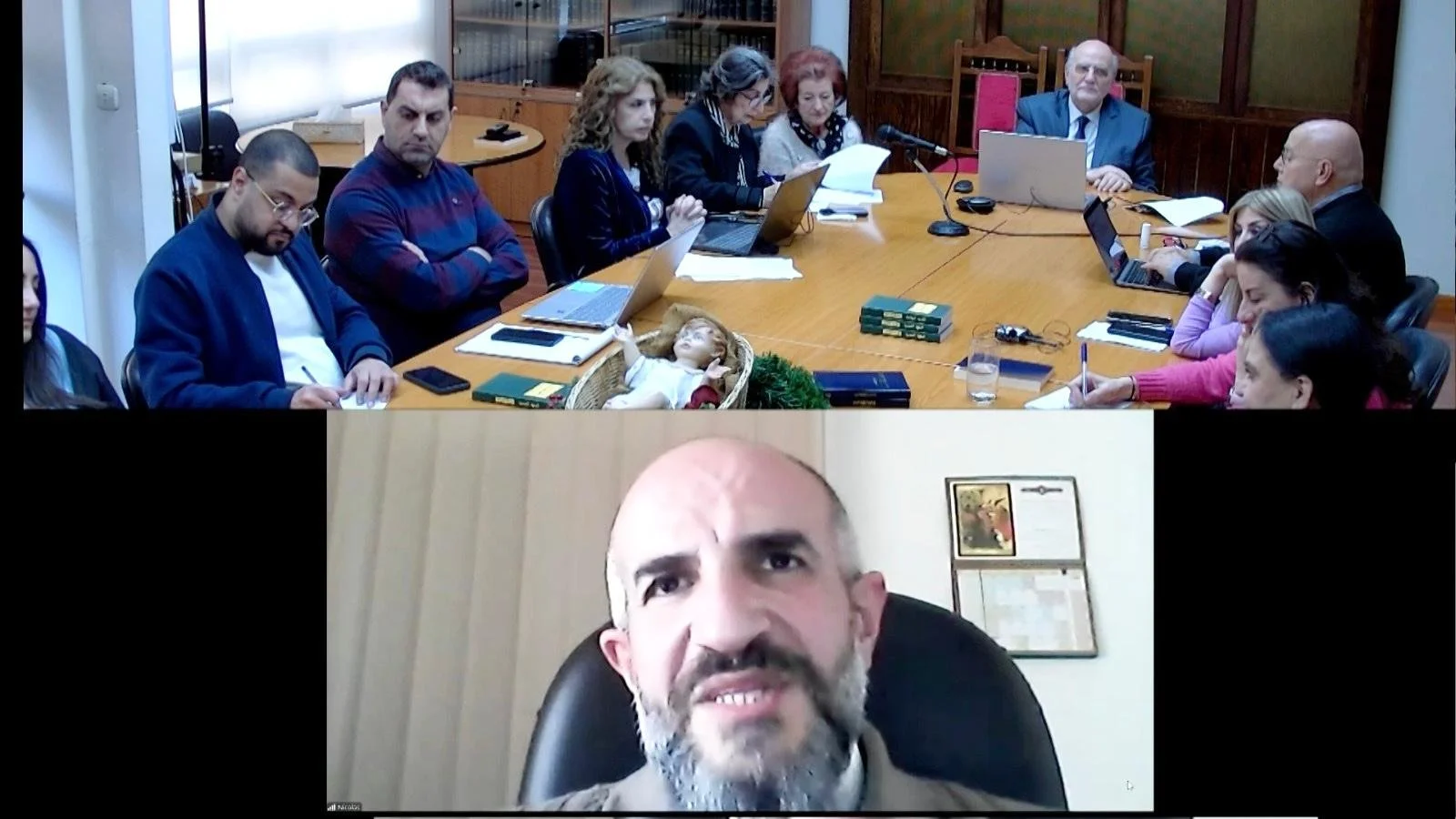
The MECC General Secretariat Prays on the Feast of the Presentation of Christ into the Temple and the International Day of Human Fraternity
“For where two or three gather in my name, there am I with them” (Matthew 18: 20).
With these Holy Words, the team of the General Secretariat of the Middle East Council of Churches (MECC) in Beirut continues its periodic meetings headed by the MECC Secretary General Professor Dr. Michel Abs, raising Prayers to the Lord Jesus for the intention of peace and justice in the Middle East and the world, for the suffering and marginalized people, and for every human being on this earth.
In its last meeting on Tuesday, February 4, 2025, the family of the MECC General Secretariat gathered around the Gospel of the Feast of the Presentation of Christ into the Temple, which was read by the Journalist Lea Adel Maamary, the Media Officer at the Middle East Council of Churches (MECC), the Director of “The Platform of the Word” and the Coordinator of the Church and Media Relations at MECC, in an atmosphere of reverence, contemplation and fraternity, amidst an inner peace that filled the hearts of the worshipers.
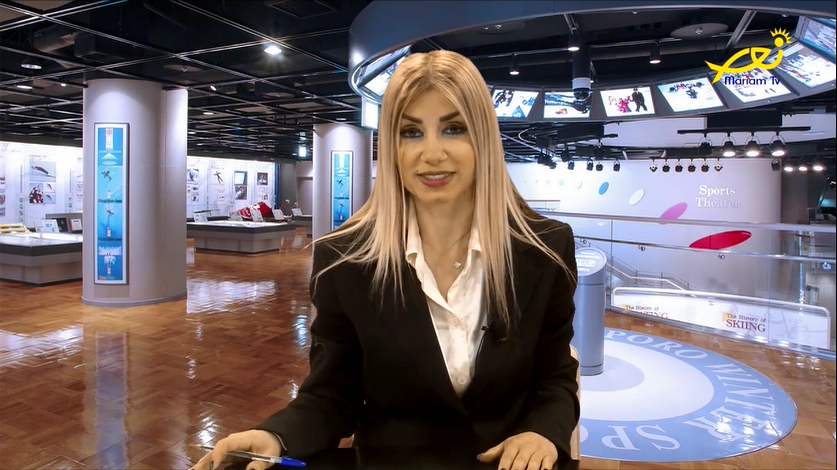
Video – A Church News Bulletin On “Mariam TV” Including the Latest MECC Updates, Prepared and Presented by the Journalist Lea Adel Maamary
In the video, you can find a Church News Bulletin on Mariam TV, which includes the latest updates of the Middle East Council of Churches (MECC). The bulletin is prepared and presented by the Journalist Lea Adel Maamary, the Media Officer at the Middle East Council of Churches (MECC), the Director of “The Platform of the Word” and the Coordinator of the Church and Media Relations at MECC.

Video - The International Day of Human Fraternity
What is the Importance of Its Message?
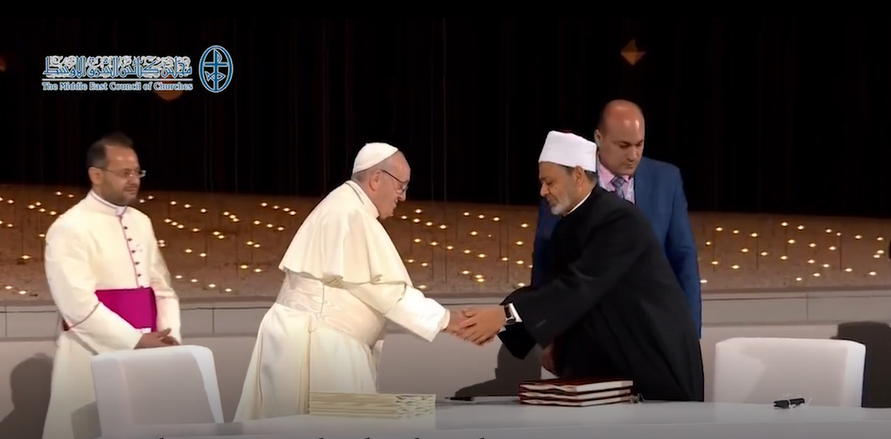
The world celebrates the "International Day of Human Fraternity" on February 4 of each year, as adopted by the United Nations General Assembly. A day that reminds us of the importance of living in peace and love among all the inhabitants of the earth. Hence, this report sheds light on the most important meanings that this day carries, emphasizing the need for solidarity, cooperation and unity.
2025 Begins
Middle East Socioeconomic Overview
Report: January 2025
2025 begins with massive changes that will forever change the Middle East and the world. From the easing of tensions to the emergence of leaders with different perspectives, there is no doubt that the year will be witnessing changes unlike any other preceding years. While it is still uncertain what will happen geopolitically in certain arenas, in others, there will be further cooperation in so many aspects including energy, and the Levantine Middle East will not be a stranger to this. Hopefully, things will transpire cordially and there will be no further escalation between global powers.
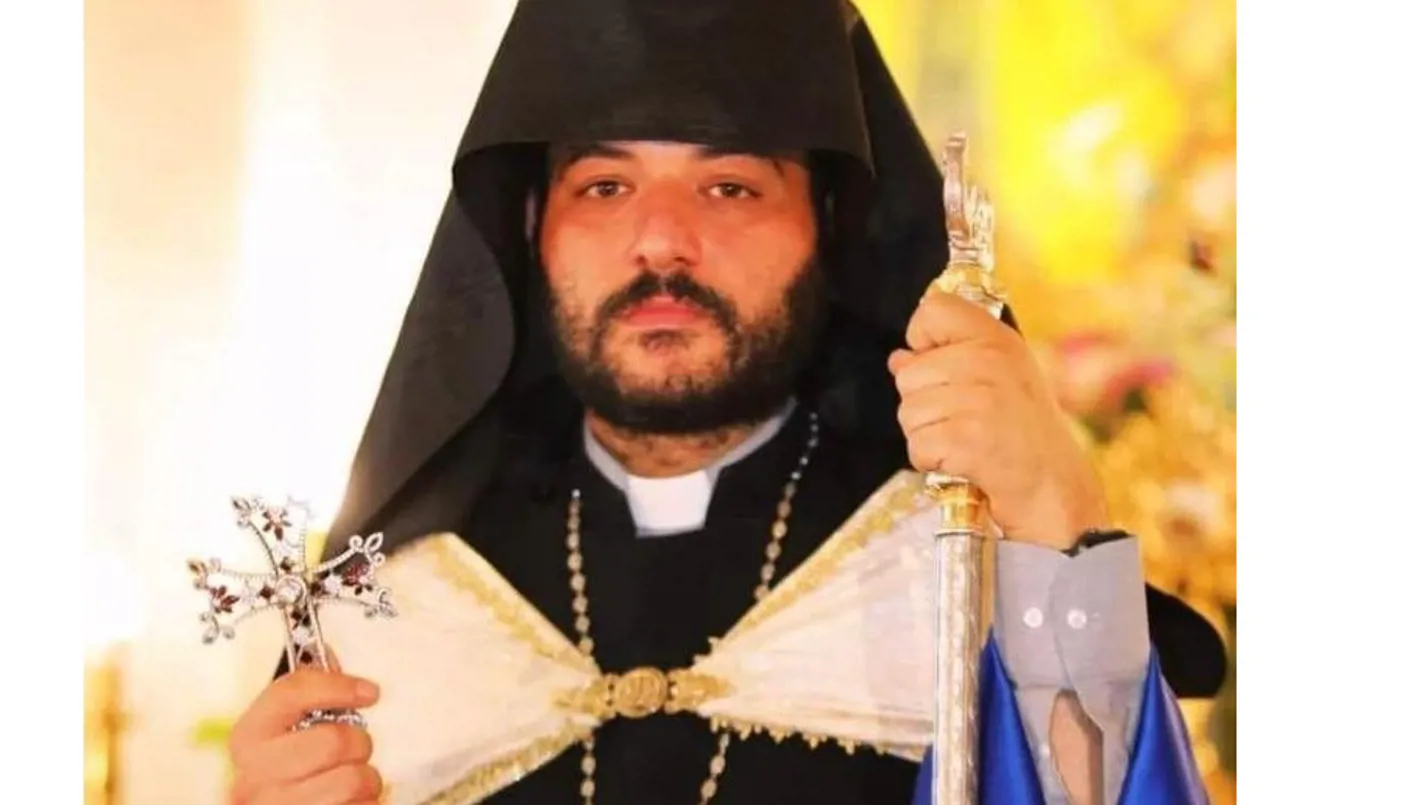
The Secretary General of the Middle East Council of Churches, Professor Michel Abs, sends Condolences to H.H.
Catholicos Aram I Keshishian and His Eminence Shahe Panossian Prelate of the Orthodox Armenian Church of Lebanon, on the death of the Very Reverend Archimandrite Anania Koghanian
On behalf of the General Secretariat team, the Secretary General of the Middle East Council of Churches, Professor Michel Abs, sent a cable of condolences to H.H. Catholicos Aram I Keshishian, Catholicos of the Great House of Cilicia of the Armenian Orthodox, and to His Eminence Shahe Panossian prelate of the Orthodox Armenian Church of Lebanon and to Armenian Orthodox faithful everywhere, on the passing of the Very Reverend Archimandrite Anania Koghanian, who was found murdered in his residence.
Professor Michel Abs expressed his hope that this crime would not undermine the country’s stability and civil peace, calling for a full investigation of the incident, the apprehension of those responsible, and the realization of justice.

The Church Between Spiritual Unity and Institutional Unity
Professor Dr. Michel Abs
The Secretary General of the Middle East Council of Churches (MECC)
“Go therefore and make disciples of all nations, baptizing them in the name of the Father and of the Son and of the Holy Spirit.” (Matthew 28:19)
When the Lord entrusted His Church to His disciples, along with this commandment, which remains active to this day, He was fully aware that the salvific message would spread throughout the world, transcending political, cultural, and social boundaries. It would attract anyone who longs for salvation through knowledge, freedom, and human feelings, and it would pose a challenge to those unwilling to accept it.
We are all familiar with the history of the spreading of Christianity, its mechanisms, obstacles, and challenges. Humanity still bears witness to the uniqueness of the Christian martyrdom in human history: from the stoning in Jerusalem after the Lord’s Ascension, to throwing Christians to the wild beasts, torturing them in all sorts of ways, mass killings in our region and around the world, and culminating today in what we see in Africa, which is rising from centuries of occupation, persecution, and slavery.
The purest form of testimony is the testimony of the blood. Martyrdom!
When the Church expands into new places—such as Africa or the Far East—amid peoples and civilizations once unimaginable to embrace the salvific message, given their deep attachment to their ancient religions - some of which we cannot deny have forms of refinement and beauty, and in an era marked by the arrogance of modern man, this cannot be classified as anything but a divine blessing…

L’Église entre l’unité spirituelle et l’unité institutionnelle
Professeur Dr. Michel Abs
Secrétaire Général du Conseil des Églises du Moyen-Orient (CEMO-MECC)
« Allez donc, faites de toutes les nations des disciples, les baptisant au nom du Père et du Fils et du Saint-Esprit. » (Matthieu 28,19)
Lorsque le Seigneur a confié Son Église à Ses disciples, accompagnée de ce commandement, qui demeure valable jusqu’à aujourd’hui, Il était parfaitement conscient que le message salvateur se répandrait sur toute la terre, franchissant les frontières politiques, culturelles et sociales. Il attirerait quiconque aspire au salut par la connaissance, la liberté et les sentiments humains, et constituerait un défi pour ceux qui ne sont pas prêts à l’accueillir.
Nous connaissons tous l’histoire de l’expansion chrétienne, ses mécanismes, ses obstacles et ses défis. L’humanité témoigne encore de l’exceptionnalité du témoignage chrétien dans l’histoire : depuis la lapidation à Jérusalem au lendemain de l’Ascension, au fait de livrer les croyants aux bêtes sauvages, aux tortures de toutes sortes, aux massacres collectifs pratiqués dans notre région comme ailleurs, et qui atteignent un point culminant aujourd’hui en Afrique, sortie de siècles d’occupation, de persécutions et d’esclavage.
Le plus noble des témoignages est celui du sang. Le martyre !
Que l’Église se propage dans de nouveaux lieux, comme l’Afrique ou l’Extrême-Orient, parmi des peuples et des civilisations qu’on n’aurait jamais imaginé embrasser le message du salut, compte tenu de leur profond attachement à leurs religions anciennes, dont nous ne pouvons nier certains aspects raffinés et beaux, et cela à une époque où prévaut l’arrogance de l’homme moderne, cela ne peut être considéré que comme une bénédiction divine…
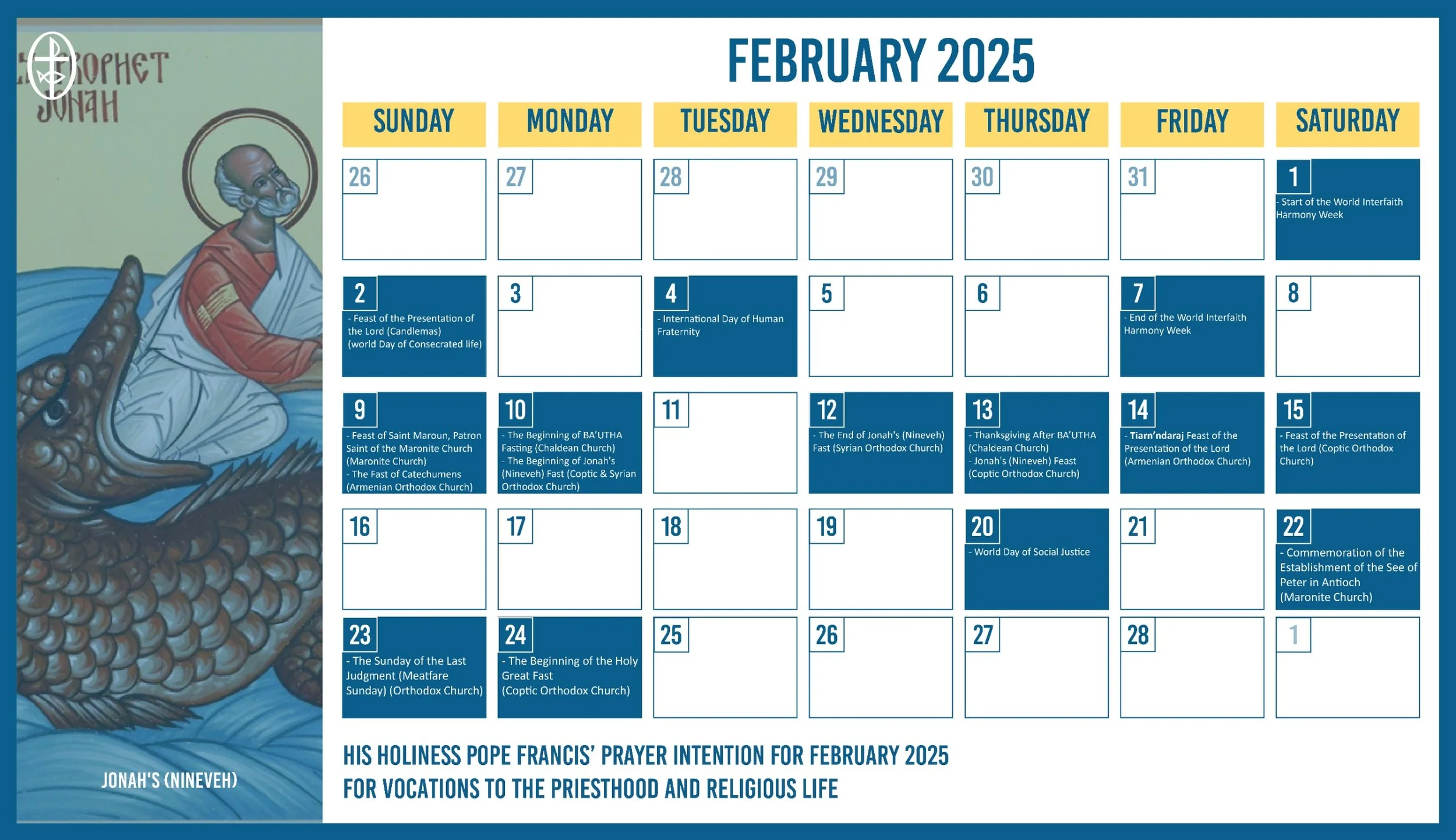
The Middle East Council of Churches Issues the Ecumenical Calendar for February 2025
The Middle East Council of Churches (MECC) have now issued its online Ecumenical calendar for the month of February 2025. It includes the Ecclesiastical and Liturgical Feasts of the various Families of Churches in the Middle East. In addition to international days identified by the United Nations, and which are related to the MECC identity and its spiritual and human mission.