
“Good Deal or No Deal”
Middle East Socioeconomic Overview
Report: May 2026
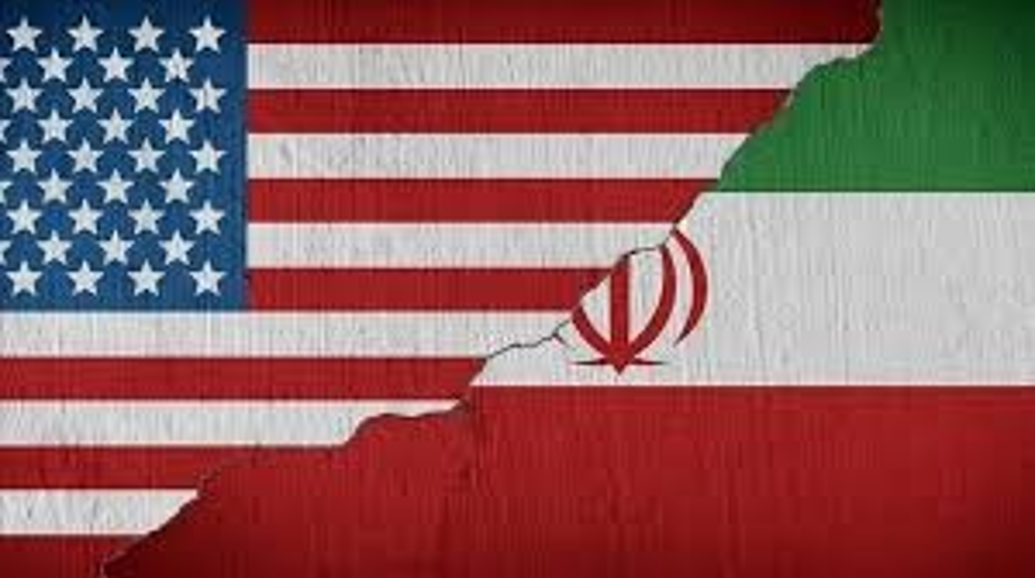
Till now, the outcomes of the negotiations are still unknown. Photo Credit: Anadolu Agency
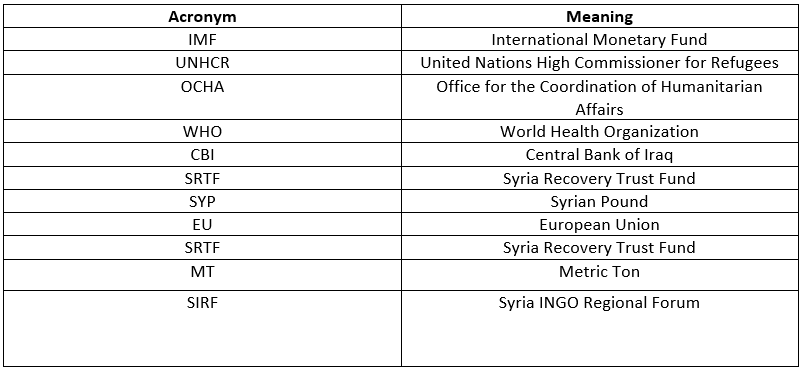
1. Table of Acronyms
2. Introduction
While the United States and Iran are still in a ceasefire, negotiations are underway to settle the conflict once and for all. Talks oscillate between news of tension and exaggerations of profound breakthrough. As such, it is still impossible to predict the likely outcome as there are too many factors at play. One thing is for certain: major differences are still unresolved and armed conflict will resume if no compromise is reached. Moreover, the Occupier, which is watching the negotiations intently, is not in favor of peace and might do something that will jeopardize the talks.
3. The Socio-Economic Situation
Egypt
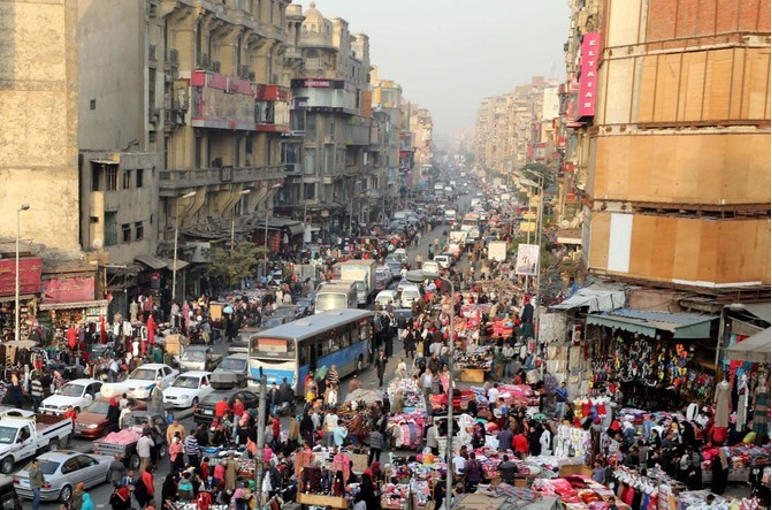
Egypt’s economy is suffering from inflation but is preparing a set of measures to mitigate the effects on citizens. Photo Credit: www.alarabiya.net
Analysts have lowered their forecasts for economic growth in Egypt for this year and next, after Iran's war pushed up energy prices and put pressure on inflation. In a survey conducted in January, before the outbreak of war, experts predicted growth of 4.9 percent, noting that reforms implemented under the IMF program two years earlier were bearing fruit faster than expected. However, with the start of the war, that number was changed to 4.6%. With energy prices expected to remain high in the coming quarters, even after oil flows through the Strait of Hormuz return to normal, increased inflationary pressures in Egypt are expected. Also this month, the central bank revised its annual GDP growth forecast for the 2025-2026 fiscal year downward to 4.9 percent from the 5.1 percent it had predicted in February, citing the Iran war. As for May, it decreased its predictions to 4.2% when it had orginally has placed a 4.7% prediction. In addition to raising energy prices, the war could also damage tourism in Egypt, slow the flow of remittances from Egyptians working in the Gulf, and reduce fees collected from ships passing through the Suez Canal. The survey predicted that inflation would average 13.5 percent in 2025-2026, 12 percent in 2026-2027, and nine percent in 2027-2028. Economists in the previous survey had predicted inflation of 11.6 percent, 9.1 percent, and 8.2 percent respectively. If the conflict in the Middle East continues and oil prices remain high, this will lead to continued upward pressure on inflation. The pressure will be also more prevalent in cities were infaltion rate has increased at a faster pace than expected to 15.2 percent in March from 13.4 percent in February.
Despite such a drop in the economy, the Egyptian government is moving towards the gradual implementation of the cash support system during the next fiscal year, after decades of postponing the decision. However, given the current circumstances and the inflation that is impacting every citizen, it might be better to begin its implementation. The idea of cash support is based on giving eligible families direct sums of money instead of the traditional food subsidy system, thus giving citizens greater flexibility in setting spending priorities according to their actual needs. The government believes that the new system may help in reducing manipulation and raising the efficiency of government spending and ensuring that allocations accurately reach the most needy groups. The government confirmed that it will review the value of cash support periodically in accordance with price developments and inflation levels, in an effort to maintain the purchasing power of beneficiaries. The current subsidy allocated per individual on ration cards is about 50 pounds, a value that many economists consider insufficient in light of the continuous rise in the prices of goods and services. In the new draft budget, the state allocated about 178.3 billion pounds to support food commodities, an annual increase of 11%, reflecting the continued financial pressures related to the subsidy file. Experts believe that the success of the experiment will depend not only on the shift to direct cash, but also on the state’s ability to build accurate databases that ensure that support reaches the most needy groups and prevents it from leaking to those who shouldn’t receive it.
Jordan
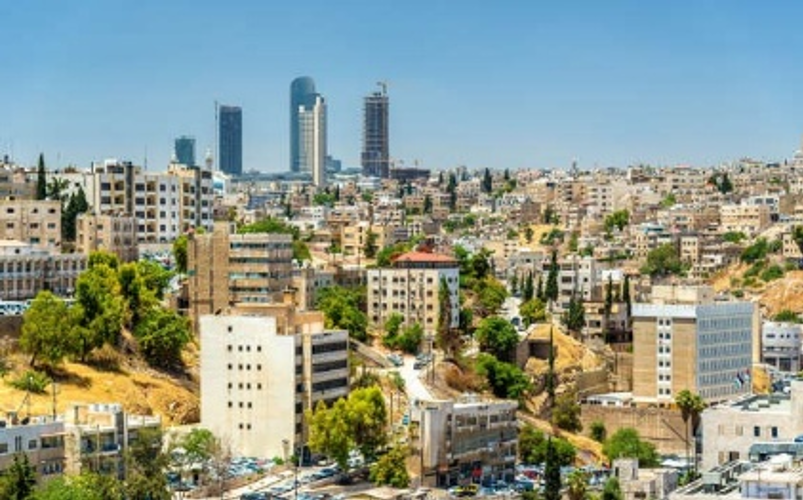
As the crisis drags on and inflation takes its toll, Jordan is being impacted. Photo credit: jo24.net/
Escalating geopolitical tensions in the region, coupled with disruptions to global supply chains, are bringing inflationary pressures back to the forefront of Jordan’s economy, amid rising oil prices and increased shipping and insurance costs. As the situation at the Strait of Hormuz is still volatile and is still disrupting international energy and trade, sharp fluctuations in energy and commodity prices are being noted within the Jordanian economy as it heavily relies on imports of food, energy and production inputs. The rise in oil prices, shipping costs, and global commodity prices have already taken its toll on the industrial sector as imported finished goods and production inputs are becoming more expensive. The commercial and service sectors have also taken a hit mainly due to the unstable situation in the region and to general decline in global economic activity. Nevertheless, various economic analysts agree that it would still be a better option to develop its own production sector to achieve greater self-sufficiency. Afterall, the experience of past years, especially during the period of the war against Gaza, the Jordanian economy has shown the ability of the industrial and agricultural sectors to achieve relatively better growth rates, which reflects the possibility of building on this experience to reduce the impact of external shocks in the future. This would be done through governmental and parliamentary legislation and procedures that would support the agricultural and industrial sectors, improve economic growth rates, and contribute to reducing the trade deficit and limiting unemployment. Some economic commentators emphasize that mitigating the effects of the crisis requires direct government intervention to reduce production costs, through reducing indirect taxes, reconsidering energy costs related to taxes, in addition to addressing the high interest rates and debt that burden individuals and companies and negatively affect the productive sectors. In this way, Jordan can put lid on inflation and preventing from spiraling out of control. So far, it has been able to do so through financial measures but things might change in the future if the crisis in the region prolongs.
Iraq
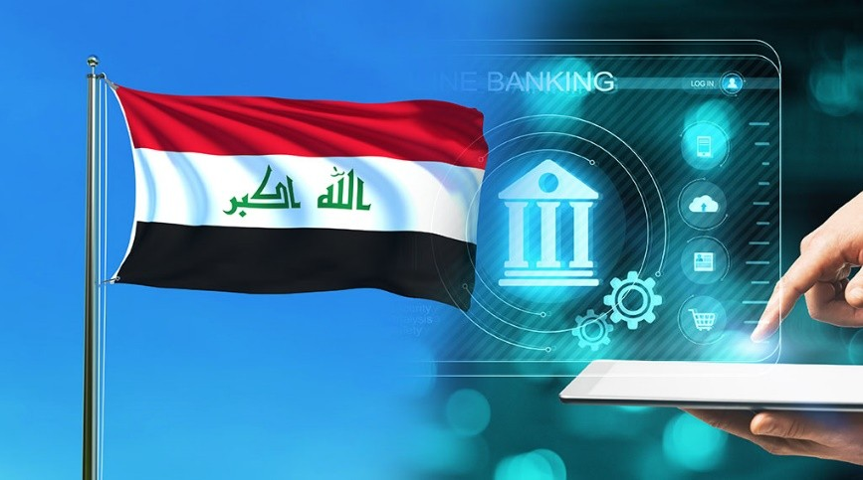
The conflict in the region has made impossible for Iraq to dismiss the necessity of switching to a more digital economy. Photo credit: Fintechnews.com
In a country where more than 90% of government revenue depends on oil, any crisis in energy prices becomes a direct threat to financial and living stability. With Iraq’s population exceeding 45 million and the need for hundreds of thousands of new jobs each year, economic reform is no longer just a political slogan or a temporary government plan, but has become a vital necessity related to the future of Iraq and its ability to continue and remain stable in a rapidly changing economic world. Therefore, true economic reform does not just mean reducing expenditures or cutting spending, but rebuilding the way the state and the economy are managed together, and moving from an economy dependent on oil to a more diversified, productive and stable economy. This can be done by investing in Industry, education, technology, and productive projects can represent a true turning point for the Iraqi economy. Spending on roads, electricity, ports, schools, and technology is not merely government expenditure, but rather a long-term investment that increases productivity, creates jobs, and stimulates economic growth. Supporting industrial, agricultural and productive projects also helps to reduce dependence on imports and increase non-oil revenues, creating an economy that is more resilient to crises rather than relying solely on consumer spending linked to oil revenues. Meanwhile, the Iraqi economy remains heavily reliant on paper currency, which opens the door to tax evasion, corruption, money laundering, weak tax collection, and the expansion of an unregulated parallel economy. When money continues to move outside of banking and digital systems, the state’s ability to monitor the movement of money and know the true size of revenues becomes limited, which leads to the loss of billions of dollars annually and weakens the government’s ability to plan financially and economically. Therefore, the shift towards electronic payment, digital collection, and automated systems is not merely an administrative or technical update, but rather a profound economic transformation aimed at reorganizing the financial cycle within the country and increasing the efficiency of the state’s management of the economy.
Lebanon
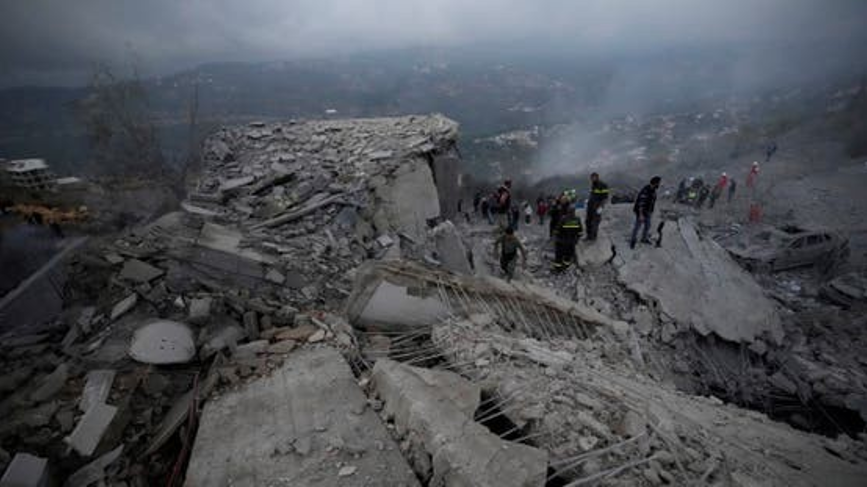
A glimpse of the destruction in South of Lebanon, photo credit: alhadath.net
While the ceasefire between the Occupier and Lebanon slowly disintegrates, the grim war is increasing in intensity, threatening the country’s already-battered economy. Lebanese Finance Minister Yassin Jaber claimed the ongoing war is expected to cause Lebanon's economy to contract by at least 7% this year and could cost the country around $20 billion. In January, the World Bank projected modest GDP growth of 4% in 2026 if the country maintained stability, received some reconstruction aid, and continued implementing fiscal reforms. As for the government, it hoped that there will be a certain surplus in the budget, but instead had to allocate $50 million of public funds to support more than one million people displaced by the war. Jaber indicated that the full extent of the economic damage will depend on the flow of remittances from the Gulf states, the success of the summer tourist season, and whether Occupier strikes continue to destroy property and livelihoods in Lebanon. Unfortunately, the resumption of the war with Iran can happen at any moment and therefore impact Gulf economies, potentially weakening the ability of Lebanese expatriates to send remittances back to their relatives in Lebanon. To make matters worse, international aid has been far less than what Lebanon received during the 2014 war, when it received approximately $700 million in humanitarian assistance and dozens of airlifts of aid. Despite UN Secretary-General António Guterres' visit and the launch of an appeal for $300 million, only about $100 million has been received, according to the minister. He added that state revenues had also declined, but the government had managed to maintain the stability of the Lebanese pound's exchange rate against the dollar, which he is a rare positive aspect amidst the bleak economic outlook. In other words, more efforts should be put in place to end the war as economic loss is only increasing and the longer this war drags on, the more difficult it is going to be to recover. Unfortunately, the occupier seems intent on enlarging the war by increments until it gets what it wants.
Palestine
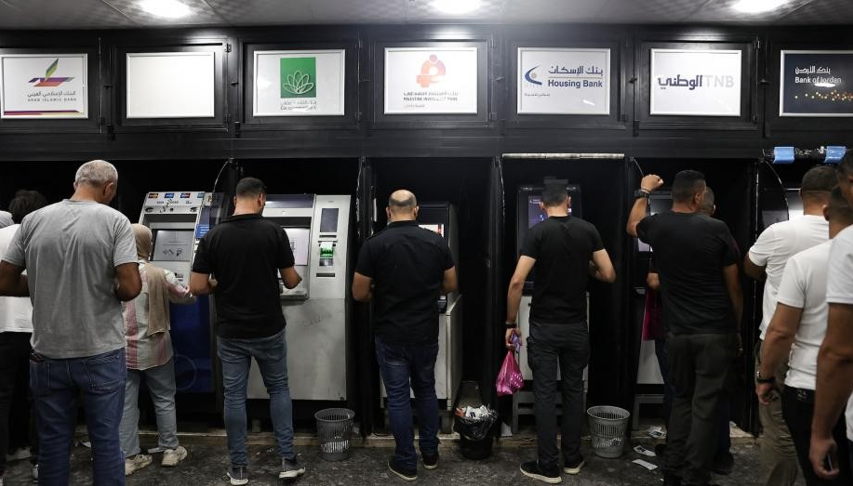
Palestinians rallying at ATMs to gather what’s left of their salaries. Photo Credit: felesteen.news
Palestine is in an unprecedented deterioration economic situation, amid rising inflation and declining purchasing power of citizens. This is leading Palestinians to more difficult living conditions, with the absence of job opportunities, delayed salaries and a noticeable decline in commercial activity. The Palestinian economy is going through a real structural crisis, in which there is a decline in GDP of about 25%, and an increase in the unemployment rate to about 46%. Moreover, there are increasing financial obligations on the government estimated at about $15.4 billion, which also reflects the size of the economic challenges facing various sectors. The Palestinian economy still lacks independence, as it relies heavily on the Occupier’s economy, especially through clearance revenues which constitute about 68% of the Palestinian Authority's income. Additionally, the persistent restrictions imposed on crossings and control over resources, is limiting the economy's ability to grow and develop. Current Occupier policies use the economy as a tool for political pressure, by stifling the Palestinian market and weakening its productive capacity, with the aim of undermining the idea of a Palestinian state. Some economic commentators consider that these policies have also contributed to strengthening individualism among citizens at the expense of collective action. To change this, urgent policies are needed to boost local production and support the agricultural and industrial sectors, along with financial and administrative reforms and building trust between citizens and the government. A fundamental solution remains contingent on a political process leading to the establishment of an independent Palestinian state, while emphasizing the importance of taking interim measures to mitigate the current crisis.
Syria
The EU is stepping up its partnership with Syria. Photo Credit luxembourg.representation.ec.europa.eu
In a historic step forward for Syria, the European Council announced that it had adopted a decision ending the partial suspension of the cooperation agreement between the European Economic Commission and Syria, thereby restoring full trade relations with Syria. It added that this decision represents an important step towards strengthening bilateral relations between the European Union and Syria. The European Council in a statement, claimed that the decision sends a clear political signal of the EU's commitment to re-engagement with Syria and support its economic recovery. This came as Syrian Foreign Minister Asaad Hassan al-Shaibani participated in the activities of the EU-Syria Partnership Coordination Forum in the Belgian capital, Brussels. Al-Shaibani. For her part, European Commissioner for the Mediterranean Dubravka Šuiša assured that the council is working on implementing a financial package of 175 million euros, in addition to providing a second financial package of 180 million euros this year as part of supporting the Syrian government in reconstruction and recovery. She added that this funding will help unlock investments in the public and private sectors and will encourage European banks. This is important for Syria, which is looking to rebuild and provide services to facilitate the return of refugees can contribute to the reconstruction of their country. There is no doubt, Syria has a radically different mindset from the one it was a year and a half ago, as it is trying to strengthen the Syrian economy, encourage investment, provide decent housing, and bolster national institutions.
The European Council’s move is good news for Syria especially when its economy is still suffering from setbacks. The Syrian pound is recording a new decline against the dollar, reaching record lows after the dollar touched 14,000 pounds, reflecting the prevailing uncertainty amid the ongoing geopolitical conditions in the region and the disruption and breakdown of supply chains. What made it worse is the fact importers resorted to increasing the prices of goods locally, ranging between 20 and 35 percent, as a safety precaution. Syrian economists confirm that their country is suffering from a shortage of foreign currency and that the decline of the lira reflects chronic imbalances in the structure of the local economy related to weak local production. The increased reliance on imports and the continued monetary policies are also making the problem worse. Moreover, despite the repeal of the "Caesar Act," sanctions still constitute a significant obstacle to the flow of remittances to Syria as required, thus delaying the entry of investments. This decline in the value of the Syrian pound comes at a time when the market is experiencing the peak of the foreign remittance season during Eid al-Adha, during which inbound foreign currency flows that are supposed to increase the supply and contribute to lowering the exchange rate or at least curbing its rise, are not doing so. Economists attribute the decline of the lira to the widening gap between supply and demand, and the decline in the quantitative power of remittances compared to the size of inflation resulting from the continuation of geopolitical conditions in the region, regional military escalation, and the failure to end the Strait of Hormuz crisis.
Cyprus
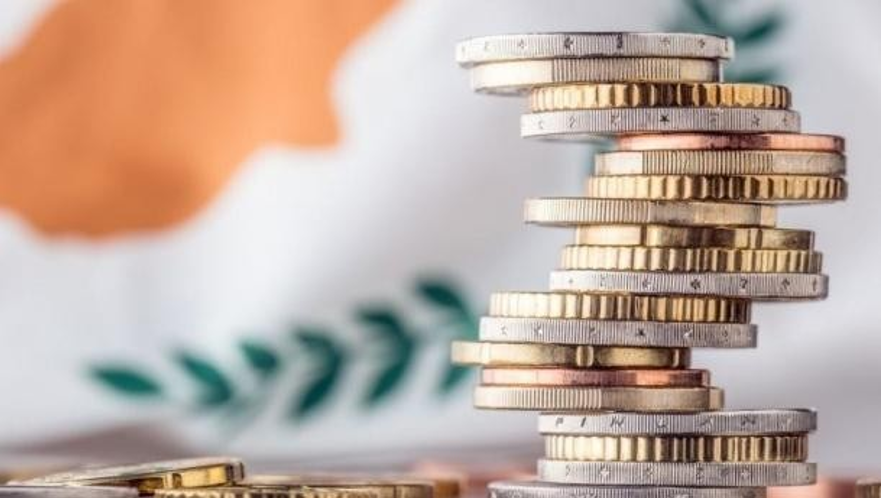
EU: Cyprus economy resilient despite Mid East tensions. Photo Credit: stockwatch.com.cy
The European Commission released a report detailing a bit of negative projections regarding Cyprus’s economy. It forecasted a slowdown in Cyprus’s economic activity in addition increasing inflation. Although it did admit that Cyprus entered 2026 with a great standing, it warned that the conflict’s impact is expected to be felt in the short term through higher inflation and increased uncertainty. Economic growth is expected to be moderate with GDP to increase by 2.3% in 2026 and 2.7% in 2027. This is a drop from 3.8% recorded in 2025. Growth will be determined by private consumption, although that too will be affected by the inflation that is draining disposable income. Moreover, it is expected that domestic tourism to act as a buffer for any regional disruption. Of course inbound tourism is expected to decrease and so are tourism exports but service exports such as ICT, financial and business services are expected to remain resilient. Cyprus’s technology sector alone, is now contributing almost one-sixth of the country’s GDP, supporting nearly 80,000 jobs and outperforming every other EU member state in ICT growth. Therefore, Cyprus is able to rely on emerging sectors that are delivering innovation and forward-thinking solutions that keep Cyprus’s economy afloat. Moreover, the commission highlighted a significant improvement in Cyprus’ debt position, with the debt-to-GDP ratio falling to 55.0 per cent at the end of 2025, dropping below the 60 per cent threshold for the first time since 2009. Despite the economic contraction, the downward trend is expected to continue, with debt projected to decline further to 50.4 per cent in 2026 and 45.5 per cent in 2027. The Commission made a final note that all in all, Cyprus’s economy is still doing much better when compared to other European countries who have taken a bigger hit as a result of the energy shock. Luckily in this domain, Cyprus is increasing development and production plans to gas fields. This not only is putting Cyprus in a better strategic and economic position but is serving as an energy hub for Europe.
4. The Humanitarian Situation
Egypt
Reports from local rights groups indicate that Egyptian authorities are carrying out daily crackdowns on Sudanese refugees and asylum seekers, many of them elderly, women, and children, before deporting them back to Sudan.[1]
Jordan
The UNHCR states that there are currently 388,505 registered refugees in Jordan up until the beginning of May.
The proportion of Syrian displaced people registered within the UNHCR, are distributed as follows:
-122,704 in Amman Governorate (31.6%)
-99,418 in Mafraq Governorate (25.6%)
-68,377 in Irbid Governorate (17.6%)
-57,222 in Zarqa Governorate (14.7%)
-10,562 in Balqa Governorate (2.7%)
-8,122 in Madaba Governorate (2.1%)
-4,478 in Jarash Governorate (1.2%)
-4,932 in Karak Governorate (1.3%)
-5,895 in Maan Governorate (1.5%)
-2,902 in Ajlun Governorate (0.7%)
-2,746 in Aqaba Governorate (0.7%)
-883 in Tafilah Governorate (0.2%)
-264 in other (0.1%)
Executed in close coordination with the United Nations High Commissioner for Refugees (UNHCR) in the Hashemite Kingdom of Jordan, distributed food baskets to Syrian refugees in Jordan’s Azraq and Zaatari camps.[2]
Japan contributed $250,000 to support UNICEF programs aimed at maintaining water, sanitation and hygiene services for Syrian refugees living in Jordan’s Zaatari camp.[3]
Iraq
The UNHCR states that there are currently 350,232 registered refugees. 91,936 live in camps.
The proportion of refugee people (non-camp) registered within the UNHCR up until the beginning of May, are distributed as follows:
-149,211 in Erbil (42.6%)
-92,353 in Dahuk (26.4%)
-40,082 in Sulaymaniyah (11.5%)
-2,810 in Ninewa (0.8%)
-45,167 in Baghdad (12.9%)
-20,313 in other areas (5.8%)[4]
The president of the International Committee of the Red Cross (ICRC) warned during a visit to Iraq that renewed military escalation in the Middle East risks undermining years of hard-won progress, with devastating consequences for peace, security and economies of the region.
Lebanon
{UNHCR Lebanon did not update distribution figures for the month of May}
Since the beginning of April the number of registered Syrian refugees in Lebanon is 532,357.
Refugees in Lebanon are distributed as follows:
-174,592 in Bekaa (35.6%)
-153,036 in North Lebanon (31.2%)
-110,455 in Beirut (22.5%)
-52,341 in South Lebanon (10.7%)[5]
In a report published by Amel Association, delivered health services, protection activities, educational and recreational activities and relief items to 101,581 people across 8 governorates, through 19 Primary Healthcare Centers, 14 Mobile Medical Units, and a multi-sectoral health, protection and education response across 187 sites, including 110 collective shelters. [6]
Syria
The rehabilitation of the Qalaat al-Madiq grain silos, with a storage capacity of 140,000 tons, was completed ahead of the 2026 wheat harvest season, strengthening Syria’s grain storage infrastructure, improving food security, and enhancing strategic reserve management.
According to the World Food Program, the Syrian Petroleum Company announced a major contract to purchase 350,000 tons of gas to support domestic energy supplies, alleviate fuel shortages, stabilize the local market, and ensure the continuity of essential economic and household activities.[7]
Cyprus
UNHCR, the UN Refugee Agency, welcomes the adoption by the House of Representatives in Cyprus of the Refugee Law of 2026, incorporating the provisions of the EU Pact on Migration and Asylum.[8]
[1] New Arab, May 26, 2026, https://www.newarab.com/news/egypt-terrorising-and-deporting-sudanese-refugees-back-war
[2] OCHA, May 13, 2026, https://reliefweb.int/report/jordan/qatar-charity-distributes-food-baskets-syrian-refugees-jordan-enar
[3] Sana, May 24, 2026, https://sana.sy/en/syria/2318945/
[4] https://data2.unhcr.org/en/situations/syria/location/5
[5] UNHCR, Oct 28, 2024, https://data2.unhcr.org/en/situations/syria/location/71
[6] OCHA, May 18, 2026, https://reliefweb.int/report/lebanon/amel-situation-report-2-supporting-all-populations-affected-crisis-march-april-2026
[7] OCHA, May 10, 2026, https://reliefweb.int/report/syrian-arab-republic/wfp-syria-monthly-market-price-bulletin-february-2026-issue-134
[8] UNHCR, May 11, 2026, https://www.unhcr.org/cy/news/speeches-and-statements/unhcr-welcomes-adoption-refugee-law-2026-cyprus-while-urging-0