
A Fragile Agreement
Middle East Socioeconomic Overview
Report: June 2026
Both side have reached an agreement. However, it remains fragile as both sides sporadically exchange fire. Photo credit: Fair Observer
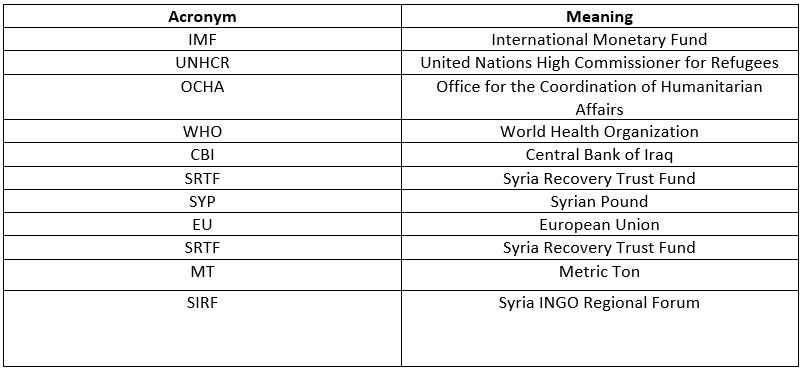
1. Table of Acronyms
2. Introduction
The United States and Iran reached an agreement that would put an end to hostilities, open the Strait of Hormuz and carry out certain economic measures. However, many view as this is only a ploy crafted for domestic political and economic reasons as major points that were the reason behind the war in the first place, have yet to be agreed upon. For this reason, commentators speculate that the recommencement of the conflict is still on the table and the war may resume weeks or months from now. For the time being, the region can take a breather while the warmongers reconsider their plans and replenish their will and resources to fight. Hopefully sanity and reason will prevail and there will be no return to destabilizing the Middle East and the world.
3. The Socio-Economic Situation
Egypt
Egypt’s monetary policy allowed it to absorb the economic shock of the regional war. Photo Credit: alarabiya.net
While Egypt was not directly involved in the war, it has never been far from the heart of the economic storm stirred up by the conflict. As the airstrikes on Tehran began, the Occupier suspended gas supplies to Egypt. Stocks plummeted, and sell orders poured in from the offices of funds, banks, and international investment firms that had invested over $30 billion in the local debt market, taking advantage of high interest rates and a stable economy supported by an IMF program. The consensus among investors and experts was that Egypt, the most populous Arab country, would be among the most affected by the war, perhaps most notably by its energy import bill, which rose last year to about $20 billion compared to about $12.5 billion in 2024. Bond investors withdrew between $10 and $12 billion of their funds during March, according to recent estimates by the Standard Chartered Bank. As a result, the government ordered shops and businesses to close early, and the streets of Cairo, that has always known only hustle and bustle, was plunged into darkness. However, more than 100 days after the start of the most serious economic crisis to hit the Middle East in half a century, Egypt stands out as one of the successful models so far in containing the effects of the conflict and minimizing losses. However, what happened did not come about without a price as the threat has not ended and some of the structural challenges that have plagued the economy for years remain. Nevertheless, the ability to absorb the shock with less damage than expected reveals an important shift in how the economy deals with crises. One important buffer is the monetary policy which has won the praise of investors and international institutions. It has doubled the confidence of expatriate Egyptians in the banking system causing remittances from workers to rise to a record high, contributing to mitigating the impact of money leaving the debt markets.
Although the Egyptian economy succeeded in adapting to the circumstances, there is a major issue that prevents it from being significantly better. A report issued by the Organization for Economic Co-operation and Development (OECD) revealed that the Egyptian economy is losing significant development opportunities due to the weak participation of women in the labor market, stressing that reducing the gap between men and women in employment could raise Egypt’s GDP by up to 56%. The report described this phenomenon as representing "wasted talent," referring to the large gap between the levels of education achieved by women and their actual rates of participation in economic activity. According to the data in the report, the size of the labor force in Egypt is about 35.4 million individuals, distributed between 27.6 million men and only 7.8 million women, reflecting a wide disparity in economic participation between the sexes. The figures show that the rate of men’s participation in economic activity reaches 72.5%, compared to only 21.5% for women, which puts Egypt in front of a structural challenge related to making use of its available human resources. Despite this disparity, the report indicated, ironically, that women in Egypt outperform men in university enrollment rates, and they represent about half of the graduates in science, engineering and technology disciplines, reflecting the existence of a qualified base of female talent capable of contributing to economic growth. But these qualifications are not reflected in the labor market, as the unemployment rate among women is 14.3%, compared to only 3.6% among men, which is almost four times higher.
Jordan
World Bank forecasts Jordan’s economic growth to reach 3 percent by 2028. Photo Credit: ammonnews.net
In its latest report, the World Bank expects the Jordanian economy to continue its gradual recovery over the coming years, with the growth rate reaching 3% by 2028, despite the repercussions of regional conflicts, rising energy prices, shipping costs, and global inflation. As such, the Jordanian economy is projected to achieve growth of 2.7% during 2026, compared to 2.8% expected in 2025, with growth expected to rise to 2.9% in 2027 and reach 3% in 2028. The report indicated that Jordan continues to maintain an upward growth trajectory despite the economic challenges facing the region, at a time when growth in the Middle East, North Africa, Afghanistan and Pakistan is expected to slow to 1.6% during 2026, compared to 4% in 2025. The World Bank explained that the repercussions of the conflict in the Middle East have affected the region's economies through higher energy prices and shipping costs, increased inflationary pressures, as well as continued uncertainty related to geopolitical developments. It added that the Jordanian economy was affected by rising energy prices, transportation and shipping disruptions, and a decline in financial transfers, which impacted the pace of growth during 2026. It predicted a slight widening of the current account deficit as a result of increased import costs, while rising fertilizer prices may contribute to supporting Jordanian exports and alleviating some of these pressures. From her end, the World Bank’s Director of Operations, Anna Bjerde, affirmed that Jordan is demonstrating a high degree of resilience in the face of current regional challenges, attributing this to its largely stable economy, its adoption of sound economic and financial policies, and its investment in key areas including infrastructure, health, and education. Birdie stated that the best way to address current challenges and developments, including the conflict in the Middle East, is to invest in building resilience, emphasizing that this is precisely the approach Jordan has adopted. She added that a stable economy, sound economic and fiscal policies, and investment in human capital have contributed to strengthening the Kingdom's ability to cope with current regional circumstances.
Iraq
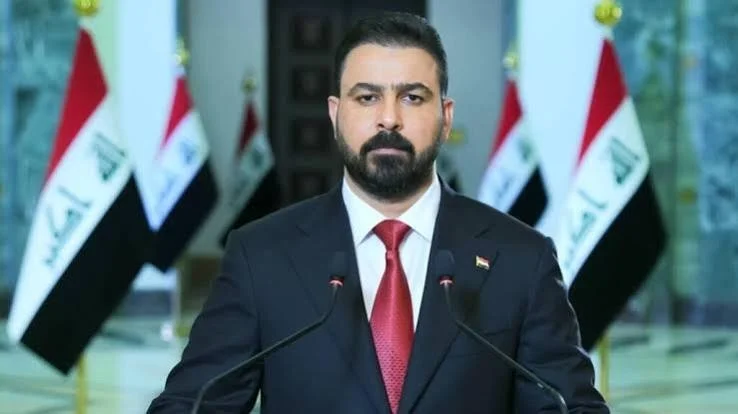
The Iraqi Prime Minister is calling for a revamp of the economy whihcch is extensively driven by oil. Photo Credit: France 24.
Amid the escalating economic challenges facing Iraq, Prime Minister Ali Faleh al-Zubaidi reiterated the fragility of the country’s economic model, warning against the continued near-total reliance on oil as the main source of revenue, and calling for a structural transformation economy and the re-evaluation of the state’s role in it. During a visit to the Ministry of Finance, Al-Zaydi described the current situation as "delicate," referring to the increasing impact of regional and international instability on the Iraqi economy, which remains closely tied to global energy markets. This highlights the risk of relying on a single resource, as oil revenues constitute approximately 90 percent of the general budget, making public finances vulnerable to external shocks. From its end, the World Bank predicted that Iraq’s economy would contract by 2.2 percent in 2026, before declining at a faster pace to 8.9 percent in 2027, according to the “Global Economic Prospects” report issued in June 2026. According to the report's data, the Iraqi economy recorded growth of 0.5 percent in 2024, while it is estimated that it may have contracted by 1.5 percent during 2025, before continuing to decline in 2026, with a return to growth of 12.2 percent expected in 2028. Due to this volatility, Al-Zaydi called for the expansion of the non-oil economy and to explore sectors which have potential. Al-Zaydi's most prominent statement was that "the economy should run the state," reflecting a desire to reduce the state's direct role in economic activity and strengthen market mechanisms. This approach aligns with liberal economic trends that advocate empowering the private sector to be the main driver of growth. This practically means reconsidering the "rentier state" model, which relies on distributing oil revenues through public spending and government employment, and move to a more productive model. The bottom line without complicating the matter: Iraq needs an economy in which oil does not play a central role. Doing so would ensure the stability of the economy which is impacting millions of citizens’ livelihood whithin Iraq. Potential is there but a bolder approach and leadership are needed to insure more radical change.
Lebanon
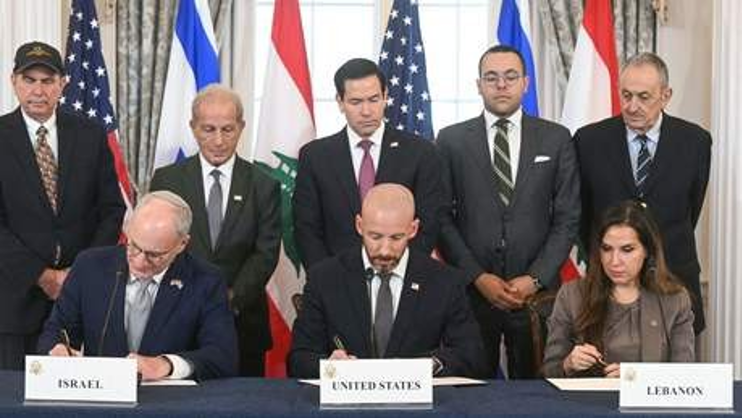
As the representatives gathered to sign the agreement, media, and commentators deemed this as pivotal moment. Photo Credit: www.naharnet.com
In a pivotal moment, an agreement was signed between Lebanon and the Occupier aiming to end all forms of hostilities. The move, although would pave the way to normalize relations between the countries in the future, was not welcomed by a large portion of the Lebanese population. As a result, there was backlash in the media and on the streets in an attempt to discredit and refute the agreement. There is no doubt that Lebanon became even more divided during a time the country cannot afford any more mishaps. Already, the country’s economy is in very bad shape in which the average inflation has reached 20%. The World Bank is predicting that the economy will regress as a result of the war and will incur pressures on society. Also, the IMF is warning that Lebanon will face a contraction in its GDP due to the escalating economic repercussions. Both organizations are currently in talks with the Lebanese government to find ways to mitigate the crisis. However, none of the measures include any quick relief packages. Also, Lebanon is still contending with renewal of Lebanon's classification on the "grey" list of countries with deficiencies in combating money laundering and terrorist financing. Failure of the government to deal with such an issue in time would lead to fresh repercussions for cross-border financial transactions. The government has received warnings that the grace period for finalizing the legal and procedural measures to dismantle the parallel economy and illicit cash flows operating outside the formal financial sector is nearing its end. According to a financial official, the catastrophic consequences of the recent war been used as excuses to justify the slow pace of necessary remedial actions by the concerned authorities, particularly administrative, judicial, and security bodies. Therefore, Lebanon’s whole government apparatus, whether economic, political, or security is under close scrutiny from foreign observers. It would take a lot of effort and haste to tackle the situation as time is not in Lebanon’s favor.
Palestine
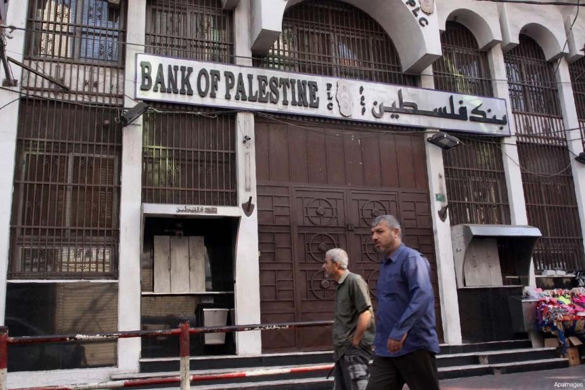
Companies and investors in Palestine are holding on to their money without thinking of investing them in other projects due to the unpredictable economic situation. Photo Credit: felesteen.news
The war and the political and security developments that came with it, have created widespread uncertainty in the Palestinian economy. This has directly impacted the behavior of investors and capital owners, who have adopted a more conservative approach, focusing on risk reduction and resorting to saving and cutting costs as the safest option in the current circumstances, both in the West Bank and the Gaza Strip. Data released by the Palestinian Monetary Authority showed that private sector deposits in banks operating in Palestine reached approximately $22.09 billion by the end of April, marking a 3% increase compared to the previous month and a 15% increase compared to the same period in 2025. This growth reflects the continued flow of liquidity into the banking system despite the ongoing economic challenges. Despite this increase, economic observers believe these indicators do not reflect a genuine improvement in economic activity. Rather, they point to a state of investment stagnation, where funds remain within banks instead of being directed towards productive sectors capable of stimulating growth or creating jobs, thus limiting the vitality of the local economy. Experts attribute this behavior to the cautiousness of individuals and companies due to ongoing political and security instability, coupled with weak confidence in the market's ability to absorb long-term investments. This leads capital to remain in liquid form within the banking system. This failure to translate into actual investment and the continued of freezing of liquidity leads to a slowdown in economic activity, a decrease in spending, and a weakening of companies' ability to expand and hire. This will inevitably lead to rising unemployment, thus reproducing uncertainty and deepening the recession. The current high savings rate does not reflect economic prosperity, but rather a defensive behavior imposed by unstable conditions. This necessitates the adoption of economic policies capable of transforming accumulated liquidity into real productive investments that support growth and strengthen the resilience of the Palestinian economy, especially in light of the Occupier oppression and economic siege.
Syria
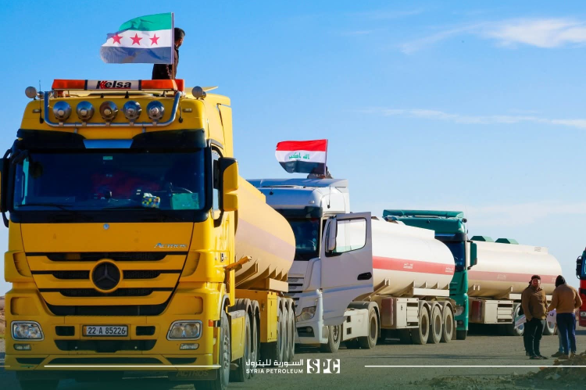
Iraq dispatched convoys to Syria as an alternative route to using the strait of Hormuz. Photo Credit: Levant 24.
The Syrian economy has unexpectedly benefited from the Iran war as the closure of the Strait of Hormuz seems to have turned in Syria’s favor. According to a report published by the British economic magazine "The Economist" and reviewed by "Al Arabiya Business", the 860-kilometer road stretching from Ramadi in Iraq to western Syria, which had been a deserted and marginal road for decades, is now crowded with trucks loaded with oil. The magazine notes that these trucks pass through ancient ruins and abandoned villages before unloading their cargo at the Banias station on Syria’s Mediterranean coast, then return to Iraq to refuel and resume the journey, which means a major boost to this route that is now gaining increasing importance. The report concludes that Syria has become an unexpected winner of this war, as the blockade imposed on the Strait of Hormuz forced Iraq to reduce its oil production by 80% last March, as its storage tanks filled up. The Iraqi state-owned oil company SOMO, responsible for oil exports, has contracted three companies to transport 650,000 tons of oil per month out of the country. The Syrian route is shorter than routes through Jordan or Turkey, and transports the oil directly to the Mediterranean Sea. Iraq wants to export more oil westward via this route, but trucking is difficult to scale up, as nearly 1,000 trucks a day clog the pumping facilities in Banias, meaning it is a much slower route than the pipeline. Moreover, the report states that the Syrian government imposes transit fees, with the border authority receiving a share of these fees, while the remainder goes to the Syrian Petroleum Company, a new state-backed company whose subsidiaries manage the storage and pumping of oil to tankers in Banias. As a result of all of this, Syria achieved a daily revenue which is estimated to range between $1 million and $2 million
Despite the sliver of good news, Syria is still facing dire economic conditions. From one end, US sanctions are still in place despite the Syria’s president efforts to talk US president Donald Trump to get him to remove them. Lifting the remaining sanctions is a crucial step towards enabling the Syrian economy to recover and improve the living conditions of its citizens. This would encourage investment and create a suitable environment for the return of economic and development projects to various vital sectors. Another problem Syria is facing is its deteriorating currency despite the increase in investment into the country. The reason behind this is the inadequacy of Syria’s exports to bring substantial revenue for the country. As such, Syria’s government needs to put in place a new set of policies should it wish to curb such a problem as boosting exports would take quite some time. Another issue plaguing the country is the high inflation making its way into most products in Syria. The cost of transporting them has become an additional burden that weighs heavily on consumers and is redrawing the economic map between the governorates. With the rapid rise in freight costs in recent months, the distance a commodity travels, has become a decisive factor in determining its final price, to the point that an increasing portion of what Syrians pay today goes more towards covering the cost of transportation than the value of the product itself. This issue is of exceptional importance given the Syrian economy's heavy reliance on imports and land transport between production and consumption areas, meaning that any increase in shipping costs is quickly passed on to the prices of food, agricultural, and industrial goods.
Cyprus
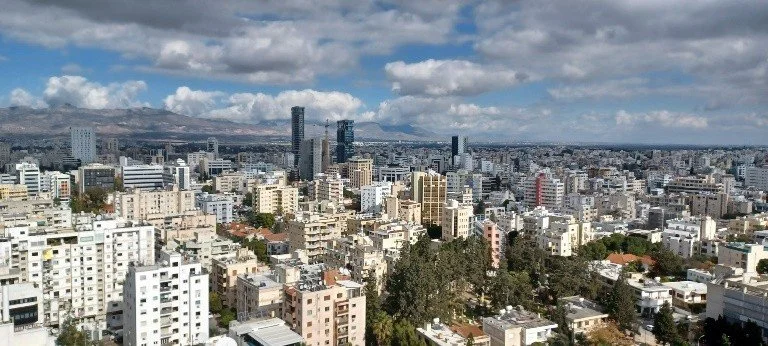
Cyprus’s economy has been affected by what is going on in the region, yet it will record strong growth. Photo Credit: cyprus-mail.com
The Central Bank of Cyprus revised down its economic growth forecast for 2026-2027, claiming that the war in the Middle East has caused weaker growth and higher inflation. As a result, it downgraded GDP growth in 2026 by 0.2 percentage points to 2.5 per cent and reduced its estimate for 2027 by 0.1 percentage points to 2.9 per cent. Moreover, it noted that unemployment will rise by 0.1% to 4.6% in 2026. Also, inflation will surge by 0.5% for the same year to 3.2%. Of course, these projections will continue throughout 2026 as long as the conflict in the Middle East has not been resolved and the situation remains unknown with respect to peace settlement. The CBC did mention that the announcement of US-Iran agreement was beneficial for the overall situation but the agreement has not yet been finalized or implemented and that key issues remain under negotiation. The CBC also noted that the growth rate is mostly impacted by the availability of energy resources and the production of raw materials. Therefore, these factors and their prices can in turn affect the economy. According to the central bank, inflation based on the Harmonized Index of Consumer Prices is forecast to rise sharply to 3.2 per cent in 2026 from 0.8 per cent in 2025. This alone showcases how energy is having an effect on prices and how the war is having economic consequences on Cyprus. Food prices are likewise projected to come under upward pressure, mainly because of higher fertilizer prices resulting from supply chain disruptions. One other issue that is still having an effect on the economy are lingering structural problems. Nevertheless, the Cypriot government has made important strides in addressing this issue. In the end, one cannot but say that Cyprus has been far more resilient than other countries and despite the economic upheaval surrounding the region, its economy is still going to achieve strong growth.
4. The Humanitarian Situation
Egypt
New bylaws have been newly passed by the government which will give it a nine-month deadline to set up and operate a system that will, for the first time, see the state take sole control over asylum applications from start to finish, determining independently whether it will grant, renew or deny refugee status. This will take over the UNHCR’s role. [1]
The media in Egypt released thousands of reports indicating that Sudanese refugees in Egypt are facing harsh treatment, prolonged detention, and forced deportations despite ongoing conflict in their homeland.[2]
Jordan
The UNHCR states that there are currently 380,990 registered refugees in Jordan up until the beginning of June.
The proportion of Syrian displaced people registered within the UNHCR, are distributed as follows:
-120,055 in Amman Governorate (31.5%)
-97,914 in Mafraq Governorate (25.7%)
-66,514 in Irbid Governorate (17.5%)
-56,527 in Zarqa Governorate (14.8%)
-10,337 in Balqa Governorate (2.7%)
-8,013 in Madaba Governorate (2.1%)
-4,356 in Jarash Governorate (1.1%)
-4,870 in Karak Governorate (1.3%)
-5,780 in Maan Governorate (1.5%)
-2,828 in Ajlun Governorate (0.7%)
-2,746 in Aqaba Governorate (0.7%)
-864 in Tafilah Governorate (0.2%)
-225 in other (0.1%)
According to Jordanian government spokesman Mohammad Momani more than 192,000 Syrian refugees registered with the UN High Commissioner for Refugees in Jordan have voluntarily returned to the Syrian Arab Republic since the fall of the Bashar Assad regime.[3]
Iraq
The UNHCR states that there are currently 350,433 registered refugees. 91,936 live in camps.
The proportion of refugee people registered within the UNHCR up until the beginning of June, are distributed as follows:
-148,686 in Erbil (42.4%)
-92,445 in Dahuk (26.4%)
-40,030 in Sulaymaniyah (11.5%)
-2,816 in Ninewa (0.8%)
-45,758 in Baghdad (13.1%)
-20,325 in other areas (5.8%)[4]
According to the UNHCR, around 900 Syrian refugees have returned from Iraq to Syria since the beginning of 2026 adding that return remains voluntary and ongoing.[5]
Lebanon
{UNHCR Lebanon did not update distribution figures for the month of June}
Since the beginning of April the number of registered Syrian refugees in Lebanon is 532,357.
Refugees in Lebanon are distributed as follows:
-174,592 in Bekaa (35.6%)
-153,036 in North Lebanon (31.2%)
-110,455 in Beirut (22.5%)
-52,341 in South Lebanon (10.7%)[6]
The United Nations and Government of Lebanon launched a Flash Appeal calling for US$ 639.9 million to assist 1.4 million people through August 2026.[7]
Médecins Sans Frontières (MSF) warned of deadly conditions in Nabatiyeh, southern Lebanon, and callsed for the immediate protection of civilians and medical and rescue workers as relentless attacks hit the governorate.[8]
The World Food Program (WFP) scaled up response in Lebanon as rising costs push food out of reach. Current WFP assistance includes emergency cash support for close to half a million Lebanese through national systems, as well as cash support for more than 100,000 Syrian refugees.[9]
Syria
Since November 2025 and up until June 2026, nearly half a million medical consultations were provided in Aleppo, Idleb, Hama, and Homs through funding from Saudi Arabia through the King Salman Humanitarian Aid and Relief Centre (KSrelief), helping families access essential health care closer to home at a time when needs remain high across Syria.[10]
Cyprus
The interior ministry informed the House refugee committee of its intention to construct new apartment buildings for refugees as part of the government’s efforts to address housing needs. Currently, the committee that the government is reviewing available state land with the aim of expanding housing stock for refugees, alongside ongoing upgrading works to existing complexes.[11]
[1] Madamasr, June 5, 2026, https://www.madamasr.com/en/2026/06/03/news/u/new-refugee-bylaws-set-9-month-deadline-for-state-to-take-over-asylum-processing-from-unhcr/
[2] Modern Diplomacy, June 24, 2026, https://moderndiplomacy.eu/2026/06/24/sudanese-refugees-report-abuse-in-egyptian-detention-centers-amid-rising-deportations/
[3] Arab News, https://www.arabnews.jp/en/middle-east/article_169596/
[4] https://data2.unhcr.org/en/situations/syria/location/5
[5] Sana, https://sana.sy/en/syria/2314990/
[6] UNHCR, Oct 28, 2024, https://data2.unhcr.org/en/situations/syria/location/71
[7] Relief Web, June 7, 2026, https://reliefweb.int/report/lebanon/lebanon-flash-update-32-escalation-hostilities-lebanon-4-june-2026
[8] MSF, June 22, 2026, https://reliefweb.int/report/lebanon/medecins-sans-frontieres-msf-warns-deadly-conditions-nabatiyeh-southern-lebanon-and-calls-immediate-protection-civilians-and-medical-and-rescue-workers-relentless-israeli-attacks-hit-governorate
[9] OCHA, June 1, 2026, https://reliefweb.int/report/lebanon/wfp-scales-response-lebanon-displacement-crisis-enters-third-month-and-rising-costs-push-food-out-reach
[10]Relief Web, June 2026, https://reliefweb.int/report/syrian-arab-republic/who-and-ksrelief-help-deliver-nearly-half-million-health-consultations-syria
[11] Cyprus Mail, June 23, 2026, https://cyprus-mail.com/2026/06/23/cyprus-plans-new-refugee-housing-as-mps-press-for-expanded-support