
Meditation of His Beatitude Patriarch Cardinal Pierbattista Pizzaballa: XXIX Sunday Of Ordinary Time
This Meditation is shared from the website of the Latin Patriarchate of Jerusalem.
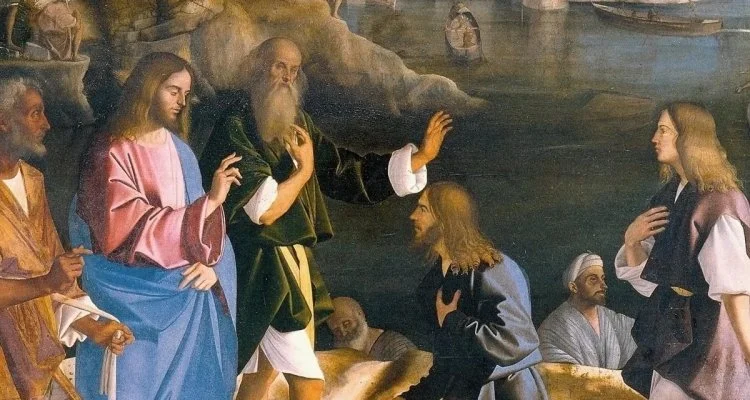
Below you can find the Meditation of His Beatitude Patriarch Cardinal Pierbattista Pizzaballa, Latin Patriarch of Jerusalem, for the XXVIII Sunday Of Ordinary Time, Sunday 20 October 2024.
Mk 10, 35-45
Jesus goes up to Jerusalem with His own, but they are afraid because they suspect what might happen to Jesus and themselves in the Holy City. In fact, Jesus tells them exactly what awaits Him: His glory, which will be revealed when He is lifted up on the cross. For the third time, Jesus announces His destiny of passion, death and resurrection, a time when he will surrender himself completely to the obedience of the Father and give himself up.
In this dramatic context, the evangelist Mark reports that the two brothers James and John approach Him with an unusual-sounding question. A question in which the roles are reversed and Jesus is asked to obey their will (“we want you to do for us whatever we ask of you” - Mark 10:35).
They ask to occupy a privileged position in which they are given an honor that distinguishes them from others: namely, they ask not only to be with Jesus in glory, but also to be in a unique position, as those on the right and on the left, as those who occupy the best place “Grant us to sit, one at your right hand and one at your left, in your glory” - Mark 10:37).
The two disciples sense that Jesus will soon enter Jerusalem and that he will finally reveal his glory there, and they endeavor to secure a piece of this fame and power for themselves. The disciples think about a human power that they want to share in as Jesus talks about the cross.
Jesus' answer serves to show them that the vocation to which we are called is greater than any human honor we can receive in life.
Jesus therefore answers them that they do not know what they are asking for “You do not know what you are asking” - Mk. 10:38), not because they are mistaken when they ask for the ultimate life and glory, but only because they are deceiving themselves when they realize what that glory really is.
Jesus’ answer consists of three steps.
In the first, he focuses on the essentials, on what constitutes true glory “Are you able to drink the cup that I drink, or be baptized with the baptism that I am baptized with?” - Mark 10:38). The cup and baptism are metaphors for Jesus’ passion and death. True glory, then, is the fullness of a given life poured out on one's brothers and sisters so that all may live. It is not about filling places, but making room, giving life.
Each person counts for their own capacity to love, and life generously provides us with opportunities to do so: In Jerusalem, life will offer Jesus a cup to drink and a baptism in which to be baptized, will offer events in which Jesus can choose glory, that is, to keep on loving, even in a context of unjust human suffering.
This choice, the consent to the logic of gift and love, is what builds life, what gives fulfillment to our personhood: if we give up, something of us remains unfinished, remains outside of glory.
The disciples say, as if to justify themselves, that they are able to live like this, to drink this cup, to be baptized (“They answered him: «We are able»” - Mk. 10:39)…
This news was originally published on the website of the Latin Patriarchate of Jerusalem. Please click here to read the full text.