
Meditation of His Beatitude Patriarch Cardinal Pierbattista Pizzaballa for the Sunday II of Ordinary Time A
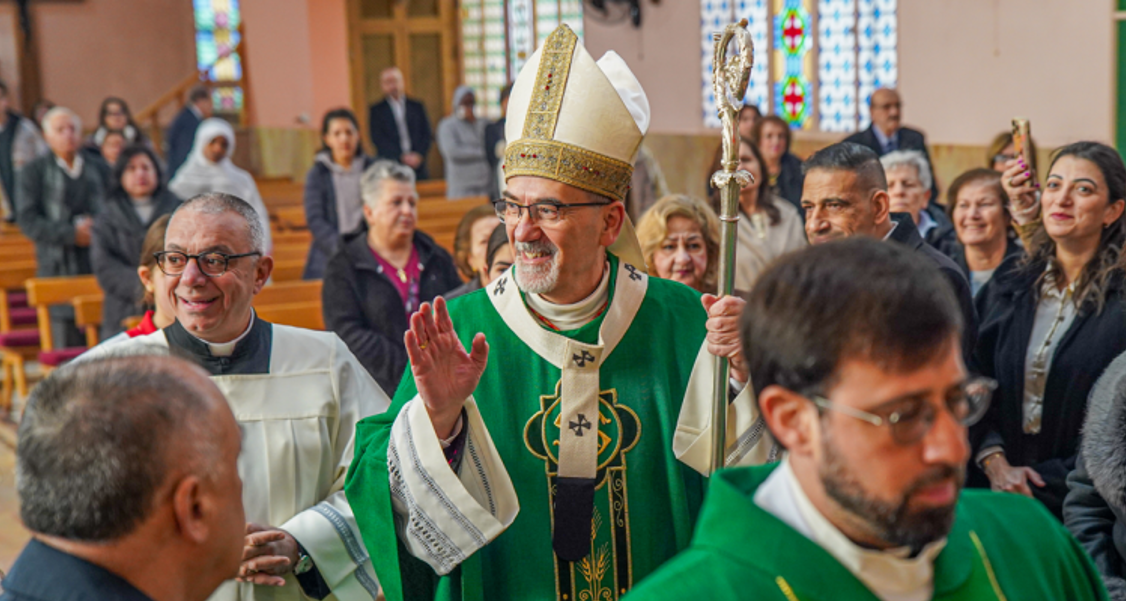
Below you can find the Meditation of His Beatitude Patriarch Cardinal Pierbattista Pizzaballa, Latin Patriarch of Jerusalem, for the Sunday II of Ordinary Time A, on Sunday, January 18, 2026.
Jn 1, 29-34
The Christmas season has led us to celebrate and contemplate a God who comes.
The Word of God comes in the flesh of our poverty, enters into history, and takes the initiative to be with us and like us.
But God does not come only at Christmas, nor does He come only at the moment of the Incarnation.
On the contrary! The incarnation of the Word inaugurates a new time for humanity, a time in which God comes and continues to come.

For this reason, it is very significant that among the first words we find in the Gospel of this first Sunday after the Baptism of the Lord (Jn 1:29–34) the verb “coming” (Jn 1:29): John the Baptist sees Jesus coming toward him.
“Coming” is an active verb that reveals the identity of God: the One who comes.
First of all, there is this movement of God toward us; His coming to us.
There is no God who remains distant, a God who waits for us to go to Him.
If God draws near, then we can encounter Him, and this is precisely what happens to John the Baptist: when Jesus draws near to him, he recognizes Him and therefore welcomes Him.
If “coming” is God's verb, “seeing” is the verb of man, of humanity: John sees Jesus coming toward him.
Both of these verbs are important; both are necessary for the encounter to take place.
If God does not come, Man, on his own, can do nothing.
But if God comes and Man does not recognize Him, does not see Him, then even God’s coming bears no fruit, brings about no encounter. God can come in vain if He is not welcomed by Man.
But what does it mean to see God? How does John see the Lord coming?
In reality, the Baptist sees nothing out of the ordinary: he sees a man like any other, coming toward him as many others did at that time.
The Evangelist John tells us that the Baptist, while seeing only a man, sees far beyond and much more.
He sees the Lamb of God who takes away the sin of the world (Jn 1:29).
He sees someone who, though comes after him, in reality was before him, meaning, the Eternal One (Jn 1:30).
He sees someone on whom the Spirit descends and remains, someone who will baptize in the Holy Spirit (Jn 1:33).
How can John the Baptist see all this?
The question is legitimate, especially since the Baptist himself states twice within a few verses that before that encounter he did not know Jesus (Jn 1:31, 33).
John is able to see and recognize Jesus because he lives immersed in the Word: he sees because he has first listened.
Two clues lead us to this conclusion.
The first is that his words are filled with Scripture: we find the lamb of Exodus chapter 12, a reference to the Wisdom of Proverbs chapter 8, and many prophetic promises that speak of the Spirit who descends and remains.
John does not see more because he possesses some special gift, but because when he sees Jesus coming, the Scriptures within him are ignited and illuminate his gaze.
But John’s listening does not only concern the Scriptures…
This Meditation was originally published on the Website of the Latin Patriarchate of Jerusalem. Please click here to read the full text.