
Meditation of His Beatitude Patriarch Cardinal Pierbattista Pizzaballa for the Sunday III of Ordinary Time A
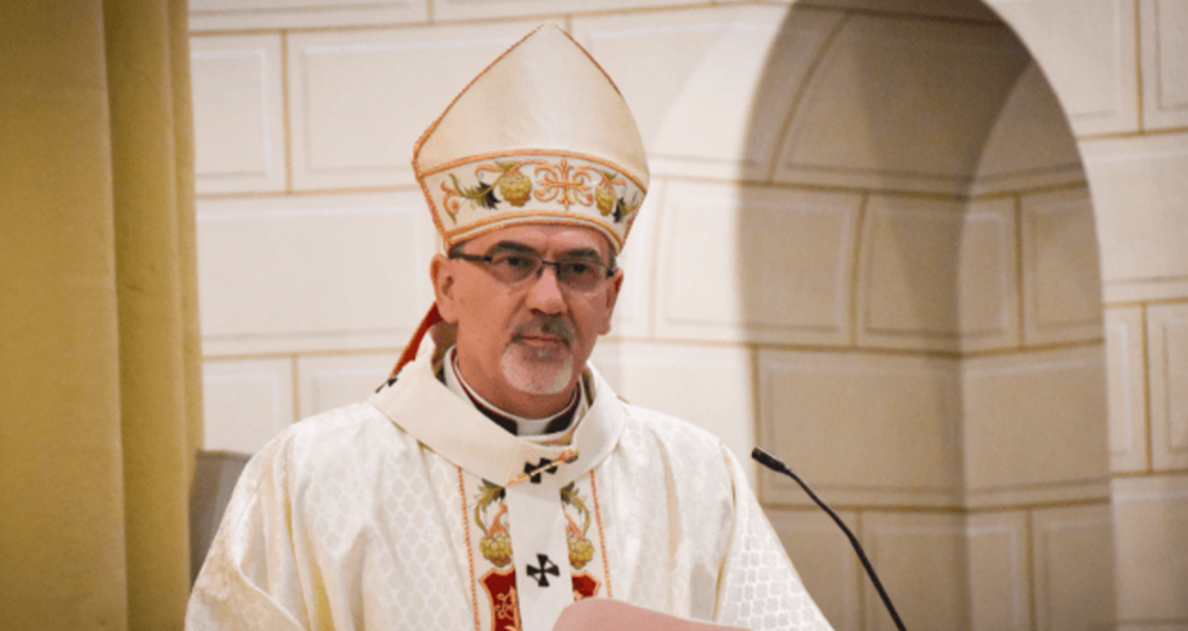
Below you can find the Homily of His Beatitude Patriarch Cardinal Pierbattista Pizzaballa, Latin Patriarch of Jerusalem, for the Sunday III of the Ordinary Time, A, Sunday 25 January 2026.
Mt 4,12-23
Each of the four evangelists introduce Jesus’ public ministry through a kind of gateway, a key for interpretation that helps the reader pose the fundamental question underlying the entire text: Who is Jesus? What has he come to do? What is this story that is now beginning really about?
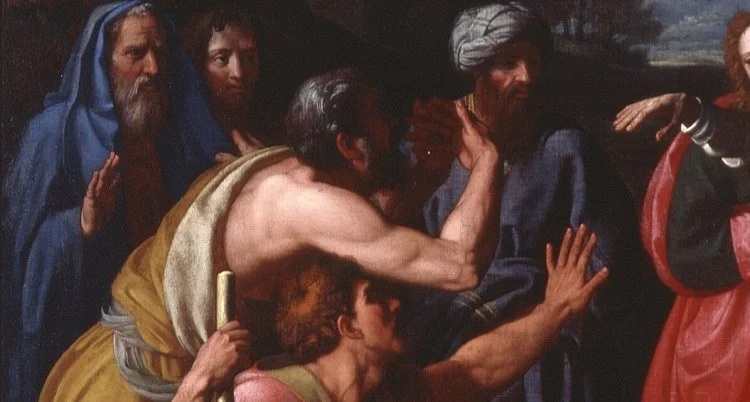
Likewise, Evangelist Luke, through the episode in the synagogue of Nazareth (Lk 4:16–30), hints that Jesus is the prophet anointed by the Spirit, sent to bring the good news of salvation to the poor and the outcast. He will be rejected, just as he was in Nazareth; yet this rejection will not stop him from continuing his journey.
Mark is the briefest of all: “The time is fulfilled, and the kingdom of God is close at hand. Repent, and believe the gospel” (Mk 1:15). In such, he announces the definitive fulfillment of God’s gift, which calls for an urgent response from humanity: the time has come for all to convert and to believe.
John, too, in his own way, presents a manifesto of the Lord’s work. It is a narrated manifesto, in which John constructs a seven-fold introductory (Jn 1:19–2:11), beginning with the testimony of the Baptist and culminating in the wedding at Cana. It is the account of a new creation, which unfolds through the birth of a new, small community of believers, gathered around the one Bridegroom, Christ, the one who has kept the wine of the feast until now.
Today’s passage (Mt 4:12–23) shows us the key through which the evangelist Matthew writes his Gospel.
Matthew places great emphasis on the place where Jesus’ mission begins (Mt 4:13): he tells us that Jesus leaves Nazareth and retreats to Capernaum. Matthew does not stop there, but adds further details, all related to the place where the story unfolds: Capernaum is by the sea, and it is in the territory of Zebulun and Naphtali.
Matthew’s lingering over these spatial elements has a specific purpose: to introduce the long quotation from prophet Isaiah (Is 8:23–9:1), which speaks precisely of this same territory.
The text belongs to the so-called “Book of Emmanuel” (Is 7–12), a collection of oracles written in a dramatic period, a time of war. Assyria, the dominant power, was advancing southward, and the first territories to be invaded and devastated were precisely Zebulun and Naphtali, the northern tribes. These regions were the first to fall, the first to be deported, the first to experience the “darkness” of occupation.
Thus, a land deeply wounded. But not only that. The territory that the evangelist Matthew takes the time to describe has two further characteristics: it is Galilee of the Gentiles, a borderland, a marginal land, a place where “mixed” people live together and therefore, according to the logic of traditional religiosity, a place also considered “impure.” It is also a land of passage: it is on “the way to the sea”, a crossroad, and therefore necessarily open and welcoming.
Well, Jesus goes to dwell exactly there. And He is the light promised by Isaiah, a light that shines in the very place where history had known the deepest darkness, where its wounds had been most painful and dark. The light does not avoid the dark areas: on the contrary, it passes through them and transforms them…
This Meditation was originally published on the Website of the Latin Patriarchate of Jerusalem. Please click here to read the full text.