
Editorial Article by His Holiness Pope Tawadros II in Kiraza Magazine: A Stranger I Am on Earth
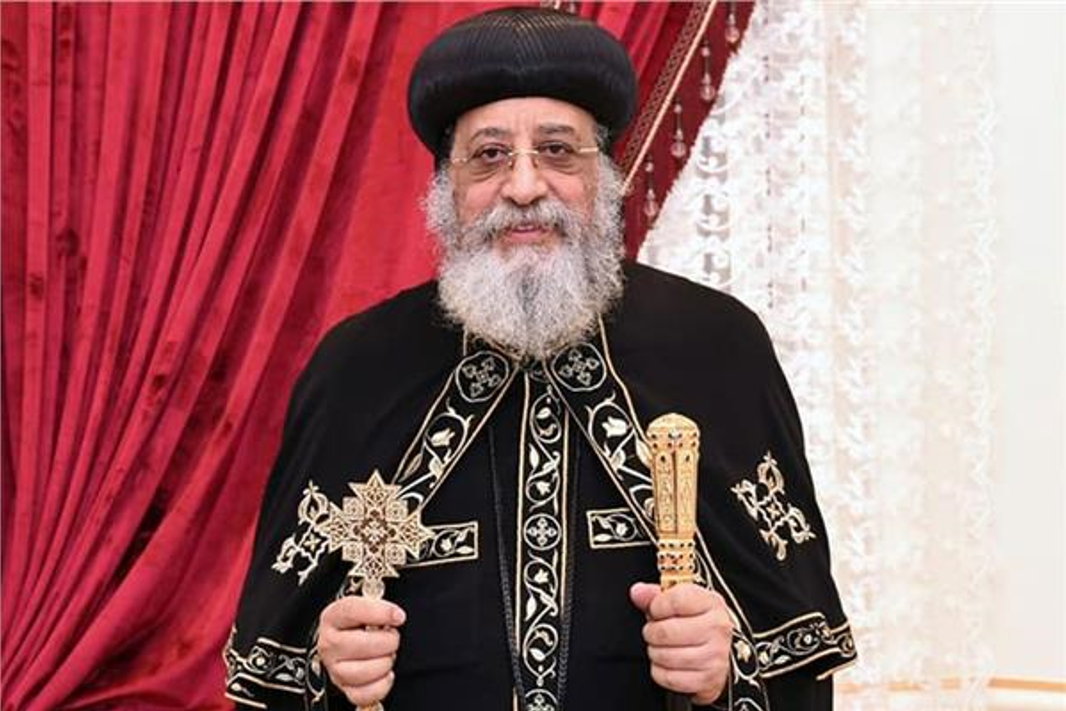
His Holiness Pope Tawadros II, Pope of Alexandria and Patriarch of the See of St. Mark
It is rare for people to live without experiencing estrangement. Estrangement is moving from one’s place of birth to other places. It may be short or long, temporary or permanent. It may be voluntary or forced, or in search of a better place, better education, better work, or a better position.
We read about estrangement in Holy Scripture, and how many prophets lived as strangers and journeyed from one place to another, such as Abraham, the father of the fathers. We also read about the Holy Family, who lived as strangers in the land of Egypt for more than three years.
From a spiritual perspective, all human beings are strangers on the earth, to the extent that the Prophet David says: “I am a stranger in the earth; do not hide Your commandments from me” (Psalm 119:19). The late Pope Shenouda III has a poem entitled “I Lived as a Stranger,” in which he describes estrangement both historically and monastically. Estrangement is a powerful human feeling that operates throughout a person’s life, whether academically, educationally, economically, or socially. It may even reach the point where a person feels estranged within his own home when he finds the members of that household drifting away from him through being endlessly preoccupied. It is striking that the world invented social communications tools about thirty years ago, and now it is discovering that they have become tools of social disconnection and isolation within the same household or society, affecting both young and old, drawing them into a virtual world filled with many moral, behavioral, and social perverted deviations.
On the other hand, if estrangement is positive and occurs under favorable circumstances, a person can benefit from it through virtues such as diligence, self-reliance, and learning new skills like languages, as well as forming many friendships that might not be possible if one remained in the same place. Thus the Arabs of old said, “Travel has seven benefits,” and the historian Kamal El-Mallakh said, “How delightful travel is upon the pages of a book.”
There are some places where a person feels estranged even while remaining within his society or homeland. One of these places is “the hotel.” When a person goes to a hotel for any reason—whether to attend a conference, meeting, exhibition, seminar, or even for leisure and tourism—he feels estranged. Whether his stay is for one day, several days, or even weeks, he finds people around him whom he does not know, carrying out the duties of hospitality, accommodation, and facilitating everything. The place appears at its finest, and all the staff are trained in kindness, courtesy, elegance of speech, and smiling. Everyone tries to please the person and satisfy his desires, no matter how many or varied they may be. Yet they do this as a job that brings them income, profit, and surplus—the goal is purely transactional. They do not know you, and you are a stranger among them; they look to what you will pay and what they will gain from you. Therefore, hotels compete in offering all kinds and forms of services that always attract people with tempting offers. Yet you remain a stranger, forgetting that your true comfort is in your own home, among your family.
Another place where a person feels deep estrangement is when he enters “the hospital” seeking treatment, whether for minor or major ailments. His stay may extend, based on the condition, for a few days, a week, or weeks. There he feels estrangement accompanied by pain. He entrusts himself into the hands of doctors he does not know, a nursing staff distributed according to duty schedules, and healthcare technicians. All of them do not know you, nor do you know them, but their sole concern is your healing and the removal of pain and illness. Their goal is your health. They study, observe, and serve with a high human spirit during your time of estrangement, offering of their health and time so that you may regain your strength and return safely. Oh, how beautiful are Your gifts, O Lord…
This Article was originally published on the Coptic Orthodox Church Website. Please click here to read the full text.