
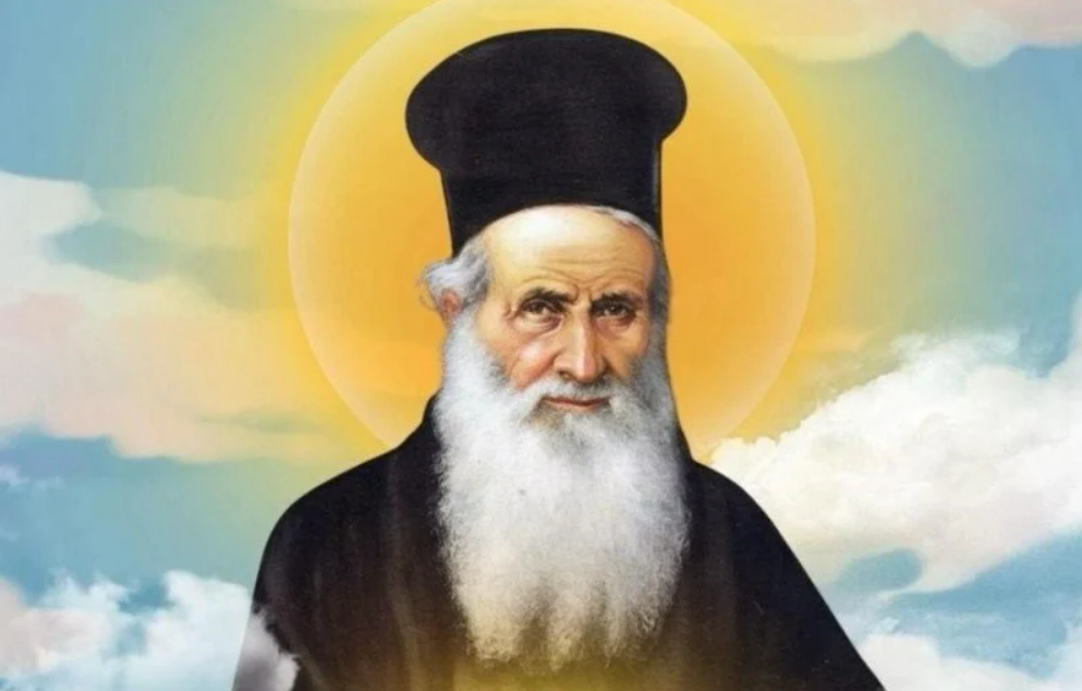
Blessed Father Bechara Abou Mrad
A Father, Shepherd, and Faithful Servant of the Church of Christ, A Life Crowned with Holiness
Media of the Middle East Council of Churches (MECC)
From the St. Elias district of Mkhallessiyeh, a new journey of holiness begins, as the Church in Lebanon and around the world witnesses an Ecclesial event that strengthens faith and renews hope. The Beatification of Father Bechara Abou Mrad marks a radiant spiritual milestone, embodying Christian witness, Ecclesial obedience, and humanitarian service.
Father Bechara Abou Mrad lived a life filled with Prayer, piety, and humility. He became a blessing to many faithful, guiding them back to the path of salvation. In 2026, the Holy See approved his Beatification after recognizing a miracle attributed to his intercession.
Beginnings Rooted in Prayer
His birth name was Salim Jabbour Abou Mrad. He was born on May 19, 1835, in Zahle, Lebanon, in the St. Elias district of Mkhallessiyeh. His father was Jabbour Abou Mrad, and his mother was Elizabeth Al-Kash, who taught him to pray and to participate in the Liturgical Prayers. He was the third of eight children, four sons and four daughters. On June 28, 1835, he received the Sacraments of Baptism and Confirmation at the Cathedral of Our Lady of Deliverance.
Between 1835 and 1874, Father Bechara grew up between his family home, the neighborhood school, the Bishop's School where he received his early education, and the nearby Church of St. Elias, served by the Basilian Salvatorian Fathers. There, he witnessed their zeal for the salvation of souls and was deeply inspired by their way of life, eventually deciding to join their Religious Order.
From Religious Life to the Priesthood
Father Bechara Abou Mrad began his Religious journey on September 5, 1874, when he entered the Monastery of the Savior after receiving his parents' blessing, especially the consent of his father, who had initially opposed his decision to enter Religious life. On September 19 of the same year, Salim Abou Mrad entered the Novitiate at the Monastery of Our Lady of the Dormition, adjacent to the Monastery of the Savior, where he received the Religious name 'Bechara.' Two years later, on November 4, 1876, he professed his Religious vows.
Between 1876 and 1883, he studied philosophy and Theology at the School of the Monastery of the Savior. Because of his exceptional piety and exemplary conduct, his superiors entrusted him with caring for his fellow monks. During the final years of his studies, he hesitated to be ordained first as a Deacon and then as a Priest, believing himself unworthy of the great dignity of the Priesthood. He often said, 'I entered Religious life only to save my own soul, not to be ordained.'
Nevertheless, on March 26, 1882, he was ordained a Deacon in the Church of the Monastery School by His Eminence Bishop Basilius Hajjar. On December 26, 1883, the second day of Christmas, he was ordained a Priest at the Altar of the Lord in the Monastery Church by the same Bishop. He adopted as his Priestly motto: ‘I have made thee a watchman unto the house of Israel: therefore hear the word at my mouth, and give them warning from me.’ (Ezekiel 3:17).
Following the deaths of his brothers Joseph and Mourad, and later his mother, he refused to return to Zahle for their funerals, embracing sacrifice and fulfilling the Lord's command: ‘Let the dead bury their own dead’ (Luke 9:60).
Between 1883 and 1891, he served at the Seminary of the Monastery of the Savior as a teacher, spiritual guide, and confessor to the brothers.
A Life of Service and Faith
His Pastoral Ministry began on November 8, 1891, when Father Bechara was assigned to Deir El Qamar as a teacher at the Episcopal School. In September 1892, he was appointed Parish Priest for the villages surrounding Deir El Qamar, including Serjbel, Wadi Benahleh, Bentouati, Wadi al-Dayr, Wadi Deir Dourit, and others, serving more than fourteen villages stretching from the Damour coast to the upper Chouf region.
He was always accompanied by the Rosary in Prayer. His ministry was distinguished by the reverent celebration of the Liturgy, Pastoral care for those who had drifted away from Church attendance, visits to the sick, concern for prisoners, assistance to the poor, and spending long hours hearing confessions. He also oversaw the construction of the Church of Our Lady of the Annunciation and a nearby school for children's education.
On December 4, 1922, he was transferred to the Cathedral of St. Nicolas in Sidon, where he spent five years devoted to fasting, Prayer, preaching, spiritual direction, and confession ministry, particularly among school students and local confraternities.
Final Days Crowned with Holiness
The final chapter of his life unfolded at the Monastery of the Savior, where he returned on February 27, 1927, as a venerable elder burdened by illness. There, he spent his last years in silence, Prayer, and contemplation.
On February 22, 1930, Holy Saturday of the Souls, Father Bechara Abou Mrad peacefully fell asleep in the Lord at 6:30 am. A large Funeral was held, and he was buried in a special tomb built into the southern wall of the Monastery Church.
Thus, the Monastery of the Savior stands as a witness to a life of faith crowned with holiness, a journey crowned with the heavenly crown. With the Beatification of Father Bechara Abou Mrad, Prayers are raised to the Lord that He may grant His peace and abundant graces upon all.