

MECC
MECC Organizes a New Course About Disaster Risk Management and Churches Response
His Eminence Bishop Michel Kassarji: It is necessary to enhance cooperation, solidarity and God-reliance
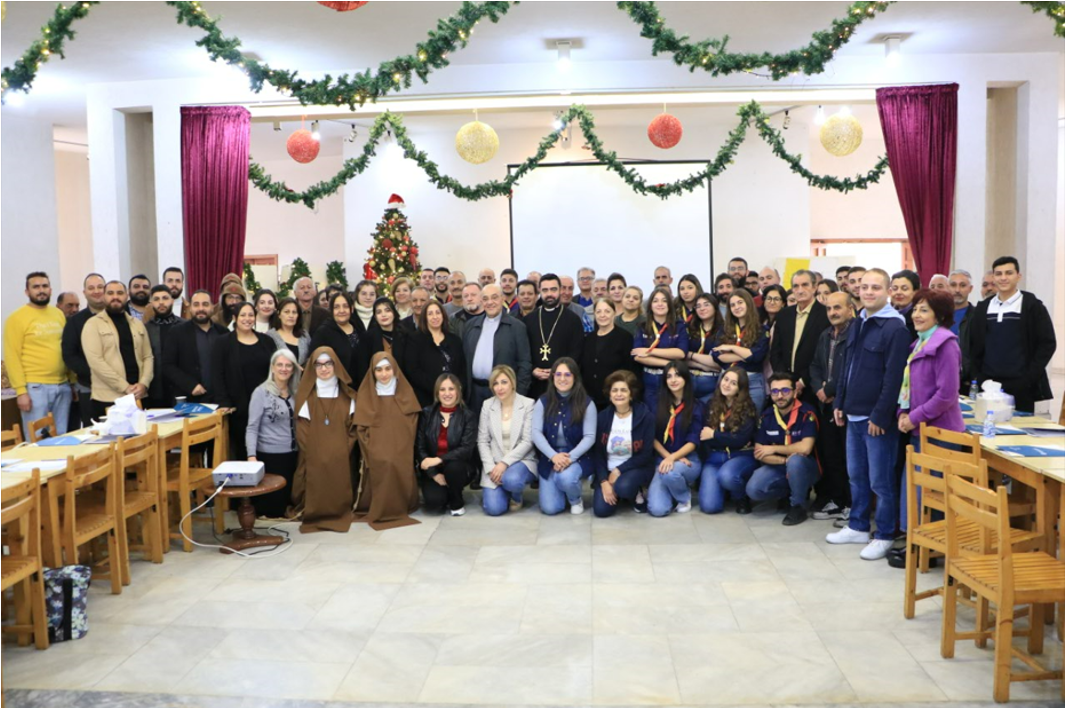
With the blessing and presence of His Eminence Bishop Michel Kassarji, Head of the Chaldean Community in Lebanon, the Middle East Council of Churches (MECC), Diakonia and Social Service Department – Lebanon’s Office, in partnership with TearFund organization, held a new training course within the program "Disaster Risk Management and Churches Response", on Saturday, December 7, 2024, hosted by the Chaldean Archdiocese of Beirut, Hazmieh - Lebanon.
The training was held in the presence of Monsignor Raphael Traboulsi, the General Vicar of the Chaldean Diocese of Beirut, and Father Khoren, Priest of the Armenian Orthodox Cathedral Church in Zkak el-Blat, Beirut, and the participation of an Ecumenical group including 120 participants of clergy, consecrated men and women, lay people, scouts and workers in the Church field from the Chaldean Diocese of Beirut, the Syriac Orthodox Archdiocese of Beirut, and the Armenian Orthodox Archdiocese of Lebanon.
The training aimed to empower the participants and develop their capacities on the topic at hand in order to support them and provide them with the basic skills that will help them train workers in their Parishes. Thus, it will enable them to help the Church in supporting the neediest and most affected people by the crises and difficult living conditions, on various humanitarian, social, health and psychological levels.

MECC Supports 72 Small Projects in Latakia and Tartus
Through its Service and Relief Department, Diakonia, the Middle East Council of Churches continues its efforts to strengthen social and economic stability within local communities. The goal is to provide individuals with the necessary support to improve their living standards in response to current economic challenges.
Operating through its office in Syria, the Diakonia Department has supported many small projects in the Latakia and Tartus governorates via the Livelihood Support Program. This initiative aims to empower project owners and equip them with essential tools for success and sustainability.
A total of 72 projects were supported, spanning various fields. These included a greenhouse, a motorcycle repair workshop, an event decoration center, a mosaic art workshop, a car wash, a candle-making workshop, a local restaurant, and dairy and cheese production. Additionally, there were other small projects addressing local community needs and providing a source of income for their owners.
Awareness Sessions for Pregnant and Lactating Women and Women in Reproductive Age in Syria
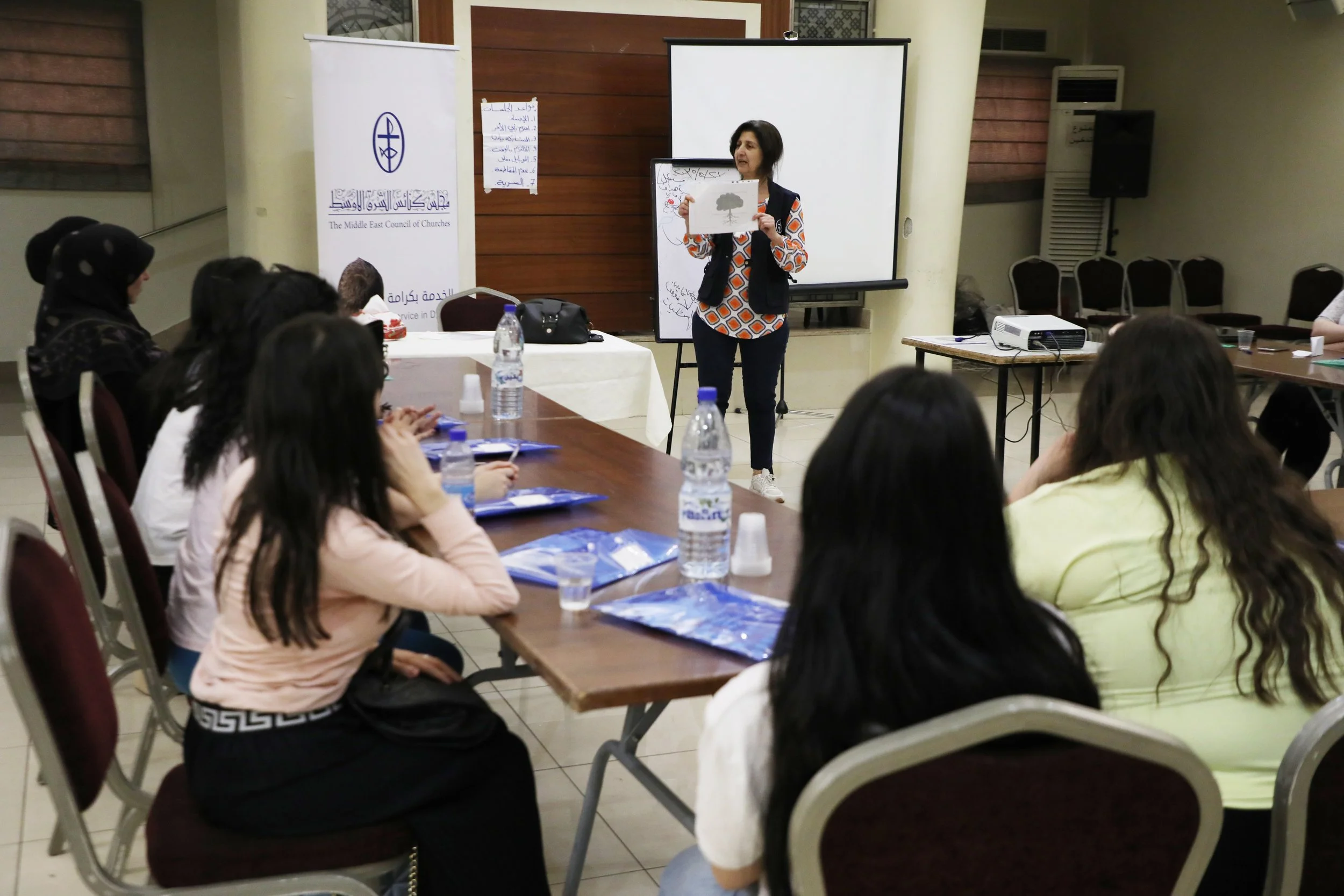
The Diakonia and Social Service Department at the Middle East Council of Churches (MECC), Syria’s Office, continues raising awareness among pregnant and lactating women about the importance of breastfeeding and the correct way to care for infants.
This is being done through holding health and Psychosocial sessions for pregnant and lactating mothers in three governorates: Damascus and its countryside, Aleppo, and Dara’a.
These sessions shed light on all aspects related to breastfeeding, the difficulties mothers face with breastfeeding, and clarification of some misconceptions. They also addressed complementary feeding for infants, maternal nutrition, and dietary practices when the child is ill.
Vocational Courses in Damascus Help Beneficiaries to Establish Small Businesses
With the rise of unemployment and inflation rates, as well as the increase in the prices of basic needs, the percentage of families living below the poverty line and relying primarily on humanitarian aid has increased. Many young people find themselves unable to build a stable future under these harsh conditions.
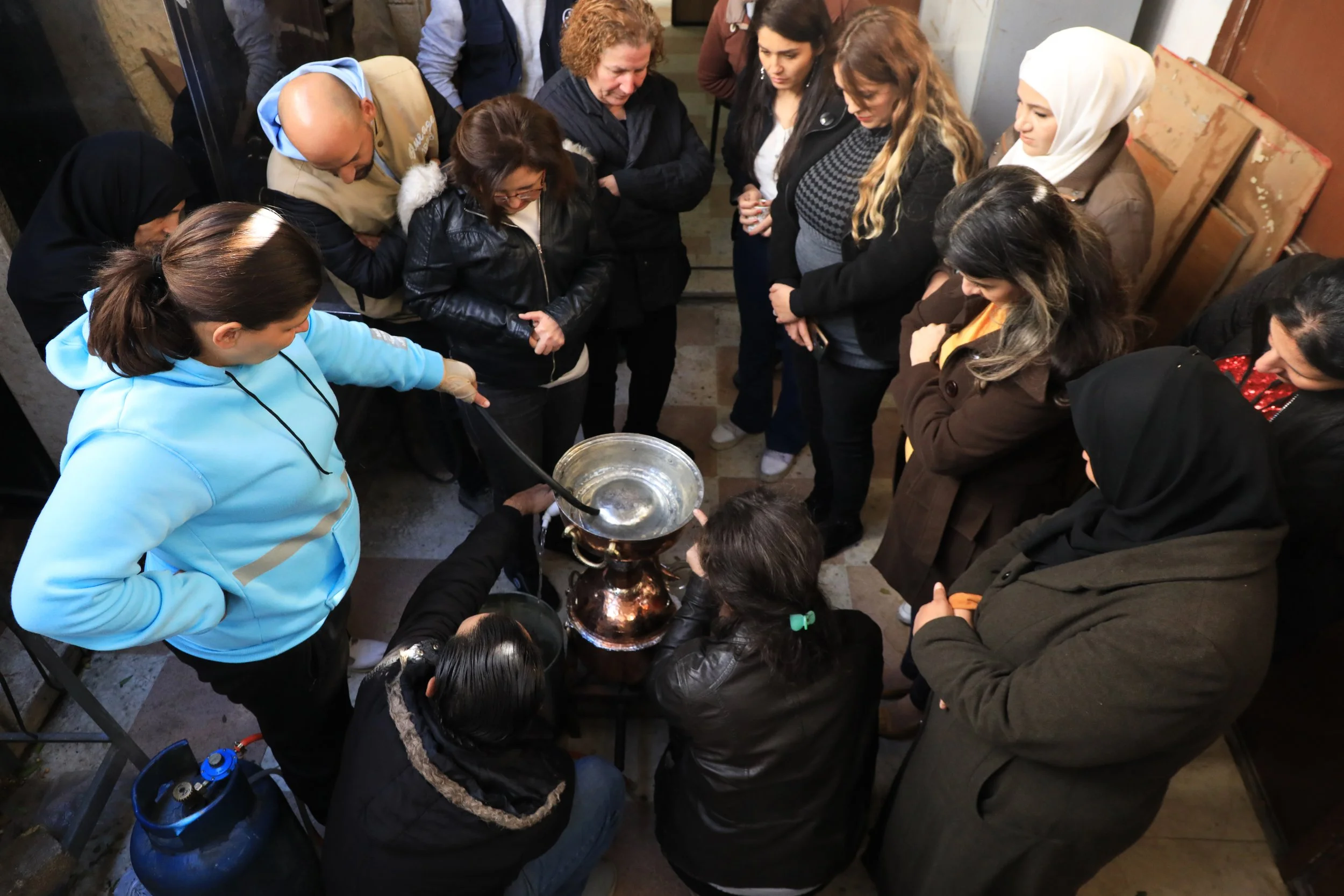
In response to these challenges, the Middle East Council of Churches (MECC) continues to support the most vulnerable people by organizing vocational training courses that help participants enter the job market. In addition, MECC provided them with vocational kits as well as skills through business start-up courses, enabling them to establish small businesses that can become sources of income, rather than spending months or even years searching for suitable job opportunities.
In this context, the MECC Diakonia and Social Service Department, Syria’s Office, conducted a vocational training course on growing oyster mushrooms and another course on distilling medicinal herbs and flowers. A total of 30 participants, aged between 25 and 55, benefited from these courses.