
Meditation of His Beatitude Patriarch Cardinal Pierbattista Pizzaballa for the III Sunday of Advent, A
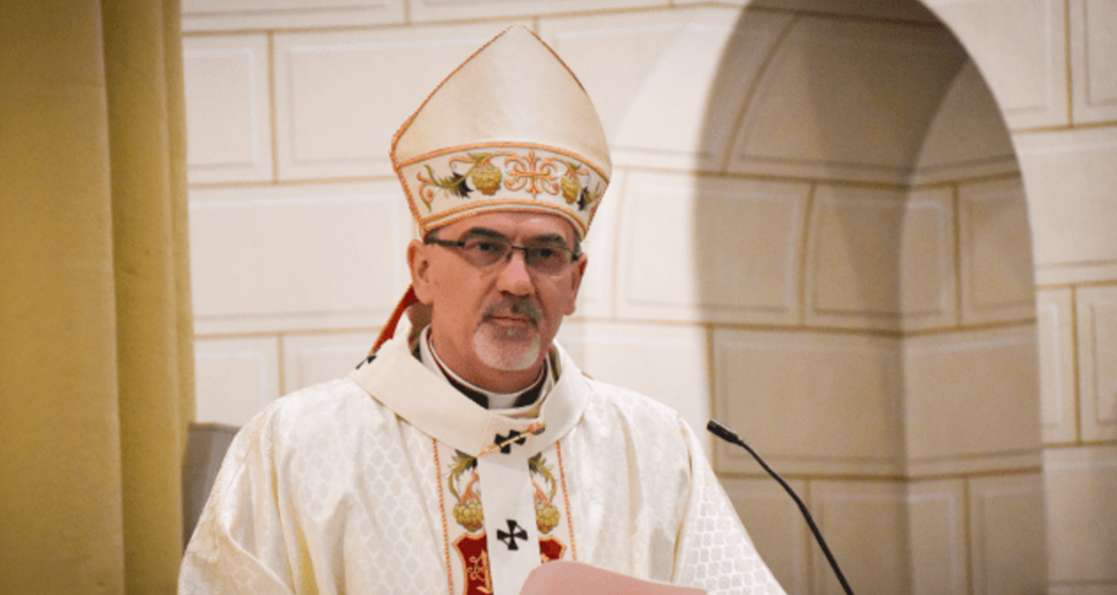
Below you can find the Meditation of His Beatitude Patriarch Cardinal Pierbattista Pizzaballa, Latin Patriarch of Jerusalem, for the III Sunday of Advent, A, Sunday 14 December 2025.
Mt 11: 2-11
The first fruit of the coming of the Kingdom is the arising of a question in those who await it.
Not an answer, not a certainty, but open questions, which are paths to be traveled.
The question arises in those who go down to the Jordan to be baptized, and who, faced with John's preaching, wonder what they should do (Lk 3:10). The question arises in the heart of John himself, who marvels at seeing how the Messiah presents himself in history, radically upsetting his expectations.
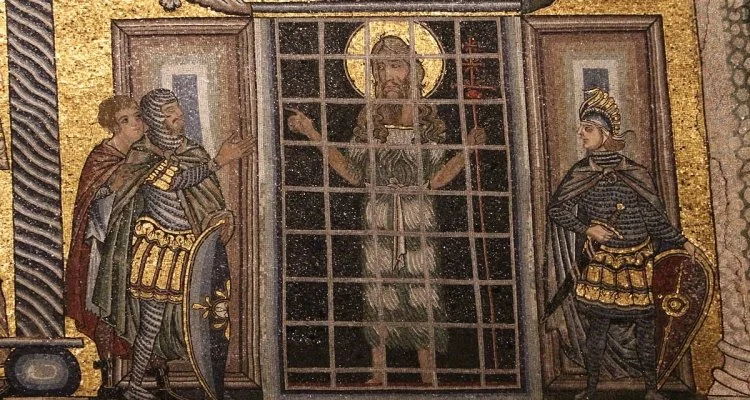
We hear John's first question at the moment of Jesus’s Baptism, when with perplexity, he addresses Jesus saying: “I need to be baptized by you, and yet you are coming to me?” (Matthew 3:14).
A second question is found in today's Gospel (Mt 11:2-11), when the Baptist, imprisoned, sends his disciples to Jesus to ask him if he is truly the One they were expecting, or if they should wait for another (Mt 3:3).
Let us pause for a moment on this question, because in this Advent season, when we are asked to prepare the way for the Lord who is coming, the first step is precisely to ask ourselves the right questions.
The question is precisely what makes something new possible, a journey. It is not enough to bring about change, but it prepares for it. Then other steps are needed: choice, will and perseverance. But the first step is to ask the question.
John’s question is born from the gap between what he expected and the ways of Jesus, about whom he hears while confined in prison. He does not ask, “Who are you?” in an abstract sense, but rather concretely whether Jesus is truly the One awaited, the Messiah who inaugurates the Kingdom. John had preached about a powerful Messiah who would bring judgment and justice. Now he finds himself in prison, and there seems to be a discrepancy: Jesus does not meet John's expectations.
Jesus welcomes and understands this doubt. He does not respond directly, neither does he affirm or deny. Instead, he provides a guide, that is, a path to follow to learn how to recognize the way He acts in history. is way of acting in history.
The method brings together two verbs, two aspects of the life of faith: hearing and seeing.
Jesus responds to the messengers sent by the Baptist by asking them to report to John what they hear and what they see: “Go and tell John what you hear and see” (Mt 11:4).
If we stop at what we see, then we risk being offended, because the works that Jesus performs are not sensational or revolutionary: He does not destroy the wicked, He does not eliminate suffering, and in the end He Himself will be unjustly condemned and crucified. Indeed, according to the expectations of John the Baptist, Jesus performs deeds that are unexpected for a ‘Master’ or of someone sent by God: He sits with sinners, plays with children, speaks with women…in short, not exactly what one would expect from someone who hold “winnowing fan is in his hand,” who will “clear his threshing floor,” and “burn the chaff with unquenchable fire” (Mt 3:12).
Jesus speaks precisely of this offense in verse 6: “Blessed is the one who takes no offense at me”…
This Meditation was originally published on the website of the Latin Patriarchate of Jerusalem. Please click here to read the full text.