
Meditation of His Beatitude Patriarch Cardinal Pierbattista Pizzaballa for the Sunday IV of Ordinary Time A
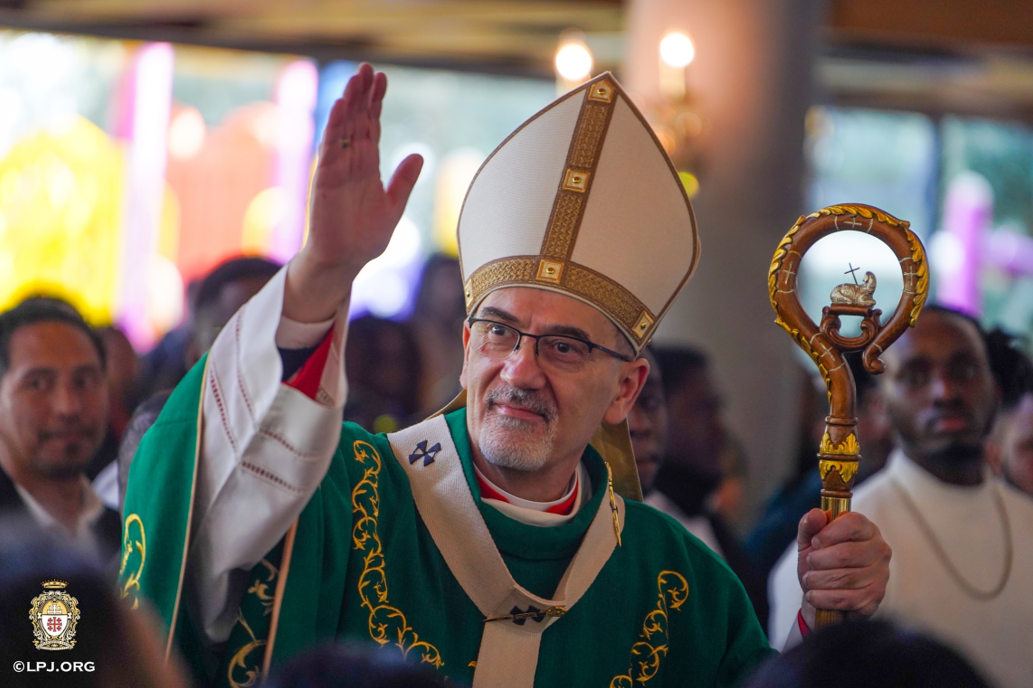
Below you can find the Homily of His Beatitude Patriarch Cardinal Pierbattista Pizzaballa, Latin Patriarch of Jerusalem, for the Sunday IV of Ordinary Time A, Sunday February 1st, 2026.
Mt 5,1-12a
Last Sunday (Mt 4:12-23), we saw that Jesus began his public ministry in a wounded land near a border. In this wounded land, his words came as a light, indeed, as a great light, the same great light that the prophet Isaiah had foretold, laying the foundation for the hope of those who lived in a land of darkness and death (Isaiah 8:23-9:1).
We see immediately what this great light is in today's Gospel (Mt 5:1-12a). It is the Gospel of the Beatitudes, which begins the first great discourse of Matthew's Gospel, the Sermon on the Mount.
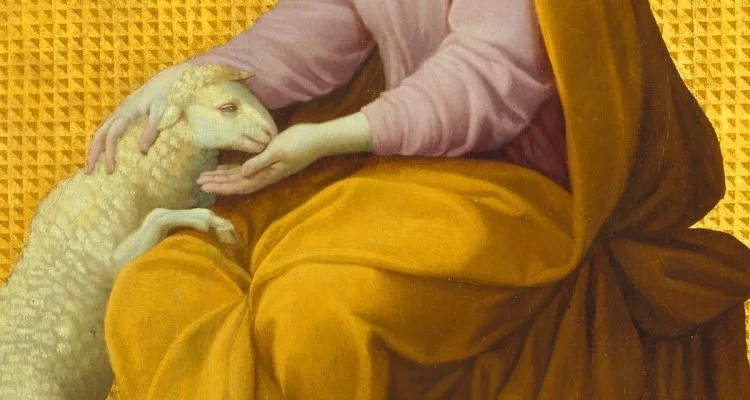
It is a passage that we all know almost by heart, which we will try to read today using a twofold interpretation linked to the gaze. Today's passage begins by saying that Jesus sees the crowds, and that following this gaze, the words he then utters are born. Not only that. Continuing in the discourse, we see that the theme of the gaze returns, in reference to the Father: the Father sees in secret and will reward all that is done in secret (Mt 6:4, 6, 18).
This Father, therefore, is a Father who first and foremost sees: his gaze is directed towards his children, towards those who follow Jesus and welcome his presence.
The Sermon on the Mount, beginning with the Beatitudes, recounts how those who are under the Father's gaze ought to live. It is not an unattainable ideal, but a description of what happens when the Kingdom touches one’s life.
Those who live under the gaze of the Father live in a different way from the prevailing logic, meaning, to live in an alternative way.
The difference is radical: it is not just a moral addition, a correction made to something that does not work well enough; it is a completely different way of living, the proposal of a different world.
This new way of living is first and foremost a different way of experiencing power.
Worldly logic, in fact, is based on power: those who can do a lot, those who can do everything, are happy.
The Beatitudes, on the other hand, speak of an evangelical power. The power of the poor in spirit, who do not possess others but leave them free. The power of the meek, who do not crush but protect. The power of the afflicted, which is the power to remain in pain without denying it or fleeing from it. The power of peacemakers, who build relationships without imposing anything. The power of the pure in heart, a power without deceit. The power of those who hunger for justice, who seek the truth and not their own advantage. The power of the persecuted, that is, of those who remain faithful even when it costs them…
This Meditation was originally published on the Website of the Latin Patriarchate of Jerusalem. Please click here to read the full text.