MECC
Ecumenical Media: Mission and Ethics
A Webinar Organized by MECC
Secretary General Prof. Michel Abs: “Media reflects the splendor of Christianity by showcasing its culture and its diverse dimensions”
Fr. Dr. Rifat Bader: “we have a responsibility to translate this witness into an Ecumenism of the word: media that brings people together rather than divides them, heals rather than wounds, and builds rather than destroys”
Journalist Lea Adel Maamary: “Ecumenical media serve as a bridge for dialogue, a space for encounter, a tool for strengthening a culture of unity”
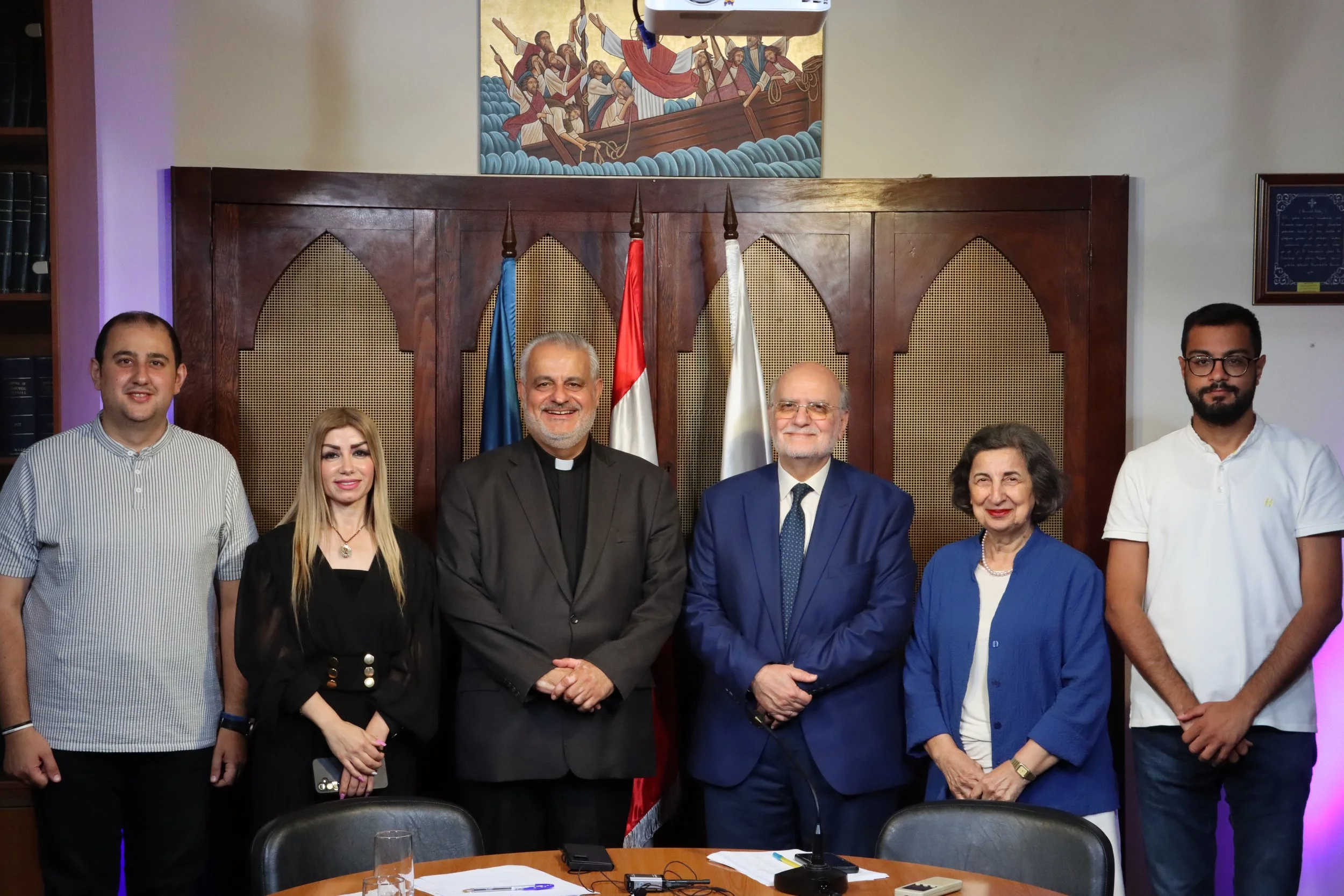
As part of the series of seminars launched by the Middle East Council of Churches (MECC), a new seminar entitled “Ecumenical Media: Mission and Ethics” was held, with Father Dr. Rifat Bader, General Director of the Catholic Center for Studies and Media in Jordan, Publisher of “Abouna” Website, and Representative of the MECC Executive Committee for Media Affairs. It was moderated by the Journalist Lea Adel Maamary, Coordinator of Media and Church Relations at MECC.
The seminar was held on Wednesday, August 19, 2026, in the presence of the MECC Secretary General Professor Michel Abs. It was attended in person at MECC headquarters in Beirut by Mrs. Seta Hadeshian, MECC Associate Secretary General, Professor Laure Abi Khalil, Coordinator of the Dialogue, Social Cohesion, and Human Dignity Rehabilitation Programs at MECC, Journalist Rafi Sayegh, and the MECC media team.
Online attendees were Father Dr. Nicolas Bustros, MECC Associate Secretary General, colleagues from the MECC team, as well as a Journalists and Experts from the Egyptian Council of Churches, “Abouna” Website, and many media outlets across the region.
The Cultural Counselor of the Islamic Republic of Iran in Lebanon Dr. Sayyed Mohammad Rida Mortadawi Heads Delegation
On a Visit to MECC Secretary General Professor Michel Abs
Emphasis on Strengthening Cultural and Social Cooperation
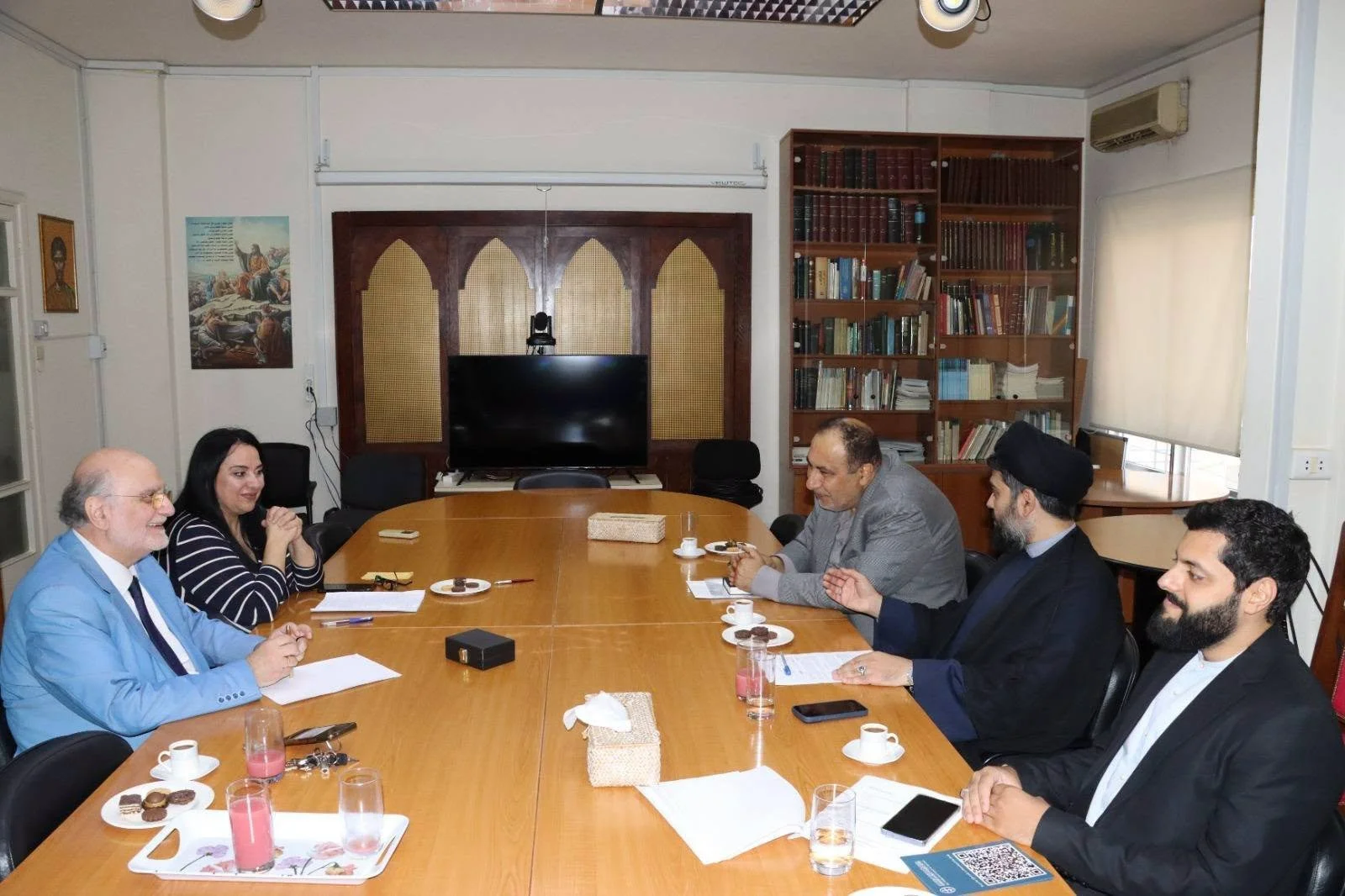
The Secretary General of the Middle East Council of Churches (MECC) Professor Michel Abs, received Dr. Sayyed Mohammad Rida Mortadawi, the Cultural Counselor of the Islamic Republic of Iran in Lebanon, at the head of a delegation including Dr. Ali Kasir, Media Affairs Officer, and Mr. Jawad Tabrizi, Director of the Counselor’s Office (Secretary). The meeting took place on Tuesday, August 18, 2026, at the MECC headquarters in Beirut.
The meeting was attended from the MECC side by Professor Laure Abi Khalil, Coordinator of the “Dialogue, Social Cohesion and Human Dignity” programs.
During the meeting, the participants discussed many issues of common interest, as well as ways to strengthen cooperation and communication between both sides. Discussions also addressed opportunities to develop areas of mutual cooperation in ways that contribute to promoting dialogue and understanding among different Religious and cultural communities, while reinforcing the values of coexistence, peace, and solidarity in the region.
Video - "Ecumenical Horizons" Program
Produced by MECC
Father Joseph Soueid: "The book ‘1,033 Hours from the Life of Christ’ is the Gospel of our lives... and the Baptism Site is preparing to celebrate the Baptism of Jesus Christ in 2030"
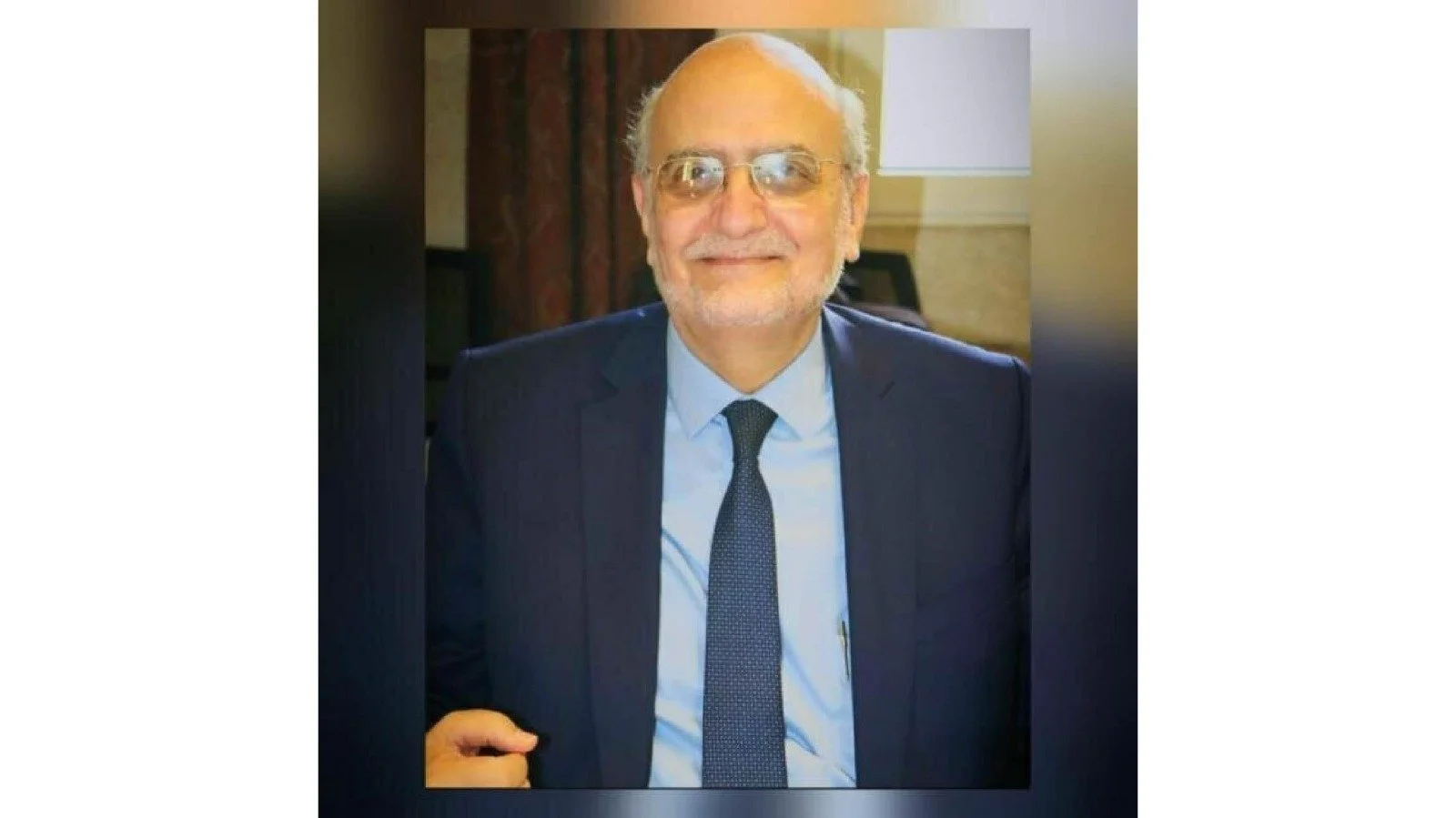
The Tragedy of Organizations Is the Tragedy of Society and a Crisis of Culture
Professor Michel Abs
The Secretary General of the Middle East Council of Churches (MECC)
The tragedy of organizations is manifested in corruption, deception, forgery, distortion of facts, pressure, circumvention of established regulations and procedures, and hypocrisy.
The organization, or the institution, is the backbone of modern society. It is an organized entity whose purpose is to serve the public interest through clear rules and transparent procedures. But when organizations are afflicted by corruption, deception, and falsification of facts, they are transformed from instruments of development into burdens on society because of the waste generated by corruption. This affliction is not a passing individual error; rather, it is a systemic deviation that strikes at three fundamental pillars: integrity, efficiency, and trust.
First: Manifestations of Organizational Dysfunction
1. Administrative and financial corruption:
This is the exploitation of public office for private gain. It includes bribery, favoritism, and the embezzlement of public funds. According to the “principal-agent” model in management, corruption occurs when the interests of the employee, the “agent,” conflict with those of the public, the “principal,” in the absence of effective oversight mechanisms.
2. Deception and falsification of facts:
This takes the form of manipulating data, falsifying reports, and embellishing fictitious achievements. This type of corruption is even more dangerous because it attacks the “organizational memory.” When decisions are based on false information, all subsequent policies become flawed.
3. Circumventing regulations and exerting illegitimate pressure:
This means bypassing laws and regulations under the pretext of “necessity” or “exceptional circumstances.” It is often accompanied by organizational hypocrisy: a double discourse whereby an organization publicly proclaims its commitment to certain values while secretly practicing the opposite…
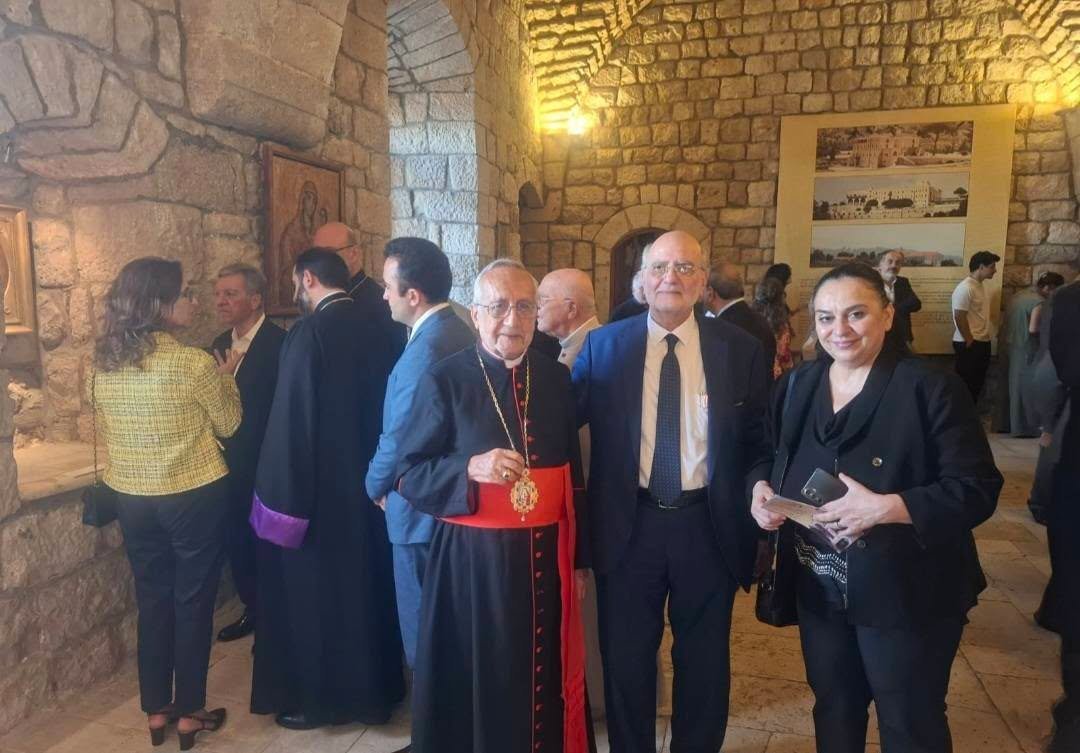
The MECC Secretary General Professor Michel Abs Participates in the Opening of the Church Exhibition “Testimony of the Spiritual Heritage” at Our Lady of Bzommar Monastery
On the occasion of the 255th anniversary of the construction of the Church of the Assumption of the Virgin Mary at the Patriarchal Monastery of Our Lady of Bzommar, a Church exhibition entitled “Testimony of the Spiritual Heritage” was inaugurated during a ceremony held on the evening of August 12, 2026. The exhibition presents a selection of artifacts from the Monastery’s museum, offering visitors a glimpse into the spiritual, artistic, and historical richness preserved by this landmark across generations.
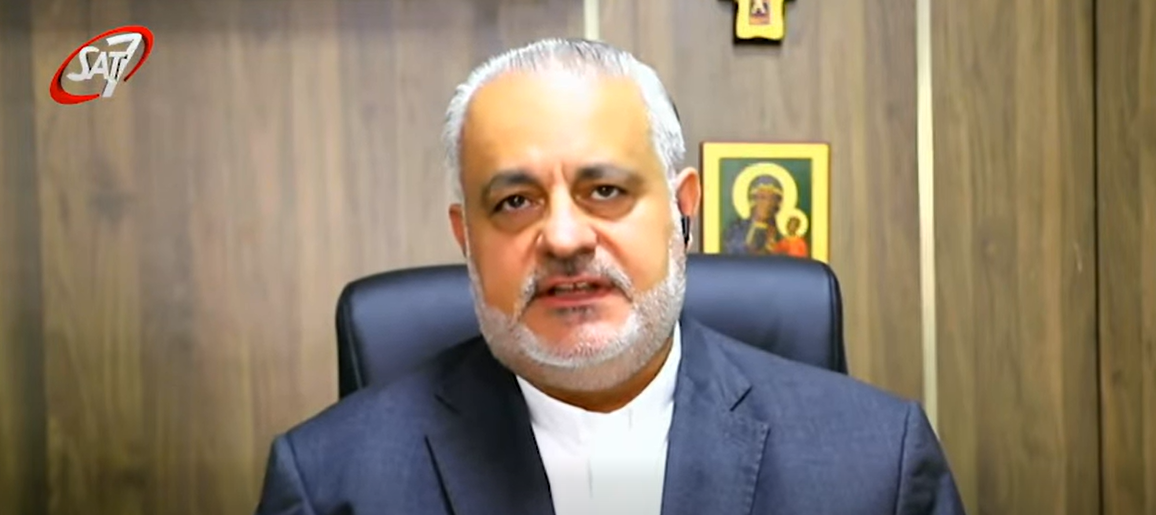
Video - Father Rifat Bader, Director of the Catholic Center for Studies and Media, Publisher of Abouna Website, and Representative of the MECC Executive Committee for Media Affairs
Highlights on the Webinar About "Ecumenical Media: Mission and Ethics", Organized by MECC
Via the SAT7 TV Channel
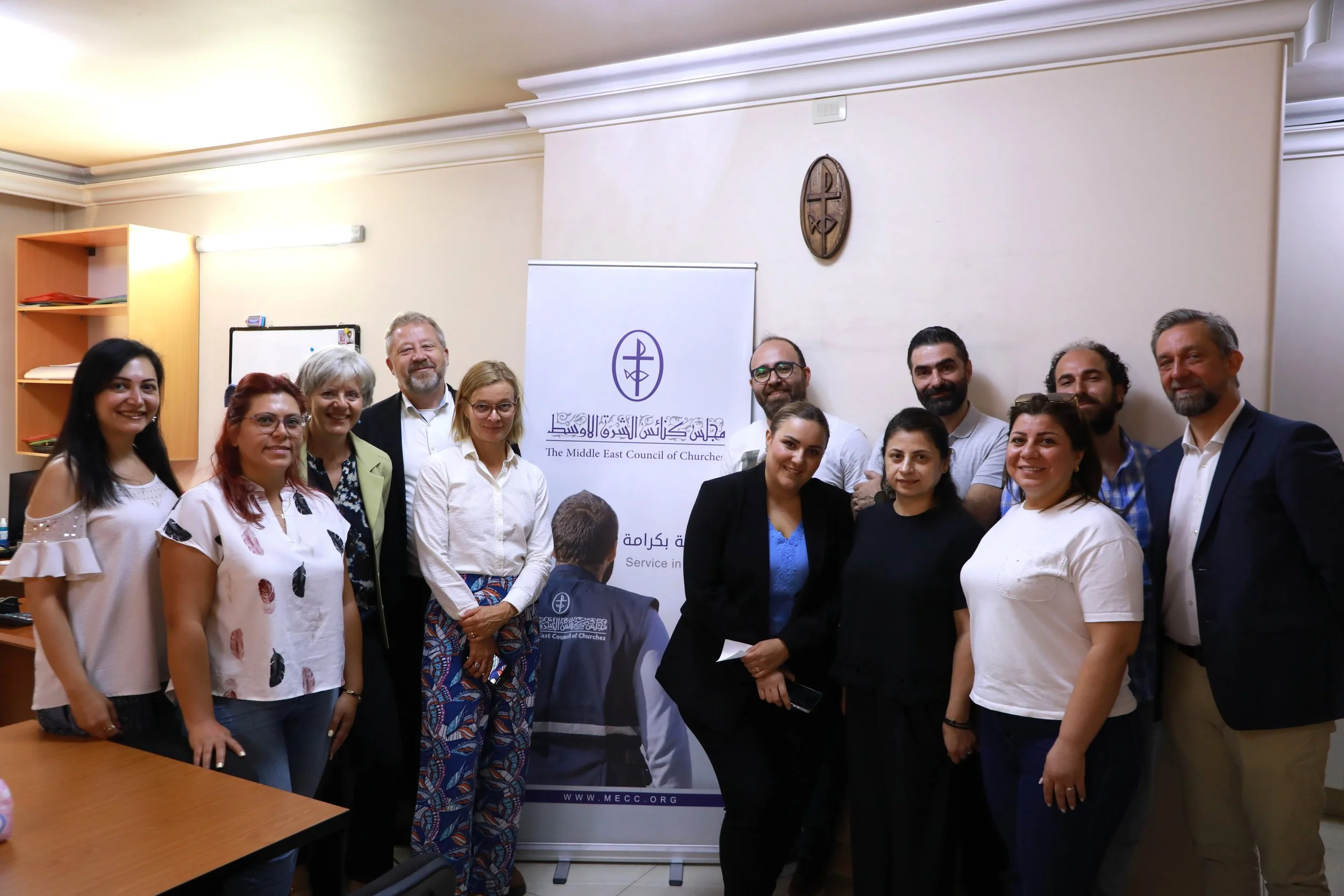
Danmission Delegation Visits MECC in Damascus to Strengthen Cooperation
A team from Danmission visited Diakonia and Social Service Department office of the Middle East Council of Churches (MECC), in Damascus, on the 10th of August. The visit included an introductory session during which MECC team presented an overview of the projects they implemented in Damascus, Rural Damascus, as well as in Dara’a Governorate, in addition to programs and projects carried out in cooperation between the two organizations.
The MECC team also provided an overview of the mechanisms and channels used to communicate transparently with beneficiaries, including the work of the Complaints and Response Mechanism (CARM), as well as Monitoring and Evaluation (M&E) mechanisms that accompany all stages of program implementation.
MECC and Danmission team also discussed the importance of the partnership between them in supporting the most vulnerable groups and contributing to meeting their basic needs.
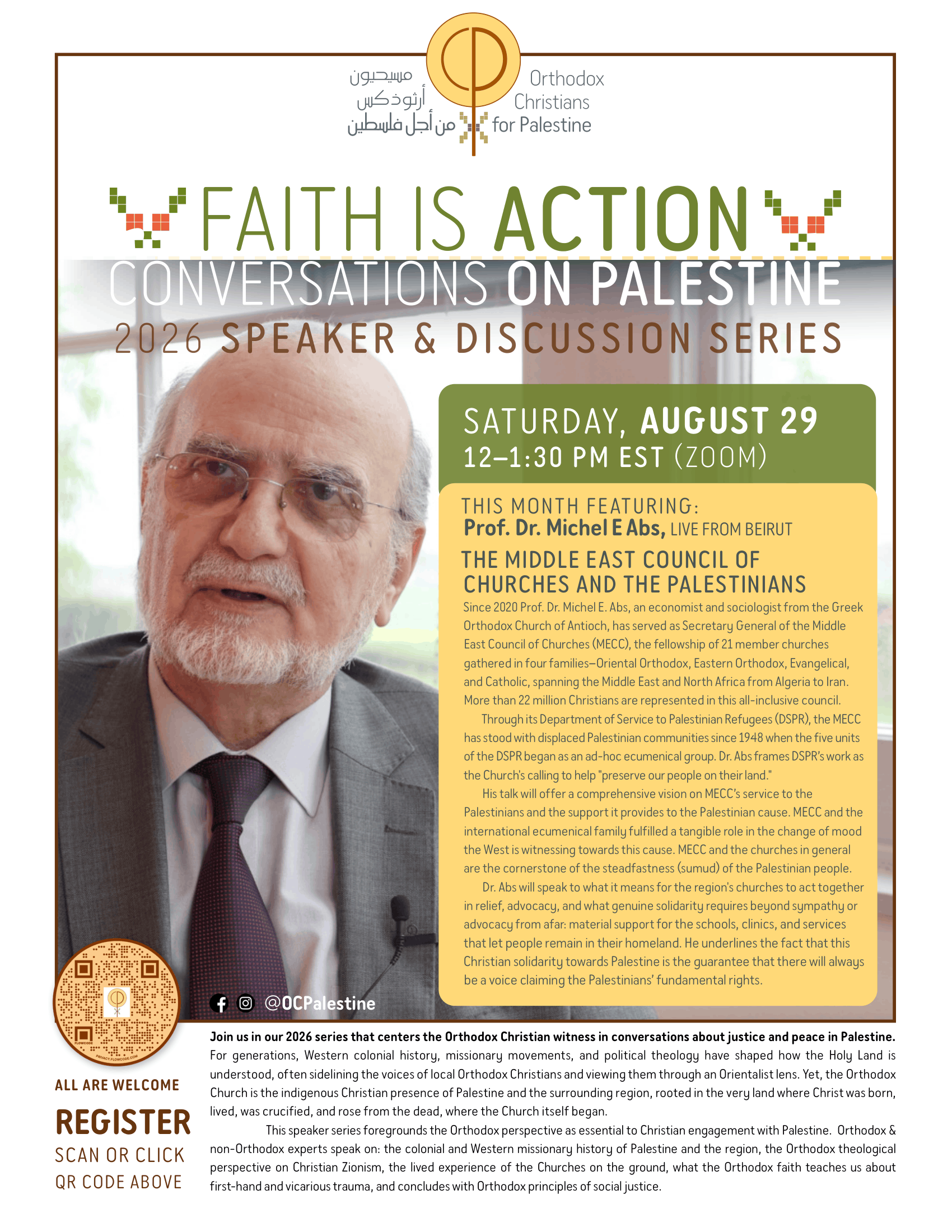
A Webinar with the MECC Secretary General Professor Michel Abs
Entitled "Faith is Action, Conversations on Palestine"
Organized By “Orthodox Christian for Palestine"
You can join the webinar via the following link: https://us06web.zoom.us/meeting/register/zwIpJ1LdT-22pTUHLrDDVg#/registration
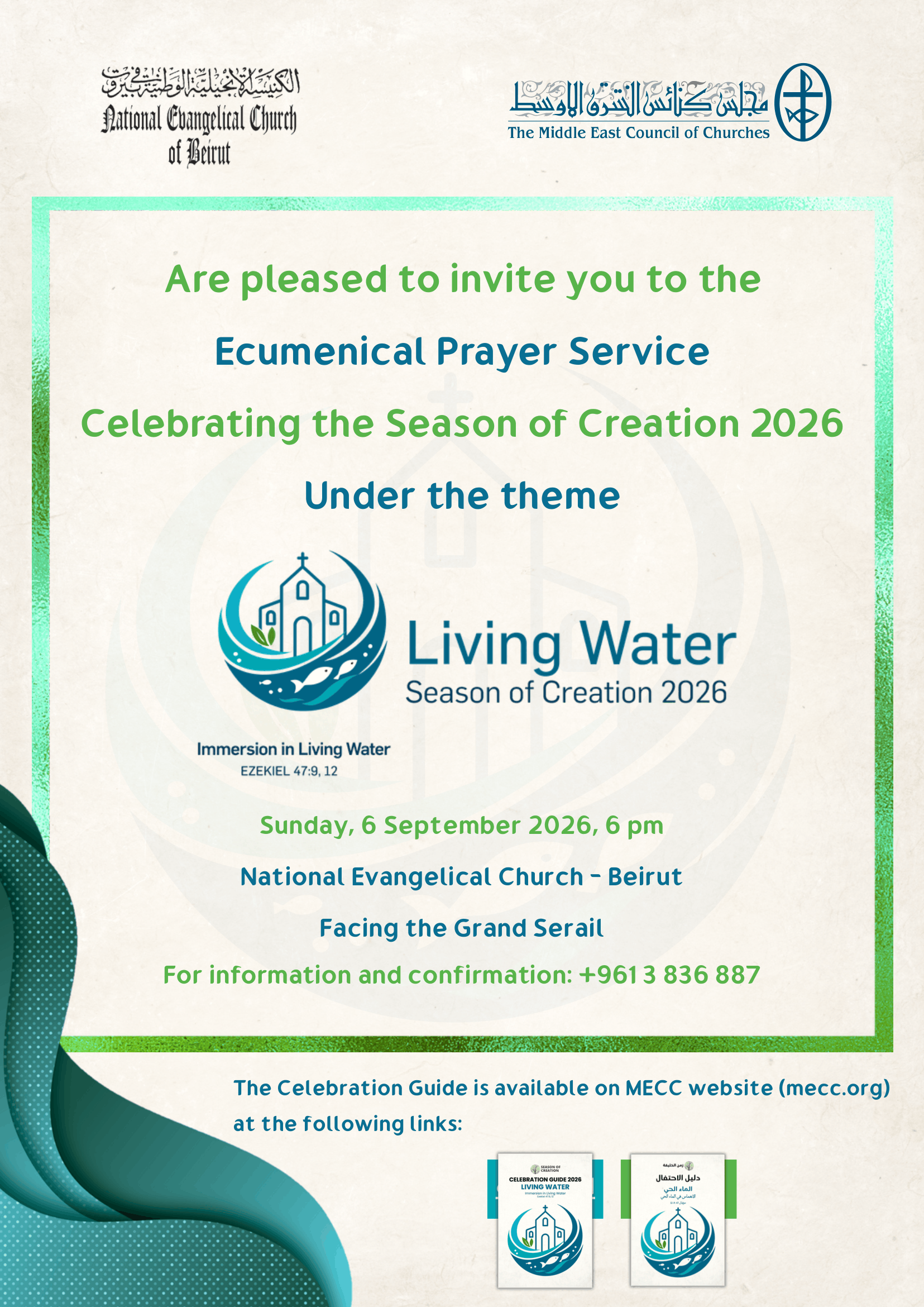
The Middle East Council of Churches and the National Evangelical Church of Beirut
Are Pleased to Invite You to the Ecumenical Prayer Service
Celebrating the Season of Creation 2026
Guide of the Season of Creation 2026 Celebration in Arabic and English: https://www.mecc.org/mecc/2026/6/23/the-middle-east-council-of-churches-issues-the-season-of-creation-2026-guide-in-arabic.
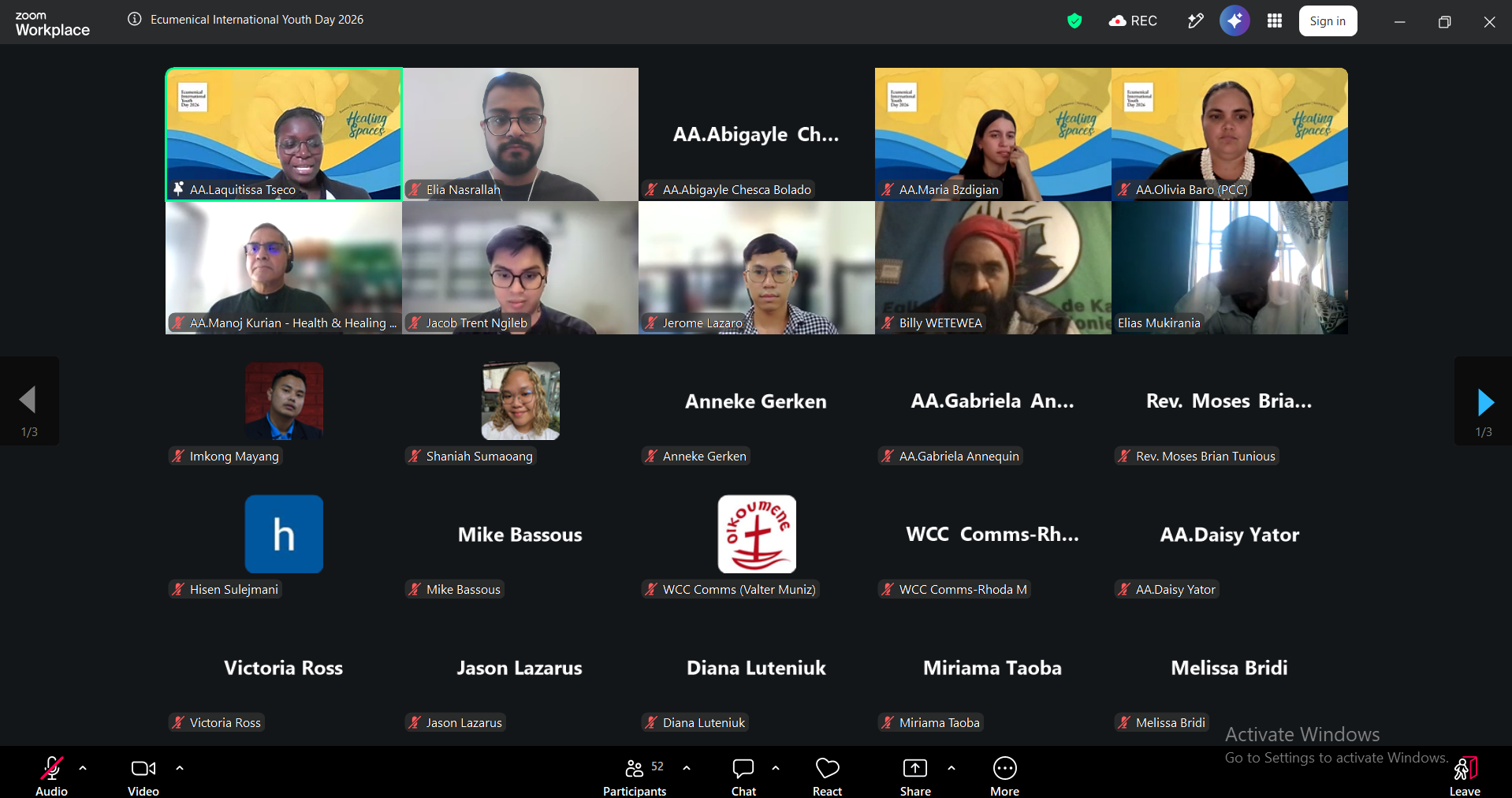
“Healing Spaces”
Global Webinar on the Occasion of the Ecumenical International Youth Day 2026
A Gathering Affirming the Importance of Youth in the Present and Future of the Ecumenical Movement
On the occasion of the Ecumenical International Youth Day 2026, a global online Ecumenical webinar was held under the title “Healing Spaces”, organized by the World Council of Churches (WCC), in partnership with ACT Alliance, Oikoumene Pasifika, and the Middle East Council of Churches (MECC).
The webinar took place on Thursday, August 13, 2026, under the theme “Restore – Empower – Strengthen – Thrive.” It brought together youth from around the world, alongside representatives of many regional and international Ecumenical organizations and bodies. Among the participants were Ms. Maria Bzdigian, Project Coordinator in the MECC Theological and Ecumenical Department, and Elia Nasrallah, Communication and Media Officer in the MECC Communication and Public Relations Department.
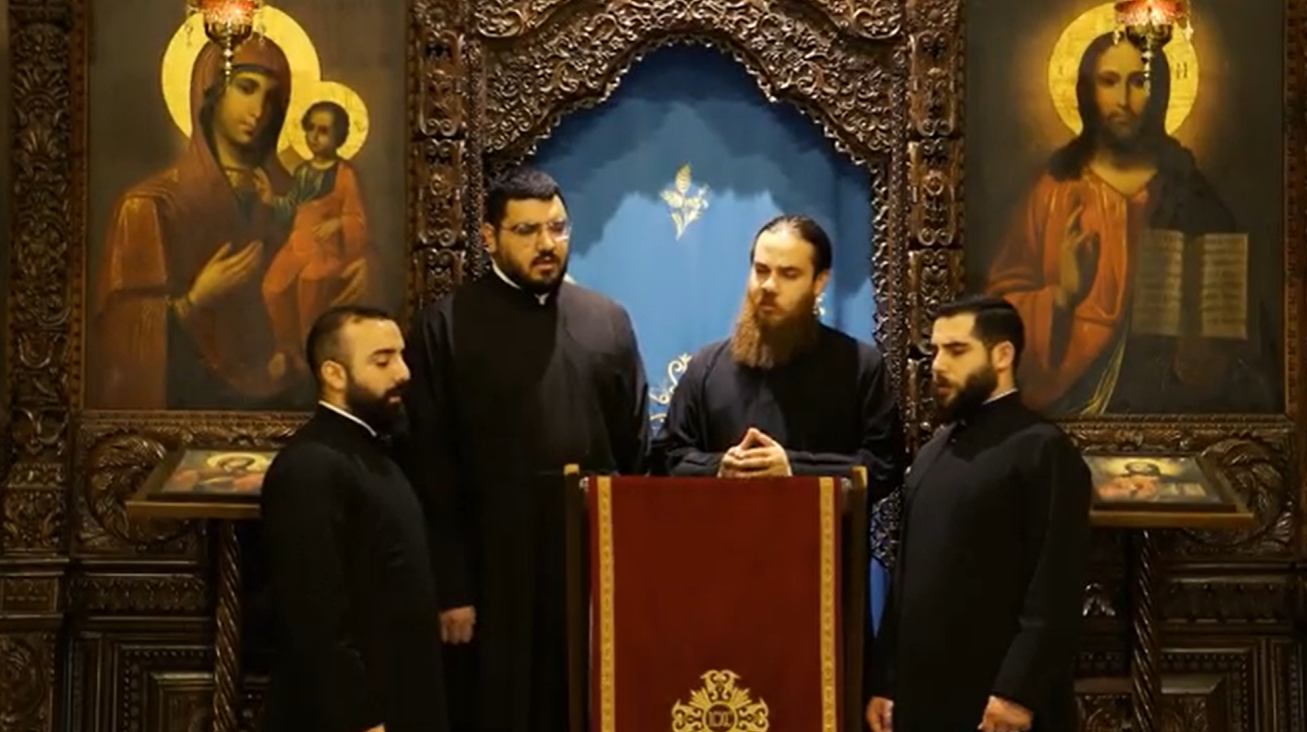
Video - Hymn to the Theotokos (2)
Choir of the Patriarchal Monastery of Our Lady of Balamand
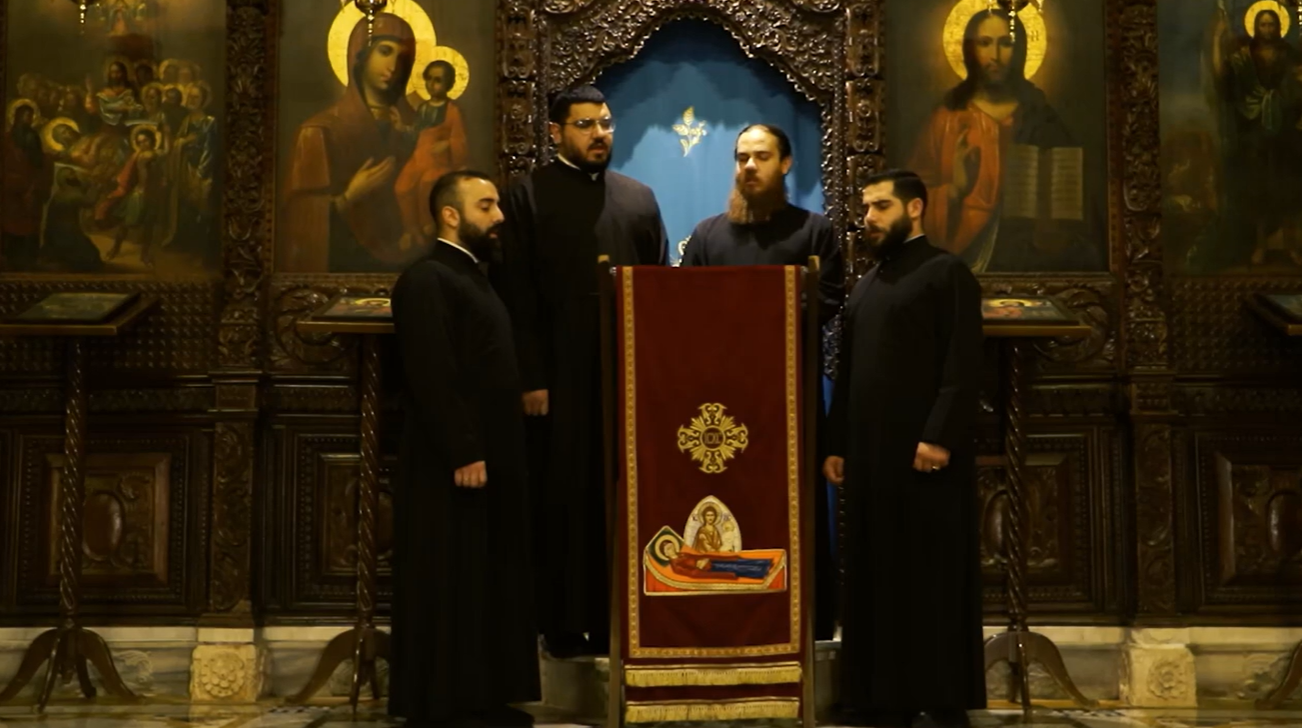
Video - Hymn to the Theotokos (1)
Choir of the Patriarchal Monastery of Our Lady of Balamand

A Webinar with the MECC Secretary General Professor Michel Abs
Entitled "Faith is Action, Conversations on Palestine"
Organized By “Orthodox Christian for Palestine"
You can join the webinar via the following link: https://us06web.zoom.us/meeting/register/zwIpJ1LdT-22pTUHLrDDVg#/registration
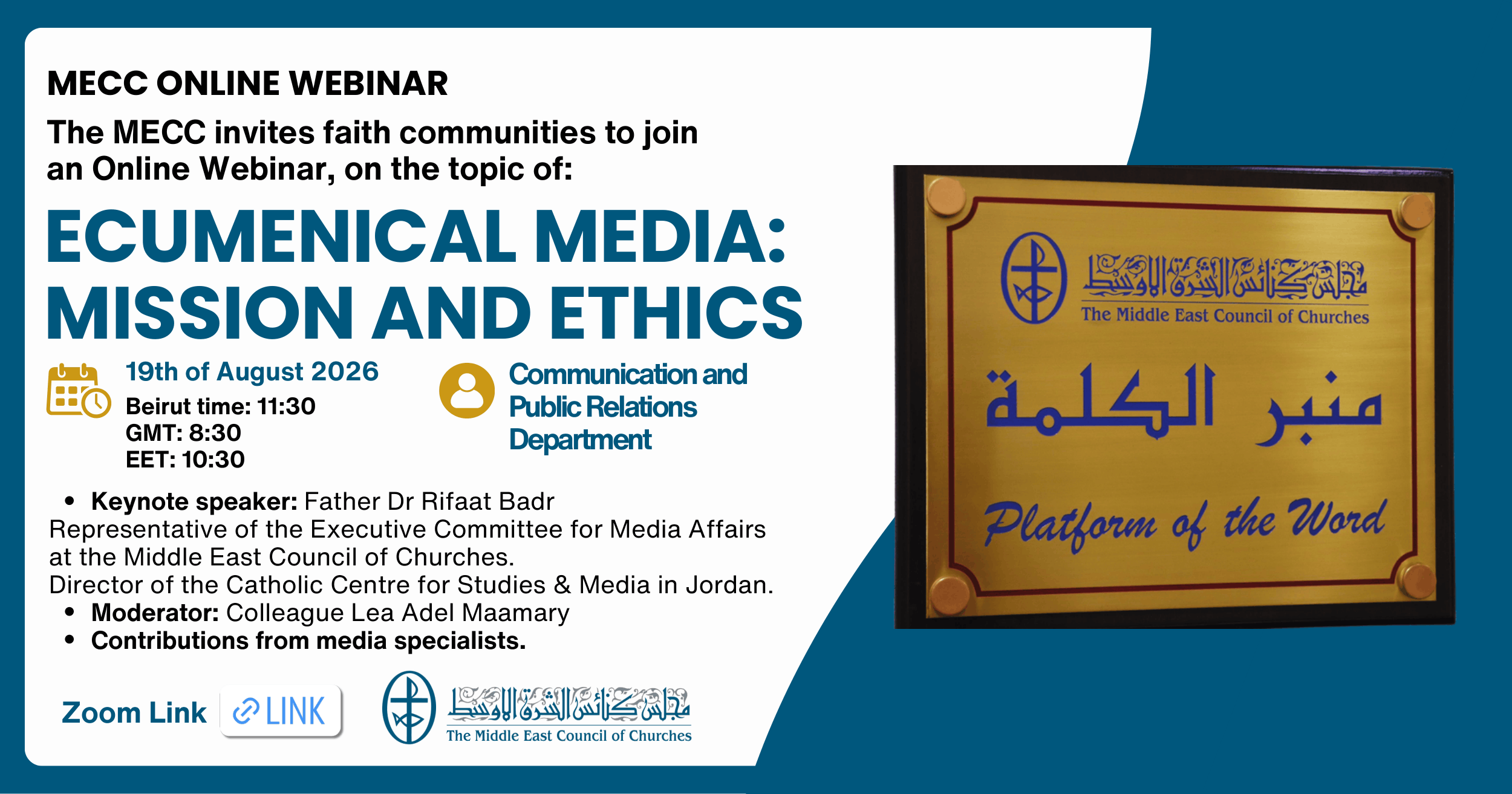
A Webinar About Ecumenical Media: Mission and Ethics
Organized By MECC
You can join this webinar through the following Zoom link: https://us06web.zoom.us/j/86864203294?pwd=7KJDrYiNKaSuFtViTB3BlKwTaxUOah.1
Video - "Ecumenical Horizons" Program
Produced by MECC
Mrs. Eugenia Ghabach and Father De Gaulle Tannous, Priest of the Saint John the Baptist Parish in Safinat Al-Dreib, Akkar: "The church is the family home, and we must draw strength and courage from the example of Saint John the Baptist"
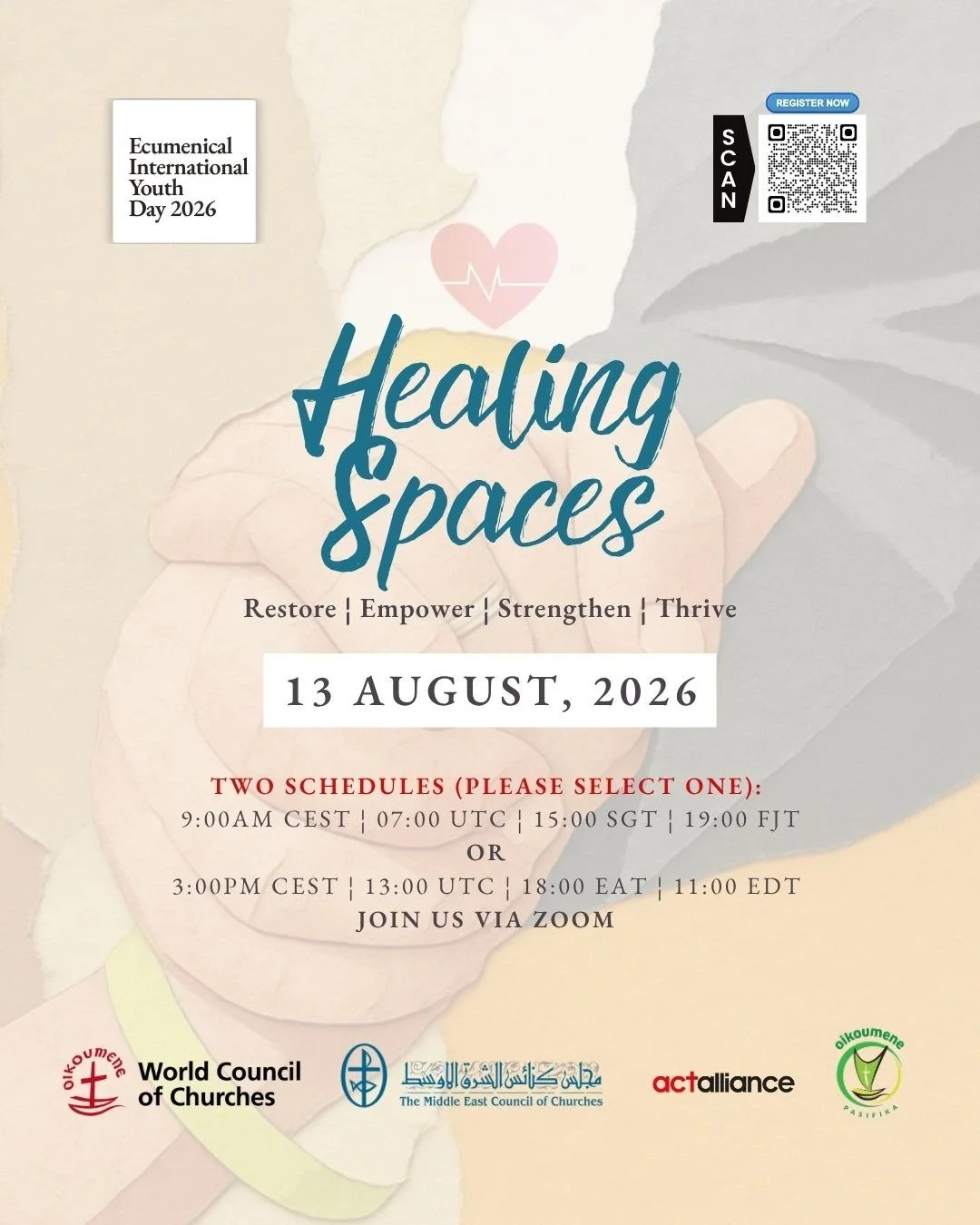
Healing Spaces
A Webinar on the Occasion of the Ecumenical International Youth Day 2026
Healing begins when we make space for one another.
In a world carrying the weight of conflict, uncertainty, grief, and change, we are invited to pause, listen, and journey together toward healing.
Join young people from across the globe for Ecumenical International Youth Day 2026 as we gather around the theme Healing Spaces—creating communities where restoration, hope, and peace can flourish.