
MECC
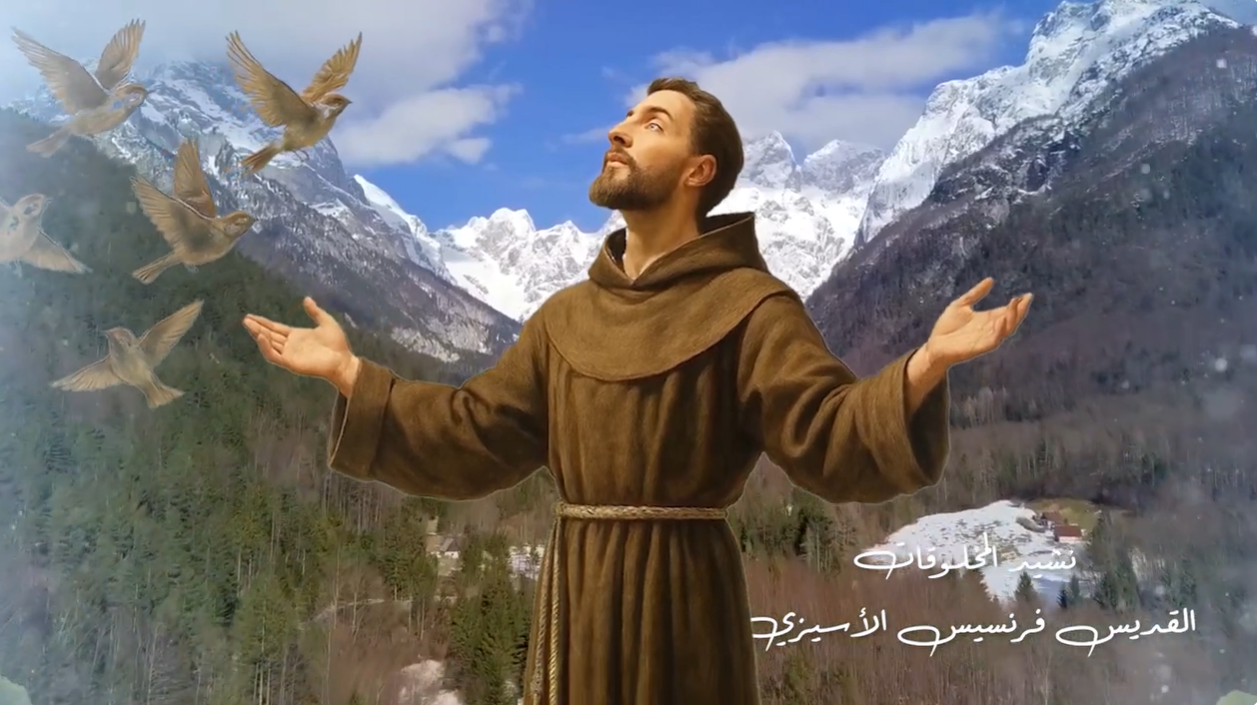
Video - The Canticle of the Creatures
By Saint Francis of Assisi
Performed by: The Glory of Heaven Choir
Video Produced By MECC
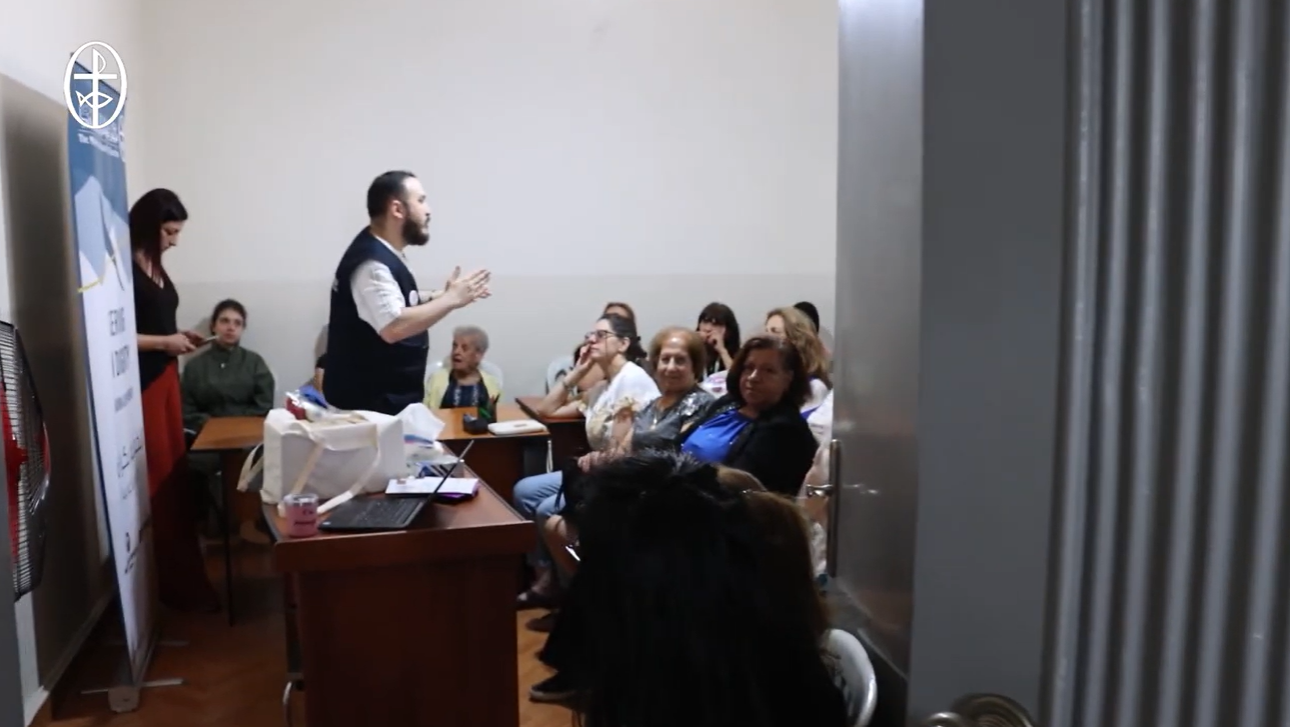
Video – MECC Organizes, Through Its Diakonia and Social Service Department, Lebanon’s Office
Awareness Sessions for Displaced People and Women from Host Communities
Video - "Ecumenical Horizons" Program: Episode 43
Produced by MECC
“Ecumenical Horizons” is a weekly program that features spiritual, cultural, intellectual, educational, youth and environmental topics.
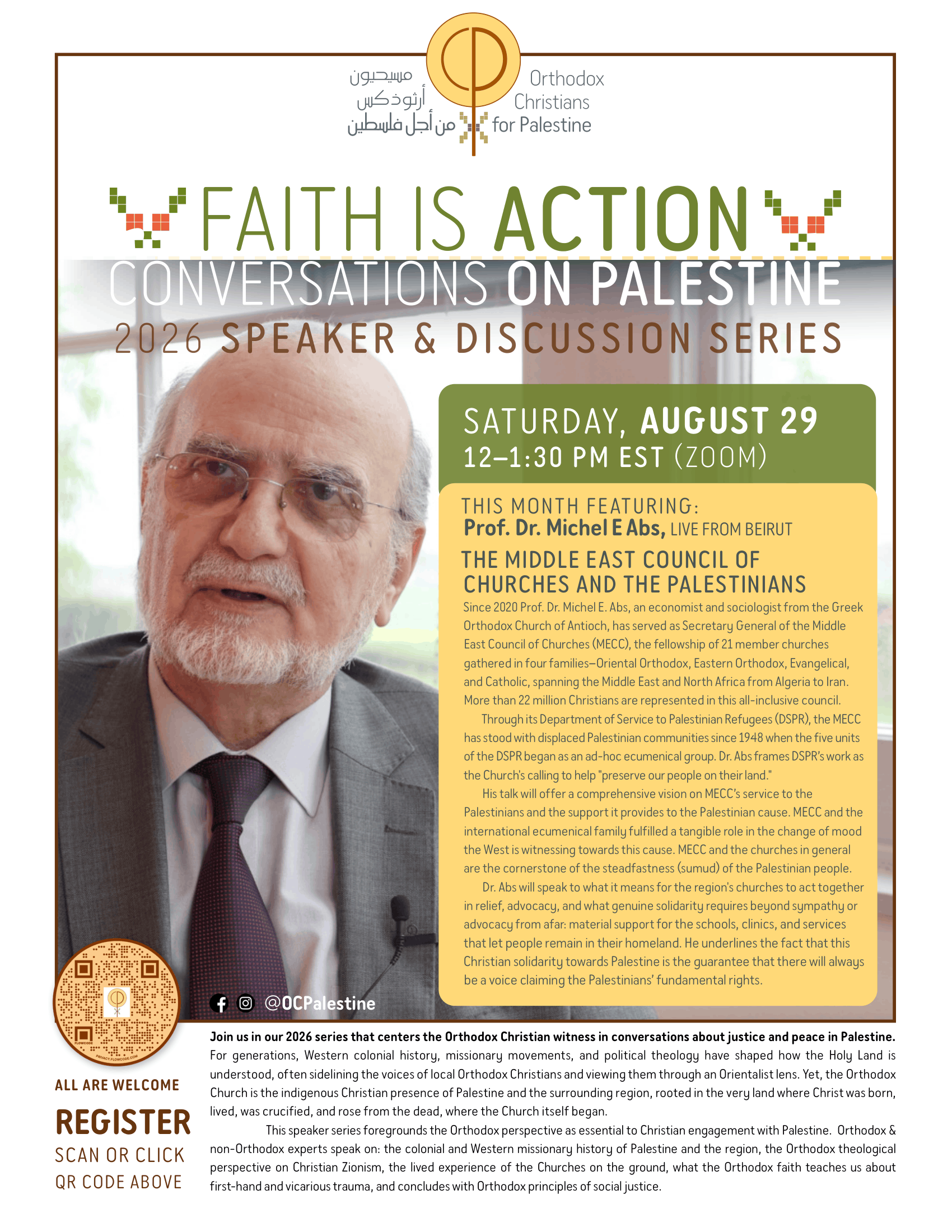
A Webinar with the MECC Secretary General Professor Michel Abs
Entitled "Faith is Action, Conversations on Palestine"
Organized By “Orthodox Christian for Palestine"
You can join the webinar via the following link: https://us06web.zoom.us/meeting/register/zwIpJ1LdT-22pTUHLrDDVg#/registration
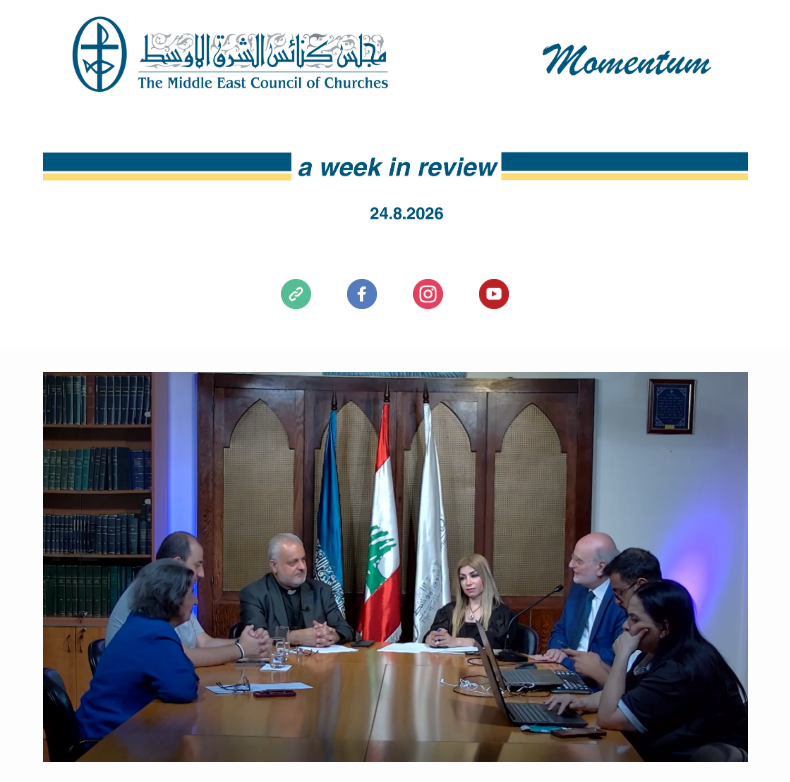
The Middle East Council of Churches (MECC) Issues Its Weekly Newsletter
“Momentum”
24-8-2026
This issue includes reports, videos, news, articles, and a full coverage of the latest developments of the Middle East Council of Churches (MECC), as well as the Church, Ecumenical, and social events…
This is in addition to the weekly word of the MECC Secretary General Professor Michel Abs which is entitled in this issue "Autonomy in Organizations: Between Accountability and Governance".
You can check the issue via the following link: https://mailchi.mp/ee9f27c09e13/momentum-mecc-weekly-newsletter.
You can also subscribe to the Momentum Newsletter via the following link:
https://mecc.us14.list-manage.com/subscribe?id=fd3381352a&u=1db32cafe9ea32b38eb90480a.
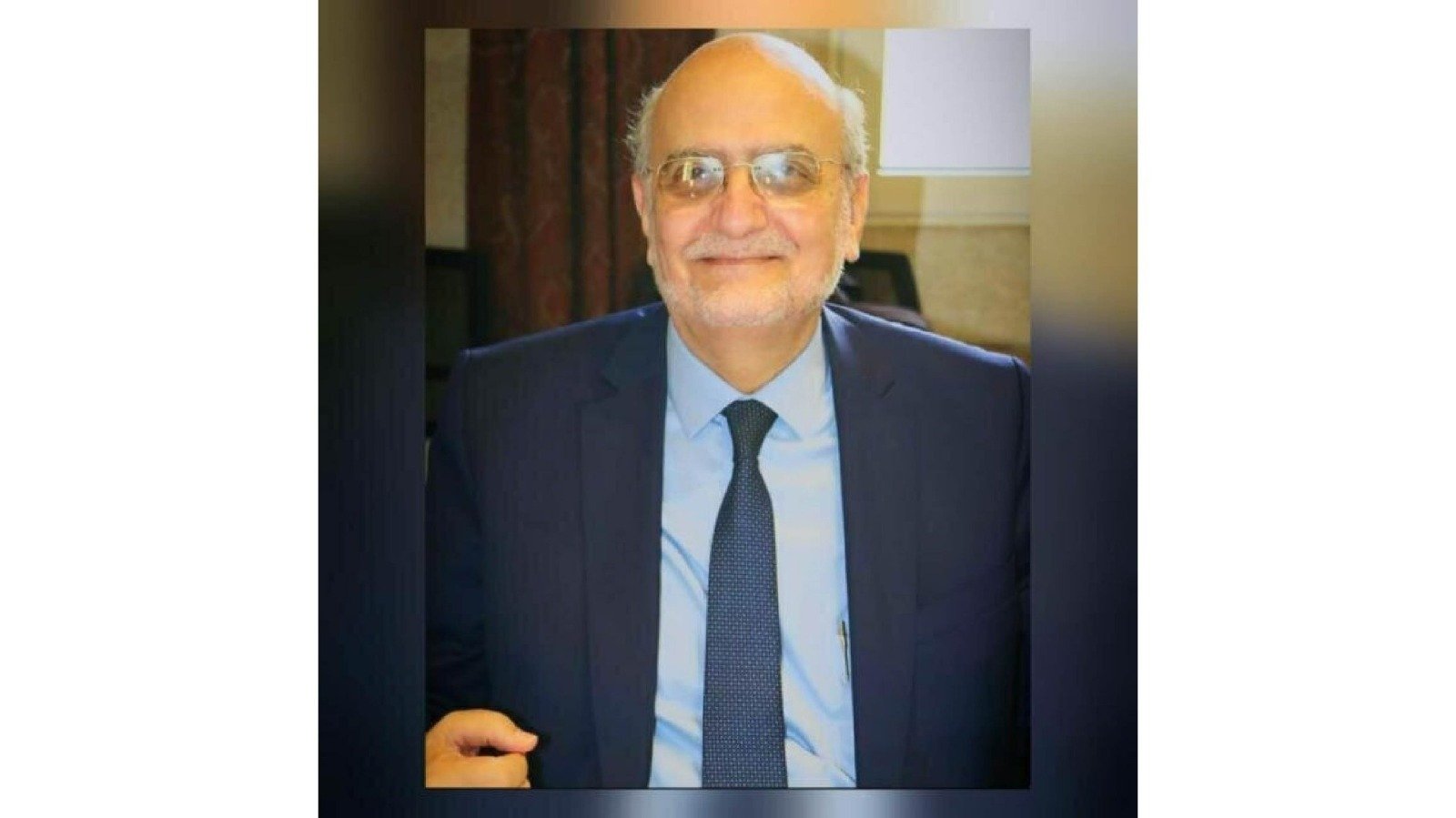
Autonomy in Organizations: Between Accountability and Governance
Professor Michel Abs
The Secretary General of the Middle East Council of Churches (MECC)
Autonomy is one of the important principles in the management of modern institutions, particularly large institutions that include branches, departments, or specialized units differing in the nature of their functions and working environments. Autonomy does not mean separation from the parent institution, nor complete freedom from its systems and authority. Rather, it means granting a specific unit a defined degree of freedom to make decisions and manage its affairs within a general framework of shared rules and objectives.
In its general sense, autonomy is the ability of a department or branch to organize its work and make decisions related to its area of competence without referring to the central administration on every detail. Its purpose is to improve efficiency, accelerate work, encourage initiative, and enable local officials to respond to the particular circumstances they face. However, such autonomy is not absolute; rather, it is an organized delegation of authority subject to the principles of governance and accountability.
The autonomy of branches or departments is achieved when they have clearly defined responsibilities, accountable leadership, designated resources, an established system of operation, and explicitly stated powers. Among its most important conditions are a clear distribution of responsibilities between the parent institution and the autonomous unit, the absence of overlapping powers, and the existence of monitoring and evaluation mechanisms ensuring that autonomy does not develop into administrative, financial, or institutional separation…
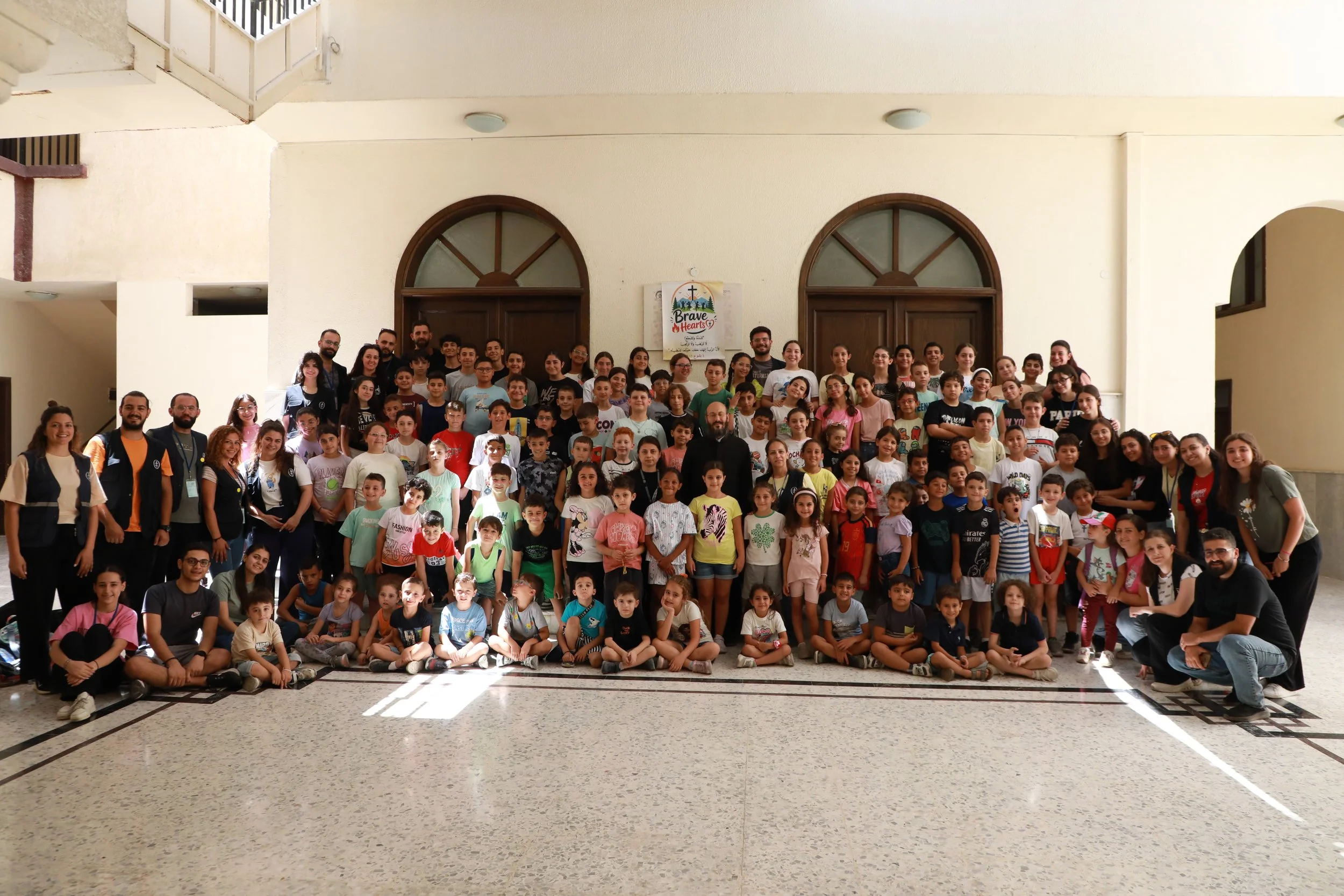
Brave Hearts
A Safe Space for Children to Develop their Skills and Make Positive Use of their Time
A Summer Club Organized by MECC in Syria
The Middle East Council of Churches (MECC), through its Diakonia and Social Service Department – Syria’s Office, organized a summer club for 102 children, aged between 5 and 14, in the city of Erbin in Rural Damascus Governorate.
The summer club, titled “Brave Hearts” included a wide range of interactive activities, including football, basketball, other physical exercises, theatre, choir, drawing, and handicrafts.
It also featured cognitive activities such as Rubik’s Cube and science experiments, as well as household skills, basic first aid principles, and purposeful recreational trips.
The club also offered computer skills courses for children aged 13 to 14 years old, in addition to life skills sessions for children of different age groups, with the aim of strengthening their resilience in dealing with themselves and their surroundings.
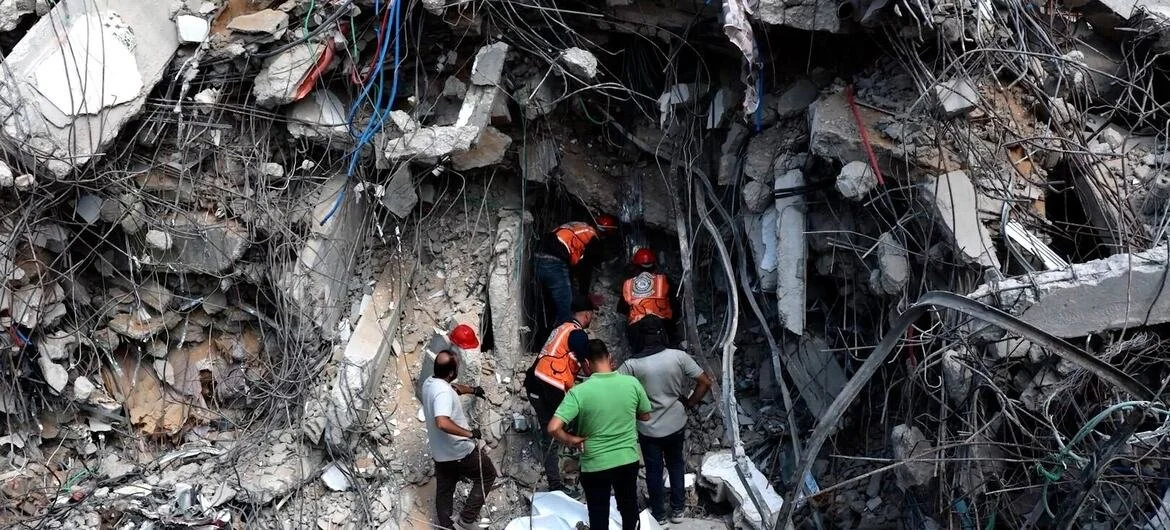
Palestine Observatory - Report: Monday 24 August 2026
مرصد فلسطين – تقرير الاثنين 24 آب/ أغسطس 2026
In light of the worsening humanitarian and social conditions in the region due to the escalation of security operations, the Middle East Council of Churches presents a weekly report entitled "Palestine Observatory," which includes the latest developments in Palestine, especially amid the deteriorating living, social, and security conditions in the country. Some texts will be in Arabic, and some others in English, depending on the source.
في ظلّ تفاقم الظروف الإنسانيّة والاجتماعيّة في المنطقة جرّاء تصاعد العمليّات الأمنيّة فيها، يقدّم مجلس كنائس الشرق الأوسط تقريرًا أسبوعيًّا بعنوان "مرصد فلسطين" حيث يتضمّن آخر المستجدّات الّتي تشهدها فلسطين خصوصًا وسط تدهور الظروف المعيشيّة والاجتماعيّة والأمنيّة في البلاد. ستكون بعض النصوص باللغة العربية، وبعضها الآخر باللّغة الإنكليزيّة، وذلك حسب المصدر.
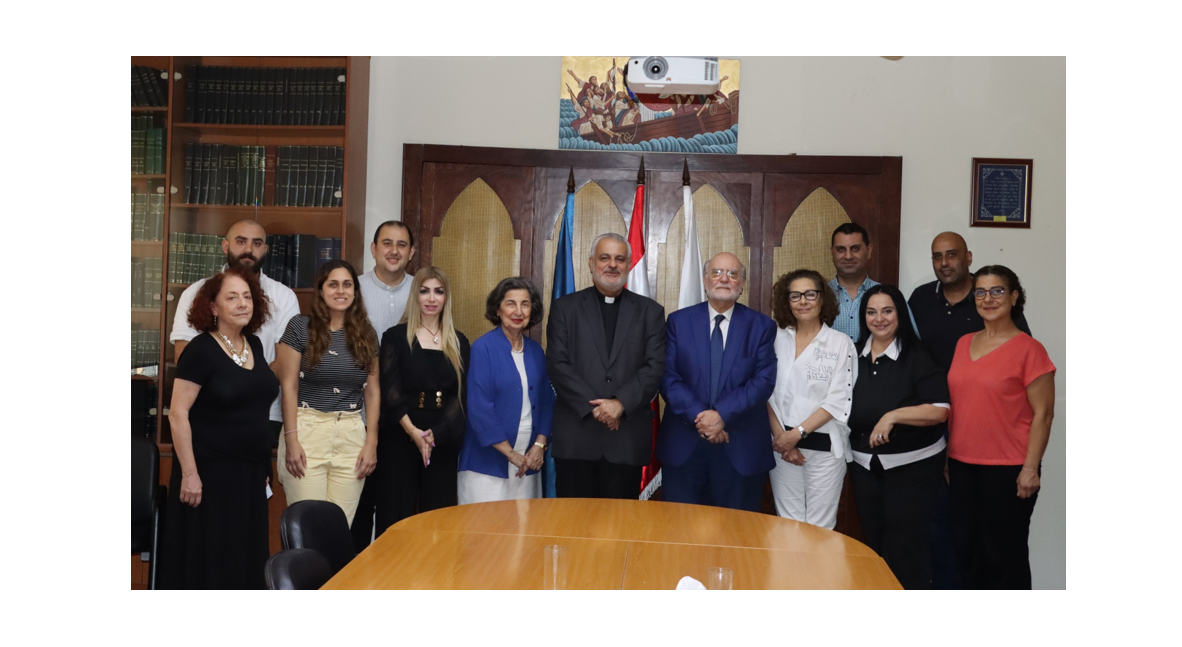
Father Dr. Rifat Bader Visits the Middle East Council of Churches in Beirut
Emphasis on the Need to Strengthen Media Cooperation
Father Dr. Rifat Bader, General Director of the Catholic Center for Studies and Media in Jordan, Publisher of “Abouna” Website, and Representative of the Executive Committee of the Middle East Council of Churches (MECC) for Media Affairs, visited the Council’s headquarters in Beirut on Wednesday, August 19, 2026. He was received by the MECC Secretary General Professor Michel Abs, and the General Secretariat team, in the presence of the Journalist Rafi Sayegh, from “Abouna” Website.
The visit took place as part of Father Bader’s participation in a seminar organized by MECC entitled “Ecumenical Media: Mission and Ethics,” where he delivered a lecture addressing the subject of Ecumenical media and the importance of its role today in serving the Church and society.
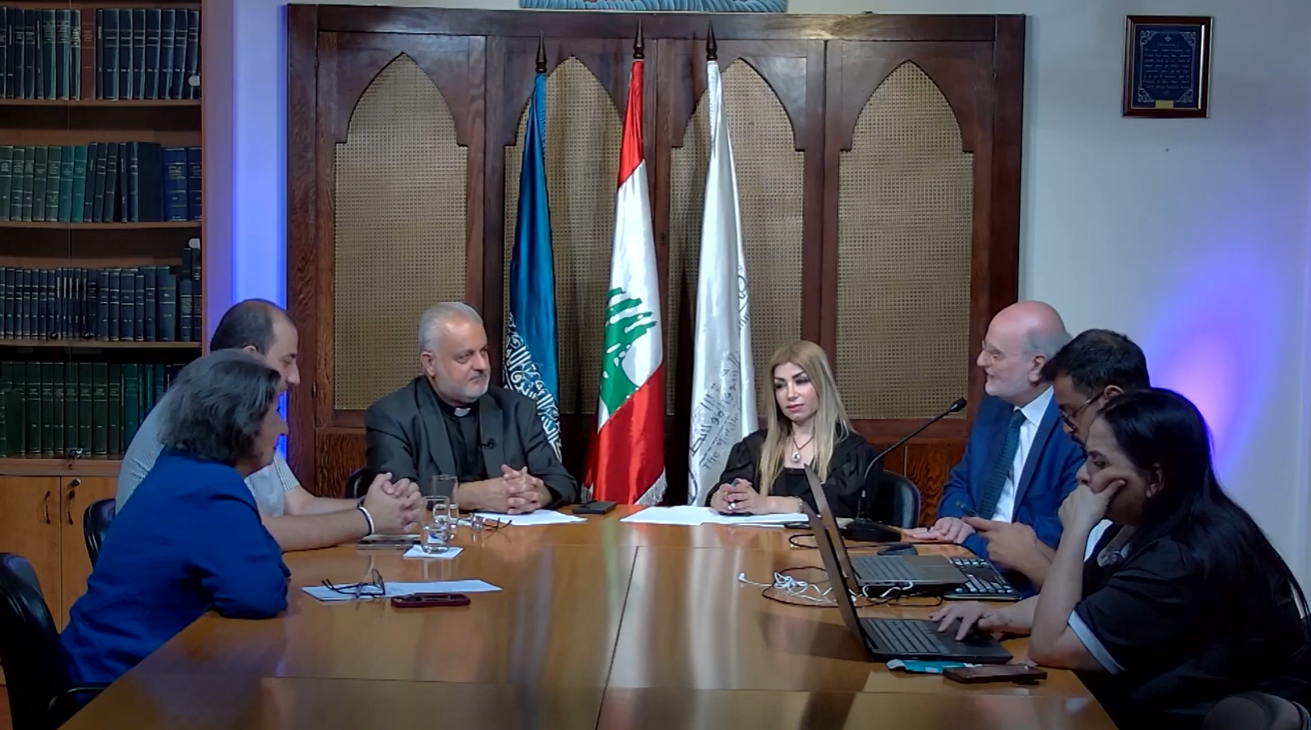
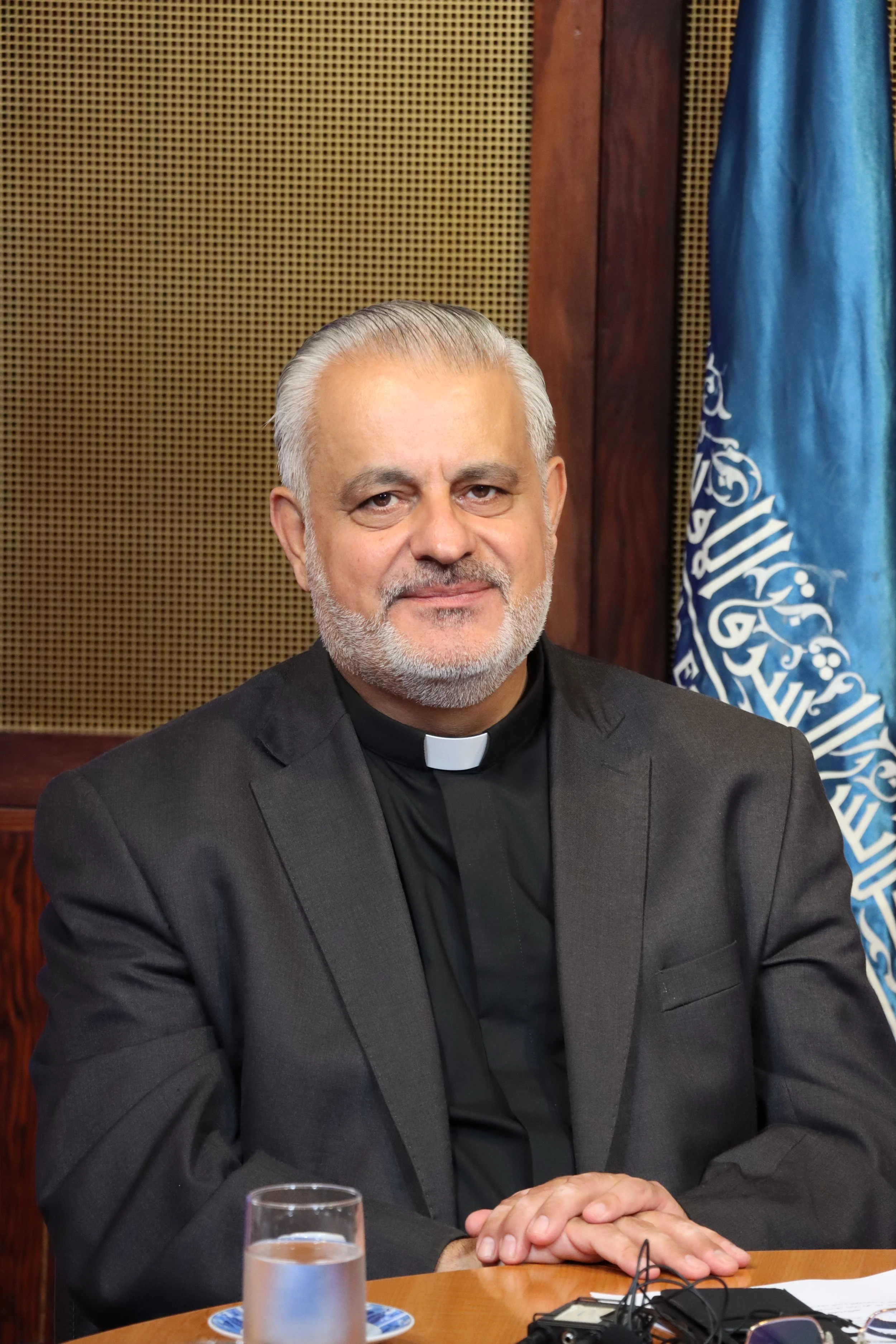
The Ecumenical Spirit in the Media of the Churches of the East:
From the “Ecumenism of Blood” to the “Ecumenism of the Word”
A Lecture By Father Dr. Rifat Bader
Father Dr. Rifat Bader, General Director of the Catholic Center for Studies and Media in Jordan, Publisher of “Abouna” Website, and Representative of the Executive Committee of the Middle East Council of Churches (MECC) for Media Affairs, delivered this lecture in Arabic at a webinar organized by MECC, entitled “Ecumenical Media: Mission and Ethics”, on Thursday, August 19, 2026.
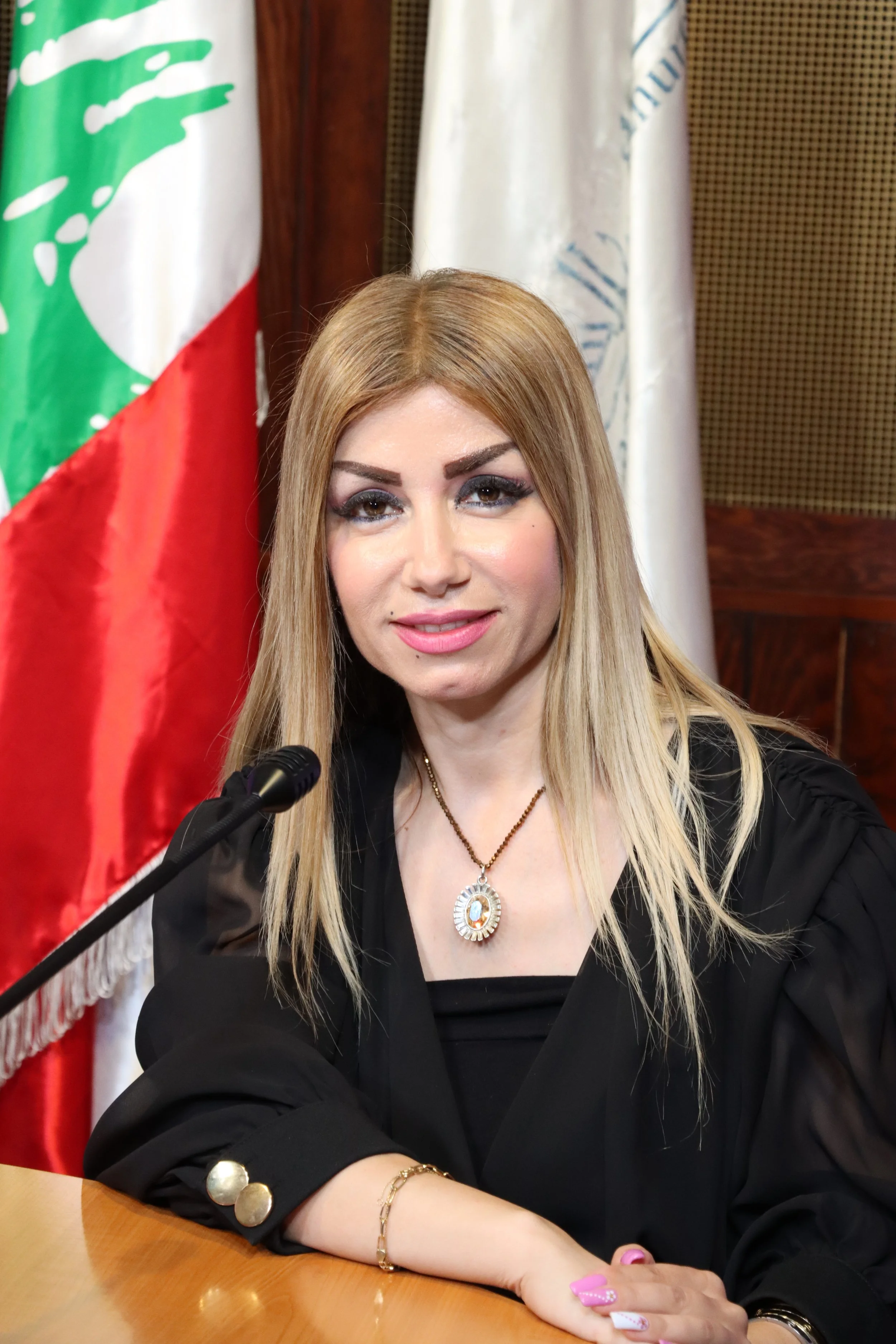
Word of the Journalist Lea Adel Maamary
At the MECC Webinar About “Ecumenical Media: Mission and Ethics”
Journalist Lea Adel Maamary, Coordinator of Media and Church Relations at the Middle East Council of Churches (MECC), delivered this word in Arabic at a webinar organized by MECC, entitled “Ecumenical Media: Mission and Ethics”, on Thursday, August 19, 2026.
Ecumenical Media: Mission and Ethics
A Webinar Organized by MECC
Secretary General Prof. Michel Abs: “Media reflects the splendor of Christianity by showcasing its culture and its diverse dimensions”
Fr. Dr. Rifat Bader: “we have a responsibility to translate this witness into an Ecumenism of the word: media that brings people together rather than divides them, heals rather than wounds, and builds rather than destroys”
Journalist Lea Adel Maamary: “Ecumenical media serve as a bridge for dialogue, a space for encounter, a tool for strengthening a culture of unity”
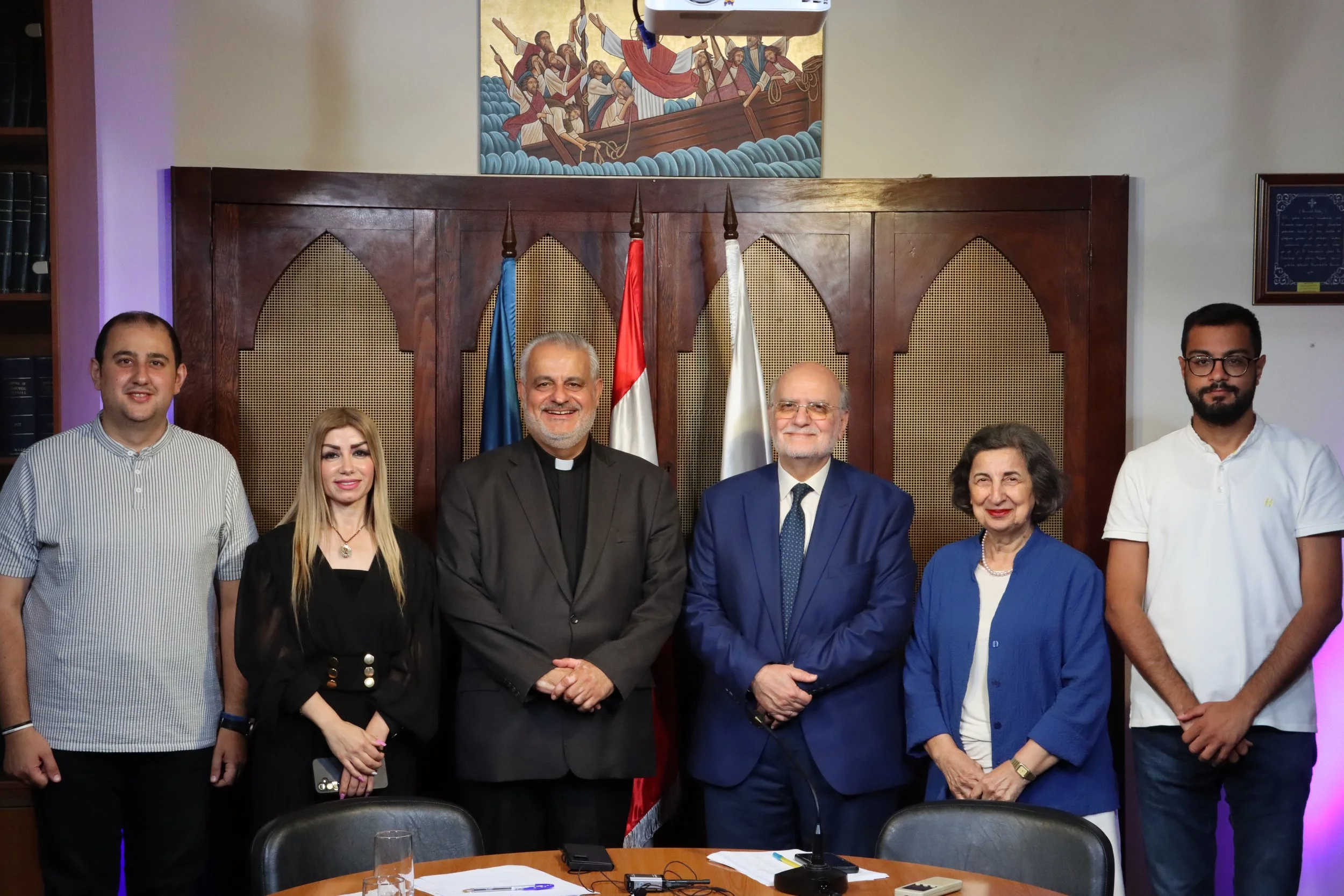
As part of the series of seminars launched by the Middle East Council of Churches (MECC), a new seminar entitled “Ecumenical Media: Mission and Ethics” was held, with Father Dr. Rifat Bader, General Director of the Catholic Center for Studies and Media in Jordan, Publisher of “Abouna” Website, and Representative of the MECC Executive Committee for Media Affairs. It was moderated by the Journalist Lea Adel Maamary, Coordinator of Media and Church Relations at MECC.
The seminar was held on Wednesday, August 19, 2026, in the presence of the MECC Secretary General Professor Michel Abs. It was attended in person at MECC headquarters in Beirut by Mrs. Seta Hadeshian, MECC Associate Secretary General, Professor Laure Abi Khalil, Coordinator of the Dialogue, Social Cohesion, and Human Dignity Rehabilitation Programs at MECC, Journalist Rafi Sayegh, and the MECC media team.
Online attendees were Father Dr. Nicolas Bustros, MECC Associate Secretary General, colleagues from the MECC team, as well as a Journalists and Experts from the Egyptian Council of Churches, “Abouna” Website, and many media outlets across the region.
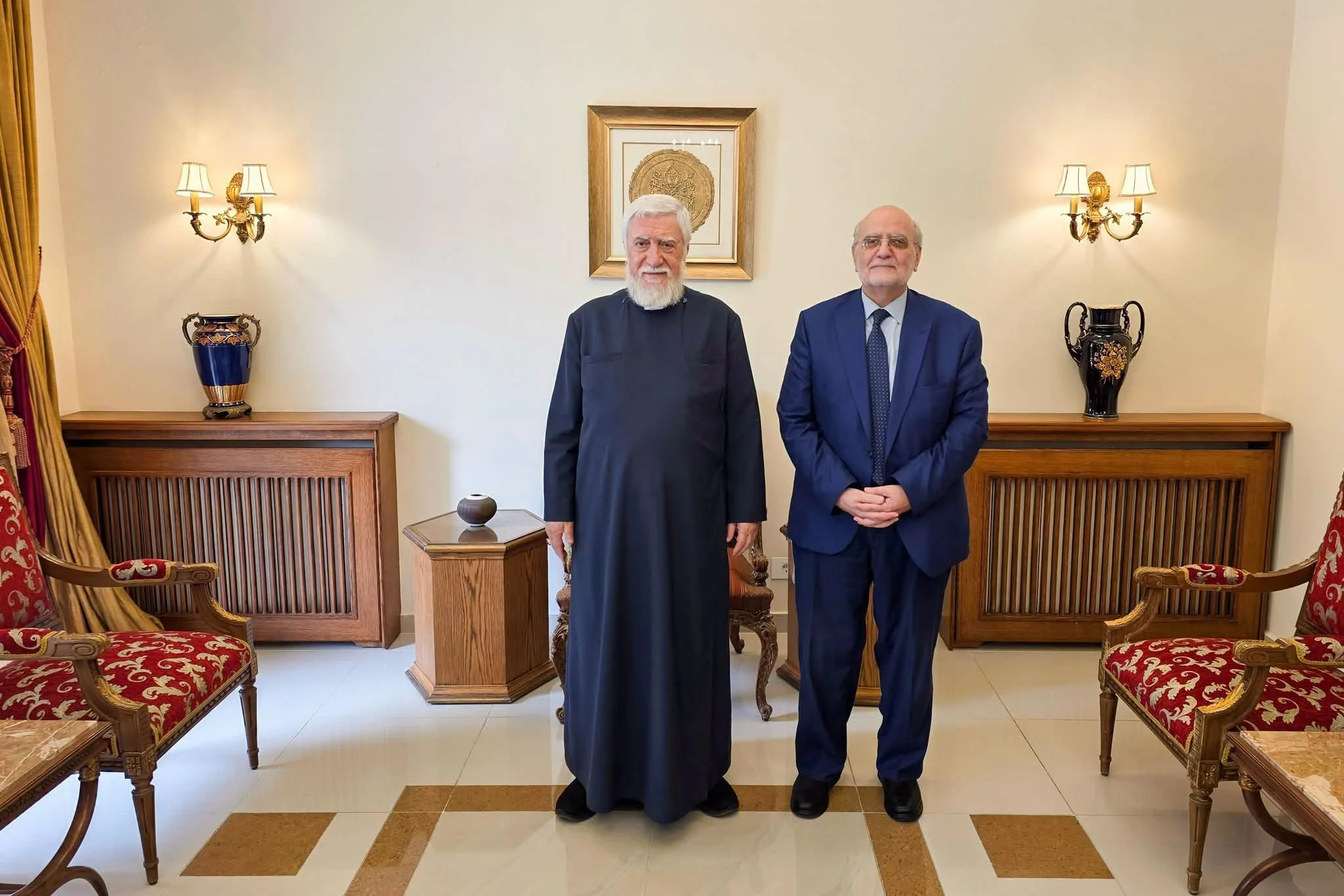
His Holiness Catholicos Aram I Receives the MECC Secretary General Professor Michel Abs
His Holiness Catholicos Aram I, Catholicos of the Armenian Orthodox Church of the Holy See of Cilicia, received Professor Michel Abs, Secretary General of the Middle East Council of Churches, at his summer residence in Bikfaya.
It is worth noting that His Holiness is President of the World Council of Churches and Honorary President of the Middle East Council of Churches. He is also a scholar in the field of ecumenism and has authored numerous publications on the subject.
This visit comes at a particularly critical time for the region, requiring an assessment of current developments and a renewed vision for the future of ecumenical work in the region.
The discussions addressed the general situation in the Middle East and the need for greater interaction among its various components in order to secure a better future for its peoples. Particular emphasis was placed on the essential role and influence of Christians within the broader regional landscape, which is characterized by intense dynamism and profound transformations.
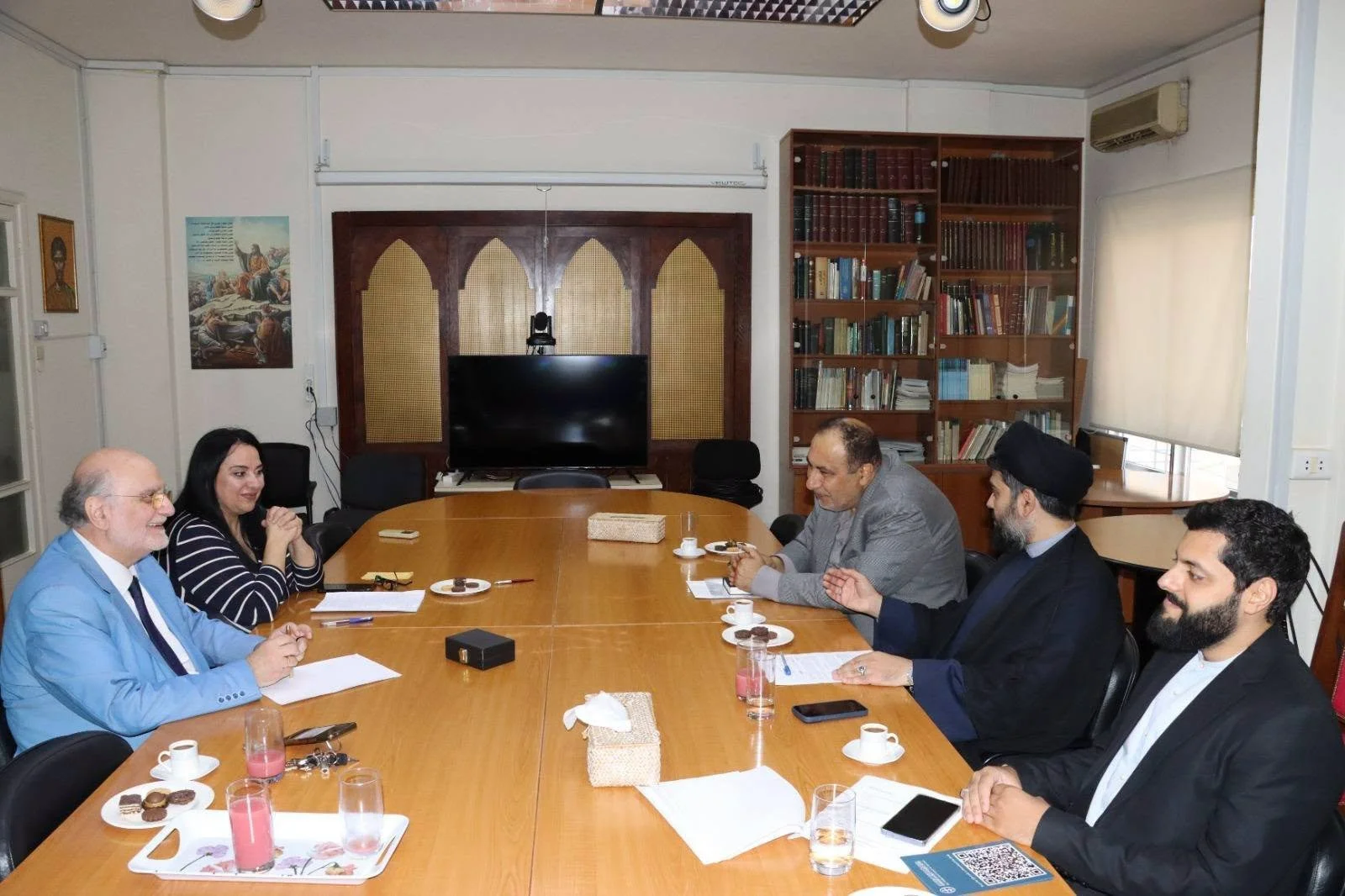
The Cultural Counselor of the Islamic Republic of Iran in Lebanon Dr. Sayyed Mohammad Rida Mortadawi Heads Delegation
On a Visit to MECC Secretary General Professor Michel Abs
Emphasis on Strengthening Cultural and Social Cooperation
The Secretary General of the Middle East Council of Churches (MECC) Professor Michel Abs, received Dr. Sayyed Mohammad Rida Mortadawi, the Cultural Counselor of the Islamic Republic of Iran in Lebanon, at the head of a delegation including Dr. Ali Kasir, Media Affairs Officer, and Mr. Jawad Tabrizi, Director of the Counselor’s Office (Secretary). The meeting took place on Tuesday, August 18, 2026, at the MECC headquarters in Beirut.
The meeting was attended from the MECC side by Professor Laure Abi Khalil, Coordinator of the “Dialogue, Social Cohesion and Human Dignity” programs.
During the meeting, the participants discussed many issues of common interest, as well as ways to strengthen cooperation and communication between both sides. Discussions also addressed opportunities to develop areas of mutual cooperation in ways that contribute to promoting dialogue and understanding among different Religious and cultural communities, while reinforcing the values of coexistence, peace, and solidarity in the region.
Video - "Ecumenical Horizons" Program
Produced by MECC
Father Joseph Soueid: "The book ‘1,033 Hours from the Life of Christ’ is the Gospel of our lives... and the Baptism Site is preparing to celebrate the Baptism of Jesus Christ in 2030"
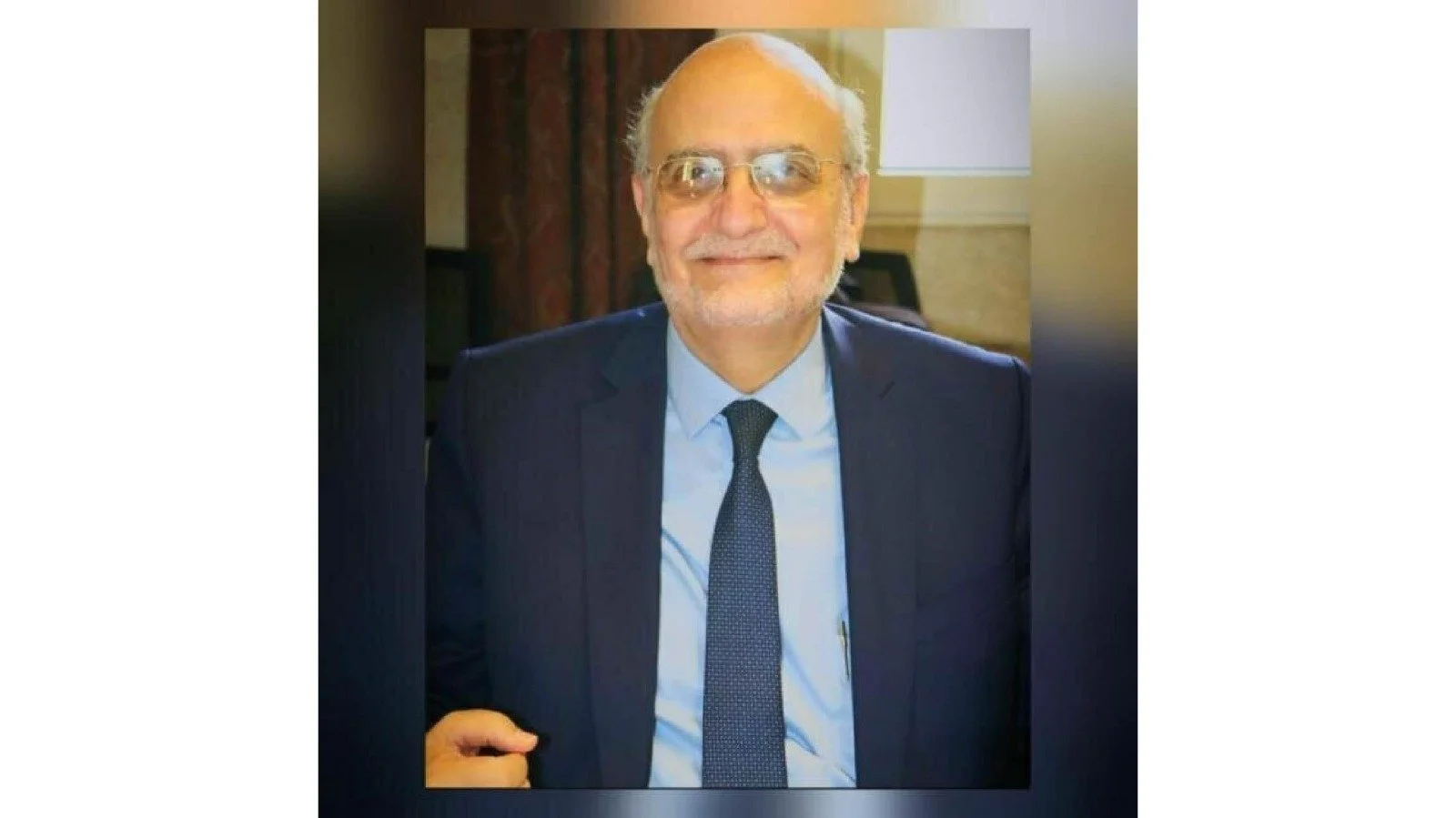
The Tragedy of Organizations Is the Tragedy of Society and a Crisis of Culture
Professor Michel Abs
The Secretary General of the Middle East Council of Churches (MECC)
The tragedy of organizations is manifested in corruption, deception, forgery, distortion of facts, pressure, circumvention of established regulations and procedures, and hypocrisy.
The organization, or the institution, is the backbone of modern society. It is an organized entity whose purpose is to serve the public interest through clear rules and transparent procedures. But when organizations are afflicted by corruption, deception, and falsification of facts, they are transformed from instruments of development into burdens on society because of the waste generated by corruption. This affliction is not a passing individual error; rather, it is a systemic deviation that strikes at three fundamental pillars: integrity, efficiency, and trust.
First: Manifestations of Organizational Dysfunction
1. Administrative and financial corruption:
This is the exploitation of public office for private gain. It includes bribery, favoritism, and the embezzlement of public funds. According to the “principal-agent” model in management, corruption occurs when the interests of the employee, the “agent,” conflict with those of the public, the “principal,” in the absence of effective oversight mechanisms.
2. Deception and falsification of facts:
This takes the form of manipulating data, falsifying reports, and embellishing fictitious achievements. This type of corruption is even more dangerous because it attacks the “organizational memory.” When decisions are based on false information, all subsequent policies become flawed.
3. Circumventing regulations and exerting illegitimate pressure:
This means bypassing laws and regulations under the pretext of “necessity” or “exceptional circumstances.” It is often accompanied by organizational hypocrisy: a double discourse whereby an organization publicly proclaims its commitment to certain values while secretly practicing the opposite…
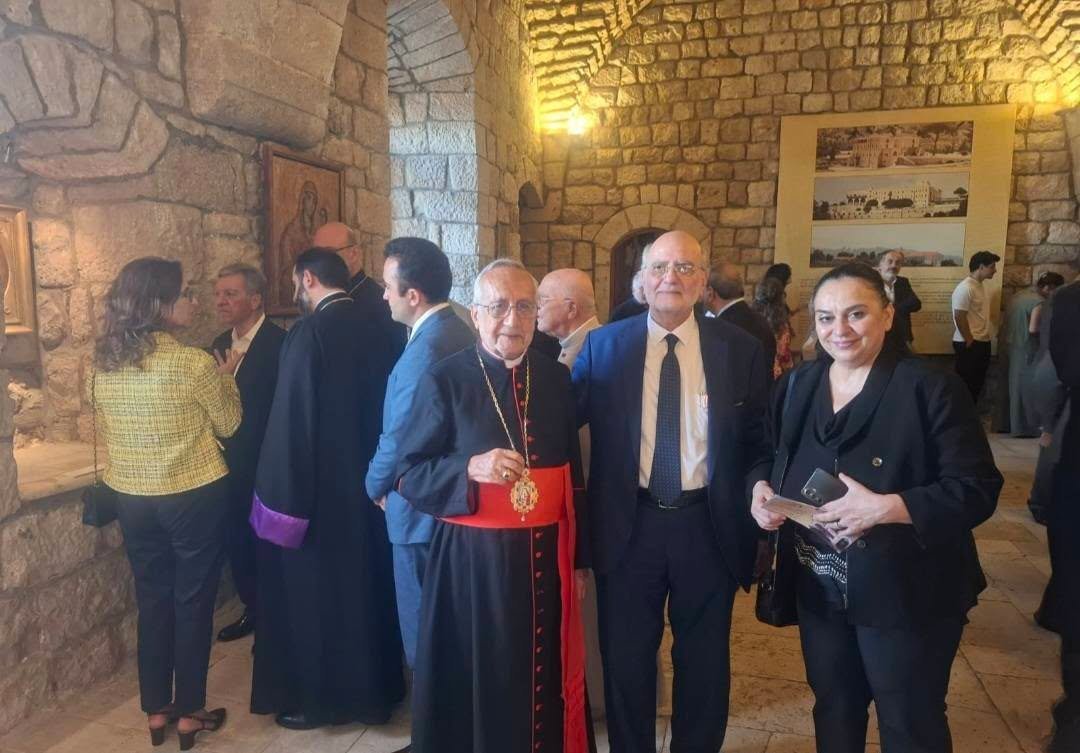
The MECC Secretary General Professor Michel Abs Participates in the Opening of the Church Exhibition “Testimony of the Spiritual Heritage” at Our Lady of Bzommar Monastery
On the occasion of the 255th anniversary of the construction of the Church of the Assumption of the Virgin Mary at the Patriarchal Monastery of Our Lady of Bzommar, a Church exhibition entitled “Testimony of the Spiritual Heritage” was inaugurated during a ceremony held on the evening of August 12, 2026. The exhibition presents a selection of artifacts from the Monastery’s museum, offering visitors a glimpse into the spiritual, artistic, and historical richness preserved by this landmark across generations.